
From Wikipedia, the free encyclopedia
Content deleted Content added
|
Tags: Mobile edit Mobile web edit
|
|||
| Line 49: | Line 49: | ||
|
==Candidates== |
==Candidates== |
||
|
*[[ |
*[[ ]] was a historian and author |
||
|
*Labour nominated local councillor and campaigner [[Dick Douglas]] |
*Labour nominated local councillor and campaigner [[Dick Douglas]] |
||
|
* |
*[[George Leslie (politician)|George Leslie]], who had trained as a vet after studying at Glasgow University |
||
|
*The local Liberal Party association nominated Ian Miller |
*The local Liberal Party association nominated Ian Miller |
||
|
*The |
*The chose Alex Murray, their Scottish Secretary |
||
|
==Result of the previous general election== |
==Result of the previous general election== |
||
Latest revision as of 01:17, 22 November 2025
UK parliamentary by-election
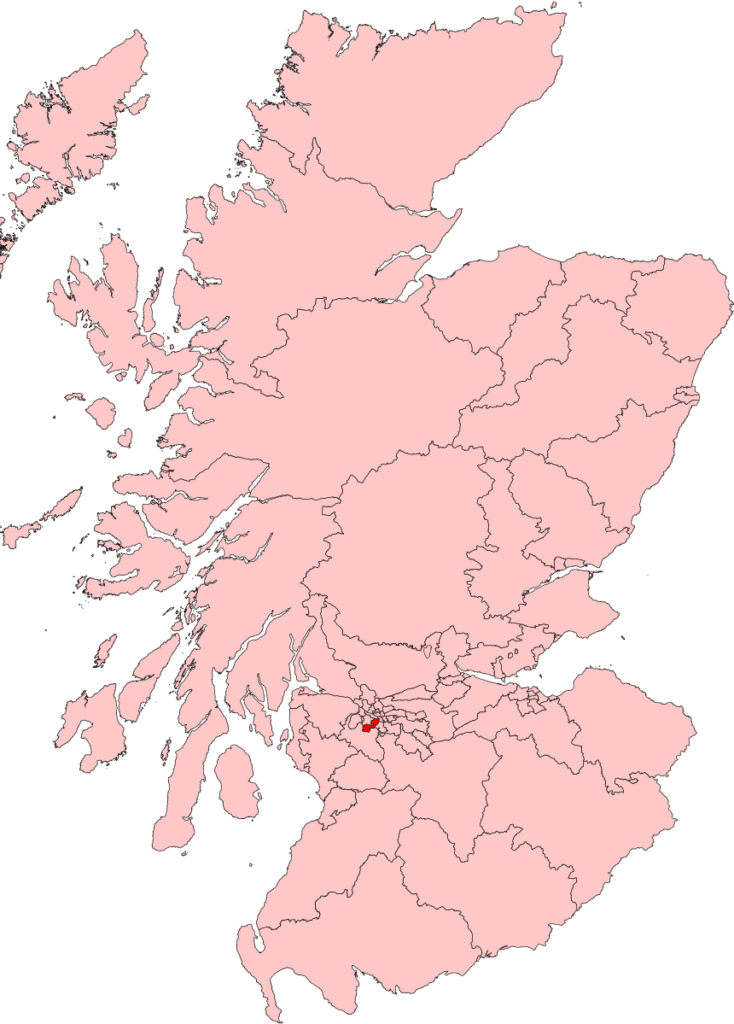
The 1967 Glasgow Pollok by-election of 9 March 1967 was held after the death of Labour MP (MP) Alex Garrow:[1]
The seat was marginal, having been won by Labour at the 1966 United Kingdom general election by under 2,000 votes.[2]
Result of the previous general election
[edit]
Result of the by-election
[edit]
Both main parties lost votes compared with the previous general election due to the good showing of the SNP, who recorded what was then their best result in a Glasgow constituency. However, as the Conservatives had predicted, the SNP drew more votes from Labour, allowing Wright to gain the seat with a majority of 2,201.[3] It was the first time the Conservatives had gained a seat in Scotland since the 1959 general election and the party’s first by-election gain since the Glasgow Camlachie by-election in 1948.[3] The Glasgow Herald suggested that the result would be claimed as a turning point by the Conservatives in Scotland, while Labour would have to eat “a lot of campaign words”, having predicted that they would have an increased majority and that the SNP would lose their deposit.[3] Having almost pushed Labour into third place the result was described by the same newspaper as a “triumph” for the SNP, who had not previously contested the constituency, while the poor showing by the Liberals was labelled “a disaster”.[3]

