
Marxist concept of a transitional state between capitalism and communism
In Marxist theory, the dictatorship of the proletariat is a state of affairs in which the proletariat (the working class) holds political power. The term, coined by Joseph Weydemeyer, was adopted by the founders of Marxism, Karl Marx and Friedrich Engels, in the 19th century. The dictatorship of the proletariat is the intermediate stage between a capitalist economy and a communist economy, the post-revolutionary state in which the proletariat has seized control of political power from the bourgeoisie (the capitalist class). It is the stage of “political transition” from capitalism to communism.
For Marx and Engels, the Paris Commune of 1871—a revolutionary government established by the workers of Paris that lasted for 72 days—was an example of the dictatorship of the proletariat. The term’s meaning underwent a significant transformation after Engels’s death in 1895. Within the Second International, figures like Eduard Bernstein and Karl Kautsky began to reinterpret or question the concept. It was Vladimir Lenin who developed a new definition of dictatorship as power “based directly upon force and unrestricted by any laws”, a view that became dominant after the Russian Revolution of 1917. The subsequent debates between Leninists, Kautskyists, and other Marxists, combined with the practices of the Soviet government, led to the term becoming widely associated with one-party rule and the suppression of dissent. While some historians like Hal Draper argue this later conception is fundamentally different from Marx’s, which centered on the democratic rule of the working class as a whole, others like John Ehrenberg contend that Lenin’s work represents an orthodox development of the original theory and that the concept was central to the democratic vision of all three thinkers.
Etymology and historical meaning
The modern understanding of the word “dictatorship” as an autocratic one-man rule is a relatively recent development. The term’s meaning in the 19th century was shaped by its ancient precedent, the Roman Republic‘s dictatura.
Roman dictatura
The original dictatura was an established office in the Roman Republic. It was a constitutional and legal mechanism for a single magistrate to be granted extraordinary powers to deal with an emergency, such as an invasion or civil disorder. Roman dictators could not make new laws and were expected to hand power back once the emergency, and their six-month term, had passed. The institution was not seen as inherently autocratic or tyrannical; for centuries, it operated within the republic’s legal framework without leading to one-man rule. The institution broke down only when figures like Sulla and Julius Caesar destroyed it by having themselves appointed “perpetual dictators” and using the position to consolidate autocratic power.
This classical meaning of a temporary, constitutional emergency power survived into the 19th century and formed the basis for how the term “dictatorship” was understood. In 1855, Friedrich Engels, writing in the New-York Tribune, used the term explicitly in this Roman sense. Discussing the mismanaged British war effort in the Crimea, he suggested that the commander-in-chief should be given dictatorial powers equivalent to the Roman dictatura to overcome the army’s inept organization, noting that this was a power “every other General-in-Chief” already possessed in a theater of war.
French Revolution
During the French Revolution, the term “dictatorship” became a political weapon. It was most often used as a pejorative accusation against political figures, especially Maximilien Robespierre, who were charged with aspiring to one-man rule. However, the meaning of the term also began to shift and broaden. The Girondins, for instance, denounced the rising power of the Paris Commune as a “dictatorial commission”, and references were also made to the “dictatorship of the National Convention“, the democratically elected assembly of the age. This extended the term’s meaning from the dictatorship of a single person to the dictatorship of a political body or a section of the people.
The revolutionary Jean-Paul Marat was a notable proponent of a temporary dictatorship to save the revolution. He argued for the appointment of a supreme “military tribune, a dictator, or a triumvirate” with limited, temporary power to punish counter-revolutionaries. Marat was clear that this office would be strictly circumscribed, lasting for only a few days and with its mission limited to “the summary punishment of the intriguers”. He envisioned this proposed official not as the head of government, but as a special agent for emergency action. This advocacy for a dictatorship to consolidate a new revolutionary government, rather than to preserve an existing one, marked a “clear, new direction in meaning for the old Roman term”, according to historian Richard N. Hunt.
By the time Karl Marx first used the term “dictatorship of the proletariat” in 1850, the word “dictatorship” had a complex meaning. It was no longer exclusively associated with one-man rule but could also refer to the exercise of extraordinary political power by a class or a political body. As historian Hal Draper notes, it had “become a political term flung around the popular newspapers.”
Early socialist and Utopian views
In early socialist and communist thought, the idea of a post-revolutionary government often took the form of an “Educational Dictatorship”. This concept was rooted in the belief that the general population, having been corrupted by the existing social order, was incapable of achieving or building socialism on its own. It therefore needed to be guided from above by a revolutionary elite who had remained uncorrupted.

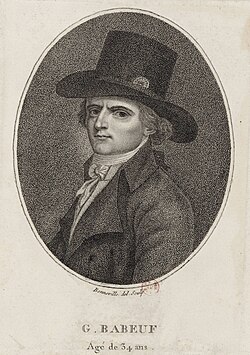
This view was first systematically articulated by the followers of Gracchus Babeuf in the Conspiracy of the Equals. One of Babeuf’s lieutenants, Philippe Buonarroti, argued that “a people so strangely kept away from the natural order was scarcely capable of making useful choices, and had need of an extraordinary means that would return it to” a state where it could exercise its sovereignty. The proposed solution was a provisional revolutionary authority that would lead the people while educating them. This provisional regime had a threefold mission: to eradicate old institutions and their leaders, to establish a new egalitarian order based on common ownership, and to educate the masses in the new ways of “virtue”. Buonarroti wrote that this task “can belong only to wise and courageous citizens” who would establish a government to “forever shield the people from the influence of the natural enemies of equality”.

The concept of an educational dictatorship by an enlightened minority was common among the secret communist societies of the 1830s and 1840s and was inherited by the Blanquists. Other socialists also advocated for similar ideas. Wilhelm Weitling, a pioneer of German communism, argued for a dictatorship led by a messianic figure with an army of thieves as his shock troops. Étienne Cabet, in his utopian novel Voyage en Icarie, described a long transitional period in which a dictator, Icar, introduces communism. These views were based on the premise that the working class was not yet ready for self-emancipation and required guidance from a revolutionary vanguard.
Marx and Engels’s conception
Hal Draper argues that for Karl Marx and Friedrich Engels, the “dictatorship of the proletariat” was not a form of government but a term describing the class content of the state that would follow the overthrow of the capitalist class. It was a synonym for “rule of the proletariat”, a “workers’ state”, or “the conquest of political power by the proletariat”, and it did not imply any specific institutional setup. Other historians, such as Richard N. Hunt, have likewise argued against identifying Marx and Engels’s concept with the “Babouvist-Blanquist model” of educational dictatorship by an elite.
Marx’s use of the term emerged in the context of the post-revolutionary period of 1848–1849, a time of political analysis and stock-taking. Draper argues that Marx strategically adopted the phrase “class dictatorship” to counter the prevailing Jacobin-Blanquist conception of a revolutionary dictatorship by a party or an elite minority. In opposition to the dictatorship of a party over the proletariat, Marx counterposed the dictatorship of the proletariat—the democratic rule of the entire working class.
First appearances (1850–1852)
.png)
Marx first used the term “dictatorship of the working class” in 1850, in the first of a series of articles later republished as The Class Struggles in France, 1848 to 1850. Recounting the defeat of the workers’ uprising in June 1848, he wrote that in place of their earlier demands, “there appeared the bold slogan of revolutionary struggle: Overthrow of the bourgeoisie! Dictatorship of the working class!” Draper argues that since there is no record of this slogan actually being used by the workers, Marx was likely proposing it himself, “putting words to the inchoate working-class aspiration expressed in the revolution.”
In the third article of the series, published in March 1850, Marx elaborated on the term’s connection to Blanquism:
… the proletariat increasingly organizes itself around revolutionary socialism, around communism, for which the bourgeoisie itself has invented the name of Blanqui. This socialism is the declaration of the permanence of the revolution, the class dictatorship of the proletariat as the necessary transit point to the abolition of class distinctions generally…
Here, Marx links the concept of “class dictatorship” to the name of Auguste Blanqui. Draper and Hunt suggest that Marx was not claiming the slogan came from Blanqui, but rather that the bourgeoisie had attached Blanqui’s name to revolutionary socialism as a bogeyman. This refers to events in 1848 when the bourgeoisie circulated stories that the workers’ demonstrations were part of a Blanquist plot to impose communism. Hunt argues that by adopting the fearsome-sounding “dictatorship” but emphasizing its class nature (“Klassendiktatur”), Marx was attempting to persuade the Blanquists to accept the idea of class rule instead of clique rule.
In April 1850, Marx and Engels, together with Blanquist refugees in London and the left-wing Chartist leader Julian Harney, co-signed the statutes of the “Société Universelle des Communistes Révolutionnaires” (SUCR). Article 1 stated the society’s aim was “the downfall of all the privileged classes, to subject these classes to the dictatorship of the proletarians, maintaining the revolution in permanence until the realization of communism”. The project was short-lived and collapsed within months due to political disagreements. According to Draper, the formulation was a compromise: the Blanquists were satisfied by its revolutionary tone, while for Marx and Engels, the key was that it specified the dictatorship of the entire class of proletarians, not of a conspiratorial clique.
The term’s next major appearance was in a letter from Marx to Joseph Weydemeyer on 5 March 1852. In it, Marx stated what he believed his new contribution to socialist theory was:
… what I did that was new was to prove: (1) that the existence of classes is only bound up with particular historical phases in the development of production; (2) that the class struggle necessarily leads to the dictatorship of the proletariat; (3) that this dictatorship itself only constitutes the transition to the abolition of all classes and to a classless society.
The Paris Commune and after (1871–1891)
.jpg)
After 1852, the term did not appear in the writings of Marx and Engels for nearly two decades. It re-emerged in the aftermath of the Paris Commune of 1871, a revolutionary government established by the workers of Paris. On 24 or 25 September 1871, at a banquet celebrating the seventh anniversary of the First International, Marx gave a speech in which he stated:
The last movement was the Commune, the greatest that has yet been made, and there could not be two opinions about it—the Commune was the conquest of the political power of the working classes. … But before such a change could be effected a proletarian dictature would become necessary, and the first condition of that was a proletarian army. The working classes would have to conquer the right to emancipate themselves on the battlefield.
.jpg)
In his 1873 polemic against the anarchists, “On Authority”, Engels wrote that a revolution must maintain its rule “by means of the terror which its arms inspire in the reactionaries.” When challenged to explain what this rule would look like, he pointed to the example of the Paris Commune. In a 1874 article on the Blanquist refugees, Engels explicitly contrasted the Blanquist conception of dictatorship with the Marxist one:
From the fact that Blanqui conceives of every revolution as the coup de main of a small revolutionary minority, what follows of itself is the necessity of dictatorship after its success—the dictatorship, please note, not of the entire revolutionary class, the proletariat, but of the small number of those who made the coup de main and who themselves are organized beforehand under the dictatorship of one person or a few. One can see that Blanqui is a revolutionary of the previous generation.
In 1874–1875, Marx wrote extensive private notes on Mikhail Bakunin‘s book Statism and Anarchy, which had accused him of advocating an authoritarian, educational dictatorship of “learned Socialists” over the people. The exchange in Marx’s notebook reveals his opposition to such a concept. When Bakunin sarcastically outlined what he believed to be the Marxist theory of a “veritable dictatorship” of “men of learning” to “educate and uplift the people”, Marx’s marginal note was “Quelle rêverie!” (“What a pipe dream!”). Marx wrote that the “class rule of the workers” would last only until “the economic basis that makes the existence of classes possible has been destroyed”, and he explicitly abstained from using the word “dictatorship” in his response to Bakunin’s charge, reverting to the German “Klassenherrschaft” (class rule) instead.
Marx also countered Bakunin’s claim that a workers’ government would simply rule over the peasantry. In countries with a large peasant population, Marx wrote, the proletariat must “take steps that will immediately improve his position and thus win him over to the revolution”. These measures should “further the transition from private to communal ownership of land in such a way, that the peasant comes to it of his own accord on economic grounds.” On the question of governance, Marx rejected Bakunin’s portrayal of a new ruling elite. When Bakunin asked if all forty million Germans would be members of the government, Marx replied: “Certainly, for the thing begins with the self-government of the communities.”

The most famous use of the term appeared in a private letter: Marx’s 1875 Critique of the Gotha Program, a critique of the draft program of the Social Democratic Party of Germany. In it, he wrote:
Between the capitalist and the communist society lies the period of the revolutionary transformation of the one into the other. To this there corresponds a political transition period whose state can be nothing but the revolutionary dictatorship of the proletariat.
This formulation identified the dictatorship of the proletariat not as a temporary emergency measure but as the political form of the entire transition period between capitalism and full communism.
Engels used the phrase for the final times in 1891. In his introduction to a new edition of Marx’s The Civil War in France, he concluded his historical overview of the Paris Commune with the words:
Of late, the Social-Democratic philistine has once more been filled with wholesome terror at the phrase: dictatorship of the proletariat. Well and good, gentlemen, do you want to know what this dictatorship looks like? Look at the Paris Commune. That was the dictatorship of the proletariat.
In his critique of the draft of the Erfurt Program of the German Social-Democratic Party, Engels stated that “our party and the working class can come to power only under the form of the democratic republic. This is even the specific form for the dictatorship of the proletariat, as the great French revolution has already shown.”
The Paris Commune as a model
For both Marx and Engels, the Paris Commune was a concrete example of the dictatorship of the proletariat. Draper’s analysis identifies three key aspects of their view of the Commune that corresponded to this concept.
- Workers’ state: Marx described the Commune as “essentially a working-class government”, a state in which the working class held political power.
- Hegemony of the proletariat: Marx emphasized that the Commune was not just a government of the working class, but one that was recognized as the leader of all healthy elements of French society. He noted that the “great bulk of the Paris middle class” acknowledged the Commune as “the only class capable of social initiative”. This demonstrated the principle of hegemony, where the revolutionary working class becomes the leader of other classes and social elements.
- Democratic governance: Marx celebrated the Commune’s democratic and anti-bureaucratic features. For Marx, the Commune provided “the basis of really democratic institutions” and was a government “of the people by the people”. He highlighted its use of universal suffrage, the election of all officials (including judges), the right of recall for all delegates, the payment of workmen’s wages for public officials, the separation of church and state, and the abolition of the standing army in favor of a people’s militia. This last point was central to Marx and Engels’s understanding. They held a dual conception of the state: the state as a “parasitic” body of professional administrators and soldiers standing apart from society, and the state as an instrument of class coercion. The Commune, they argued, had “smashed” the parasite state by deprofessionalizing the army, police, bureaucracy, and judiciary, and replacing them with ordinary people serving on a short-term, rotational basis. The coercive functions of the state, however, remained in the form of the National Guard, now a workers’ militia. Engels famously argued that this new coercive power, made up of the armed people, was “no longer a state in the proper sense of the word”.
In contrast, the Blanquists who participated in the Commune saw it as a revolutionary dictatorship in the traditional sense. They advocated for the creation of a Committee of Public Safety, modeled on the original from 1793, and believed the Commune’s primary mission was to defend the revolution through military and police action, postponing democratic and social reforms.
In the Second International
After Friedrich Engels’s death in 1895, the interpretation of the “dictatorship of the proletariat” became a point of contention within the Second International. According to Draper, Marx’s original meaning—the rule of the working class—was widely “misunderstood” and reinterpreted to mean something about specific governmental forms or policies, often of an anti-democratic nature.
.jpg)

The “revisionist” wing of the movement, led by Eduard Bernstein, was the first to attack the concept directly. In his 1899 book Evolutionary Socialism, Bernstein recommended dropping the phrase altogether, arguing it was incompatible with parliamentary democracy. He dismissed the concept of a “dictatorship of the classes” as a political “atavism” belonging to a “lower civilization” and antithetical to the liberal traditions of social democracy. Reformist socialists like Jean Jaurès similarly counterposed Marx’s “dictatorship” to democracy, assuming it meant the suspension of popular consent.
The “orthodox” Marxist center, represented by Karl Kautsky, offered a muddled defense. Before 1917, Kautsky’s writings were inconsistent. In 1893, he wrote that a parliamentary republic with a socialist majority could be “as good an instrument of the dictatorship of the proletariat as it is an instrument of the dictatorship of the bourgeoisie.” At other times, he suggested that while the “class rule of the proletariat” did not necessarily entail special “dictatorial measures,” such measures might become necessary. For Draper, Kautsky failed to grasp that for Marx, the term did not refer to governmental measures at all but to the class character of political power.
.jpg)
In contrast to both revisionists and the orthodox center, Rosa Luxemburg consistently used the term in what Draper considers the original Marxist sense. For Luxemburg, the dictatorship of the proletariat was simply “the conquest of political power” by the working class, synonymous with the establishment of a workers’ state. She saw no contradiction between this “dictatorship” and democracy, as both referred to the rule of the vast majority of the population.
In the Russian Marxist movement
The concept of the “dictatorship of the proletariat” took on a particular meaning in the Russian socialist movement, largely shaped by Georgi Plekhanov and later redefined by Vladimir Lenin.
Georgi Plekhanov and the 1903 program
.jpg)
Georgi Plekhanov, the “father of Russian Marxism,” was responsible for introducing the term into the Russian movement and ensuring its inclusion in the party program. From the outset, Plekhanov’s interpretation linked the concept to the necessity of suppressing counter-revolutionaries and sacrificing democratic principles for the sake of the revolution. In a conversation with Engels in 1893, Plekhanov expressed his view that a future revolutionary government would “grant freedoms to no one but ‘ourselves'”. Engels privately expressed dismay, suggesting to a confidant that such an approach would “either transform Russian Social Democracy into a sect … or might produce a series of splits.”
Plekhanov’s view was publicly articulated at the 2nd Congress of the Russian Social Democratic Labour Party in 1903. This congress was unique in the Second International for formally including the “dictatorship of the proletariat” in its program, stating it was “an essential condition” for the socialist revolution to “conquest … political power”. During the debates, a delegate argued that democratic principles must be held as inviolable. Plekhanov famously responded that if the success of the revolution required the temporary restriction of a democratic principle, such as universal suffrage, “it would be criminal to hesitate.” He declared that the “welfare of the revolution is the supreme law” (Salus revolutionis suprema lex). This stance, Draper argues, laid the groundwork for an anti-democratic interpretation of the concept within Russian Marxism.
Lenin’s evolving concept
.jpg)
Like other Russian Marxists, Lenin initially accepted the term as part of the party’s program. In the context of the 1905 Russian Revolution, he developed the formula of a “revolutionary-democratic dictatorship of the proletariat and the peasantry.” This was a “two-class dictatorship” intended for the specific conditions of a backward country where the proletariat was a small minority and could only succeed in alliance with the peasant majority.
In 1906, in the aftermath of the failed revolution, Lenin articulated a new and, in Draper’s view, theoretically unprecedented definition. He wrote that the “scientific term ‘dictatorship’ means nothing more nor less than authority untrammeled by any laws, absolutely unrestricted by any rules whatever, and based directly on force.” Draper contends that this definition was a “theoretical blunder” with no basis in Marx’s work or the historical tradition of the term. For Lenin, “dictatorship” now meant a government that operated outside of any legal framework. Other scholars argue that this formulation is consistent with the orthodox Marxist view of the state as an instrument of class rule, where any victorious power in a civil war must be a dictatorship based on force, not law. While this definition remained dormant until after 1917, it formed the basis for his later arguments justifying the actions of the Soviet state.
The Russian Revolution and its aftermath
The Bolshevik seizure of power in October 1917 transformed the “dictatorship of the proletariat” from a theoretical concept into a practical political question. The Bolsheviks’ interpretation and the reality of the Soviet regime fixed the term’s modern meaning as a one-party state and triggered a final, decisive split in the international Marxist movement.
The Kautsky–Lenin split

The sharpest conflict over the term broke out between Lenin and Karl Kautsky in 1918. In his pamphlet The Dictatorship of the Proletariat, Kautsky condemned the Bolshevik regime for suppressing other socialist parties, abolishing the Russian Constituent Assembly, and ruling by force without a democratic mandate. He argued that Marx’s “dictatorship of the proletariat” referred to the class rule of a majority, exercised through a democratic republic, and was not a “form of government” that dispensed with democracy.
Lenin replied in The Proletarian Revolution and the Renegade Kautsky. He defended the Bolsheviks’ actions as necessary and reiterated his 1906 definition of dictatorship as power won and maintained by force, unrestricted by any law. He derided Kautsky’s appeal to “democracy” as “bourgeois democracy” and a betrayal of the revolution. By counterposing “dictatorship” to “democracy,” Lenin argued for a class-based view: proletarian democracy (for the working class) required the dictatorship (suppression) over the bourgeoisie. Hunt notes that while Marx and Engels did use similar harsh language about the repressive functions of the workers’ state, they did so assuming a “revolutionary Provisorium”—a temporary, extralegal period following a revolution where the old ruling class is engaged in violent resistance. They did not, however, advocate for the suppression of peaceful opposition. The Paris Commune, for example, tolerated a legal bourgeois opposition within its own assembly, and in an unpublished draft of The Civil War in France, Marx presupposed the continued existence of a legal bourgeois opposition under a national government of the Commune.
Luxemburg’s critique
.jpg)
Rosa Luxemburg, writing from a German prison in 1918, offered a third perspective in her essay on The Russian Revolution. While she defended the Bolsheviks’ revolutionary actions, she sharply criticized their dictatorial policies. She argued that the dictatorship of the proletariat required “the most active, unlimited participation of the mass of the people, of unlimited democracy.” She warned that the Bolsheviks’ suppression of political life—by eliminating elections, freedom of the press, and assembly—would lead not to a workers’ state but to the “dictatorship of a handful of politicians,” a “bourgeois dictatorship in the Jacobin sense.” She famously concluded: “Freedom only for the supporters of the government, only for the members of one party – however numerous they may be – is no freedom at all. Freedom is always and exclusively freedom for the one who thinks differently.”
From class dictatorship to party dictatorship
In the crucible of the Russian Civil War, the concept of the dictatorship of the proletariat was explicitly fused with the idea of the dictatorship of the Bolshevik party. By 1920, leading Bolsheviks were openly arguing that the rule of the working class could only be realized through its vanguard party. Leon Trotsky, in his work Terrorism and Communism, wrote that it was possible to speak of “the dictatorship of the proletariat which is led by the dictatorship of its party.” Similarly, Nikolai Bukharin argued that the “dictatorship of the proletariat is in essence the dictatorship of its vanguard,” the Communist party. By the end of the civil war, the dictatorship of the proletariat had been transformed, in both theory and practice, into the dictatorship of the party, a conception that, according to Draper, was the opposite of what Marx had intended. This view was rooted in the Russian revolutionary tradition’s idea of a vanguard, which Marx and Engels themselves consistently opposed. In their analysis of the revolutionary movement in Russia, they argued that revolution must be made “by a Nation”, not “by a party”, and they denounced the elitist and conspiratorial conceptions of figures like Bakunin.
Historiography
According to Hal Draper, the modern misunderstanding of the “dictatorship of the proletariat” as a form of one-party rule or minority dictatorship began with the German Social-Democrat Eduard Bernstein at the turn of the 20th century. Bernstein, the founder of revisionism in Marxism, sought to portray Marx’s revolutionary phase as an immature “Blanquist” aberration. He claimed that Marx’s advocacy for revolution was based not on a scientific understanding of historical necessity but on “the apotheosis of pure Will as the revolutionary drive,” a voluntaristic view he identified with Blanquism. By this logic, anyone who advocated for revolution was a “Blanquist,” regardless of their views on minority coups or party dictatorships.
Draper argues that Bernstein created a “fable” by asserting that the Communist Manifesto was “Blanquist through and through” and that Marx only shook off Blanquism after the failed revolutions of 1848. This interpretation, Draper maintains, is based on a falsification of the historical record and an ignorance of Marx’s consistent critique of putschism and conspiratorial politics. The “Marx-Blanquist myth” was subsequently taken up by other writers, including both reformist socialists and anti-Marxists, and became a common feature of “Marxological” scholarship. Draper critiques later historians like George Lichtheim and Bertram D. Wolfe for perpetuating this myth, often without providing any evidence beyond Bernstein’s original assertions.
In contrast to the narrative of a sharp break between Marx and Lenin, other scholars like John Ehrenberg argue for a fundamental continuity in their political theory. Ehrenberg contends that the dictatorship of the proletariat is the democratic core of Marxism, defining the entire transition from capitalism to communism. From this perspective, Lenin’s work is not a “distortion” but an orthodox development and application of Marx and Engels’s core principles to the specific conditions of revolutionary Russia. This interpretation emphasizes that for all three thinkers, the concept described the political power required to lead a comprehensive social revolution and “break” the old bourgeois state in favor of a new, more democratic form like the Paris Commune or the soviets.
References
Works cited
- Draper, Hal (1986). Karl Marx’s Theory of Revolution, Volume 3: The “Dictatorship of the Proletariat”. New York: Monthly Review Press. ISBN 978-0-85345-678-5.
- Draper, Hal (1987). The “Dictatorship of the Proletariat” from Marx to Lenin. New York: Monthly Review Press. ISBN 978-0-85345-726-3.
- Hunt, Richard N. (1974). The Political Ideas of Marx and Engels, Volume 1: Marxism and Totalitarian Democracy, 1818–1850. Pittsburgh: University of Pittsburgh Press. ISBN 0-8229-3285-7.
- Hunt, Richard N. (1984). The Political Ideas of Marx and Engels, Volume 2: Classical Marxism, 1850–1895. Pittsburgh: University of Pittsburgh Press. ISBN 978-0-333-19706-6.

