
Between 1975 and 1977 she was part of the [[Eduardo De Filippo]] stage company.<ref name=”ATTRICI” />
Between 1975 and 1977 she was part of the [[Eduardo De Filippo]] stage company.<ref name=”ATTRICI” />
In 1975 she made her film debut in ”[[Killer Cop]]”, a ”[[Poliziotteschi|poliziottesco]]” directed by [[Luciano Ercoli|Luciano Ercol]]<nowiki/>i.<ref name=”ATTRICI” /><ref name=”:0″ />
In 1975 she made her film debut in ”[[Killer Cop]]”, a ”[[Poliziotteschi|poliziottesco]]” directed by [[Luciano Ercoli|Luciano Ercol]]<nowiki/>i.<ref name=”ATTRICI” /><ref name=”:0″ />
Her [[Breakthrough role|breakout role]] was the ugly Fosca in [[Ettore Scola]]‘s ”[[Passion of Love]]” (1981);<ref>{{cite book|title=L’Espresso , Parte 4|publisher=Editrice L’Espresso, 1983}}</ref> for this role she was awarded with a [[David di Donatello for Best Actress]] and a [[Globo d’oro]] in the same category.<ref name=”ATTRICI” /><ref>{{cite book|last=Enrico Lancia|title=I premi del cinema|date=28 February 1998 |publisher=Gremese Editore, 1998|isbn=88-7742-221-1}}</ref>
Her [[Breakthrough role|breakout role]] was in [[Ettore Scola]] [[Passion of Love” (1981)<ref>{{cite book|title=L’Espresso , Parte 4|publisher=Editrice L’Espresso, 1983}}</ref> role a [[David di Donatello for Best Actress]] and [[Globo d’oro]] in the same category.<ref name=”ATTRICI” /><ref>{{cite book|last=Enrico Lancia|title=I premi del cinema|date=28 February 1998 |publisher=Gremese Editore, 1998|isbn=88-7742-221-1}}</ref>
A notable performance was in [[Ettore Scola|Ettore Scola’s]] [[Passion of Love|”Passione d’amore”]] (1981), based on the novel by [[Iginio Ugo Tarchetti]]. The role required extensive physical transformation, and D’Obici played a character defined by illness rather than traditional attractiveness, marking a departure from dominant female representations in Italian cinema of the period. The film was presented in competition at the [[1981 Cannes Film Festival]].<ref name=”:22″>{{Cite web |last=Cappabianca|first=Alessandro|date=2023-06-09|title=Misteriosa, Valeria D’Obici|url=https://ilmanifesto.it/misteriosa-valeria-dobici|access-date=2026-01-19|website=il manifesto|language=it}}</ref>
In the same year, she appeared in [[Peter Del Monte|Peter Del Monte’s]] [[Sweet Pea (film)|”Piso Pisello”]], portraying a maternal figure involved in a surreal narrative that contrasts her character with youthful beauty and innocence. The film further contributed to her association with unconventional and non-stereotypical female roles.<ref name=”:23″>{{Cite web |last=Cappabianca |first=Alessandro |date=2023-06-09 |title=Misteriosa, Valeria D’Obici |url=https://ilmanifesto.it/misteriosa-valeria-dobici |access-date=2026-01-19 |website=il manifesto |language=it}}</ref>
In the same year, she appeared in [[Peter Del Monte|Peter Del Monte’s]] [[Sweet Pea (film)|”Piso Pisello”]], portraying a maternal figure involved in a surreal narrative that contrasts her character with youthful beauty and innocence. The film further contributed to her association with unconventional and non-stereotypical female roles.<ref name=”:23″>{{Cite web |last=Cappabianca |first=Alessandro |date=2023-06-09 |title=Misteriosa, Valeria D’Obici |url=https://ilmanifesto.it/misteriosa-valeria-dobici |access-date=2026-01-19 |website=il manifesto |language=it}}</ref>
==Awards==
==Awards==
* 1981: [[David di Donatello for Best Actress]], ”’winner”’ – ”[[Passion of Love]]”
* 1981: [[David di Donatello for Best Actress]], ”’winner”’ – ”[[Passion of Love]]”
* 1981: [[Globo d’oro]] for Best Actress, ”’winner”’ – ”[[Passion of Love]]”
* 1981: [[Golden Globe Awards|Golden Globe]] for Best Newcomer, ”’winner”’ – ”[[Passion of Love]]”
* 1982: [[David di Donatello for Best Supporting Actress]], nominee – ”[[Sweet Pea (film)|Sweet Pea]]”
* 1982: [[David di Donatello for Best Supporting Actress]], nominee – ”[[Sweet Pea (film)|Sweet Pea]]”
* 1984: David di Donatello for Best Supporting Actress, nominee – ”[[A Proper Scandal]]”
* 1984: David di Donatello for Best Supporting Actress, nominee – ”[[A Proper Scandal]]”
Italian actress (born 1944)
|
Valeria D’Obici |
|
|---|---|
 |
|
| Born | 17 April 1944[1] |
| Occupation | Actress |
| Years active | 1974–present |
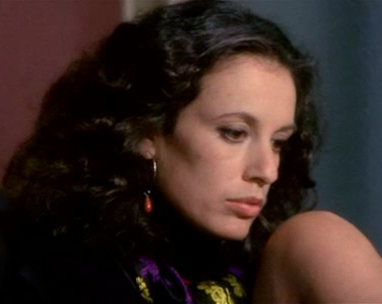
Valeria D’Obici (born 17 April 1944) is an Italian film, stage and television actress.
Career
D’Obici was born in Liguria, and moved to Milan in 1967. There she trained at the Piccolo Teatro theatre company directed by Paolo Grassi, and studied acting alongside several future collaborators.[1][2][3] After completing her studies, she co-founded a theatrical cooperative with colleagues, and participated in the opening of the Salone Pier Lombardo, later renamed Teatro Franco Parenti. She remained with the company for approximately six years before moving to Rome.[2][3]
Between 1975 and 1977 she was part of the Eduardo De Filippo stage company.[1]
In 1975 she made her film debut in Killer Cop, a poliziottesco directed by Luciano Ercoli.[1][2]
Her breakout role was in Ettore Scola’s Passione d’amore (1981), based on the novel by Iginio Ugo Tarchetti.[4] Playing the role of Fosca, it required extensive physical transformation, as D’Obici’s character is defined by illness rather than traditional attractiveness, marking a departure from dominant female representations in Italian cinema of the period. The film was presented in competition at the 1981 Cannes Film Festival.[5] She won the Golden Globe for Best Newcomer, the David di Donatello for Best Actress, and Globo d’oro in the same category for the role.[6][1][7]
In the same year, she appeared in Peter Del Monte’s Piso Pisello, portraying a maternal figure involved in a surreal narrative that contrasts her character with youthful beauty and innocence. The film further contributed to her association with unconventional and non-stereotypical female roles.[8]
In their book about her, Francesco Foschini and Stefano Careddu describe D’Obici as an actress “sui generis”, emphasizing her ability to move fluidly between theatre, cinema, and television, as well as between dramatic and comic roles, often embracing characters that deliberately challenged conventional ideals of female beauty in Italian cinema.[9]
Awards
References
- ^ a b c d e Enrico Lancia, Roberto Poppi (28 February 2024). “D’Obici, Valeria”. Dizionario del cinema italiano, Le Attrici. Gremese Editore, 2003. pp. 115–6. ISBN 978-88-8440-214-1.
- ^ a b c Cilento, Gianmarco. “Il mestiere dell’attore: intervista a Valeria d’Obici | FilmDOC”. www.filmdoc.it. Retrieved 19 January 2026.
- ^ a b Foschini, Francesco (8 June 2016). “Intervista a Valeria D’Obici”. Taxidrivers.it (in Italian). Retrieved 19 January 2026.
- ^ L’Espresso , Parte 4. Editrice L’Espresso, 1983.
- ^ Cappabianca, Alessandro (9 June 2023). “Misteriosa, Valeria D’Obici”. il manifesto (in Italian). Retrieved 19 January 2026.
- ^ ““Scola mi cambiò la vita. Che risate con ‘Yuppies'””. Il Resto del Carlino (in Italian). 10 March 2024. Retrieved 3 February 2026.
- ^ Enrico Lancia (28 February 1998). I premi del cinema. Gremese Editore, 1998. ISBN 88-7742-221-1.
- ^ Cappabianca, Alessandro (9 June 2023). “Misteriosa, Valeria D’Obici”. il manifesto (in Italian). Retrieved 19 January 2026.
- ^ Cappabianca, Alessandro (9 June 2023). “Misteriosa, Valeria D’Obici”. il manifesto (in Italian). Retrieved 19 January 2026.

