
{{Infobox person
{{Infobox person
| name = William E. Kraus
| name = William E. Kraus
| image =
| image =
| alt =
| alt =
| caption =
| caption =
| birth_name = William Erle Kraus
| birth_name = William Erle Kraus
| birth_date = {{birth date and age|1954|12|3}}
| birth_date = {{birth date and age|1954|12|3}}
American cardiologist and academic
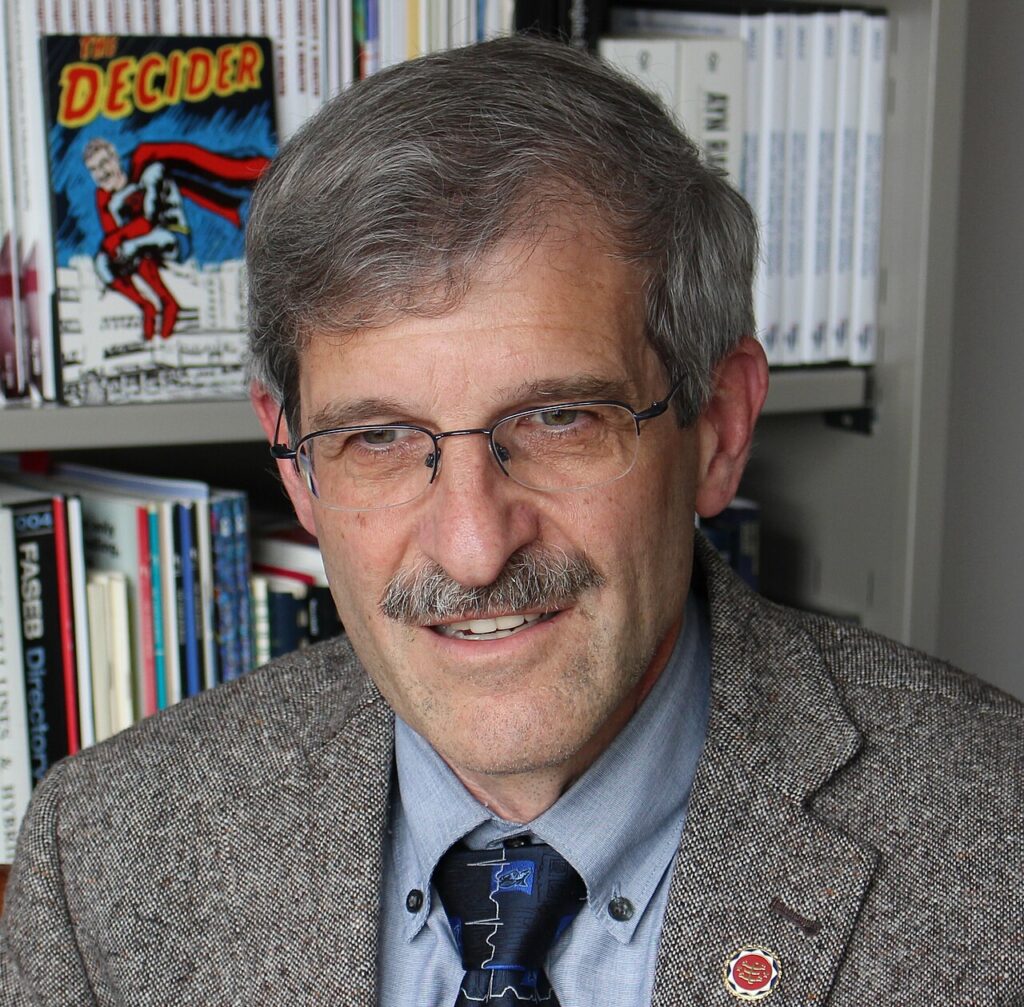
William Erle Kraus (born December 3, 1954) is an American cardiologist, physician-scientist, and professor. He is the Richard and Pat Johnson University Distinguished Professor of Cardiovascular Genomics in the Division of Cardiology, Department of Medicine, at Duke University School of Medicine. He is also a professor in the Duke Molecular Physiology Institute, the School of Nursing, and the Department of Biomedical Engineering at Duke University.[1][2][3]
Kraus specializes in preventive cardiology, cardiac rehabilitation, and the effects of physical activity on cardiometabolic health.[4] His research has influenced public health guidelines on exercise and explored both the benefits and potential risks of physical activity.[5][6][7]
Early life and education
[edit]
Kraus was born in Akron, Ohio. He earned an A.B. degree magna cum laude in Astronomy and Astrophysics from Harvard College in 1977. He received his M.D. from Duke University School of Medicine in 1983.[8][3]
Kraus has been a faculty member at Duke University since the late 1980s.[1][3]
Academic appointments
[edit]
He progressed from Associate in the Division of Cardiology (1988–1989), to Assistant Professor (1989–2001), Associate Professor (2001–2006), and full Professor since 2006. In 2017 he was named the Richard and Pat Johnson University Distinguished Professor of Cardiovascular Genomics.[1][2]
He also holds professorships in the Duke Molecular Physiology Institute, the School of Nursing, and the Department of Biomedical Engineering.[2]
Kraus is a practicing cardiologist specializing in preventive cardiology, cardiac rehabilitation, and sports cardiology for mature athletes. He has served as Medical Director of the Duke Cardiac Rehabilitation Program since 1994.[4][3]
He previously directed the Duke Center for Living (1996–1999), an outpatient facility focused on cardiovascular disease prevention through lifestyle interventions.[1]
Kraus’s research centers on the physiological and molecular mechanisms by which exercise training improves cardiometabolic health, the role of skeletal muscle adaptations, gene–environment interactions, and personalized preventive cardiology.[2][3] He has investigated epigenetic mechanisms, detraining effects, dose-response relationships, and various exercise modalities to understand their impact on physical fitness, body composition, insulin action, lipoprotein metabolism, and metabolic syndrome.[9][10]
His work explores variability in exercise responses, including cases where physical activity may lead to adverse effects on cardiovascular risk factors.[5][11] Kraus has also shown that sporadic bouts of moderate-to-vigorous activity can reduce mortality risk similarly to sustained sessions.[6][7][12][13]
Major studies and trials
[edit]
He led the STRRIDE series (Studies of a Targeted Risk Reduction Intervention through Defined Exercise), landmark NIH-funded trials that established dose–response relationships between exercise amount/intensity and improvements in plasma lipoproteins, insulin sensitivity, and other cardiometabolic risk factors.[14] Follow-up studies have shown legacy effects persisting ten years later, with vigorous intensity groups maintaining better cardiorespiratory fitness.[10][15]
Kraus played a major leadership role in the HF-ACTION trial (Heart Failure: A Controlled Trial Investigating Outcomes of exercise traiNing), providing evidence that supported Medicare reimbursement for cardiac rehabilitation in patients with heart failure.[16]
He served as Study Chair for the multicenter CALERIE trial investigating the effects of sustained calorie restriction on biomarkers of aging and cardiometabolic risk.[17]
He co-authored a 2012 study examining adverse responses to exercise in sedentary adults, finding that a small percentage experience worsening of cardiovascular risk factors despite regular exercise.[11]
He has also participated in the Molecular Transducers of Physical Activity Consortium (MoTrPAC).[2]
Influence on policy
[edit]
Kraus was a member of the 2008 and 2018 U.S. Physical Activity Guidelines Advisory Committees. His work on exercise dose–response relationships contributed significantly to the scientific foundation of the Physical Activity Guidelines for Americans, which have been adopted internationally.[8][18][19][20] These guidelines emphasize that inadequate physical activity is linked to substantial health care costs and premature mortality, and they highlight benefits from even brief activity bouts.[20][19][12][13]
Professional leadership
[edit]
Kraus is a Fellow of the American College of Cardiology (FACC), American College of Sports Medicine (FACSM), and American Heart Association (FAHA). He served as Vice President (2016–2018), President-Elect (2018–2019), and President (2019–2020) of the American College of Sports Medicine.[2][3][21]
Kraus received the Michael L. Pollock Established Investigator Award from the American Association of Cardiovascular and Pulmonary Rehabilitation in 2016.[22]
He received the American College of Sports Medicine Citation Award in 2024.[23][24]
He has authored or co-authored more than 450 peer-reviewed publications.[2]
- ^ a b c d “William Erle Kraus – Duke Department of Medicine”. Duke University. Retrieved February 5, 2026.
- ^ a b c d e f g “William Kraus, MD – Duke Molecular Physiology Institute”. Duke University. Retrieved February 5, 2026.
- ^ a b c d e f “ACSM Clinician Profile: William E. Kraus, MD, FACSM”. Current Sports Medicine Reports. 11 (6). American College of Sports Medicine: 281. November–December 2012. doi:10.1249/JSR.0b013e318272bbce. Retrieved February 5, 2026.
- ^ a b “William E. Kraus, MD – Heart Disease Prevention and Rehabilitation Specialist”. Duke Health. Retrieved February 5, 2026.
- ^ a b Gretchen Reynolds (May 30, 2012). “For Some, Exercise May Increase Heart Risk”. The New York Times. Retrieved February 5, 2026.
- ^ a b Dr. Brian Goldman (March 30, 2018). “Every bit of exercise counts in reducing risk of early death: Study”. CBC News. Retrieved February 5, 2026.
- ^ a b Allison Aubrey (August 14, 2023). “Counting steps for health? Here’s how many you really need”. NPR. Retrieved February 5, 2026.
- ^ a b “William E. Kraus, MD”. Office of Disease Prevention and Health Promotion. July 24, 2020. Retrieved February 5, 2026.
- ^ “Drug Repurposing to Mimic the Effects of Exercise Training for Targeted Health Effects”. Fralin Biomedical Research Institute at VTC. February 25, 2025. Retrieved February 5, 2026.
- ^ a b Johnson, JL; Slentz, CA; Ross, LM; Huffman, KM; Kraus, WE (2019). “Ten-Year Legacy Effects of Three Eight-Month Exercise Training Programs on Cardiometabolic Health Parameters”. Frontiers in Physiology. 10: 452. doi:10.3389/fphys.2019.00452. PMC 6491723. PMID 31068827.
{{cite journal}}: CS1 maint: unflagged free DOI (link) - ^ a b “Adverse Responses to Regular Exercise in Some Individuals”. Pennington Biomedical Research Center. May 30, 2012. Retrieved February 5, 2026.
- ^ a b Stamatakis, E; Ahmadi, MN; Gill, JMR; Thøgersen-Ntoumani, C; Gibala, MJ; Doherty, A; de Boer, E; Granat, M; Kraus, WE (September 2023). “Vigorous Intermittent Lifestyle Physical Activity and Cancer Incidence Among Nonexercising Adults”. JAMA Oncology. 9 (9): 1255–1263. doi:10.1001/jamaoncol.2023.1830. PMC 10445122. PMID 37440206.
- ^ a b “Sustained and Sporadic Exercise Offer Same Reductions in Death Risk”. Duke Health Referring Physicians. July 3, 2018. Retrieved February 5, 2026.
- ^ Kraus, WE; Houmard, JA; Duscha, BD (November 7, 2002). “Effects of the amount and intensity of exercise on plasma lipoproteins”. The New England Journal of Medicine. 347 (19): 1483–1492. doi:10.1056/NEJMoa020194. PMID 12421890.
- ^ “Early exercise interventions used from Duke trial to decrease cardiovascular disease”. Duke Department of Medicine. February 14, 2022. Retrieved February 5, 2026.
- ^ O’Connor, CM; Whellan, DJ; Lee, KL (April 8, 2009). “Efficacy and safety of exercise training in patients with chronic heart failure: HF-ACTION randomized controlled trial”. JAMA. 301 (14): 1439–1450. doi:10.1001/jama.2009.454. PMC 2916661. PMID 19351941.
- ^ Kraus, WE; Bhaplkar, M; Huffman, KM (September 2019). “2 years of calorie restriction and cardiometabolic risk (CALERIE): exploratory outcomes of a multicentre, phase 2, randomised controlled trial”. The Lancet Diabetes & Endocrinology. 7 (9): 673–683. doi:10.1016/S2213-8587(19)30151-2. PMC 6707879. PMID 31303390.
- ^ “Announcement of the Second Meeting of the Physical Activity Guidelines Advisory Committee”. Federal Register. November 15, 2007. Retrieved February 5, 2026.
- ^ a b “2018 Physical Activity Guidelines Advisory Committee Scientific Report” (PDF). Office of the Assistant Secretary for Health. Retrieved February 5, 2026.
- ^ a b Bruce Jancin (November 16, 2018). “New HHS physical activity guidelines break fresh ground”. MDedge. Retrieved February 5, 2026.
- ^ “Kraus to serve as president-elect of the American College of Sports Medicine”. Duke Department of Medicine. March 14, 2018. Retrieved February 5, 2026.
- ^ “Past Award Recipients”. American Association of Cardiovascular and Pulmonary Rehabilitation. Retrieved February 5, 2026.
- ^ “Named Lecture & Award History”. American College of Sports Medicine. Retrieved February 5, 2026.
- ^ “Duke Heart Pulse — June 16, 2024”. Duke Heart. June 16, 2024. Retrieved February 5, 2026.

