
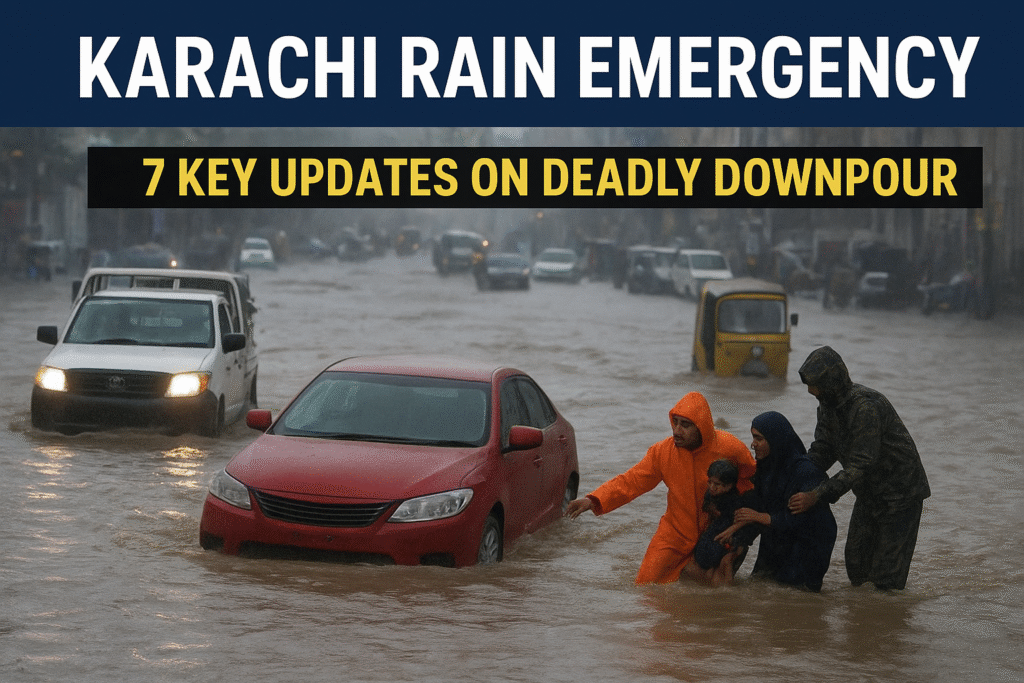
Karachi Rain Emergency: City Paralyzed by Heavy Monsoon Downpour
KARACHI – Torrential monsoon rains battered Pakistan’s financial hub on Tuesday, leaving vast swathes of the city submerged, crippling traffic, and plunging neighborhoods into prolonged power outages. In response to the worsening crisis, Karachi Mayor Murtaza Wahab declared a citywide rain emergency, urging municipal and emergency departments to remain on high alert.
The heavy rainfall, which began earlier in the day, continued late into the night, causing widespread disruption. According to the Pakistan Meteorological Department (PMD), Gulshan-i-Hadeed recorded the highest rainfall at 170mm, followed by the Airport Old Area at 158.5mm and Jinnah Terminal at 153mm. Several other localities—including Nazimabad, Surjani Town, Keamari, DHA Phase VII, and University Road—also reported rainfall exceeding 130mm, overwhelming Karachi’s already fragile drainage system.
Areas Most Affected by Heavy Rains
Below is a breakdown of rainfall recorded in key locations across Karachi (as of 8 pm Tuesday):
| Locality | Rainfall (mm) |
|---|---|
| Gulshan-i-Hadeed | 170 |
| Airport Old Area | 158.5 |
| Jinnah Terminal | 153 |
| Nazimabad | 149.6 |
| Surjani Town | 145.2 |
| Keamari | 140 |
| Saadi Town | 140.2 |
| DHA Phase VII | 134 |
| University Road | 133 |
| Korangi | 132.2 |
| PAF Base Faisal | 128 |
| North Karachi | 108.4 |
| Gulshan-i-Maymar | 98 |
| PAF Masroor Base | 87 |
| Orangi Town | 66.2 |
| Bahria Town | 4.8 |
Emergency Response and Government Directives
Following the declaration of emergency, the Karachi Metropolitan Corporation (KMC) ordered all municipal services, the fire brigade, and Urban Search and Rescue teams to remain operational 24/7. A Rain Emergency Cell was established to coordinate rescue and relief efforts across the city.
Mayor Wahab directed that all municipal leave be canceled, emphasizing that drainage and road clearance operations should be prioritized.
Meanwhile, Sindh Governor Kamran Tessori announced the activation of an emergency cell at the Governor House, providing citizens with a 24/7 helpline (1366) for assistance. “Citizens will not be left alone in difficult times; all possible facilities will be provided,” he assured.
Police and Security on High Alert
The Karachi East Zone Police, under DIG Dr Farrukh Ali, were placed on high alert to tackle potential emergencies. Officers were instructed to remain in their respective areas, ensure smooth traffic flow, and safeguard residents’ lives and property.
Rescue teams were deployed in low-lying neighborhoods, while citizens were advised to avoid unnecessary movement and report emergencies by dialing 15 or visiting their nearest police station.
Sindh Government’s Actions
Sindh Local Government Minister Saeed Ghani held urgent consultations with town chairmen and municipal commissioners, directing them to clear major highways first to allow rescue machinery access to affected areas. Smaller roads would be cleared in subsequent phases.
He also highlighted the risk of electrocution, urging residents to stay away from electric poles and flooded areas. With K-Electric’s prolonged power cuts hampering sewage pumping stations, emergency generators were deployed to keep drainage systems functional.
Sindh Chief Minister Murad Ali Shah had already convened a high-level meeting on Monday, directing local bodies and traffic police to prepare for the monsoon spell. Departments were told to enhance coordination to prevent casualties and property damage.
Broader Impact of Monsoon Rains
Monsoon rains, which typically last from June to September, are critical for replenishing reservoirs across Pakistan. However, in cities like Karachi—where infrastructure is weak and drainage systems are poorly maintained—the downpours often bring chaos, flooding, and displacement.
Past incidents show that inadequate preparedness has cost lives, underscoring the urgent need for long-term urban planning. According to experts, climate change has further intensified the monsoon pattern, increasing the frequency of urban flooding in South Asia.
Citizens Struggle Amid Crisis
Residents across Karachi reported extended electricity breakdowns, traffic gridlocks, and damaged property. Many neighborhoods were left cut off due to rising floodwaters. With little relief in sight, citizens were seen resorting to prayers, hoping for the rains to subside.
Local NGOs have also stepped in, offering food, medical help, and temporary shelter to those worst affected.
Conclusion
The declaration of a rain emergency in Karachi highlights the city’s vulnerability to extreme weather events and poor urban infrastructure. While government agencies are mobilized, the scale of disruption underscores the urgent need for long-term solutions to prevent recurring urban crises.
Related : Writozy

