
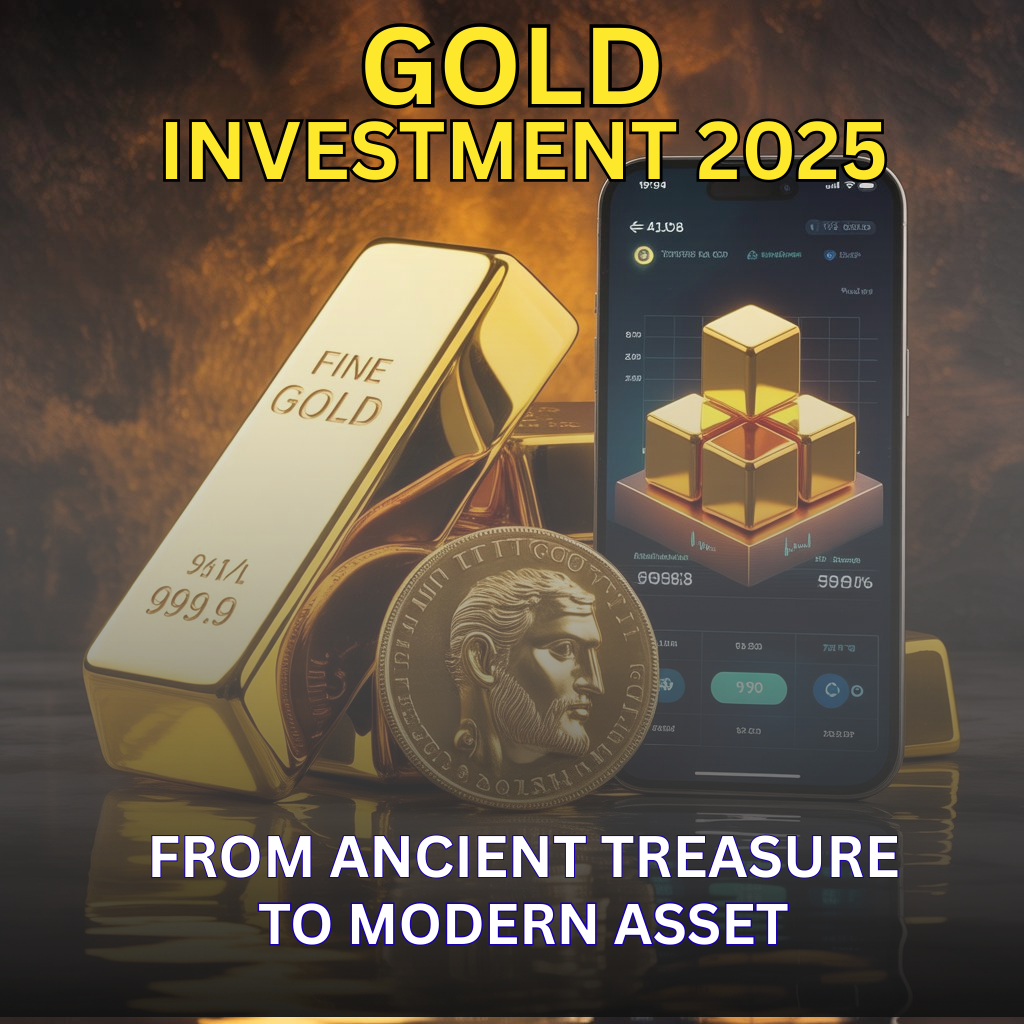
Gold Investment 2025: From Ancient Treasure to Modern Asset
The history of gold investment is as old as civilization itself. For centuries, societies across the world have valued gold not only as a symbol of wealth and power but also as a reliable form of currency and security. Today, gold remains a critical financial asset, bridging the gap between its historic role as an ancient treasure and its importance in modern financial markets. This article explores the fascinating journey of gold from antiquity to the digital investment age.
The Ancient Fascination with Gold
Gold in Early Civilizations
Gold’s allure began thousands of years ago. Ancient Egyptians used gold for jewelry, trade, and even in religious rituals, considering it a symbol of eternal life. Similarly, the Romans minted gold coins, making it the foundation of their economy.
Gold as a Symbol of Power
Throughout history, monarchs and empires stored vast reserves of gold to showcase their dominance. From Aztec temples to Byzantine palaces, gold became synonymous with prosperity and stability.
Gold in the Middle Ages and Renaissance
The Role of Gold in Trade
During the Middle Ages, gold helped facilitate international trade. European merchants relied on gold coins for safe and trusted transactions.
Gold Rush and Exploration
The search for gold drove explorers during the Renaissance. Expeditions to the Americas were often fueled by dreams of discovering golden cities, shaping global trade routes and colonization.
Gold in the Modern Economy
The Gold Standard
By the 19th century, gold transitioned into a more formal role in the economy. Countries adopted the Gold Standard, backing their currencies with gold reserves. This system stabilized international trade and exchange rates until it was abandoned in the 20th century.
Gold as an Investment Asset
Today, investors buy gold not only in physical form (bars, coins, jewelry) but also through modern tools such as ETFs, digital gold, and futures contracts. Gold is seen as a “safe-haven” asset, especially during inflation, currency devaluation, or global crises.
Why Gold Remains Valuable in 2025
- Hedge Against Inflation – Gold protects investors from rising prices.
- Global Acceptance – Unlike paper currencies, gold holds universal value.
- Safe-Haven Asset – During wars, recessions, or financial instability, gold maintains trust.
- Portfolio Diversification – Investors use gold to balance risk in stocks and bonds.
The Digital Era of Gold
Gold ETFs and Digital Gold
With the rise of fintech, investors can now buy fractions of gold online without storing it physically. Digital platforms and gold-backed cryptocurrencies are making gold more accessible worldwide.
Future Outlook
Experts predict gold will remain a critical part of global finance. As new technologies emerge, gold may integrate into blockchain-based assets, combining its historic reliability with digital innovation.
FAQs About Gold Investment
Q1: Why is gold considered a safe investment?
Gold is stable in value and less affected by inflation or currency fluctuations, making it a safe-haven asset.
Q2: Is digital gold a good option in 2025?
Yes. Digital gold allows easy, secure investment without the need for storage, and it’s backed by physical reserves.
Q3: What is the difference between gold ETFs and physical gold?
Physical gold requires storage and insurance, while ETFs represent ownership without physical handling.
Q4: Does gold still outperform stocks?
Not always. Stocks offer higher returns, but gold remains more stable in times of economic uncertainty.
Q5: How much gold should an investor keep in their portfolio?
Experts recommend allocating 5–10% of your investment portfolio to gold for risk diversification.
Conclusion
From the ancient treasure of pharaohs and emperors to a modern financial asset, gold has stood the test of time. It has played a key role in trade, wealth, and investment strategies for thousands of years. In 2025, gold remains one of the most reliable ways to preserve value and protect wealth.
👉 Whether physical or digital, gold continues to shine as a bridge between history and the future of global finance.
Related : Writozy

