
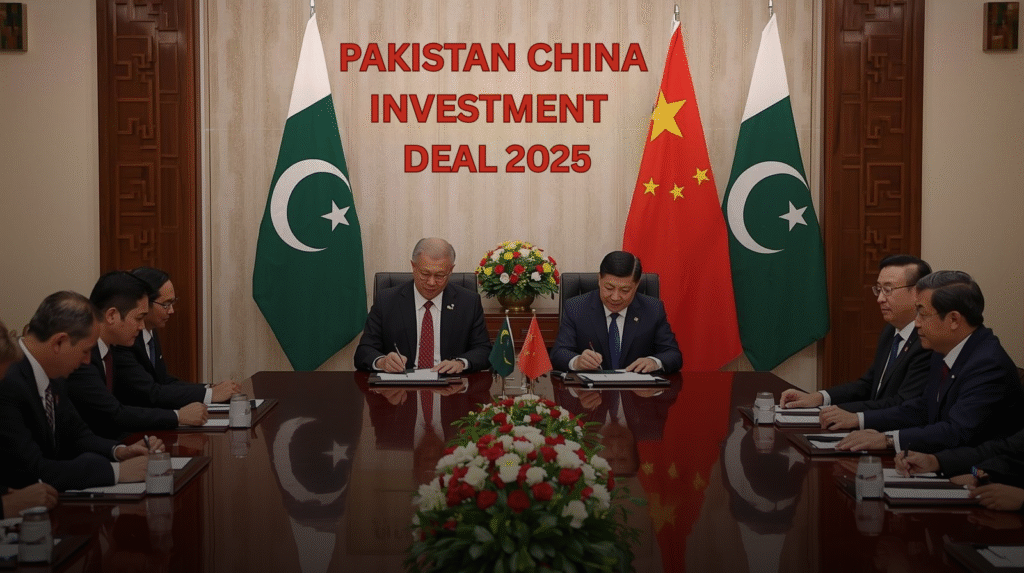
China-Pakistan $8.5 Billion Investment Deals
In a landmark development, Pakistan has signed $8.5 billion investment deals with China aimed at strengthening bilateral economic cooperation and accelerating growth under the China Pakistan Economic Corridor (CPEC) framework. The agreements, finalized in 2025, cover key sectors including energy, infrastructure, technology, and agriculture. This move is being hailed as a significant step toward boosting Pakistan’s economy and further cementing the time-tested friendship between the two nations.
The Scope of the $8.5 Billion Deals
Energy and Infrastructure at the Core
A large portion of the agreements will be directed toward energy and infrastructure projects. Pakistan has long faced challenges of energy shortages and outdated infrastructure. The new deals include:
- Renewable energy plants (solar and wind projects)
- Expansion of power grids to rural areas
- Construction of highways and rail networks connecting Gwadar to northern regions
These investments aim to reduce Pakistan’s energy crisis while improving regional connectivity.
Technology and Digital Economy
China will also assist Pakistan in boosting its digital economy. Agreements include:
- Setting up technology parks in Islamabad, Karachi, and Lahore
- Collaboration on 5G infrastructure and AI development
- Training programs for Pakistani youth in IT and advanced software development
This digital push is expected to empower Pakistan’s freelancing industry, which is already one of the fastest growing in the world.
Agriculture and Trade Expansion
Agriculture remains the backbone of Pakistan’s economy. Under these agreements, China will invest in:
- Modern irrigation techniques
- High-yield seed technology
- Cold storage facilities for exports
Additionally, trade agreements will make it easier for Pakistani goods to access the massive Chinese market, potentially reducing Pakistan’s trade deficit.
Strategic Importance of CPEC and Beyond
The China-Pakistan Economic Corridor (CPEC), launched in 2015, has been the cornerstone of Pakistan-China relations. These new deals expand the scope of CPEC, taking it beyond traditional road and energy projects into digital innovation and agricultural modernization. Experts believe this will transform Pakistan into a major economic hub in South Asia.
Economic Benefits for Pakistan
Pakistan’s economy has struggled in recent years due to inflation, debt, and a lack of foreign investment. The $8.5 billion investment provides much-needed relief by:
- Creating thousands of new jobs
- Boosting industrial growth
- Improving export competitiveness
- Enhancing infrastructure and logistics
This economic stability could also attract further foreign investors from the Middle East, Europe, and beyond.
Political and Diplomatic Implications
Strengthening China-Pakistan Ties
The deals are more than just economic — they reinforce the diplomatic relationship between Beijing and Islamabad. China has consistently supported Pakistan on regional and global platforms, and these investments highlight Beijing’s trust in Pakistan’s long-term potential.
Regional Balance of Power
Analysts suggest that such massive investments could shift the regional balance of power. With India and the U.S. strengthening ties, Pakistan’s growing economic partnership with China signals its alignment in the evolving global order.
Challenges Ahead
Despite the optimism, challenges remain:
- Ensuring transparency in project execution
- Avoiding excessive reliance on foreign loans
- Balancing relations with other regional partners
- Maintaining political stability to attract further investment
Addressing these challenges will be crucial for Pakistan to fully benefit from this historic deal.
Global Reactions
The announcement has drawn international attention. Regional players like Iran and Turkey have welcomed the move, seeing opportunities for enhanced regional connectivity. Meanwhile, Western analysts remain cautious, raising concerns about debt sustainability. However, Pakistan’s government insists that these projects are structured to ensure long-term economic benefits without overburdening the economy.
FAQs on Pakistan-China $8.5 Billion Deals
Q1: What sectors are covered under the $8.5 billion deals?
Energy, infrastructure, technology, and agriculture are the main sectors.
Q2: How will these agreements affect Pakistan’s economy?
They are expected to create jobs, boost trade, modernize agriculture, and stabilize Pakistan’s economy.
Q3: What role does CPEC play in these deals?
The new agreements expand CPEC beyond roads and energy into digital and agricultural sectors.
Q4: Are there risks of debt from these projects?
While some concerns exist, Pakistan claims the agreements are structured as investments rather than loans.
Q5: How will these deals impact regional politics?
They strengthen China-Pakistan ties and could influence South Asia’s geopolitical dynamics.
Conclusion
The $8.5 billion investment deals between Pakistan and China mark a turning point in their bilateral relationship. By focusing on energy, infrastructure, technology, and agriculture, the agreements aim to address Pakistan’s most pressing challenges while opening new opportunities for growth. If implemented effectively, these deals could transform Pakistan’s economy and position it as a key player in regional trade and development.
Related : Writozy

