
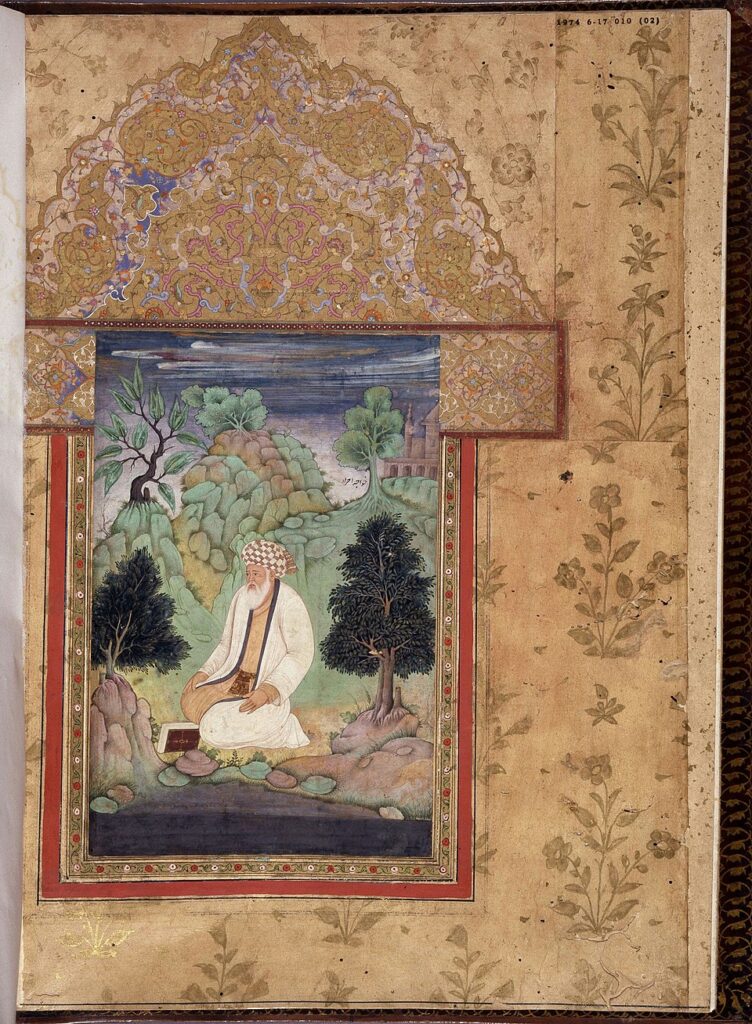
خواجہ
Makhdum-i-Azam (The Great Master)
مخدوم اعظم
Makhdum-i-Nura (The Great Light)
Hazrat Khoja Khavand Mahmud Shihab-ud-din
حضرت خواجہ خاوند محمود شہاب الدین
Ahmad Kasani
?
? – 1542 CE.
ایشان کلاں
Khoja Muhammad Amin
محمد امین
محمد اسحاق ولی
? – 1599 CE.
محمد یوسف
?CE.
آفاق خواجہ
Khoja Hidāyatullah
هداية اللہ
? – 1693/94 CE.
آفاق خواجہ
Khoja Hidāyatullah
هداية اللہ
? – 1693/94 CE.
خان خواجہ جان
Khoja Yahya
خواجہ یحیی
? – 1693/94 CE.
خواجہ دانیال
خواجہ اکباش
خواجہ احمد
خواجہ دانیال
The Zunghar Khanate under Tsewang Arabtan had in 1720 CE appointed Khoja Daniyal as administrator of Altishahr (or the Six Cities) but with Oirat overseers, thus making the Qara Taghliq as overall masters.
1720 – 1754 CE.
خواجہ یوسف
He would unite his brothers and the cities after an attempt was made on his life and his brother Khoja Chagan was kidnapped and imprisoned by the Oirats and chiefs of the cities who were against the authority of the Khojas. Yusuf was successful and in 1754–55 CE he freed the territory of Zunghar Khanate‘s hold.
1754 – 1757 CE
خواجہ برهان الدین
He along with his brother Khan Khoja rebelled against their Oirat and subsequently Qing dynasty Chinese overlords. But were eventually driven out of the region to Badakhshan where the ruler Sultan Shah killed them both. Kashghar was annexed as an integral part of the Chinese Empire under the Provincial Governor of Ili (region around Ili River). In this war four of the sons of the Aq Taghliq family were killed in fight and two were taken prisoners to Beijing for execution there. Only one son of Khoja Burhan-ud-din escaped; His name was Khoja Sa’adat Ali commonly called Sarimsak. He had escaped to Khanate of Kokand. He had three sons there; Yusuf Khoja who lived at Bukhara then there was Bahauddin and lastly Jahangir Khoja who would raise a rebellion against the Chinese in 1825 CE.
1758 CE.
خواجہ ضیاء الدین آخوند
He was from Tashmalik or Tashbaligh aka stone town to the west of Kashghar. He rebelled and with a party of Kyrgyz raided the Chinese outposts. He was soon captured and executed but his son Ashraf Beg carried on the war till he shared the same fate. His young brother, however, was sent to Beijing where he was executed on attaining full age.
1816 CE.
خواجہ جہانگیر
Syed Jahangir Sultan
سید جہانگیر سلطان
With the help of his Khanate of Kokand and Kyrgyz allies he took Kashgar in 1825.On the fall of Kashghar the people of Yangihissar, Yarkand and Khotan rose simultaneously and massacring the Chinese everywhere razed their forts and joined the service of the Khoja. But the Khoja immediately ran into trouble with his allies from Khanate of Kokand and they began to fight amongst themselves. By September, 1827, the Chinese collected in Aksu an army of 70,000, under command of military governor of Ili, Chang Ling, and in January, 1828, moved against Jahangir Khoja. He was defeated at the Battle of Yangabad and fled in despair till his own Kyrgyz allies fearing the Chinese, handed him over to them. He was taken to China and Daoguang Emperor was pleased of the Chinese success had the Khoja first tortured and then executed. The Chinese recovering possession of the revolted cities re-established their authority by numerous executions and tortures and confiscations and by the transportation of twelve thousand Muslim families from Kashghar region to Ghulja where they were settled as serfs under the name of Taranchi or those who sweat i.e. laborers.
1825 – 1828 CE.
خواجہ یوسف
Muhammad Ali Khan, the Khan of Kokand had recently annexed Kyrgyz territories and now decided in 1829 to attack the Chinese. For this purpose he invited Yusuf Khoja the elder brother of Jahangir Khoja from Bukhara and set him on the throne of his ancestors. Yusuf took the field in September 1830 with a force of 20,000 men mostly Andijan and Tashkent troops with some Karatigin levies and Kashghar refugees all under the command of Mingbashi Haq Quli Beg, a brother in law of Muhammad Ali Khan. The Chinese with 3,000 men advanced to oppose them but were defeated at Mingyol and the invaders pushing on seized Kashghar where Yusuf was at once set on the throne. Yangihissar, Yarkand, Khotan and Aksu up to the Muzart Pass quickly fell into his possession and the Chinese as before were everywhere massacred while the arrival of their troops from Ghulja was delayed for want of carriage. This advance of the Kokand army roused the hostility of Emirate of Bukhara against Andijan and Muhammad Ali Khan to avert the attack threatened by Nasr-Allah Khan bin Haydar Tora at once recalled his General Haq Quli Beg and Yusuf unable to hold his position unsupported amongst the fickle Muslims of Kashghar returned with him in November or December after a rule of only ninety days.
1830 CE.
ظہور الدین
1832 – 1846 CE.
(Revolt of the Seven Khojas)
It was conducted by that number of the members of the Aq Taghliqs. The eldest of these was Ehsan Khan Khoja commonly called Katta Tora or Great Lord and amongst the others were Khoja Buzurg Khan, Khoja Wali Khan, Khoja Kichik Khan and Khoja Tawakkul Khan all of whom subsequently figured in the conquest of the country by Yaqub Beg Atalik Ghazi.
1846 CE.
خواجہ ایشان خان
Katta Tora now assumed the government in Kashghar and appointed the others to the surrounding towns and settlements. He and his kinsmen began to pillage the houses of the government officials appointed by the Chinese and seizing their wives and daughters to stock their harems at once abandoned themselves to a course of unbridled licentiousness and debauchery their troops the while besieging the Chinese garrison shut up in the Mangshin. But within 75 days the Chinese arrived and defeated the Khojas at the Battle of Kok Rabat.
1846 CE.
احمد وانگ
1846 – 1857 CE.
خواجہ ولی خان
During 1855–56 Khoja Wali Khan and his brother Khoja Kichik Khan made several attempts to invade Kashghar but on each occasion were repulsed at the frontier pickets owing to their numerical weakness. In the spring on 16 May 1857, however, Khoja Wali Khan after performing the prayers of Ramadan set out from Kokand with seven Kashghar emissaries and a small band of trusty adherents to carry out a preconcerted enterprise against the Chinese. They arrived at the Ocsalar Fort belonging to Kokand on the Ush-Turfan and Kashghar road at night and surprising the little garrison killed the commandant and won over the soldiers to join the Khoja. Gradually his ranks swelled. At the same time some scouts sent out by the Chinese were captured and brought to Wali Khan who inaugurated his bloody career by at once striking off their heads with his own hand. He then pushed on and crossing the Kizil ford surprised the picket there as they slumbered under the effects of their opium pipes and slew every soul of them and at dawn appeared before the Kum Darwaza or Sand Gate on the south side of the city of Kashgar. He took the city and was welcomed as Buzurg Khan Tora. In the confusion Ahmad Wang the Muslim governor on the part of the Chinese with a few others escaped by the opposite gate and took refuge in the Mangshin or Yangishahr with the Chinese garrison. He began to consolidate his rule and sent commanders to take remaining Chinese forts. But the Chinese relief force rescued the besieged and recovered lost territories forcing Wali Khan to flee but was captured and brought before Muhammad Khudayar Khan, the Khan of Kokand. And thus after a rule of only a 115 days in September, 1857 ended the last of the Khoja revolts.
May – September 1857 CE.

