
• Railways minister says delays caused by regional instability, administrative issues to be resolved before relaunch
• Says Pakistan also plans to connect with Kazakhstan via Chaman under new agreement
• Rohri-Karachi track rehabilitation to start in July next year; upgraded Shalimar Express to begin running from 7th
LAHORE: The government has decided to revive the Islamabad–Tehran–Istanbul (ITI) freight train from December 31, subject to the finalisation of ongoing discussions regarding tradable goods and the resolution of administrative, logistical, and operational issues.
The government is also set to sign an agreement soon to connect Pakistan with Kazakhstan through a rail network via Chaman, according to Federal Minister for Railways Muhammad Hanif Abbasi.
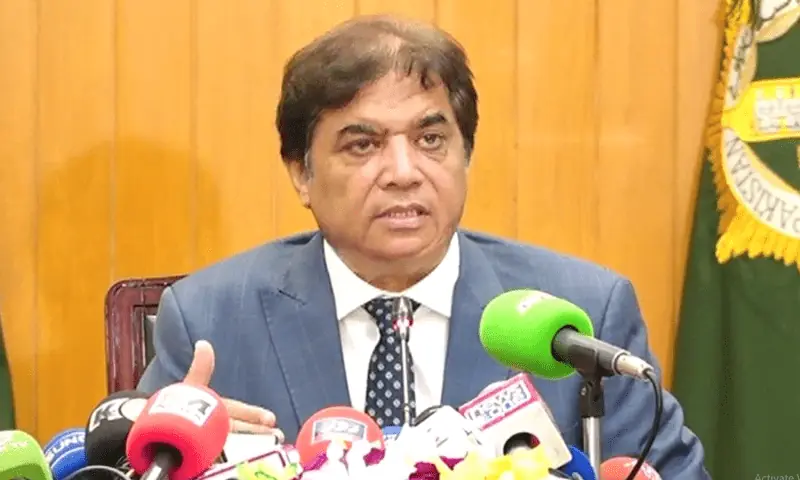
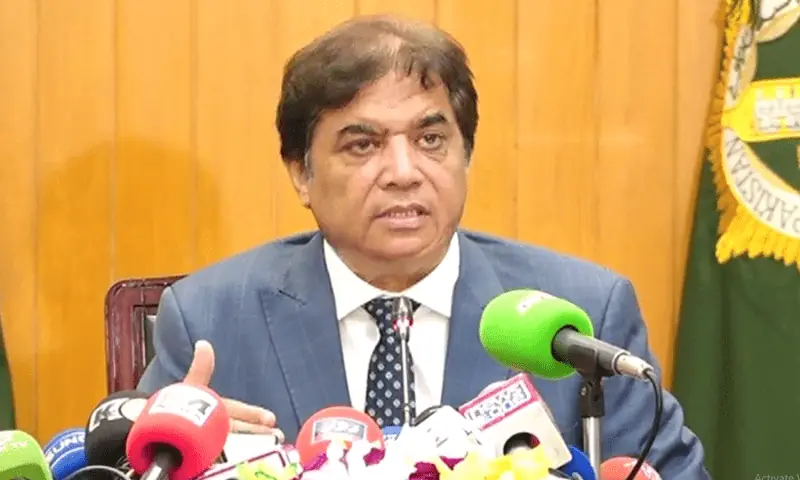
“We wanted to revive the ITI train earlier, but it was delayed because of the war in the region involving Israel. Now, we plan to resume ITI train operations from December, depending on the finalisation of trade arrangements — what will be exported and imported between Turkiye and Pakistan. The trade ministers are working on it,” Mr Abbasi told journalists at a press conference at the Pakistan Railways (PR) Headquarters on Sunday.
“There are some other issues as well, which will also be addressed. However, our main focus is to resume the ITI train service from December 31,” he added.
The ITI train service was revived on December 21, 2021, after nearly a decade, with trains reaching Turkiye in January 2022. It operated until August that year, with goods transferred to wagons compatible with Iranian and Turkish rail gauges.
The ITI operation was suspended again due to various administrative and operational issues. Although the government planned to revive it in 2023, the effort was hindered by the devastating floods that year, despite the restoration of the rail link between Punjab, Sindh, and Balochistan in April 2023.
Additionally, the main Turkish freight forwarder associated with the ITI operations refused to work with Pakistani freight companies due to delayed payments, but later agreed to resume operations directly with Pakistan Railways, the concerned PR officials showed little interest in resolving key issues. This delay hampered efforts to strengthen bilateral trade with Turkiye.
Major issues included a lack of service quality — such as delays in departures and arrivals, inefficient loading and unloading, slow customs clearance, and weak security measures. The high tariff and freight charges were also considered unaffordable for the business community. Consequently, operations slowed significantly in July 2022 and came to a complete halt in August after floods in Balochistan and Sindh submerged railway tracks and caused the collapse of the 140-year-old Hirok Bridge, the only link connecting Quetta with Dozan and beyond.
Speaking about regional connectivity, the minister said that an agreement with Uzbekistan had already been signed, while another with Kazakhstan would soon follow. “We have a rail track up to Chaman, from where we can access Kazakhstan, other Central Asian states, Russia, and eventually Europe,” he said.
Mr Abbasi revealed that the rehabilitation of the 500-kilometre Rohri–Karachi track is being planned with Asian Development Bank funding. Investments are also being arranged for the Rohri–Peshawar section. “The groundbreaking for the Rohri–Karachi track rehabilitation is expected to take place in July next year,” he added.
He said the Karachi Railway Station had been modernised and expanded to double the size of the Lahore Station. The upgraded Shalimar Express is expected to be launched on November 7, followed by the Awam, Allama Iqbal, and Rehman Baba Express trains in the coming months.
Mr Abbasi said PR had earned an additional Rs4.5bn through the outsourcing of luggage vans and express cargo trains.
Published in Dawn, October 27th, 2025

