
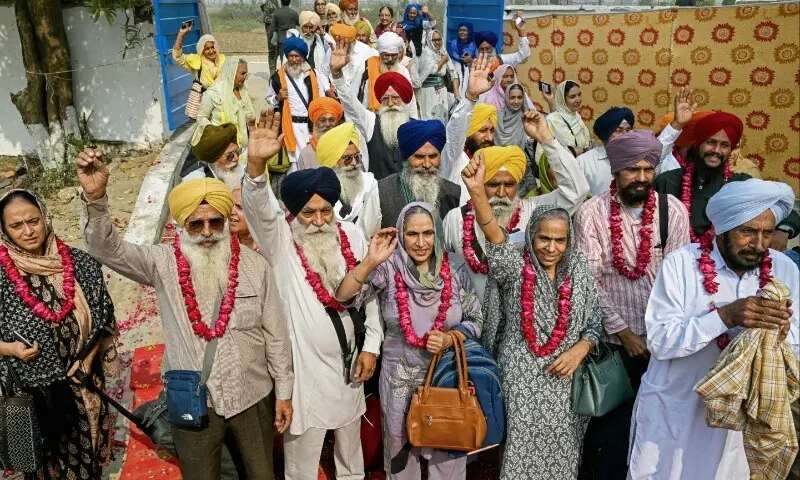
Pakistan on Tuesday welcomed dozens of Sikh pilgrims from India, AFP journalists saw, in the first major crossing since deadly clashes in May closed the land border between the nuclear-armed neighbours.
More than 2,100 pilgrims were granted visas to attend a 10-day festival marking the 556th birth anniversary of Guru Nanak, founder of the Sikh faith, Pakistan’s High Commission (embassy) in New Delhi said last week.
Tensions remain high between Islamabad and New Delhi after the worst fighting since 1999 took place in May. The Wagah-Attari border — the only active land crossing between the two countries — was closed to general traffic following the conflict.
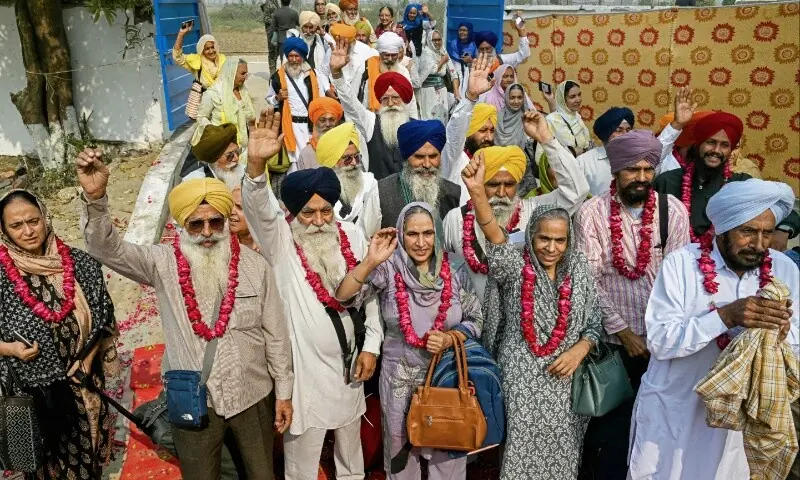
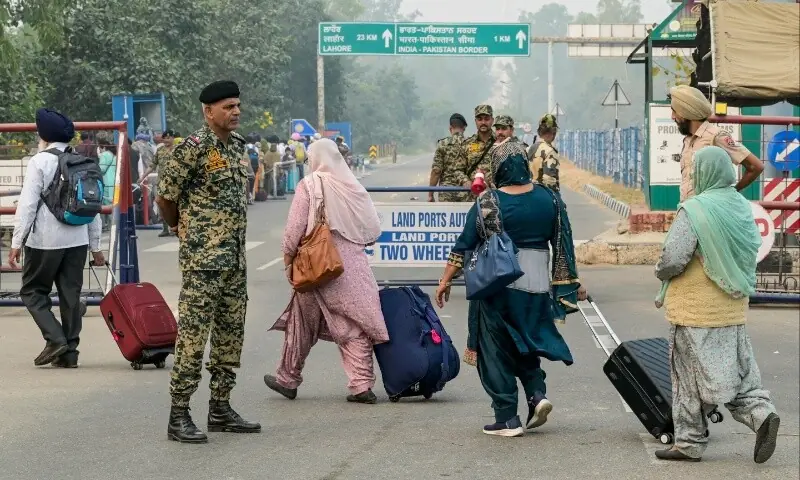
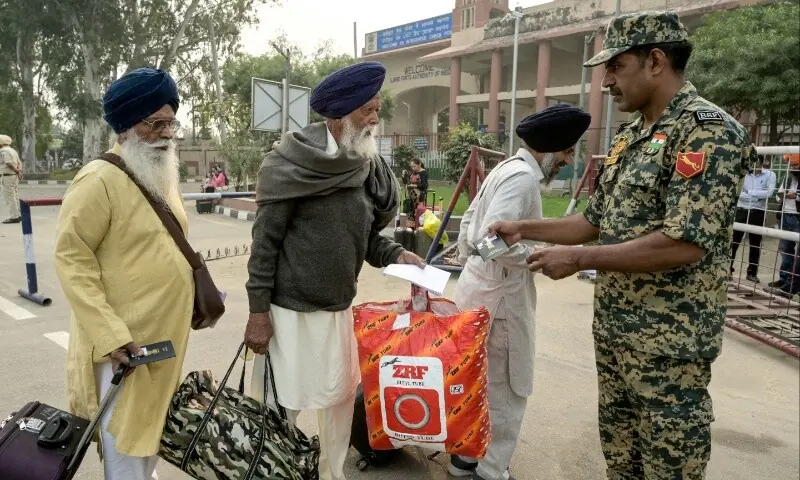
Pilgrims queued up on the Indian side of the border on Tuesday morning, some carrying their luggage on their heads, as the Indian Border Security Force looked on.
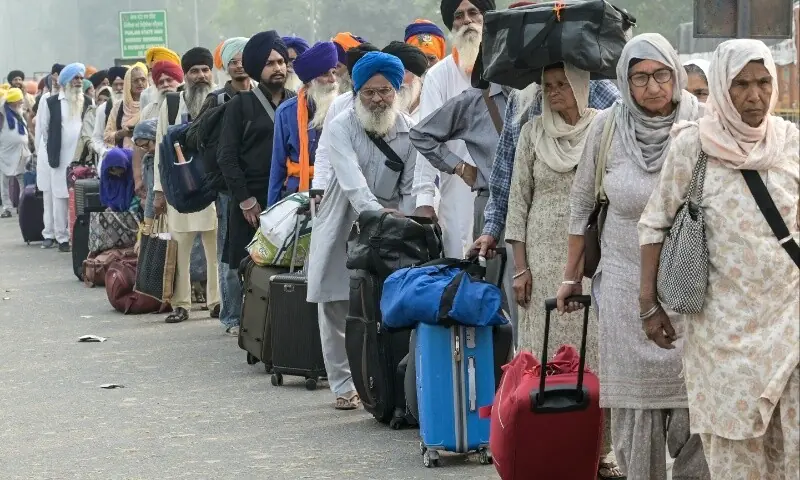
AFP journalists on the Pakistani side of the Wagah-Attari border saw dozens of them entering Pakistan.
They were received by Pakistani officials who presented them with flowers and showered them with rose petals.
Indian media reported that around 1,700 were due to cross into Pakistan, although there was no immediate official confirmation from Indian authorities.
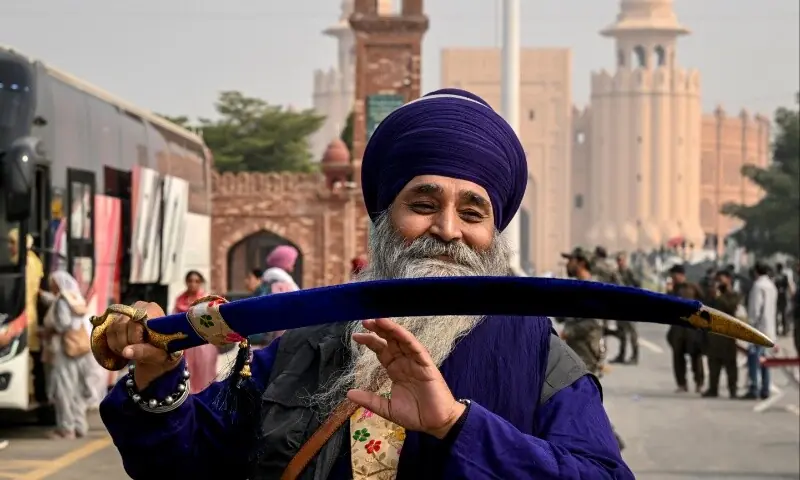
The pilgrims will gather on Wednesday at Nankana Sahib, Guru Nanak’s birthplace, about 80 kilometres (50 miles) west of Lahore by road, and later visit other sacred sites in Pakistan, including Kartarpur, where the guru is buried.
Pakistan’s High Commission had said last week its decision was consistent with efforts to promote “inter-religious and inter-cultural harmony and understanding”.
Indian newspapers reported Saturday that the government would allow “selected” groups to travel to Pakistan.
The Kartarpur Corridor, a visa-free route that opened in 2019 that allows Indian Sikhs to visit the temple without crossing the main border, remains closed since the conflict.
The four-day clashes between the arch-rivals broke out in May after New Delhi, without any evidence, accused Islamabad of backing an attack targeting tourists in Indian-administered Kashmir on April 22, claims Pakistan denied.
Sikhism is a monotheistic religion born in the 15th century in Punjab, a region spanning parts of what is now India and Pakistan.
The frontier between the two countries was a colonial creation drawn at the violent end of British rule in 1947, which sliced the subcontinent into Hindu-majority India and Muslim-majority Pakistan.
While most Sikhs migrated to India during partition, some of their most revered places of worship ended up in Pakistan, including the shrines in Nankana Sahib and Kartarpur.
Header Image: Indian Sikh pilgrims wave as they head to Pakistan through the India-Pakistan Wagah border in Wagah on November 4, 2025, on the eve of celebrations marking the birth anniversary of Guru Nanak, founder of Sikhism. — AFP/ Narinder Nanu

