
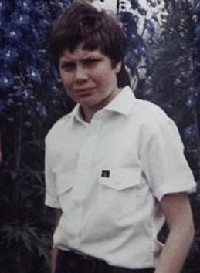
Unsolved 1979 case of 15-year-old who disappeared from London
Martin Duncan Allen (19 October 1964 – disappeared 5 November 1979) was a British secondary school student who disappeared while travelling home from Central Foundation Boys’ School upon the London Underground transport network on 5 November 1979. He was last definitively seen alive at King’s Cross St Pancras tube station at approximately 3:50 p.m. walking toward the Piccadilly line platform, although subsequent eyewitness statements indicate Allen may have travelled—willingly or otherwise—to Earl’s Court tube station in the company of an adult male.
Allen is strongly suspected to have been abducted, possibly by a member or members of a paedophile ring, although no definitive suspect has ever been identified.
Despite an intense contemporary police investigation and extensive media coverage devoted to Allen’s disappearance, no individual has ever been charged with his abduction, and Allen’s ultimate fate remains unknown. Although officially a cold case, Allen’s disappearance has been subject to periodic review. The case remains open.
Martin Duncan Allen was born in Islington, London, on 19 October 1964, the youngest of four sons born to Thomas and Eileen (née Clark) Allen.[1] His father was a chauffeur, and his mother a secretary at Tufnell Park Primary School. The family were working class and close-knit, and lived in a council flat in Hornsey in North London.[2]
Thomas and Eileen raised their sons impartially, and placed an emphasis upon their children’s education. The family frequently socialised together, with the brothers frequently spending weekends ice skating at Alexandra Palace.[3]
In 1976, Thomas Allen gained prestigious employment as the personal chauffeur to the Australian High Commissioner, Sir Gordon Freeth.[4][5] Shortly thereafter, the Allen family moved into a five-bedroom grace-and-favour cottage in the grounds of the Australian High Commission in Kensington.[6] Via this employment, the family’s socioeconomic status improved. Their new neighbours—with whom the family became affable—included the De Beers jewellery family, and Allen and his brother Kevin (18 months his senior) earned a weekly sum of £5 (the equivalent of approximately £25 as of 2025[update])[7] by cleaning the commissioner’s imported fleet of Ford Fairlanes every Saturday.[2][5] Politicians such as Margaret Thatcher and Edward Heath were regular visitors to the Australian High Commission and according to Kevin Allen, senior political figures and other notable and affluent individuals regularly socialised within the grounds of the Australian High Commission, recollecting in 2015: “There were garden parties over the fence from us; Thatcher knew my Dad to say hello to.”
Allen attended the Central Foundation Grammar School in Old Street, a distance of approximately 6 miles (9.7 km) from the family’s Reston Place cottage. As such, he frequently travelled to school via the London Underground transport network, alighting at Old Street station.[9] Although described as a shy boy, he was an intelligent pupil, with a particular flair for French, mathematics, and drawing.[2] By his fifteenth birthday, Allen was 5 feet 0 inches (1.52 m) in height, and looked slightly younger than his years. His hobbies included photography, bicycling, drawing, and model railways.[3] He also held a passion for cars.[10]
On Monday 5 November 1979,[11] Allen travelled to school on the London Underground with his 17-year-old brother Jeffrey. The brothers travelled upon the Circle line from Gloucester Road tube station to King’s Cross St Pancras tube station, where they transferred to the Northern line before alighting at Old Street station. The brothers arrived at school shortly before 9 a.m.[12]

By all accounts, Allen’s day at school was unremarkable, and he finished school at 3 p.m. He and a friend named Ian Fletcher then travelled home from school together via the London Underground. Fletcher later informed investigators he and Allen parted company at King’s Cross St Pancras tube station, and that he had last seen his friend descending an escalator en route to the southbound Piccadilly line platform at approximately 3:50 p.m. after Allen had simply said “See ya tomorrow” to him before Fletcher himself had walked toward a separate platform.[13][14] Allen was wearing his school uniform and carrying a distinctive yellow schoolbag inscribed with the word “Astral”. Fletcher was adamant Allen had been alone when descending the escalator.
In addition to a lunchbox, PE kit, schoolbooks and stationery, Allen’s schoolbag contained a new transformer for his model railway, and an item of woolen clothing his mother had knitted for her first grandchild and which Allen intended to give to his oldest brother, Robert, and his sister-in-law, Susan, that afternoon. He had initially intended to travel to their Holloway Road home immediately after leaving school, but had informed friends he would first have to return home in order to collect a £1 note to give to his sister-in-law as payment towards a digital watch he had recently purchased from her mail-order catalogue as he had forgotten the money.[2] The trip home, then to Holloway Road via the tube network would have taken Allen approximately twenty-five minutes.[12]
Allen failed to arrive either home from school, or at his brother’s Holloway Road home.[17] His disappearance was not noted for over twenty-four hours as his parents assumed that—as Allen typically did so each Monday—he had stayed overnight with his brother and sister-in-law and would return home the following evening.[n 1] His brother—who had no telephone—assumed Allen had simply returned to his parents’ home from school, possibly to attend Guy Fawkes Night celebrations at Battersea Park with their brother Kevin. As such, neither his parents nor any of his brothers realised he was missing until the following evening.[2]
When Allen failed to return home from school on the afternoon of 6 November, his parents contacted his best friend, Robert Toft, only to discover their son had not been at school that day. Eileen Allen then initiated phone contact with her oldest son, Robert, at 7 p.m., only to learn his brother had not arrived at his home the previous day and that he had assumed this was because of the Guy Fawkes Night celebrations.[2] After telephoning several of Allen’s other friends only to learn they had not seen her son since the previous day, Thomas and Eileen Allen then called the Metropolitan Police to report their son missing.[2]
Initial investigation
[edit]
Police rapidly determined Allen’s disappearance was involuntary, and an intense manhunt was launched to locate him, with investigators strongly suspecting a “violent or sexual motive” behind the abduction.[13] Upon receiving several eyewitness reports of an adult male likely seen in his company upon the London underground, the manhunt would evolve to also identify the individual with whom he had been seen. Detective Chief Inspector David Veness was assigned overall command of the investigation, and numerous officers were assigned full-time to the case.[18] Extensive media publicity was devoted to the manhunt, with the Australian High Commissioner, Sir Gordon Freeth, also offering a financial reward for any information leading to Allen’s whereabouts.[3][n 2]
Investigators initially focused their search for Allen in North London, with officers conducting extensive searches in areas of interest such as vacant land and derelict properties in and around Holloway, King’s Cross, and around Allen’s home and school. These searches failed to yield any clues. Officers also conducted door-to-door inquiries in and around both Earl’s Court and West Brompton in addition to questioning both members of the gay community and members of the public traveling upon the tube network.[12] Numerous suspects, including several known sex offenders, were questioned but eliminated from the inquiry.[19]
Initial media reports state the last confirmed sighting of Allen was made by Ian Fletcher as he observed Allen descending the elevator to the southbound Piccadilly line platform at King’s Cross; however, later reports—allegedly corroborated by his brother Kevin—indicate Allen had returned home at approximately 5 p.m. to retrieve the money to give to his sister-in-law as payment towards his digital watch before quickly leaving the household.[2][n 3]

Televised reconstruction
[edit]
Four weeks after Allen’s disappearance, a televised reconstruction of his movements from Old Street station along the tube network was broadcast nationwide upon the BBC current affairs programme Nationwide;[10] this reconstruction resulted in police receiving six separate reports of sightings of a man “forcibly guiding a small boy, his hand on the back of the boy’s neck” onto a train at Gloucester Road tube station at 4:15 p.m. on 5 November,[20] approximately half an hour after Ian Fletcher had last seen Allen at King’s Cross station.[13][21] The train itself had been a Piccadilly line train bound for Earl’s Court station, and the boy had been dressed in a dark blue blazer emblazoned with a crest similar to that of Central Foundation Boys’ School. He had also been carrying a yellow schoolbag.[13]
Suspect description
[edit]
Each witness described the man as being in his thirties, and several reported he had been standing with his arm around the shoulder of the dark-haired boy, who closely resembled Allen.[18] The boy had appeared distressed and both parties appeared to be nervous as they boarded the train.[21] One of the eyewitnesses had seen the man prod the boy in the back before stating: “Don’t try to run!”[22] The pair had travelled to Earl’s Court station where they alighted the train—the man again warning the boy against attempting to run.[23]
The witnesses described the man as reasonably well-spoken, Caucasian, in his thirties, approximately 6 feet 0 inches (1.83 m) in height and with distinctive blonde hair and a prominent moustache.[24] He had been wearing a mid-blue denim jacket and trousers.[13] A composite drawing of this individual was released to the media on 8 December.[20]
Renewed police efforts
[edit]
Prior to the BBC broadcasting of Nationwide, investigators had largely focused their search for Allen in and around North London; upon receiving and correlating the eyewitness accounts of Allen’s likely movements in the presence of a lone man, investigators concentrated their search for Allen and his abductor in West London, particularly within the vicinity of Gloucester Road and Earl’s Court.[12] The evident intimidation used in the abduction further solidified investigators’ belief the motive behind Allen’s abduction was sexual, and that he had likely been abducted by a member of a paedophile ring.[25]
The police effort to identify the man seen with Allen included what was described by sections of the media as London’s biggest ever house-to-house search,[10] with police visiting over 40,000 homes in and around Earl’s Court, and officers showing residents the composite drawing released to the media.[26] The identikit picture was also widely disseminated via police and media across London, although no member of the public was definitively able to identify the man depicted, and no individual came forward to identify himself as the individual seen with the schoolboy and thus eliminate himself from the inquiry.[21]
Potential link to subsequent murder
[edit]
On 29 July 1981, an eight-year-old boy named Vishal Mehrotra disappeared while walking home alone from a newsagents to his father’s Putney home after watching the wedding of Prince Charles and Lady Diana Spencer with members of his family.[27] Sections of his body were discovered in West Sussex the following year.[28] Mehrotra is also strongly believed to have been abducted and murdered by a paedophile ring.[25]
The proximity of Mehotra’s abduction at a location close to the tube network upon a weekday evening led investigators to tentatively link the two abductions, although investigators were unable to conclusively link the two cases.[29]
Despite an extensive and exhaustive contemporary police investigation, which saw over 50,000 members of the public questioned, over 600 witness statements collected, and over 200 persons of interest questioned and eliminated as suspects, investigators ultimately received few tangible leads of inquiry, and Allen’s disappearance remained unsolved.[23][30][31] The identity of the individual seen in his company was never established.[31][n 4]
By the mid-1980s, the case had largely became cold, and the Metropolitan Police formally closed the investigation, although senior investigators emphasised the fact Allen’s disappearance remained unsolved was not for a lack of police effort.[33][29]
Later investigations
[edit]
“I’ve only been to two fireworks displays in the past thirty years, even with my own kids—I can’t do it! I’ve often seen kids in parks who look similar to Martin, but I’ve never approached them. I’ve known for thirty-three years that Martin wasn’t ever going to come back … I just want the people who were responsible to be brought to justice.”
Allen’s family have long suspected their son and brother is deceased, that the motive behind his abduction had been sexual, and that the reason they had sensed a lackadaisical investigation into his disappearance in the immediate months and years following the event had been to protect either senior political individuals or others with influence who may have been involved in the abduction of their son and brother.
The scale of police efforts to locate Martin Allen—with accompanying publicity—had only increased in intensity five days after his disappearance,[34] and his brother Kevin would later recollect that “within a couple of months” of the event, the family had suspected that senior police were performing protocol procedures with little or no sincere effort to locate Martin;[35] his brother Jeffrey would allege in the 2010s that weeks after his brother’s disappearance, the family had been informed by a senior officer that “high-up people [were] involved” and that, for their own safety, they should cease pursuing and publicising the event or “someone will get hurt”.[33]
The family’s belief in this theory was strengthened in 2014 when they were contacted by the Metropolitan Police, then-investigating a paedophile ring with alleged connections to individuals within the upper echelons of British society including established Westminster political figures in addition to senior police officers and military personnel.[36] The family were contacted as a result of an investigation into historic child abuse cases occurring at the Elm Guest House in southwest London the 1970s and 1980s.[37][n 5] The operation itself—named Operation Fairbank—had been instigated to investigate the historical abuse of children both male and female,[38] although developments would indicate some perpetrators had also murdered at least three boys abused at the Elm Guest House—possibly including Allen and Vishal Mehrotra.[35][39]
In 2015, Operation Midland officers interviewed Carl Beech,[n 6] then known publicly under the pseudonym “Nick”, who claimed to have been repeatedly abused between the ages of seven and sixteen and who falsely claimed that he saw three boys being murdered by the child sex ring: one had been deliberately run over by a car; another strangled by a Conservative MP; and the third killed in front of a government minister.[6] Beech told police that former Conservative MP Harvey Proctor had been responsible for two of the murders and had been implicated in the third.[41] Proctor denied all allegations and did not recognise an E-FIT photograph of the boy when questioned.[41] The allegations were eventually proved false and Beech was proved to be a fantasist.[42] He was convicted of crimes related to lying to police in July 2019 and was jailed for eighteen years.[43]
In April 2015, police announced that the Cabinet Office had rediscovered four further files pertaining to the ongoing child abuse inquiries—some of which allegedly focused upon Westminster MPs. Investigators confirmed the files would be given to police, although they refused to publicly disclose either the titles of the files or their specific contents.[9]
The Allen case was reopened in 2009 in light of new information.[33] The officer leading the revived investigation admitted that police were baffled by the case and that, despite a massive initial inquiry and a having received a good response from the public, the case remained unsolved. The same year, police informed Allen’s brothers Kevin and Jeffrey that the files pertaining to the investigation had been destroyed in a flood.[6] That same year, Allen’s parents conceded they held no hope of seeing him alive again, believing him to have been abducted—likely by a paedophile ring.[44] Both parents added their wish simply to ultimately know just what had happened to their son and why prior to their own deaths,[23] with Eileen (then aged 81), stating: “We just want to know what happened so we can have some final closure. But of course it will never go out of our minds. My biggest wish is to have a meeting of the family and a remembrance service, not a funeral, but a service so we can put our memories away.”[46]
In 1998, an anonymous tip off resulted in Merseyside Police discovering a “shrine” dedicated to Allen at the home of an alleged child sex offender. This bizarre development prompted a brief resurgence of interest in the case, but no new leads were forthcoming.[47]
All theories pertaining to the precise circumstances behind Allen’s disappearance, the individual(s) responsible, and their motive ultimately remain unproven.[35]
- ^ Allen typically stayed overnight at the home of his oldest brother on Mondays as his mother attended weekly women’s evening fitness classes and his father’s employment typically resulted in his returning home late.[14]
- ^ The Australian High Commissioner’s offer of a financial reward for any information leading to Allen’s whereabouts failed to generate any solid public leads.[3]
- ^ Kevin Allen would later claim the reports of his having last seen his brother at approximately 5 p.m. were inaccurate.
- ^ Serial killer Dennis Nilsen was twice questioned with relation to Allen’s disappearance following his 1983 arrest; he denied any knowledge of or involvement in the abduction.[31] Police would also question child molester and murderer Sidney Cooke with regards to potential involvement, although he remained uncooperative.[32]
- ^ The Metropolitan Police had initiated a number of renewed investigations into child abuse allegations dating back over the previous thirty years in 2012. This had included a re-investigation of claims of systemic child abuse by an alleged child sex ring at Elm Guest House during the 1970s and 1980s.[33]
- ^ Operation Midland had been established by the Metropolitan Police in 2014 to investigate claims of historical child abuse dating between the 1970s and 2005 allegedly overlooked due to the perpetrators being influential individuals. The inquiry itself had been established due to developments pertaining to Operation Fairbank.[40]
- ^ “FreeBMD: Births: Dec. 1964”. freebmd.org.uk. 19 September 2001. Retrieved 16 October 2025.
- ^ a b c d e f g h Butter, Susannah (14 May 2015). “Martin Allen Mystery: How Case of London Teenager Missing for 35 Years Could be Linked to the Elm House Paedophile Ring”. Evening Standard. Retrieved 18 July 2018.
- ^ a b c d e Butter, Susannah (14 May 2015). “Martin Allen Mystery: How Case of London Teenager Missing for 35 Years Could be Linked to the Elm House Paedophile Ring”. Evening Standard. Retrieved 17 October 2025.
- ^ Foster, Jonathan (20 April 1986). “Detectives Pool Ideas as Girl’s Body Found”. The Observer. p. 2. Retrieved 17 October 2025.
- ^ a b “A Missing Boy and the High Commission”. The Australian. 31 January 2015. Retrieved 19 October 2025.
- ^ a b c Keate, Georgie (26 November 2014). “Paedophile Ring May have Killed Boy, 15”. The Times. Retrieved 12 May 2017.
- ^ “Bank of England Inflation Calculator”. bankofengland.co.uk. Bank of England. Retrieved 19 October 2025.
- ^ a b Parmenter, Tomi (6 March 2015). “Family Demands Names Of New Child Abuse Files”. Sky News. Retrieved 18 October 2025.
- ^ a b c “Why the Allens Remember the Fifth of November”. Daily Mirror. 3 April 1980. Retrieved 20 July 2018 – via wordpress.com.
- ^ Evans, Holly (4 December 2022). “Mystery of Schoolboy who Disappeared on the London Underground with Stranger”. MyLondon. Retrieved 29 October 2025.
- ^ a b c d “A Boy Who Disappeared”. The Illustrated London News. 29 November 1980. p. 29. Retrieved 20 October 2025.
- ^ a b c d e Sandell, Charles (9 December 1979). “Photofit Clue as Police Fear Lost Boy is Prisoner”. News of the World. Retrieved 20 July 2018.
- ^ a b Coffey, Susan (5 November 1984). “Missing Children”. Reading Evening Post. p. 4. Retrieved 26 October 2025.
- ^ “New Clues to Missing Boy’s Fate”. BBC News. 9 November 1998. Retrieved 12 May 2017.
- ^ a b “Missing Boy Seen With Man”. The Observer. 9 December 1979. p. 1. Retrieved 17 October 2025.
- ^ “Trust is a Two-Way Street”. The New Statesman (99 ed.). p. 954. Retrieved 6 November 2025.
- ^ a b “Allen: Missing Boy Seen With Man”. The Observer. 9 December 1979. p. 1. Retrieved 23 October 2025.
- ^ a b c “Parents’ Plea Over 1979 Abduction” (video). BBC News. 23 December 2009. Retrieved 12 May 2017.
- ^ Malton & Mulholland 2022, Ch. 8.
- ^ a b c “Parents Make 1979 Abduction Plea”. BBC News. 23 December 2009. Retrieved 12 May 2017.
- ^ “‘Thirty Years On, We Still Don’t Know who Abducted our Son’“. Evening Standard. 13 April 2012. Retrieved 22 October 2025.
- ^ a b Halliday, Josh (19 November 2014). “Father Claims Police Covered up Son’s Murder by Westminster Paedophile Ring”. The Guardian. Retrieved 2 November 2025.
- ^ “Police Quiz 40,000 in Hunt for Tube Boy”. The Evening News. British Newspaper Archive. 7 January 1980. Retrieved 9 November 2024.
- ^ “Vishal Mehrotra: Man Claims He Saw Murdered Boy After He Vanished”. BBC News. 9 May 2023. Retrieved 5 November 2025.
- ^ “Vishal Mehrotra: Police Scrapped Plans for Schoolboy Murder Appeal”. BBC News. 29 July 2021. Retrieved 2 November 2025.
- ^ a b Hart, Penny (7 March 1982). “Family Wait and Fear for News of Schoolboy Son”. Sunday Express. Retrieved 26 October 2025.
- ^ Sanders 2016, p. 15.
- ^ a b c “Parents of Boy Abducted 30 Years Ago Make Final Appeal”. The Daily Telegraph. 23 December 2009. Retrieved 12 May 2017.
- ^ Hale, Don (21 May 2016). “Cops Quiz Child Killer Sidney Cooke as They Reopen Case of Missing Boy”. The Daily Mirror. Retrieved 1 September 2016.
- ^ a b c d Sabin, Laura (26 November 2014). “‘Kidnapped Boy May Have Been Abused and Murdered by VIP Paedophile Ring,’ Say Police”. The Independent. Retrieved 7 July 2016.
- ^ Sandell, Charles (11 November 1979). “Fears in Hunt for Missing Boy, 15”. News of the World. Retrieved 30 October 2025.
- ^ a b c Miranda, Charles (27 November 2014). “Martin Allen’s Disappearance May be Linked to VIP Paedophile Ring that Allegedly Killed and Raped Boys”. News.com.au. Retrieved 27 October 2025.
- ^ Peachey, Paula (27 August 2015). “General Sir Hugh Beach Denies Paedophile Ring Involvement After Being Outed by Former Conservative MP Harvey Proctor”. The Independent. Retrieved 28 October 2025.
- ^ “Child Abuse Inquiry: Police Investigate Three Alleged Murders”. BBC News. 18 December 2014. Retrieved 29 October 2025.
- ^ “Freedom of Information Request: Operation Fairbank”. Metropolitan Police. 17 August 2023. Retrieved 4 November 2025.
- ^ Hickman, Martina (3 March 2013). “Police Failings Put Dozens of Children at Risk from Notorious”. The Independent. Retrieved 11 September 2022.
- ^ “‘Possible Homicide’ Examined in Historical Abuse Inquiry”. BBC News. 14 November 2014. Retrieved 30 October 2025.
- ^ a b Evans, Martin (9 February 2016). “Detectives Did Not Put Name of Boy Allegedly Murdered by VIP Paedophile Ring to Only Suspect”. The Daily Telegraph. Retrieved 7 July 2016.
- ^ Gillespie, James (29 April 2018). “Lord Janner’s Son Ready to Prosecute Sex Accuser ‘Nick’“. The Sunday Times. Retrieved 19 July 2018.
- ^ “Carl Beech Trial: ‘VIP Abuse’ Accuser Guilty of False Claims”. BBC News. 22 July 2019. Retrieved 25 July 2019.
- ^ Miller, Nick (19 December 2014). “Alleged Victim of VIP Paedophile Ring Martin Allen Lived on Grounds of Australian High Commission in London”. The Sydney Morning Herald. Retrieved 23 October 2025.
- ^ “Appeal 30 Years After Abduction”. Daily Express. 23 December 2009. Retrieved 29 October 2025.
- ^ “Shrine Found to Boy Missing for 19 Years”. The Independent. 19 November 1998. Retrieved 7 July 2016.
Cited works and further reading
[edit]
- Collins, James J. (1999). Law Enforcement Policies and Practices Regarding Missing Children and Homeless Youth. United States: Office of Juvenile Justice and Delinquency Prevention. ISBN 978-0-788-18639-4.
- Cooper, Paulette (1994). Reward!. New York City: Pocket Books. ISBN 978-0-671-87020-1.
- Crockett, Arthur (1990). Serial Murderers. New York City: Kensington Publishing Corporation. ISBN 978-1-558-17432-0.
- Davis, Liz; Duckett, Nora (2016). Proactive Child Protection and Social Work. Los Angeles: Sage Publishing. ISBN 978-0-857-25973-8.
- Fisher, Bonnie S.; Lab, Steven P. (2010). Encyclopedia of Victimology and Crime Prevention. Los Angeles: Sage Publishing. ISBN 978-1-412-96047-2.
- Gill, Anton (1984). Martin Allen is Missing. London: Corgi Press. ISBN 978-0-552-12466-9.
- Greene, Dr. Karen Shalev; Alys, Llian (2016). Missing Persons: A Handbook of Research. London: Routledge. ISBN 978-1-409-46802-8.
- Halber, Deborah (2014). The Skeleton Crew: How Amateur Sleuths Are Solving America’s Cold Cases. Cambridge: Cambridge University Press. ISBN 978-1-107-04145-5.
- Jenkins, Philip (1992). Intimate Enemies: Moral Panics in Contemporary Great Britain. New York: Aldine de Gruyter. ISBN 978-0-202-36692-0.
- Malton, Jackie; Mulholland, Hélène (2022). The Real Prime Suspect: From the Beat to the Screen. My Life as a Female Detective. London: Octopus. ISBN 978-1-913-06899-8.
- Pettem, Silvia (2017). The Long Term Missing: Hope and Help for Families. Maryland: Rowman & Littlefield. ISBN 978-1-442-25680-4.
- Shaw-Smith, Scott (2015). Vanishing Act – People Who Disappeared Mysteriously or Did They?. North Carolina: Lulu Enterprises Incorporated. ISBN 978-1-326-46952-8.
- Stewart, Erin (2021). The Missing Among Us: Stories of Missing Persons and Those Left Behind. New South Wales: NewSouth Publishing. ISBN 978-1-742-23679-7.

