
Defence Minister Khawaja Asif said on Friday that the talks between Pakistan and Afghanistan are “over” and have “entered an indefinite phase” as negotiators failed to bridge deep differences between the two sides.
Earlier, officials and sources said the talks stalled without any agreement. “The talks in Istanbul are deadlocked,” a senior security source told reporters, confirming that discussions had hit an impasse.
The third round of Pakistan–Afghanistan talks began on Thursday in Istanbul and was planned to continue for two days.
Pakistan’s delegation, led by Inter-Services Intelligence (ISI) Director General Lieutenant General Asim Malik, included senior military, intelligence and Foreign Office officials. The Afghan Taliban side was headed by General Directorate of Intelligence (GDI) chief Abdul Haq Waseq and included Suhail Shaheen, Anas Haqqani and Deputy Interior Minister Rehmatullah Najib.
The dialogue process was launched after border clashes in early October that left several soldiers and civilians dead on both sides. Following those clashes, Turkiye and Qatar stepped in to mediate.
The first round in Doha produced a fragile ceasefire, while the second, also in Doha, ended with only a general agreement to develop a mechanism for verifying compliance and a decision to continue talks.
The latest round was aimed at finalising the modalities of that verification and monitoring mechanism.
Reports from Istanbul suggest that the Pakistani delegation left for the airport after the talks broke down. There was no direct meeting between the two delegations on Friday. The sides had met face to face in the presence of Qatari and Turkish mediators the previous day.
For most of Friday, mediators engaged the Afghan delegation separately, relaying Pakistan’s concerns and demands. Pakistan’s Foreign Office (FO) spokesman, Tahir Hussain Andrabi, told reporters in Islamabad that the Pakistani delegation had presented its case in a “comprehensive and evidence-based manner”.
“The Pakistan delegation has handed over its evidence-based, justified, and logical demands to the mediators with a singular aim to put an end to cross-border terrorism,” Andrabi said. “They are now discussing Pakistan’s demands with the Afghan delegation point by point.”
Afghan negotiators, meanwhile, claimed that their own proposals were “logical and easily achievable” for Pakistan but described Islamabad’s demands as “unrealistic and aggressive,” suggesting they might serve as a pretext to create further complications.
According to a source familiar with the discussions, the Afghan side conveyed that “it is up to Pakistan’s own calculations to deal with the situation.”
A source in Istanbul described the late-evening atmosphere at Istanbul’s Conrad Hotel, where the talks were held, as “not positive.”
Information Minister Ata Tarar, who had declared a similar deadlock at the previous round before mediators salvaged a statement, said the “onus lies on Afghanistan to fulfill its long-standing international, regional, and bilateral pledges regarding control of terrorism — in which so far they have failed.”
“Pakistan shall continue to exercise all options necessary to safeguard the security of its people and its sovereignty,” Tarar said, echoing the Foreign Office spokesman’s earlier warning about Islamabad’s response in case of failure of the talks.
“All I can say is that, in any eventuality, we will protect the lives of our people and make sure that our civilians, our military forces, and our law enforcement agencies on the border are not killed by attacks emanating from Afghanistan,” Andrabi said.
Border clashes and talks
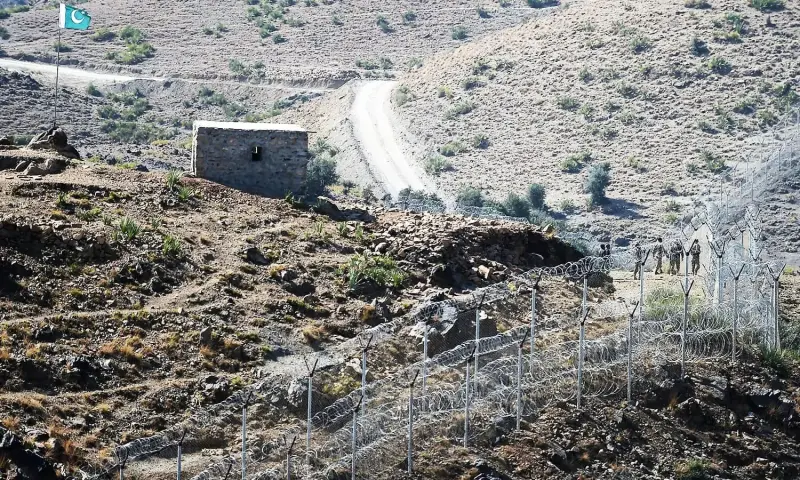
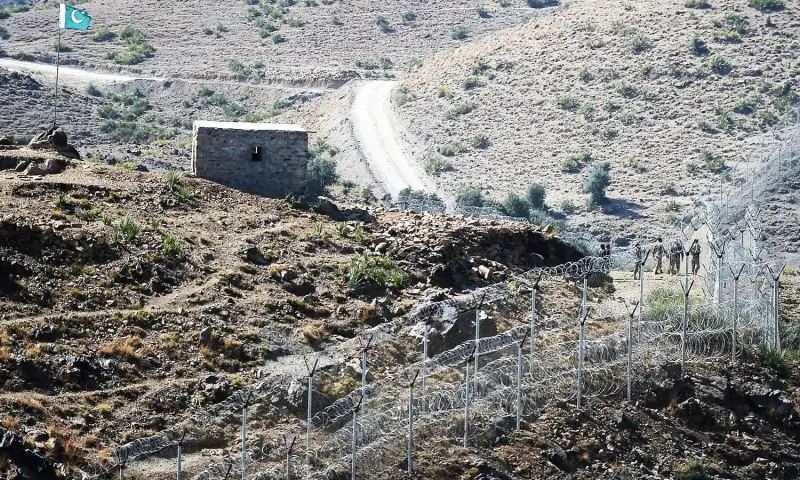
Talks between Pakistan and the Afghan Taliban follow weeks of shuttle diplomacy after deadly border clashes last month plunged relations between the two neighbours to their lowest point since the Taliban seized power in Kabul in 2021.
The hostilities began when an attack was launched on Pakistan from Afghanistan on the night of October 11. The attack had followed an allegation from the Taliban of airstrikes by Pakistan into Afghanistan — an accusation which Islamabad has neither confirmed nor denied.
For its part, Islamabad has long demanded that Taliban stop terror groups from using its soil against Pakistan. Taliban, however, deny the allegation of allowing terrorists to operate from Afghan soil.
Meanwhile, Pakistan continues to grapple with the issue of terrorism and has suffered multiple casualties among security forces in intelligence-based operations.
After the initial skirmish on October 11, multiple others took place along the Pakistan-Afghanistan border. Meanwhile, strikes by Islamabad also targeted Gul Bahadur group camps in Afghanistan.
A ceasefire was then agreed upon on October 15 in the evening, and eventually, the two sides came together for dialogue in Doha.
Since the skirmishes between October 11 and 15, Pakistan and Afghan Taliban representatives have held two rounds of talks — first in Doha and then in Istanbul — but a final agreement has not yet been achieved.
After the Doha talks, a temporary ceasefire continued to prevent border hostilities while the two sides committed to reconvene in Istanbul to work on mechanisms for lasting peace and stability between the two countries.
On October 25, the second round of talks between the two sides began in the Turkish capital. But, Information Minister Attaullah Tarar announced in a post on X on October 29 that the talks “failed to bring about any workable solution”. He also asserted that Pakistan would continue to take all possible measures to protect its citizens from terrorism.
However, mediators Turkiye and Qatar intervened and managed to salvage the dialogue process, with an October 31 joint statement released by Turkiye stating that “further modalities of the implementation will be discussed and decided” during a principal-level meeting in Istanbul on November 6.
For the third round, under the joint mediation of Turkiye and Qatar, delegations from both sides arrived in Istanbul on Wednesday.
The talks began yesterday, surviving a brief exchange of fire along the border that tested the shaky ceasefire.
Two people, including a woman, were killed on the Pakistani side in a cross-border exchange of fire at the Chaman-Spin Boldak crossing.

