
[[Category:1729 in Spain]]
[[Category:1729 in Spain]]
[[Category:1741 in Spain]]
[[Category:1741 in Spain]]
[[Category:1741 in Europe]]
[[Category:1741 in ]]
[[Category:1729 beginnings]]
[[Category:1729 beginnings]]
[[Category:1720s ships]]
[[Category:1720s ships]]
 |
|
| Name | Galicia |
|---|---|
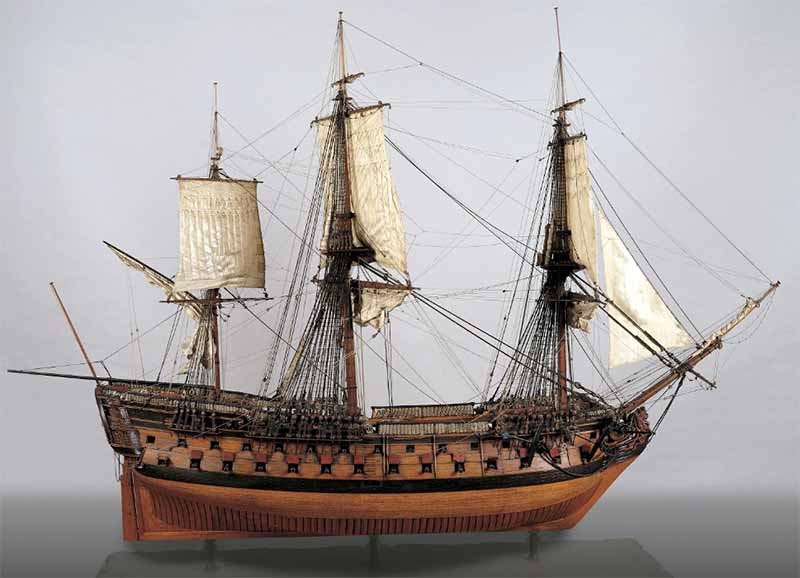
The Galicia, the first ship of the Spanish Navy to bear the name, was a two-deck ship of the line with gunports for 70 nominal guns,[2] although other sources list between 70 and 74 carried guns.[3][4] The ship was the lead vessel of the Galicia class. Like all Spanish Navy ships of the era with non-religious names, it was placed under the advocation of a saint, though there is no documentary evidence. According to British rating standards, the ship was classed as a third-rate ship of the line.[2] Its namesake refers to the former Kingdom of Galicia, part of the Crown of Castile.
Construction
The Galicia was built under the supervision of Lorenzo de Arzueta y Torres, who was entrusted with overseeing its condition.[4][5] The ship was launched on 28 July [O.S. {{{3}}}] 1729.[3] It was the first ship of the Navy built at this Galician yard. However, there is controversy: some authors argue that the first ship built there was the León, of the same class.
The design was by Cipriano Autrán, succeeding Antonio de Gaztañeta e Iturribalzaga (1656–1728).[3] The Galicia was one of nearly fifty ships built between 1724 and 1744, and was considered one of the seven “magnificent, of the Princesa type”, along with the Santa Ana, Reina, Príncipe, Princesa, León and San Carlos.
The ship was formally commissioned into the Spanish Navy on 26 April 1730.
Service history
In March 1730, the ship, under Alejandro Chatelein, transported troops from Cádiz to La Coruña, and from there to Barcelona in April. It sailed from Cádiz on 26 May with the ship Santiago and the frigate Fama bound for Barcelona. In July 1731, the ship was at Barcelona with a fleet of 18 ships of the line, 5 frigates and 2 dispatch boats of Esteban de Mari, marquis of Mari or Sr. Mary [sic], gathered for the expedition to Livorno under Miguel de Sada y Antillón, Count of Clavijo, with an armament of 70 guns and 500 men. It returned to Cádiz on 17 December. In 1732, the ship fought piracy and, in June 1732, joined Andalucía, Conquistador and León in the expedition to Oran, under Jacinto Serrano, Count of Bena Masserano. In October, it took part in the expedition against Naples and Sicily, under Clavijo.
In September 1733, the marquis of Ensenada, Zenón de Somodevilla, requested cables for the Galicia and other ships of Antonio Serrano’s squadron to be installed at the Cartagena Arsenal because there were no supplies at Cádiz.[13] The ship was placed in reserve in July 1736.
The ship returned to service at Ferrol with Santa Teresa, Santiago, San Carlos and the transport San Diego. It departed Ferrol on 18 October 1739 with San Carlos bound for Puerto Rico to take part in the War of Jenkins’ Ear. The ships reached Cartagena de Indias, where they were besieged by the Royal Navy. On 25 March 1741, the damaged ship was captured by the British and converted into a floating battery, held for just over a month.[14]
On 15 April 1741, her former Spanish crew attempted to scuttle the ship at Cartagena de Indias to block Boca Chica, but the British retained her. Eventually, anticipating withdrawal, the British sank her between 27 and 28 April 1741, as she was no longer usable.[14][4]
Service in the United Kingdom
The ship was briefly commissioned into the Royal Navy as HMS Galicia, serving as a floating battery, but ran aground. She was burned in May 1741 when the Royal Navy began its withdrawal from Cartagena de Indias.
See also
References
Bibliography
- Artiñano y de Galdácano, Gervasio (1920). Oliva de Vilanova (ed.). Arquitectura naval española (en madera). Bosquejo de sus condiciones y rasgos de su evolución. Barcelona.
{{cite book}}: CS1 maint: location missing publisher (link) - Fernández Duro, Cesáreo (1902). “XIII Orán y Nápoles (1728-1736)”. Armada española (1701-1758) (PDF). Vol. VI. Instituto de Historia y Cultura Naval – via armada.defensa.gob.es.
- Fernández Duro, Cesáreo (1902b). “XXI La obra de Ensenada (1746-1754)”. Armada española (1701-1758) (PDF). Vol. VI. Instituto de Historia y Cultura Naval – via armada.defensa.gob.es.
- Gómez Cañas, Santiago (2021). Historia de los navíos de línea españoles (1700-1850). Círculo Rojo. ISBN 978-841398357-8.
- Ocampo Aneiros, José Antonio (2021). “La historia marítima en el mundo” (PDF). Revista de Historia Naval. 39 (151). Madrid: Servicio de Publicaciones de la Armada. ISSN 2530-0873.
- Quintero González, José (2006). “La Carraca y La Habana. Aproximación al intercambio de pertrechos entre arsenales” (PDF). Revista de Historia Naval (93). Madrid: Servicio de Publicaciones de la Armada. ISSN 0212-467X.
- San Juan, Víctor (2015). “Jorge Juan y la Construcción Naval española en el siglo XVIII” (PDF). Dendra médica. 14 (2). ISSN 1889-8203.
- Vega Blasco, Antonio de la (2000). “La infraestructura naval en el Siglo de las Luces”. Revista de Historia Naval (71). Servicio de Publicaciones de la Armada. ISSN 0212-467X.
- Winfield, Rif; Tredrea, John M; García-Torralba Pérez, Enrique; Blasco Felip, Manuel (2023). Spanish Warships in the Age of Sail 1700–1860: Design, Construction, Careers and Fates. Barnsley, United Kingdom: Seaforth Publishing. ISBN 978-1-5267-9078-1.

