

This “think” page is devoted to great mysteries I have encountered in this world. Feel free to think along with me!
These are in no particular order, except for the final two sections, which will always come at the end. These mysteries are written as they recur to me.
Homestead, Florida’s Coral Castle
[edit]

Check out this quite probably related YouTube video. And here’s a YouTube search. Seems that lots of people think they’ve solved this mystery. But there are still anomalies that stand out.
I remember reading about Ed’s legendary move from Florida City ten miles north to Homestead. He hired a flatbed truck and driver, and he made the driver go around the corner while he himself loaded the heavy blocks onto the flatbed. When the driver returned a few minutes later, the blocks were loaded and ready to go. How did ol’ Ed do all this? This is a very puzzling mystery wrapped in an enigma!
Churches of Lalibela
[edit]

_Lalibela_Ethiopia_(2).jpg)
In Ethiopia, where I spent time with the U.S. Peace Corps, there are twelve (oops) eleven huge churches, Christian churches, that were carved out of solid rock. Instead of the story told in the WP article, I heard a somewhat different legend about these awesome churches. King Lalibela had his men begin work on these churches and asked the angels to work on them, also. His men worked in the daytime, and the angels worked during the night. The men would wake up each day and be astounded by the amount of work done overnight by the angels. The legend is that it took only one week, seven days, to construct all of the churches! Well, at least that is what you hear while you’re actually there in Ethiopia.
Why were these churches built this way? and why eleven? I have suspected for some time now that there were actually twelve of these churches constructed all at about the same time. One church that houses the Ark of the Covenant, which was taken there by members of the Knights Templar, has been filled in to protect the Ark and other religious relics. The 12th church and the Ark will be found soon, rediscovered for all to ponder. So the churches were built this way in order to very effectively hide the Ark of the Covenant and other precious relics from the unworthy eyes of those who would not appreciate their true worth.
These churches are an example of many great and mysterious ancient constructions throughout the world. The Great pyramids of Egypt and elsewhere, the Sphinx and other similar wonders give many people pause.
-
Gray is truth and the truth is gray.

Why are we here? Is our presence here governed by determinism or by free will? Why can’t we rid ourselves of stuff like murder, thievery, human trafficking and the like (evil stuff)? Evil is with us because it is a necessity. People measure good by its contrast to evil. It’s ironic to think that without evil, there would be no good, either. So why can’t we get rid of the both of them, good and evil? Is there more to it than just yin and yang?
For more than fifty years I have believed and accepted the following instruction… “There’s no such thing as black or white; gray is truth and the truth is gray.” That’s okay, because for almost as long and to give you a bit of context, I have also accepted that, “When a person learns to read with understanding, they automatically become a Republican,” and I am a registered Democrat from a long, long line of Democrats. So I’m liberal at heart, but conservative at mind. Again with the “polar opposites”? The important thing to always keep in mind (and in your heart) is that there is no such thing as black or white; gray is truth and the truth is gray.
So, is our fate made for us? or do we make our own way. That “truth is gray” thing is not something I came up with on my own. It was taught to me by my hypnosis/meditation instructor while I was in Viet Nam in 1971. Mike had several students, and he laid that little gem on us one evening while we were in group. I was pretty much a redneck when I started Mike’s training, and that slowly changed as I worked to remake myself. The answer to the question of fate, then, is somewhere in the middle of the two extremes of our lives being made for us and making our own destinies. Where in that middle depends upon each of us, upon each of our inner beings based upon nature and nurture.

In this book of ancient Chinese philosophy, the reader is led to throw three coins. Because a coin has two sides, heads and tails, it represents the dual, bipolar nature, the black and white, the yin and the yang. Three coins are used to derive a hexagram, sometimes two hexagrams, figures each composed of six horizontal lines. The written explanations for these hexagrams can then help the reader find an answer to a question they asked, to find the likliest future if the described steps are taken. By throwing the coins, the illusion of the dual nature is transformed into what I see as the gray, the truth, as determined through careful study by the ancients who wrote the I Ching. The book can be surprisingly adept at helping readers, and lends credibility to what I’ve learned as, “no such thing as black or white – gray is truth and the truth is gray”.
I don’t expect anyone who reads this to blindly accept it as all true, because it may well be way off the mark, but frankly, I think it’s right on the mark. And I’m never wrong!  Remember… there’s no such thing as black or white; gray is truth and the truth is gray. Mystery, mystery, shrouded in history – have a cup of coffee or something and let’s wait on the next big adventure!
Man: It won’t be long now. Woman: It never was. 
Quantum outtakes – esp. the unsolved double-slit
[edit]


If a picture is worth a thousand words, then we’ve saved 3,000 words with these three images. With this physics mystery comes many interesting questions. Let’s keep it simple and begin with how at first they used photons even though the first image to the right shows electrons being shot toward the screen through the double slits. Whatever the particles that are “shot” into the slits, from photons to buckyballs, they produce the image on the screen as shown in the second one on the right. That’s called an “interference pattern”, and it means that the so-called particle is behaving just like a wave instead of like a particle. No big mystery here – the electron or photon is actually a wave rather than a particle.
What’s puzzling is when a sensing device is placed near one of the slits to see if a certain individual particle goes through one slit or the other, then the particles produce the pattern on the screen as shown in the third image on the right. The particles begin to act like particles instead of like waves. And ever since this was discovered in the last century, scientists have been asking “Why?” That’s the big mystery. Why do particles behave like waves until they are closely observed, at which time they act like particles? Take the sensing device away, and they act like waves again (that is, they produce the interference pattern seen in the second image on the right).
We need some quantum outtakes here.
The simplest conclusion is that we can change waves into particles just by observing them. The seemingly mere act of observing a subject can radically change the subject’s behavior!
This conclusion becomes obvious when we think of how the great scientist, Jane Goodall, began her study of chimpanzees by observing them from afar and ended up becoming so close to her subjects and changing their behavior. It’s one of several reasons why animals in zoos act differently than animals in their natural habitats. Just the mere act of observing a subject can radically change the subject’s behavior. Someone once said about the difference between “reputation” and “character”, “How we behave around others is our reputation; how we behave when we’re alone is our character.”
Isn’t it interesting that this mysterious discovery is the only thing we’ve found so far that is common between our larger world of classical physics and the tiny world of quantum physics? Observation changes the behavior of the subject that is being observed. Behaving like a particle is a particle’s reputation; behaving like a wave is a particle’s character!
An interesting tiny-world read is quantum gravity. How odd the tiny world is as compared to our regular-size world! We humans are made of mostly water, but molecules of water are mostly made of space. In fact everything is made mostly of space – it’s all protons, neutrons, electrons and… mostly just space. While it seems unbelievable, we are compelled to accept it since our very laptops, cell phones, and a ton of other high technology all depend upon the theories of the tiny world of quantum mechanics.
I find it fascinating that we can use it without being certain as to how it works. It’s like using electricity. Most of us turn the switches on and off without having any clue as to what is actually going on inside that light bulb or toaster or coffee maker. And so it is with scientists and quantum mechanics. Just fascinating! (and perhaps even a bit humorous)


- This sentence is false.
- So if that sentence is true, then it must be false; however, if it is false, then it must be true. This is a form of the “liar paradox”.
Of all the weird stuff in this Universe, I think contradictions – paradoxes – are great mysteries. I first came across this particular paradox in a less streamlined form:
- The sentence below is true.
- The sentence above is false.
As good as the first sentence of this section is, I think the double sentence better illustrates the profound mystery of this paradox. A real head-scratcher! Can’t stay long, jus’ gotta move on. 
I’ve searched for this one, a paradox of entropy similar to Zeno’s paradoxes, and since I haven’t been able to find it, I’ll call this Asimov’s paradox. Isaac Asimov wrote a story, “The Last Question“, in which the concept of entropy, defined as the gradual dissipation of energy in the Universe, arose and was explained, well, sort of. As well, this one came to mind from remembering Russell’s teapot and its impact on theism vs. atheism.
If the energy of the Universe dissipates halfway to zero, then it will have to dissipate halfway to zero again… and again and again in a series of infinitesimals, and it will never, ever reach zero.
Since the actual realities of Zeno’s paradoxes paradoxically show that infinity paradoxes are simply mental math tricks, it doesn’t leave us much hope for the Universe, now does it. I need more coffee.
Here’s an interesting puzzle on YouTube, and yes, I did get it wrong. In general this is classified as a veridical paradox. It is also interesting to note that, near the end of the video, the narrator explains what to say if anyone challenges whether or not this is a true paradox: “and if you have any objection to that, just take it up with Wikipedia“. This leads to the following:
The situation in which someone uses Wikipedia as a reliable source, even though they or their media might not be used as a reliable source on Wikipedia (e.g. You Tube), and even though Wikipedia does not even see itself as a reliable source. Please let me know what class of paradox you think this is.

When you think that anything has remained the same, look more closely, and think again.
It seems to be one of the greatest mysteries that there is actually an order to chaos. Chaos theory has unveiled just such an order to every chaotic, changing system that has been studied. It’s a mystery that a butterfly can flap its wings in Peking and in Central Park you get rain instead of sunshine.[1]
I am truly mystified by the order that has been discovered in apparently chaotic systems. The only thing in this entire universe that does not change is the fact that everything changes, and there seems to be an organization to those changes no matter how unruly they appear to be. This is more awesome than most people are prepared to accept. It is the basis of the I Ching, the Chinese Book of Changes. It’s strange how well that book works to predict the future. Peruse it in good health!
Changes are so difficult to understand and spark the many arguments of fools. People argued over the beginning of the new century and even the new millennium. Some said they began on 1 January 2000, while others argued that they didn’t really begin until 1 January 2001. The latter is correct for the new century and for the third millennium. This century, what we call the 21st century, which began on 1 January 2001, is the first century of the 3rd millennium. To really understand all this, you must start from the year 0001 CE – that was the first year of the first decade, first century, and the first millennium. It wasn’t “year 0000” because there was no year zero. Zero was just the transition point in time between year 0001 BCE and year 0001 CE. That instant in time came on the night of 31 December 0001 BCE, and the very next day was 1 January 0001 CE. No year zero. Everything starts with a one. The tenth year was the last and final year of the first decade, and the eleventh year, year 0011, was the first year of the second decade. So the 100th year was the last and final year of the first century, the 1,000th year, year 1000, was the last and final year of the first millennium, and year 1001 marked the first year of the second millennium. Year 2000 was the last and final year of the second millennium, and year 2001 marked the first year of the third millennium. Easy peasy.
It can be very confusing, I know, but that’s how it works. It’s even more complicated a little by the transition from the Julian calendar to the Gregorian calendar. That’s why some birth dates, for example Ben Franklin‘s and Thomas Paine‘s, have both “Old Style” and “New Style” birth dates. This change brought the global calendars that accepted it back into line with the movement of the Earth around the Sun, so it was a necessary, if confusing, alteration. Time and the inventions of the measurement of time are as mysterious as is the idea of change, my friend, and I’ve covered time in a later section of this page. Thank you so much for reading this far!
References
- ^ In the 1993 movie Jurassic Park, Dr. Ian Malcolm (played by Jeff Goldblum) attempts to explain chaos theory to Dr. Ellie Sattler (played by Laura Dern), specifically referencing the butterfly effect, by stating “It simply deals with unpredictability in complex systems”, and “The shorthand is ‘the butterfly effect’.” [link]
.jpg)
With this I reveal something I’ve never told anyone. I’m not an atheist nor a theist, nor even agnostic; I am a don’t-knowist, I am truly very much don’t-knowic. I simply do not know anything at all about whether or not a higher being of any kind exists. I believe in higher beings, but there is no proof, no hard evidence. I believe in them because, as I’ve said before, I refuse to accept that human beings as a whole are the highest forms of life in the Universe. So in truth, I’m just a little ol’ don’t-knowist, just an ignorant sumbitch. What comes next after my body dies is one great and profound mystery to me.
Heisenberg’sFeynman’s Uncertainty Principle:
| “ | I can live with doubt and uncertainty and not knowing. I think it is much more interesting to live not knowing than to have answers that might be wrong. If we will only allow that, as we progress, we remain unsure, we will leave opportunities for alternatives. We will not become enthusiastic for the fact, the knowledge, the absolute truth of the day, but remain always uncertain … In order to make progress, one must leave the door to the unknown ajar. | ” |
| — Richard Feynman, 3 Paradoxes… on YouTube 9:10 | ||
As Wm. Shakespeare would say, “…there’s the rub!” (At least, for me) it seems to be the hardest, most difficult thing to “leave the door to the unknown ajar”, and yet I have to admit that I am constantly uncertain. I don’t want to peek through that door to the unknown, that’s how much I (and most people) fear, even dread, the unknown, but I can’t help myself. What the hell, let’s keep peeking.
If you, like me, are a don’t-knowist, or perhaps the things you’ve read and studied have made you a budding don’t-knowist, then this particular mystery of living has a certain amount of attraction and interest for you. I’ve been looking most of my life for evidence that higher beings exist, and I think I’ve found some. If you have found some objective evidence, then do please bring it up on this unarticle’s talk page to discuss it. Keep in mind my thoughts on the nature of a deity or deities, which might make proving their existence a little easier. What we’re looking for are things similar to the free oxygen level in the atmosphere of Earth that is regulated to about 21%. What other things are also being controlled/regulated that could be evidence of higher beings? I honestly would love to hear from you!
- Unarticle see also: Emerald breath#Control of the oxygen level
I think that the reason humans fear death is that we don’t know for sure whether or not we’ll end up in hell. The uncertainty, the unknown destination is the underlying reason for all the fear of the end of our lives on Earth. My better half and I discussed this, and I was told that some people fear death because of the uncertainty about how painful death might be. All this, of course, is a huge mystery! We may be told by religious people that we either must do this or that, or we’ll end up in eternal torture and suffering. Not much of a choice after all, is it. So we are to accept that a loving spiritual deity gives us such a choice? Makes no sense at all to me. So a lot of people do “this or that” not necessarily to go to heaven, but to avoid going to hell, to avoid the eternal torment. And they know that is why they did “this or that”, and they feel ashamed that they didn’t do good just for the sake of doing good. They did good to avoid hell, and only to avoid hell. And as humans grow older, they think about death more and more and about why they did “this or that”. And they get more and more scared, afraid that when they die they will not go to heaven but will go to “the other place”. They fear hell so much that they can’t even say the word “hell”. It’s “the other place”.
I guess I’ve always believed that if there really is an afterlife, then there must be something spiritual about it. I mean, if we are being looked after by highly advanced beings, whether biological, artificial or some cyborgish combination of the two, then that may not lend much credence for a spiritual life. However, if we are being looked after by a spiritual being or beings, then that means there just might be a spiritual life after death, an “afterlife”, or what I call the “reverdure“. There is a possibility that we are being looked after by both material and spiritual beings. Can’t discount that. I must admit, even at the risk of maybe ending up in a hellish eternal torment (I haven’t exactly been the least terrible of human beings), I am hopeful. I tell myself that I believe in a spiritual deity even though I can produce not one iota of evidence for such a thing. I tell myself I have faith, trust that such a deity exists, is benevolent, and has helped me in many ways at several times in my life. And I am sincerely hopeful that I am right about this.
So there are three possibilities, and they’re all puzzling:
- You and I will not end up in eternal torment (although where my “spirit” will land is still “up for grabs”),
- We will end up in eternal torment, or
- We will drift off into oblivion, a fate that atheists seem to accept without question, and this might be somewhat equivalent to #1.
If it’s #1 or #2, then we can only be certain of it after the physical body dies. If it’s #3, then we’ll all be past caring. Strangely enough, I remain eternally hopeful that the #1 possibility is truth for all who spread the good.

Back in ’71 when I was a US Peace Corps volunteer in Ethiopia, East Africa, we were instructed to never, ever, become involved in any discussion with Ethiopians about any of the four “Taboo” subjects: they are race, religion, politics, and sex. Even now, discussions on these topics can be highly contentious and even violent! While I’ve seen this many times and know all this to be true, I’ve never been able to understand why people cannot discuss these subjects with a higher mind, without getting all bent out of shape. This is yet another mystery I may never solve.

It seems so obvious to me that what science calls “dark energy” is the energy of spacetime itself. And dark matter? Well, general relativity states that gravitational fields have energy, and special relativity concludes that energy is equivalent to mass. So a gravitational field induces a further gravitational field. And dark matter is just dark energy that has been detected very far away and, from that long distance, exhibits the properties of a mysterious substance that exerts a very real gravitational force. The mystery for me is… why hasn’t science caught up with these facts?
And now it comes down to this. (pun intended)
We should feign no hypotheses for the cause of gravity (Isaac Newton in public) – I’m told that in a private letter to a friend, Newton wrote that gravity is caused by divine interaction (God). – no, wait – gravity is caused by the influence of matter upon spacetime, matter curves space and that results in the “effect” (not the “force”) of gravity. So matter tells spacetime how to bend, and spacetime tells matter how to move. (Albert Einstein). “Prof. Einstein, what did you say, precisely, that bends and curves? the ‘nothing’ of spacetime?” – no, wait a tiny wee bit more – gravity’s cause is rooted somewhere deeply inside of the enigmatic, perplexing theory of quantum mechanics (quantum gravity).
The actual cause of gravity is the energy of spacetime (dark energy), which continuously flows toward and into the much more condensed forms of energy known as matter. The greater the mass, the more spacetime flows into it and the stronger the apparent gravitational field of the mass. That is what keeps our feet on the ground and our behinds in our seats.
The challenge is that there is no “proof”, no evidence that spacetime itself is energy, what I’ve been calling “spatial energy”, which is the same as “dark energy”. All energy has wavelengths and frequencies. Light energy has wavelengths and frequencies, infrared energy has both, ultraviolet energy, x-ray energy, sound energy, and so on, all have wavelengths and frequencies. What then is the wavelength(s) and frequency(ies) of spatial energy? The longer the wavelength, the weaker the energy, so I suspect that since gravity is the weakest of the fundamental forces, then its energies are at the weak end of the spectrum with very long wavelengths and very low frequencies. And since these have not yet been detected, measured and attributed to gravity, then there is nothing yet that we can say with certainty about spatial energy comprising spacetime and causing gravity.
I’m not even sure that we are as yet looking for spatial energy, let alone looking for it in the likely places. I’m not even sure we as yet have the technology to find and measure the long wavelengths of spacetime. The study of gravitational waves will hopefully take us forward. I find that doubtful, though, because studies of gravitational waves and of gravity waves go off in different, unrelated directions. If Newton and Einstein weren’t onto something, then who was?
- Here’s a thought… light, the energy of light, according to scientists can exert pressure on spacecraft equipped with solar sails. Since light photons are massless, I think that the pressure is actually exerted by non-massless particles that accompany solar light photons. Anyways, light energy is composed of fairly short wavelengths, and are fairly high energy waves. Perhaps the longer the wavelength and the lower the relative energy, the more pressure an energy can exert on matter. When the wavelengths are very long and the energy is very low, as I suspect it is for spatial energy of the type that exerts pressure on us and keeps our toothbrushes from rising into heaven, the strength of that pressure is large and powerful enough to keep us from floating away? To be clear, the wavelengths of spatial energy can be expected to be very long, and the frequencies, then, must be very low, well below one hertz (one cycle per second) and very difficult to detect.
-
- I sound my barbaric yawp over the roofs of the world. – Walt Whitman
- It looks like (and I want to be careful here) that I am correct about the very low frequency, very long wavelength of the spatial (dark) energy that causes gravity. In June of 2023 astronomers discovered what they call the gravitational wave background (GWB), roughly similar to the cosmic microwave background (CMB). They estimate the wave frequency to be on the order of a billionth of a hertz (0.000000001 of a cycle per second, which is equal to 3.15 cycles per century), and they describe this with the terms “nanohertz” and “These gravitational waves stretch light years across …”. We get closer and closer to connecting the energy of spacetime and the pressure exerted on our bodies that keeps our buns in our seats. I hope a light turns on in somebody’s head soon. Rather than “Remember the Alamo!”, I’ll continue to yawp, “Remember the Casimir!“

- The symbol for wavelength is called “lambda” and looks like this: λ. The formula for wavelength is:
- λ = v / f where v = the velocity of the wave, and f = the frequency of the wave in hertz (cycles per second)
- If gravitational waves travel at the speed of light, then the wavelength of a nanohertz wave, a wave that is one billionth of a cycle per second (hertz), is (hold onto your seats) 300 trillion kilometers, which equals 31.7 light years. That is one long wavelength! In case you are not familiar with the wavelengths of energy, to give you perspective, the wavelengths of visible light vary between purple’s 380 to red’s 700 nanometers (a nanometer is one billionth of a meter). As frequency decreases the wavelength tends to increase, so a lower frequency sound wave that varies between 20 hertz and 20 kilohertz (kilo means “thousand”) has a longer wavelength, 20hz = 17 meters (56 feet) to 20khz = 17 milimeters (0.67 inches). Keep in mind also that the velocity of sound is much slower than the speed of light and other similar waves. The thing to remember here is that the wavelength tends to increase as the frequency decreases.
- To call all this “science”, then, at least two of these three variables, λ, v, and f, still need to be accurately measured so the third unknown can be computed. Yes, I know that science often starts with axiomatic assumptions, but when it comes to gravity, let there be no mistake. If we’re going to solve the mystery of the cause of gravity, then we must be as thorough as we can possibly be.
-
- External videos (mostly show these studies in their infancy)
- I think, but cannot yet prove, that it is this extremely low frequency, extremely long wavelength dark energy of spacetime that flows into all matter and causes gravity. It flows continuously into galaxy clusters, into each galaxy toward their centers, into all the stars in each galaxy, and into every material object that orbits those stars. And a tiny bit of this spatial energy flows into each of us. Spatial energy exerts pressure on our atoms, molecules, our organs, our bodies. The rest of this continuous energy flow travels through and around our bodies and then down toward the center of Earth. If I am correct, then such is the cause of gravity.
- For me the ongoing mystery here is the source of spatial energy. All energy that we know of has a source – the sound of the crack of a bat in a baseball game has a source, the tiny pinpoints of light in the night sky are the sources of that light, the x-ray energy that shows your doctor your bone structure has a source – so the energy of spacetime, which I believe flows into us and keeps our buns in our seats, must also have a source. It must come from something somewhere, and that is a big mystery of our Universe for me… what could generate, what is the source, of nanohertz spatial/dark/gravitational energy? Is there some kind of enormously huge engine out there somewhere? some gargantuan generator that oscillates at one cycle every billion seconds? Go ahead my friend, you tink a billion seconds ain’t so long? Yeah, I know, math-ugh!
I’ve been asked my opinion about unidentified flying objects more than once in my lifetime. I saw one once, long ago when I was a boy. My younger cousin’s house was within walking distance, and I would often go over to play with him in his backyard. The two of us would walk around the small pond behind his house, watching the minnows swim around near the water’s edge, and several role-playing games were also on the menu. One sunny late-afternoon found us lying on our backs in the grass and cloud watching. Almost directly overhead at what seemed a fairly high altitude we noticed several different-colored bright lights revolving slowly around a center. There was no other movement, just red, green, and blue lights circling around an unseen center. My cousin and I watched the lights for several minutes, fascinated and almost mesmerized by their lazy circling in the sky overhead.
-

- Confirmation?
- Cuz looked over at me and suggested we call the nearby airbase. I told him that they would probably just say it was a weather balloon or something similar. I went into his house and called the large Air Force base that was a few miles away. The young man who answered, probably a one- or two-striper with phone duty, blurted, “We don’t know what it is! We’re watching it, too!” Then I went back outside, but by then the lights had disappeared. I told my cousin what the airman had said, and we both remained perplexed by the sighting. We lied back down on the grass, but the circling, colored lights never reappeared. Cuz and I resumed our fun and games. Whenever we told our story to others, they thought we were making it up. So we eventually just kept it to ourselves. Believe it or not, as Ripley would say, U.F.O.s are not always fictional idle gossip. For me, there’s another unsolved life-changing event for us to ponder!


This is perhaps the greatest mystery of all where human dominance hierarchies are concerned. Not only humans, though. I once read a study of primates, monkeys who lived on an island. There were three distinct groups, each group occupying its own territory on the island, and they all lived in harmony with each other. Then one day, one of the groups went on a conquest of the other two groups. They ravaged the monkeys that weren’t in their group, raped and pillaged, made the other monkeys their slaves, and took over the entire island. The scientists who were taking data on these monkeys were astounded! They found that one of the monkeys in the conquering group had recently become the leader of the group, the alpha male. Researchers decided to capture that alpha male to isolate him. After he was removed from the conquering group, everything went back to normal. The conquering group receded back to their traditional territory, the other two groups of monkeys each went back to their previous territories on the island, and there wasn’t even any retribution from them against the conquering group of monkeys. All was good, all was peaceful. Researchers then let the alpha male go. He immediately returned to his group, once again led them on a conquering rampage, and proved that even a monkey can possess charisma.
- Here is another part of the mystery of charisma
Charisma is listed as an “individual virtue” in the “{{Virtues}}” navbar:
I look at some of those “individual virtues” and find them to be somewhere on the spectrum line between virtuous and non-virtuous, and charisma does appear to be one of those concepts that can be a virtue, or it can be most everybody’s nightmare. Was the inclusion of the alpha monkey on that study island not a nightmare for most of the other primates on that island? Indeed it was. This same negative type of charisma has been seen in humans throughout our history. Some charisma has been positive in many areas like science, the military, politics, and so on. And some of those who had and have charisma are considered by many to be negative.
How do people like Churchill, Washington, Franklin, Thatcher, Trump, Hitler, Kennedy, Mussolini, Khrushchev, Biden, Putin, and so many others, how do they rise to positions of power? It’s that magical property of charisma that’s a big part of it. Not having had much charisma in my own life, I doubt that I will ever understand it.
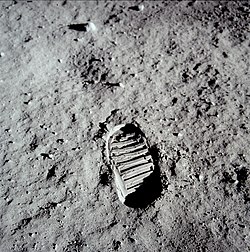
I am totally mystified by how our (us humans) exploration of space has been stifled, essentially halted for so long! In the moon landings article we see that a total of six crewed missions (Apollo) landed on the Moon between July 1969 and December 1972, and since then, for more than fifty years, there have been no follow-ups. Since then the astronauts have pretty much spent all their time in low-Earth orbit, so I must wonder… why have we spent so much time not making progress in space exploration?

We of course must realize that the cost of space exploration is pretty high, both in monetary and in human terms. When I think of all the things we have yet to learn about space and our solar system, I have to wonder what the heck are we waiting for??? I think space explorers are some of the most courageous people on this planet, and I can’t imagine any of them turning down a chance to explore Mars and other places as we zoom around the Sun. The robotics we’ve sent to Mars do help, but Mars rovers cannot shinny down a rope into one of those mysterious holes we’ve seen to find out what is down in the caves under Mars’s surface. Only a human with a strong flashlight can spelunk on Mars.
In the photo on the right, it might appear as if there is a hole in the top of a circular mountain on Mars. It’s actually a hole at the bottom of a circular crater on Mars. Remember… perceptions!
References
- ^ Photo of Buzz Aldrin‘s bootprint on the Moon – links to a YouTube video: a Carl Sagan series excerpt called “Gift of Apollo”
Killing of civilians during World War II
[edit]
The dropping of nuclear bombs on Hiroshima and Nagasaki by the US-approved flight of the aircraft, Enola Gay, is a mystery for me. Those in power in the US at the time thought that it would save a lot of lives by ending the “world war”, and they were correct. That war in the Pacific was started by the Japanese when they attacked Pearl Harbor. The mystery here is that even though many Nazis were tried and executed for war crimes, the US government and its citizens have never been held accountable for the nuclear bombs dropped on two entire Japanese cities. That puzzles and frankly disgusts me. Many non-military Japanese citizens were snuffed out, vaporized, by the detonation of those nuclear bombs. Many more had to endure horrible physical disfigurement, pain and suffering. How is any of that okay?
I’ve been a war veteran for many years, so I can sort of understand the desire to save the lives of your country’s warriors by using anything in your arsenal to stop a war. It just really puzzles me how anyone could justify saving the lives of warriors at the expense of innocent civilian lives, especially innocent children’s lives. I think whoever gave the order to drop those nuclear bombs on Hiroshima and Nagasaki was insane. Dropping one bomb in the ocean near Japan with a threat to drop more bombs across the face of Japan if an ultimatum was ignored by Japanese leaders might have had the same effect without suffering the deaths of innocent kids. At the time the US only had two bombs, but the Japanese didn’t know that. They thought the US had many more nuclear bombs in their arsenal. The US could have gotten that same idea across without wiping two Japanese cities off the map.
All through history we see that the winners get away with stuff and the losers don’t. The winners have even written the history lessons to their own benefit and advantage, and they make the losers out to be the bad guys whether they were or not. It has become painfully obvious to most of us that both sides in a war are capable of the grossest atrocities. That is why there should be no more warfare allowed on this planet. None. Sit down together and talk. Try to come to some level of agreement on the issues. Act like grown-ups are supposed to behave, not like petulant children. Children eventually grow up, and now it’s time for the nations in this world to mature into places where war is the very worst crime known to mankind.
Long ago when the oxygen level was much higher, insects rose to rule this planet for millions of years. Then reptiles rose to the level of dinosaurs and ruled this planet for millions of years more. Then mammals rose to the level of human beings, who now rule this planet, but have done so for just a few thousand years. What will be next? My guess is that artificial intelligence or A.I. will arise to rule this planet for many millions of years. We humans will either become their slaves or become extinct, snuffed out like unneeded, unwanted flies, exemplary victims just like the vaporized citizens of Hiroshima and Nagasaki – gone forever.
Human aggressiveness will become a distant, ebbing memory in the minds of whatever sentient beings come next. As the winners they will write the history of us, and whether or not they write truthfully, that history will be penned in their favor, not in ours.
From a Homeric Hymn…
The air, unlit before, glows with the light of her golden crown, and her rays beam clear, whensoever bright Selene having bathed her lovely body in the waters of Ocean, and donned her far-gleaming raiment, and yoked her strong-necked, shining team, drives on her long-maned horses at full speed, at eventime in the mid-month: then her great orbit is full and then her beams shine brightest as she increases. So she is a sure token and a sign to mortal men.

Finally we get around to the great mystery of the Moon. I call the Moon “Selene“, pronounced by the ancient Greeks in three syllables, seh-LEH-neh. I think of Selene as a full-fledged planet in its own right. Like several astronomers, I do not agree with the arbitrary definitions set by the IAU. Our Earth and Moon form a double-planet system. The giant-impact hypothesis of the origin of the Moon is hard to understand and to swallow. I have my own idea as to how Selene was first formed. So it is a great puzzle. No other rocky planet, and no other gas planet, sports a partner in space that is like the Moon. For one thing, the Moon is gigantic relative to Earth’s size when compared to other natural planetary satellites – really huge!
Perhaps you, like I am, might be impressed by how Selene helped out with our evolution? The Moon keeps getting farther away from Earth, a few centimeters each year. When you back that up to hundreds of millions of years ago, the Moon was much nearer to Earth back then. That means the tides were much higher and lower in that era. When the high tide came in it would stretch for miles or kilometers, not the few yards or meters it does today. Imagine you are a fish and you swim in with the tide. As the tide goes back out you are stranded on the drying ground. You flop around for awhile and probably die before the tide comes back in – many, many fish did die that way before our ancestor managed to stay alive. Our fishy ancestor had a limited ability to breathe the air and to get around a bit on dry land. So the greater tides from the closer Moon had a significant effect on our evolution from water-going fish to land-dwelling amphibious creatures.
So how did the Moon come about? How did Earth manage to gain a partner in space as big as planet Selene?
Good questions! I’m so glad you asked. The proto-Earth had a companion in its orbit around the Sun. The proto-Moon formed in almost the same orbit as Earth, but it was far behind Earth. Since Earth was out front, it grabbed in nearly all of the good particles of dust and dirt and left only the dregs for the Moon. The orbit of the Moon around the Sun was just a tiny bit nearer to the Sun than the Earth’s orbit, so the Moon’s orbital speed was a tiny bit faster than Earth’s. Over millions of years the Moon gradually caught up to the Earth and was caught in a near orbit around the Earth. At that time the Moon orbited the Earth much more closely than today, so its tidal effects on Earth were much more prominent. Just as how today the Moon gets a few centimeters farther away from Earth each year, it slowly receded from Earth back then as well. So there is no need to think that it took a gigantic impact to account for Earth’s partner in space. The moon was caught by the Earth, and its forward momentum kept it from colliding with Earth. The two celestial bodies go around the Sun much like two race cars that circle each other while going around an oval racetrack. And that’s how Earth got its partner in space, Selene – the Moon.
.jpg)
We first came across the ideas that eventually led to the following while reading the great paleontologist Robert Bakker and his theories of dino warm-bloodedness, as well as that some dinos were ancestors to today’s birds. These unusual (back then) realizations actually came before I read Crichton‘s Jurassic Park and watched the ensuing film. I thought that it was pretty cool that the young boy in the movie, Tim, made a passing reference to Bakker’s work.
- As of today’s date, 2 October 2024, we have the following mystery
- From the main article about birds:
-
Birds are feathered theropod dinosaurs and constitute the only known living dinosaurs. (my boldfacing)
- And from the main article on dinos:
-
The fossil record shows that birds are feathered dinosaurs, having evolved from earlier theropods during the Late Jurassic epoch, and are the only dinosaur lineage known to have survived the Cretaceous–Paleogene extinction event approximately 66 mya. Dinosaurs can therefore be divided into avian dinosaurs—birds—and the extinct non-avian dinosaurs, which are all dinosaurs other than birds.
In my humble opinion (IMHO), that’s a lot of hogwash; so sorry if I find the reasoning behind those ludicrous assertions to be unacceptable. Here’s the reasoning from a supposedly lucid scientist that I asked: “Birds are dinosaurs in the same manner as humans are mammals.” From the mammal article: “A mammal … is a vertebrate animal of the class Mammalia.” There is no way we would accept that a “class“, such as mammals, is equivalent to a “clade“, such as dinosaurs.
Allow me please to further illustrate this situation, which I believe is a gross error in Wikipedia, one of the few mistakes found within this reference work in the present day. Long ago, there were little mammals skittering around the feet of the big, “terrible lizards”, and dinos ruled the world. One of those mouse-like creatures was our ancestor. We’ll call it “Mickey” for lack of a better name. Fact is, we have not been able to determine exactly which mammal back then evolved into primates and then into us. So “Mickey” it is. Lots of mammals, even lots of our ancestral Mickeys, were caught by dinos and other predators, food for their gullets. As a species, those little Mickeys managed to survive, thrive and evolve. Mickeys evolved into primates, which of course evolved into us, human beings. So while it would be correct to say that humans are mammals, would it also be correct to say that humans are Mickeys?
Again, IMHO, birds are no more dinosaurs than humans are Mickey mouses, I mean, Mickey mice. Mickey mouse does act like a human in his toons, but those are just cartoons. Mickeys are just Mickeys and dinos are just dinos. Humans are just humans and birds are just birds. Mickeys are our ancestors and avian dinosaurs are ancestral to birds. This does not mean that birds are dinos any more than it means that we humans are Mickeys. Such a travesty should be corrected, and hopefully it will be corrected very soon. The mystery is that such an enormous blunder would be acceptable in the first place. It’s difficult to respect such a blatant, enigmatic biology mishap as referring to birds as dinosaurs. It’s very probable that Mickeys have gone extinct, and it’s a sure thing that every dino that ever lived has also gone extinct. Just because our genus, Homo, probably came from some Australopithecus species, that does not mean that those ancient ape-like creatures are not extinct, nor does it mean that humans are australopithecines. Please – wake up, biologists!
One more time, IMHO, the science of biology is the most important discipline in the present day. Biology, the study of life, holds the keys to our future, whatever that fate may be. It’s high time for biologists to climb back up out of the mud, wash off their character and restore the respect they so richly deserve (in spite of this awful, egregious brain fart – geez how aggravating it is to hear that supposedly intelligent people still think that “birds are dinosaurs“ – how mysterious and sucky is that?)!
You study! and you study! and then you study some more! You’d think that after so much study that you would know something about the subject, wouldn’t you? But nooOOOOooo!

I think I know about as much about the mystery of infinity as I did when I started studying it, and I’ve read a ton of books and other subject matter. It’s just as bad as the symbol “0” (zero), just as bad. Infinity’s not really considered a number, you know. There is just no labeling it other than using the vague symbol,  . That’s really no better than the grouping of letters, ARRRGHHHH, to express how I feel about this gnarly enigma. I’m a bit of a mathe buff (geek alert), so I think that’s one reason I am put off by the concept of infinity. With the exception of calculus, infinity cannot be used in math. And its usage in the calculus seems very strange to me. Very strange.
Infinity – Eternity – “Forever”
I think the challenge of understanding infinity is at least one of the reasons why scientists have really warmed up to the Big Bang theory of the “beginning of the Universe” – the very beginning of space and time! Nobody wants to even try to reflect upon a Universe that goes on and on forever. When you think about it, everything in our lives has a beginning and an end – everything. Life itself begins and ends. We are conceived and born, and then at some point later we die. Every book we read has a beginning and an ending. Every race we run has a start and a finish. Every crisis, happiness, sadness, and occupation began at some point and ended or will end at some point. All the things of which we know about today that are ongoing had a beginning and will someday come to an end. “Nothing lasts forever.” So how can we expect to be able to wrap our minds around the idea of an infinite Universe? We have way too much trouble thinking about very large numbers, let alone about infinity or eternity. I’ve read that in a billion years, the Sun will get hot enough to evaporate all the water on Earth – no water, no life. And that’s not even close to the five billion years from now when the Sun is expected to explode in a tremendous supernova.
A billion years is just too long to be able to understand. That’s a thousand, million years! I have trouble getting the 65 million years ago when the dinos became extinct. Back then there were no primates, and there were very few mammals, and the mammals were mostly just tiny little things scurrying around the toes of the dinos (although a few were large enough to feast on small dinos). Heck I have trouble with 2 million years ago or so when humans first walked the Earth, not Homo sapiens yet but still genus Homo and so human beings. How do you fare with 10,000 years ago when people first learned how to grow their own food, to settle down in one place and form societies? My mother died 22 years ago, and everytime I think about it, it’s just like it was yesterday. So not just infinity, but time is something I also have a problem with, especially the past. That’s why I meditate, because meditation trains you to live and be in the present moment. Not easy, but it’s definitely worthwhile.
Anything that is infinite doesn’t come to an ending, nor did it have a beginning. It just goes on and on and on without end. Think it, talk it, sing it, walk it, you just keep going round and round and round until…
- you don’t.
- Like everything else, you come to a stop. Like magic. There is no tomorrow, no yesterday. And when you think about it even the present moment does not exist. The past blends into the future. So just when is the present moment? What is the real meaning of “now”?
It’s this moment. Then it becomes this moment, then this moment. OR… the present moment can be a span of time, the length of which is whatever you choose it to be. Like a circle…

You make it as big a circle as you want it to be. The area inside the circle is the present moment, and the area outside the circle is the past and the future. If the Universe is finite, as the scientists and the Big Bang theory would have us believe, then the outside of the circle is just as finite, even though it doesn’t appear to be finite. Time and space are limited – they each had a beginning and they each will end some day far into the future. If on the other hand the Universe is infinite, then the outside of the circle might also be infinite. It’s your past, your future, which as sad or happy as it may sound, had a beginning and seems to eventually come to an end. Will we be like some insects? Are we like caterpillars here on Earth and we morph into like butterflies or something (spirits maybe?) when our bodies die? We can only hope that our coffins and urns act as our pupal chrysalides and we transform into another kind of life. We can only hope. The infinity of Life – what a grand mystery!
I read that Albert Einstein imagined (perhaps dreamed?) he rode on a photon, and that is how he came up with his idea of the speed of light, his idea of what a photon is – a bundle of energy, a “quantum” – and eventually his equation, E=mc 2, his theory of relativity. So let’s ride a photon, but not just any photon. The photon we ride goes on and on without ever hitting anything. So here we are riding our photon. We go on and on forever, passing planets, stars, black holes, space dust, never hitting any of it. Never reflecting, never being absorbed, we ride on and on. Eternally.
If you can imagine that, then you can begin to understand infinity, you can begin to understand time, the timeless nature of an eternity – you can just begin to comprehend the vast nature of the universe, our universe in which we live… breathe, eat, drink, work, play… and, never say never, die.
Where’s the mystery? Let me ‘splain. To fully understand the mystery of War as I do, please let me begin with the parts of war that are not really mysterious. It’s no mystery that war can actually be beneficial to a country both economically and creatively. There are usually boosts in financial areas and in inventive scenarios. I also see no mystery in the fact that whichever side is the aggressor or the defender, there are no good guys, there are only bad guys, and either side is fully capable of gross atrocities against the other side. For me, these facts are clues to what the actual mystery of war is. If you haven’t guessed it yet, are you at least beginning to form an opinion?
There is also no puzzle that humans have been at war with each other for a long, long time. In ancient times, way before agriculture entered the human picture about 10,000 years ago, roaming groups of nomad hunter/gatherers would occasionally happen onto other groups. Some were familiar and friendly, and some were not so friendly. So there were occasional clashes. As the population grew that would happen more often. It was about 8,000 BCE that war began to become an institution. When humans settled down to practice husbandry and agriculture, we became so much more territorial. Human beings grew to covet their land, and many learned how to form armies and coveted their neighbors’ lands. The aggressive human instinct to survive probably aided our ancestors in developing offensive and defensive practices for the art of war.
Where is the mystery? I think there is something mysterious about supposedly grown, mature humans who are unable to control their violent tendencies. So it’s not just war, it is any human practice that hurts others, any type of situation where humans tread on the human rights of others, no matter how justified they think their actions are. And war is the very worst of these practices that mystify me. Think of an individual person with a knife or gun that murders another person, then multiply that by hundreds, perhaps thousands of times. I am a Viet Nam veteran. My older brother was killed there about a year-and-a-half before I got there. So I am no stranger to the ugliness of war. Nor was I immune from what I now consider to be terrible feelings of hatred and a lust for revenge (in the form of “justice”, of course). Those feelings are not easy to deal with; however, they can be overcome.
- Brain (and way of thinking)
- Specifically the human brain is what this gnarly little mystery is about. The primate brain began small, and in some primates gradually grew to present day sizes and larger. “Gradually grew” is a phrase related only to the perceptions of our present-day observations of time. When compared rather to the greater geological periods, the human brain came about in the “blink of an eye”. After many, many millions of years of the primate brain growing almost to the size of a chimpanzee’s brain, one type of primate’s brain spurted to about four or five times that size (in what in geological terms was a very short period of time): genus Homo. All of the species in that genus enjoyed brains much larger than other primates. Today, of all those dozen or more species of genus Homo, only one remains: Homo sapiens – us folks.
- Why did the human brain grow so large so quickly? No one really knows, but there is lots of speculation. Perhaps a diet change from vegetarian to meat-eating had something to do with it. Another idea lists the intervention by extraterrestrials as the reason for the fast growth. It still remains one of the most tantalizing puzzles on record: How did the human brain grow so large, so fast? Primates – monkeys and apes – began to evolve from mammals 65- to 80-million years ago, and it has been only in the last 2.5 million years or so that the Homo brain spurted to modern-day size. Blink of an eye. The human brain did in fact reach about its present size a bit more than half a million years ago, so in about 2 million years (an extremely long period compared to our individual life spans, and yet an extremely short period in geological terms), the human brain quadrupled in size. An astonishing enigma wrapped within the mystery that is us.
- Just as important as the brain size is the way human beings think – how we use our minds. To some extent this must be a function of our brain size; however, just as important is how our brains are put together, how they are “wired”, as compared with other animals. Our way of thinking appears to be very different, and how that came about, why that came about, may be added to the human mystique.
- Human extinction
- Where have all the other humans gone? There have been more than a dozen different species of humans, but now only one remains: us, Homo sapiens. This is another fine mystery for which there are only very speculative answers. One idea is that our H. sapiens ancestors killed off all the others. Actually, this is probably true, but not in the way people usually present this idea. It’s presented in a way that depicts our ancestors actively murdering all the other Homo species. I don’t think there were enough of them to do that. Human numbers, which included all of the human species back then, were too small to allow for that kind of massive and determined interaction. Most likely our ancestors, who competed with the other Homo species for game, were simply better hunters, better “bread winners”. Homo sapiens also probably made and used improved tools, so they thrived while the other Homo species dwindled and died out due to their inability to compete with our ancestors. And our ancestors may also have been better at adapting to climate changes. By the time, 8 or 9,000 BCE, that our ancestors began to plant seeds, till the land and raise animals for food, all the other Homo species were long dead. We are all that remain of a phenomenal and mysterious feat of mammal and primate evolution. With all that our ancestors had to endure, we probably shouldn’t even be here, yet here we are. We can only hope that we don’t wind up like our other genus Homo cousins.
What the devil gets into us sometimes? We can be the nicest, sweetest and most loving human beings, even most of the time. Then something happens to us to make us snap! I had a friend once long ago who was a policeman. We hooked up one night for a few drinks and he related that he had just had an ashtray thrown at him in a bar, and it was only because he was wearing a police uniform. Of course, the perp was drunk and jailed, and he went away for a good, long time. I told my cop buddy that it must really get to him at times like that. He said yeah, but the thing that really got to him and other cops was not the hardened criminal type, no, the things that got to them were the ones who were usually good, law-abiding people who, for whatever reason did wrong things, bad things. He said he really didn’t understand that. And I find it a most curious mystery, as well. This, to me, is as befuddling a mystery as whether or not there is a spiritual existence. We don’t know what goes out of us when we die, and we don’t have a clue what gets into us that makes us snap and go haywire sometimes. Yeah, I know, there are college kids and grads out there who think they know all about why this happens. RIIiight.
I’ve studied this to the point where it can be seen that my proposed theory has not yet been brought up by anyone else. There have been five major extinction events since life first began to swim or roam the Earth, along with several other minor ones, perhaps more than twenty in all. It takes a long time for our Sun and its solar system to make one complete turn around the Galactic Center of the Milky Way. It helps to gain a little perspective when you think that our Sun was just about where it is now on its previous revolution around the Galactic Center, when dinosaurs first began to walk the planet. It takes roughly (very roughly) about 230 million years for one turn around the center. And it was roughly 230 million years ago that dinos evolved from reptiles. This got me to thinking… there might be several areas of the galaxy that are toxic to life. As the Sun moves along its path around the center, it might enter an area like that, and that might be what causes the puzzling and mysterious extinction events. It could be an area of noxious galaxy gas or dust, even something plasma-based and dangerous to life. Unlike the presently proposed culprits like NEO‘s that astronomers try to look out for, such an area of space in the galaxy that is dangerous to life might be impossible to see coming at us. And it could happen at any time.
I was going to title this great mystery “Human greed“, but I cannot justify the distinction of “human” anymore than Wikipedia can, when it seems that greed is specifically and only a human trait. Do you know of any other species on this planet that suffers from the greed of others of their own kind? Well, now, wait a minute – greed isn’t just about an insatiable lust for money. There’s also the lust for other things such as power (see “Charisma” above). It seems likely that greed is very widespread among this world’s animals, and not just animals, also the plants. We have a “greedy” bush in our yard with pretty violet flowers that, if unchecked, will pop up just about anywhere in our yard. And we have another plant that is a type of bush that, again if unchecked, will grow fairly tall with a large trunk and become a “tree wannabe”. Also, weeds love to grow and absorb soil nutrients away from grasses and other plants. So even some plants can be greedy.
It appears that, to some degree or other, we are all greedy humans. If not greedy for money or power, we get greedy for other things like food, land, vehicles and other animate/inanimate possessions, or even social value, such as status. Any combination of these is possible when it comes to our needs and greeds. It is often very difficult to satisfy us. Some of us seem heavily driven to be this way, others among us not so much, and I wonder why? Why does greed seem to be so deeply entrenched in our heredity, in the very genes that construct us to be who we are? Is greed connected in some way to our hereditary aggressiveness to survive and multiply?
This one will sound just a bit sinister. It’s about those who “make the rules”. Think about what has been happening in these first 100 days of the second Trump presidential administration. The wealthy among us, the hidden oligarchy, which has controlled the United States and the world since the very beginning in the 18th century, have manipulated the Trump and Musk strings to produce (mostly by switching the tariff threats on and off) a falling stock market. They use their wealth then to buy, buy, buy market shares. Then they watch with a smile as the market goes back up, and they make more billions of dollars as share prices rise. That is how the rich get richer. And it’s so much easier for them when they’re able to install one of their own in a high position of power.
The mystery is how so many people are blind to the rules of wealth. Most people are not wealthy. Most people don’t know how to teach and train their children about being wealthy, about how to maintain and increase wealth. So most people are subject to losing what little they have gained during their lifetimes. Even if they do understand these wealth rules, they (since they are not wealthy) have no idea what can be done to rid this country and world of the political power of the hidden oligarchy. So the wealthy continue to pull the puppet strings and to watch their investments make them more and more greenbacks. How do you catch someone who breaks the rules when they are the ones who actually make the rules? Have we described herein the greedy seed? You can decide; on that we’re agreed!
Coptic Church in Colubi
[edit]
While I was in Ethiopia in 1974, a group of us headed a little south of the town of Dire Dawa, where we were being trained by the Peace Corps, to a place called Colubi. There is a huge, magnificent church there – we were told it was an Ethiopian Coptic Orthodox Church – and our group played at being tourists for awhile. The “Church at Colubi” is surrounded by a wide walkway made of many stones embedded in the ground. The first thing I noticed was a large number of people crawling around the church on their hands and knees while kissing the stones that made up the walkway. I asked one of the priests and was told that thousands of people pilgrimaged from hundreds of miles away each year to ask God for a miracle. Each pilgrim had to make a promise to God in order to receive their miracle. And the most common promise they made was to crawl around the church while kissing the walkway stones. At first I assumed that the crawling stone kissers were fulfilling their promise so they could get their miracle. But I was wrong. The priest told us that the pilgrims would ask for their miracle, make their promise, and then return home to await their miracle. The ones who were crawling around the church kissing stones had returned to the church – they were keeping their promise because they had recently received their miracle!
Doesn’t that make you wonder if the Copts (Christians) don’t have the right idea? Hmm? I mean, the Ethiopian folks walk many miles to get to that church. They ask God for a miracle in their life. They promise that if they get their miracle they will crawl around the church on all fours while kissing the stones. They return home to await God’s miracle. When the miracle happens they then keep their promise that they made to God. And there, right in front of our eyes, were hundreds of people crawling around the Church at Colubi and kissing those stones! I must admit, even I was impressed by this puzzling little mystery. Aren’t you?
For many years now (seasonal), usually in the morning and sometimes later in the day, a red-headed woodpecker makes loud noises while pecking at our neighbors’ carport canopy. Right there on the corner you hear ratta-tat-tat-tat-tat-tat. It’s much louder than when a woodpecker pecks at a tree or light pole. I smile and think of Woody Woodpecker, and I call the little redhead “Woody Metalpecker”. How un-mysterious is that? Does Woody do that to dull its beak? in the same way a carpenter might dull the point of a nail to keep from splitting the wood? or does he do that to attract a mate? I sometimes think he just wants to annoy me and other people. So why does Woody peck at a metal canopy? I wish I knew.
Who or what is God? Also, who or what is a god? Lot’s of people hesitate to talk about this, and lot’s of others can’t seem to stop talking about their God (or their gods). It’s as if they are so certain that he (or they) exist. Without proof, with no hard evidence and based solely upon their faith, some people can go on and on about God. But what exactly is he? Is he solid, or liquid, or gas? If he’s a spirit, a “ghost”, then what exactly is that? some kind of plasma? Is he an old guy in the sky? Is he even a he? or a she, or something else… genderless? Is God an “it”? (Some people think that question is “depraved”, “blasphemous” and at the very least “disrespectful”.) In older renditions of the King James Bible, Jesus begins the “Lord’s prayer”[1] with “Our Father, which art in heaven…”, but most people misquote that and say, “Our Father, who art in heaven…”. “Who” describes a person, and “which”, while it could pertain to a person, it more likely describes a non-person. “Which” could pertain to an “it” – a some”thing” rather than a some”one”. We might be able to understand why people misquote the old script, and yet it remains a misquotation nonetheless. ‘Tis a mystery – who or what is God? and who or what are “gods”?
In my own belief system, which is unrelated to any known religion, I have what can only be described as evidentiary faith – or personal-experience-supportive faith – that “God” is a higher being, which is benevolent and helpful to me and others. I call God “my Lord Universe”, and as I have written, I have no concept as to God’s nature, makeup and being. I have only personal experiences which, for me, furnish enough evidence to assure me of the correctness of my faith. I do still have a problem reconciling the enigma of an all-powerful “God” with our beloved, freedom-based systems of many national governments. Maybe God and the angels (or the gods) are more like a supreme court? congress?
I have a sincere hope that God is a spirit, because that opens the liklihood that there is an afterlife, a new life (or an old one?) after our Earthly bodies live no longer. To me, that all just makes sense. I could be wrong. One fairly popular “certainty” is that there is no way, no way that anyone on Earth could possibly imagine what the afterlife is really like. So I am quite possibly incorrect and way out in left field somewhere. What a crazy, mixed up and absurd universe this is without a powerful protector, whom some people call “God”. Tons of good fortune to all who read this, and may the caterpillar turn into a beautiful… whomever – or whatever – that is you… still you!
I have figured out why there is spirituality in our lives. People have a very deep need to believe that there is someone who is better than they are. To use myself as an example, I refuse to believe that humanity is the highest form of life in the Universe. That’s why so many people accept the existence of many gods, or a god complete with many angels, or even spiritual ancestors they can join when they die.
Of course this doesn’t answer any questions in regard to the “reality” of spirituality. However it does explain why we humans are, in great numbers, adamant about believing in spirits, ghosts, gods, devils or “evil gods”, imps, leprechauns, and even Santa Clause, Mrs. Santa and their toy-making elves. As the snow people might say, “Stay Frosty and Happy Holidays!”
References
- ^ Book of Matthew, ch. 6, v. 9
It seems so easy to be sad, and so difficult to be happy. The truth is, it’s not really so difficult (to be happy, I mean). You know by now that I’m certain that there is a higher power of some kind, a benevolent being or beings who look after this planet and both its living and non-living parts. I am sure of that largely because I do refuse to accept that humans are the highest form of life in this universe. I have found that to express love and thanks, to sit or stand quietly and with simple words convey with a smile deep gratitude and feelings of love to the lord of this largely dangerous, unsafe universe will result in a blissful happiness that defies explanation! Do it once and feel better. Do it at every opportunity and even the deepest, darkest depression will fade away, neutralized, crushed. I don’t understand how this happens, it just does. When I begin to feel low for any reason, I just tell the Lord Universe that I am thankful – for everything – and then I express my deepest love. Sometimes rather than saying “everything”, I list several items for which I am most happy and grateful. It doesn’t seem to matter if I express love first and then thanks, or thanks first and then love. I feel so much better, so blissful. I hope you try this, because if it dispels my low, dark feelings, then it should get rid of yours as well.
When you make this expression of gratitude and love, it is… actually, it is more for you, for your peace of mind. The Lord Universe knows what is in your heart, knows what is in your heart, your mind, body and soul. To express this love and thanks, then, calms your mental turmoil or anxiety. It lightens your heart and your way in this seemingly hazardous, unsafe and absurd universe. So set your mind at peace – express your thanks and love to the Lord of the Universe at every opportunity!
great happiness
to all who read this
oh! mystery of bliss
enigma joyous
What exactly is it? What is the “I” in “Who am I?” Is it Freud’s ego? Is it more like the idea of a self-concept? Is the ego real? or is it just an illusion? Hence the mystery of the ego.
Who can really deny its existence? “I am a football coach,” or “I’m a music teacher,” or “If she wants my help, tell her to come and see me.” There is someone who is a part of us, which we refer to as “me” and “I”. Who or what is that someone really?
I’ve been studying meditation and hypnosis since 1971. Those who meditate want us to believe that the practice (of meditation) helps you to realize that your ego does not really exist. It is not “real”. It is an illusion, a figment of your imagination. And if there really isn’t an ego, a self, then there is no “I”, no “me”, no “you”. We are all an integral part of the universe – we are the universe, and the universe is us. Each of us is the superest of superegos. As living things we encompass the whole of the universe. The fact that we each have our own body, our own mind, is inconsequential. It is the most important thing to believe that you are one with the universe. And so the universe is one with you, with me, with us. We are part of the larger whole and integrated together.
I’ve found no hard evidence to corroborate any of that. And there seems to be plenty of evidence against it. After all these years of study, of practicing meditation, I have never lost my sense of self, not even for a split second. So I continue to be mystified by all the talk of there being no ego, no self, no I, no me, no you. I’m completely puzzled and enchanted by the ego, both mine and yours!
Our Earth has many, many lakes, oceans, ponds and rivers. The mystery for me is simple. I’ve never read or heard a satisfying answer to my question. The question is: Why doesn’t water seep on down through the relatively thin crust due to the force or effect of gravity toward the center of the Earth? River beds, lake beds, ocean beds, they’re all made of rocky areas and sand. (I’m aware of water tables, groundwater, aquifers, wells and such.) How is it that those beds are able to hold the water up from the areas below those beds? If anyone knows the answer, please let me know…
This one has always snowed me. Most people seem to crave recognition for the things they do, for their achievements. I’ve never needed that; I’ve never wanted it. I have shyed away from recognition all my life for the most part. My second trip to Howard AFB in Panama was even better than the first one. At a squadron meeting, Commander’s Call, Homestead AFB in Florida, after our group returned from Panama, the First Sergeant read a letter from Howard’s Base Commander. He recognized our time and accomplishments there and listed the names of everyone in our group except mine. It wasn’t because he was not impressed by me, it was because I was the only one who had worked the midnight shift and, so, I had gone unnoticed. As sarge called out the names, he had them go up to the front and face the squadron. My fellow trainer, Eric, said “You were in that group; you should go up there, too!” I shook my head and smiled, feeling warm and cuddly because my name had not been called. So why is it that almost everyone craves recognition? That’s always been puzzling to me.
Back in 1969 a truly terrible hurricane hit the Gulf Coast near Biloxi, Mississippi. Hurricane Camille (~200 mph winds and 200 associated tornadoes) had devastated the towns along the coast. I was 19, a two-striper, Airman First Class, just fresh out of technical school. About two weeks after the storm I was able to get to my station at Keesler AFB in Biloxi. My boss, TSgt Maclin, was very busy cleaning up his house trailer on base. When I went to the office, I was told that all our sites were in red condition (not functioning), and they needed the TACAN site so planes could bring in needed food and blankets. I drove out to the site, which was on base near the runway. TACAN, when it’s up and running, supplies aircraft with azimuth and distance information.
There was no one to help me, so I cracked open the tech manual. Within the site there are actually two, separate TACAN units, one for primary and one secondary. I started troubleshooting one unit, carefully measuring voltages and comparing them to the manual’s readings. I found that the big, metal power amplifier, called a “klystron vacuum tube”, was not working properly. I ordered a new klystron, removed the old one, and then proceeded to troubleshoot the second TACAN unit.
The klystron in the second unit had a correct output, so I continued to check voltages. The “bongos”, a set of bandpass filters that resembled the drums, had a poor output, so I ordered a new set of bongos. The new klystron came in, so I installed it and had to wait a few hours while it warmed up. As it heated up, I kept checking the output and tuning it into a “dummy load”, which is just a false antenna for testing purposes. When the signal was strong, I flipped it over from the dummy load to the antenna, and found that the antenna, a spinning barrel about fifty feet above the ground, was working as it should. I then called the control tower to let them know that the TACAN site had gone from “red” condition to “amber”, which just meant that one of the two units had been fixed.
The new bongos arrived, so I carefully installed them as closely to the tech manual’s directions as I could. After a few more hours of waiting and tuning while the bongos warmed up, I was ready to check the output on the antenna. I called the control tower to let them know that I was switching units. The output was strong, so I let that unit be the primary, and I let the control tower know that TACAN was in a “green” condition, which meant that both units were up and working. They asked me if I could do the same with the marker beacon, a simpler set of two units that were five miles off the end of the runway. The marker beacon lets landing pilots know when they are five miles from touchdown. I got in my car and headed off base.
When I got to the marker beacon site, I found that electric power had been restored. I turned on the primary and waited while it warmed up, all the while tuning and tweaking the signal. When I measured maximum power output, I called the control tower and told them the beacon site had gone from red to amber. The secondary unit, an old BC-446, had also been warming up, so I checked it out thoroughly and found nothing wrong with it. I let the tower know that the site had gone from amber to green. Aircraft with food and blankets were then able to find and get to the air base and safely land using both the TACAN and the marker beacon.
Aside from a few pats on the back and a lot of disbelief that a dingbat two-striper could accomplish these tasks, I received no formal recognition, and I’ve always been more than okay with that. For me it’s always been the actual doing that mattered, not what others thought about me after the doing.
And don’t just accept it as truth when others tell you that the tech manuals are full of crap. The manuals that I used to troubleshoot, tune and fix the TACAN and marker beacon sites were accurate and very helpful. It was as if there were several other wise old technicians in the room with me, guiding and aiding me. I couldn’t have done it without those manuals.
- Main un-article User:Paine Ellsworth/Mystery/Life

Life is only a concern for the living, and only a mystery for the sapient.
Encouraging words from Louisa May Alcott, originally by Ellen Sturgis Hooper; I’ve also seen the first two lines attributed to Lord Byron:
I slept, and dreamed that life was beauty;
I woke, and found that life was duty.
Was thy dream then a shadowy lie?
Toil on, sad heart, courageously,
And thou shall find thy dream to be
A noonday light and truth to thee.
I would also like to note the striking resemblances of both Ellen Sturgis and Louisa May with another of my heroes, Henrietta Swan!
As I sweep the porch I think about the dead leaves and how they once provided the oxygen I breathe. I continue to sweep them off the porch as if they never had any import, and I think all the while just how indispensable they used to be to us air breathers. Paine Ellsworth
Thank you for reading!
< * more to come * >
Un-article see also
[edit]
on my Philosophy – 3rd

