
Later in March of 2017, Jennifer Kent began the production of The Nightingale, starring Aisling Franciosi and Baykali Ganambarr, who play Clare Carroll and Billy. The film takes place in 1825 and tells a story of Clare, who seeks vengeance, and a tracker named Billy, whom she hires.
Later in March of 2017, Jennifer Kent began the production of The Nightingale, starring Aisling Franciosi and Baykali Ganambarr, who play Clare Carroll and Billy. The film takes place in 1825 and tells a story of Clare, who seeks vengeance, and a tracker named Billy, whom she hires.
While making the film, Kent felt that she couldn’t authentically tell the story unless she collaborated with Tasmanian Aboriginal people. While in Tasmania, she eventually got in touch with Jim Everett, who became a part of the film’s production. In an interview called “Once Upon a Time in Van Diemen’s Land” by Graham Fuller, Kent shared, “We enlisted “Uncle” Jim Everett, a Tasmanian Aboriginal Elder, who could speak directly to the experience.” She also states that without Jim Everett’s vast input, she wouldn’t have made Billy as real as possible. She also stated that Nightingale “was the only movie directed by a woman to play in competition at the Venice Film Festival last year.” <ref>Fuller, G. (2019).Once Upon a Time in Van Diemen’s Land. Cineaste, 44(4), 25–27. Retrieved Nov 24th, 2025
While making the film, Kent felt that she couldn’t authentically tell the story unless she collaborated with Tasmanian Aboriginal people. While in Tasmania, she eventually got in touch with Jim Everett, who became a part of the film’s production. In an interview called “Once Upon a Time in Van Diemen’s Land” by Graham Fuller, Kent shared, “We enlisted “Uncle” Jim Everett, a Tasmanian Aboriginal Elder, who could speak directly to the experience.” She also states that without Jim Everett’s vast input, she wouldn’t have made Billy as real as possible. She also stated that Nightingale “was the only movie directed by a woman to play in competition at the Venice Film Festival last year.” <ref>..
</ref>
</ref>
Australian actress, writer, and director
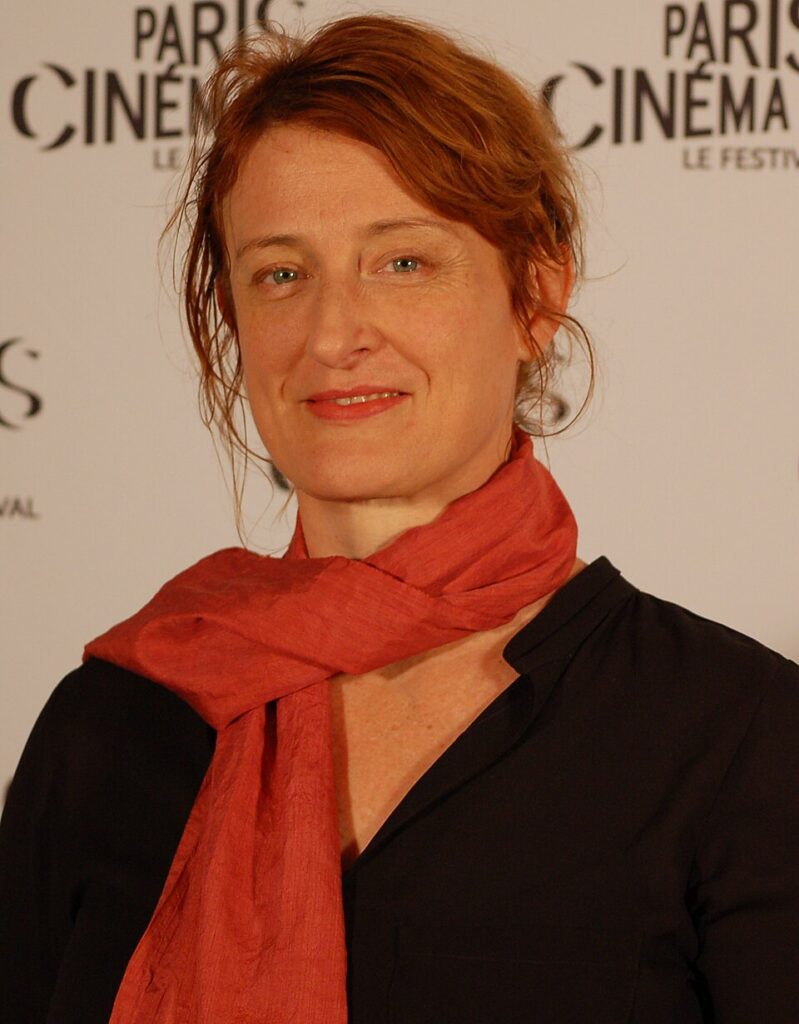
Jennifer Kent is an Australian director, screenwriter, and former actress. She is best known for writing and directing the psychological horror film The Babadook (2014). Her second film, The Nightingale (2018), premiered at the 75th Venice International Film Festival and was nominated for the Golden Lion.
Early life and education
[edit]
Jennifer Kent was born in Brisbane, Queensland. She says that she put on her first play when she was seven and also wrote stories. In an interview with Paul Risker, she states, “I actually started writing my own plays as a kid: directing and acting in them,” and that “it was something that was very organic for me.”[1]In her late teens, she chose acting as she “wasn’t really aware at that stage that women could direct films”.[2] While growing up, there weren’t many female filmmakers in her region, so she aspired to become an actress and attend the National Institute of Dramatic Art (NIDA).[3]
She graduated in 1991 from the National Institute of Dramatic Art (NIDA) in Performing Arts (Acting).[4]
By the end of her journey with education, she claims she “was burnt out and had terrible stage fright,” in a masterclass interview that took place in August of 2020. After a while, she figured that acting wasn’t for her after all, but wanted to continue writing and directing. Kent described her writing process as bad, resulting in her becoming doubtful of her ability to be a director. As she continued writing, however, the feeling that she could succeed became more apparent.
A strong, memorable moment for her is when she viewed the film “Dancer in the Dark,” a film written a directed by Lars von Trier. At the end of the viewing, she leaped into the air and stated, “I’m going to work with the man who made this film.” She was eventually offered the opportunity to spend a day on set, and after that experience, she ultimately realized that she was capable of becoming a director and writer.[5]
Kent began her career as an actress, working primarily in television. She was a main cast member of Murder Call, from creator Hal McElroy, playing Constable, Dee Suzeraine, in all 31 episodes of the series. She also appeared in several episodes of other Australian TV series such as All Saints, Police Rescue and Above the Law. Kent also had a small role in Babe: Pig in the City and The New Adventures of Black Beauty. She has also been an acting teacher for 13 years at major institutions such as NIDA and the Australian Film Television and Radio School (AFTRS).[6]
After losing interest in acting, Kent was inspired after seeing Dancer in the Dark to pursue a career as a filmmaker. She wrote to the director Lars von Trier, asking to study under him and explaining that she found the idea of film school repellent.[7] In 2002 von Trier allowed her to assist him as part of a directing attachment on the set of his film Dogville (2003) starring Nicole Kidman.[8]
In a journal by Paul Risker, which speaks about “The Quarterly Review of Film & Video”, Kent shared her journey on becoming a director. While working with Lars von Trier, she “learned a lot about directing watching him at work.” [9]In 2006 Kent directed an episode of Two Twisted, an Australian series following in the tradition of The Twilight Zone.[6]
In 2005 Kent directed her short film Monster, which was screened at over 50 festivals around the world, including Telluride, Montreal World, and Slamdance film festivals, SXSW, and Aspen Shortsfest.[6]
While she didn’t make this short film with the idea of The Babadook already in mind, she says people think otherwise. She exclaims that without this short film, The Babadook wouldn’t have been possible. Before making The Babadook, Kent made three to four full-length feature scripts that couldn’t get funded within Australia. She was left with two choices: give up or go outside of Australia. She states that Binger, a film lab in Amsterdam that acts as a creative residence for writers and directors, helped support Kent through the creation of The Babadook and, ultimately, saved her creative life.[10]
In 2014 she adapted her short into a feature-length film The Babadook starring Essie Davis whom Kent had known through drama school.[11] The film tells the story of a single mother played by Davis who must confront a sinister presence in her home while dealing with the emotional fallout of her husband’s death. Kent Explains “[she] was always quite fascinated by people who could suppress really dark, deep, painful experiences and [she] wanted to explore the idea that perhaps pushing down on those terrible experiences is harder than facing them”. The Babadook premiered at the 2014 Sundance Film Festival,[12] and was quickly picked up for distribution in the U.S. by IFC Films. Kent did five drafts of the feature script, received most of her funding from the South Australian Film Corporation, then conducted a Kickstarter campaign to help raise US$30,000 to pay for set construction.[4][13] The Babadook received widespread critical acclaim, and doubled its budget with $4.9 million in the worldwide box office.[14][15] The Babadook script won the Betty Roland Prize for Scriptwriting at the 2015 New South Wales Premier’s Literary Awards.[16]
Kent has been vocal in the press about the lack of female directors in horror cinema.[17] “It will shift, as the world shifts. Women do love watching scary films. It’s been proven, and they’ve done all the tests. The demographics are half men, and half women. And we know fear. It’s not like we can’t explore the subject.”[17]
Kent met with executives at Warner Bros. in late 2014 to talk about possibly directing the Wonder Woman film, a job which eventually went to Patty Jenkins.[18]
Later in March of 2017, Jennifer Kent began the production of The Nightingale, starring Aisling Franciosi and Baykali Ganambarr, who play Clare Carroll and Billy. The film takes place in 1825 and tells a story of Clare, who seeks vengeance, and a tracker named Billy, whom she hires.
While making the film, Kent felt that she couldn’t authentically tell the story unless she collaborated with Tasmanian Aboriginal people. While in Tasmania, she eventually got in touch with Jim Everett, who became a part of the film’s production. In an interview called “Once Upon a Time in Van Diemen’s Land” by Graham Fuller, Kent shared, “We enlisted “Uncle” Jim Everett, a Tasmanian Aboriginal Elder, who could speak directly to the experience.” She also states that without Jim Everett’s vast input, she wouldn’t have made Billy as real as possible. She also stated that Nightingale “was the only movie directed by a woman to play in competition at the Venice Film Festival last year.” [19]
</ref>
The Babadook (2014)
[edit]
Her first feature-length film, The Babadook, is a supernatural horror film written and directed by Kent. In late 2014, Kent announced that, due to popular demand, a limited edition of the Mister Babadook pop-up book featured in her film The Babadook would be published in 2015. Kent wrote the book in collaboration with illustrator Alex Juhasz, who had created the prop book used in the film. The book sold out its run of 6,200 copies.[8]
The Nightingale (2018)
[edit]
Her second film, The Nightingale, deals with murder and revenge in 1825 Tasmania.[20] On Rotten Tomatoes, the film garnered an approval rating of 86%, based on 234 reviews.[21]
The Murmuring (2022)
[edit]
In Del Toro’s television series “Guillermo del Toro’s Cabinet of Curiosities,” Jennifer Kent directed a short story from Del Toro in episode eight of the series, titled “The Murmuring.”
The episode stars Essie Davis and Andrew Lincoln. They play as a married couple who have moved into a new home and use their work to suppress their grief. Kent takes the direction for this short story and uses her horror anthology to explore the episode’s grief and turn it into horror.[22]
When asked whether she would be doing a sequel to The Babadook, Kent said that she “will never allow any sequel to be made, because it’s not that kind of film.”[23][better source needed]
One of her scripts, Grace, won the Prix Du Scenario for unproduced scripts at the Cinéma des Antipodes festival at Saint Tropez,[8] which presents films from Australia and New Zealand, but Kent said in October 2014, “The story of Grace was very much what I ended up making with The Babadook.”[24] She told The Guardian in May 2014 that HBO was courting her for a TV series.[2]
In June 2015, it was reported that the nonfiction book Alice + Freda Forever was being adapted into a film that Kent would write and direct. The book tells the real-life story of Alice Mitchell and her lover Freda Ward whom she killed in 1892.[25] The film’s producer is Sarah Schechter.[26]
Currently she is scheduled to direct the live-action adaptation of Clive Barker‘s novel The Thief of Always.[27]
The Babadook strays from the typical approach to the genre of horror by using a mix of psychological drama and horror and focusing on the imagination of children slowly turning into a reality. Kent does this by using horror elements in the layout and camerawork.[28] The film uses German expressionist techniques; many of the scenes are disorienting and dark.[29] Kent uses different approaches to the horror genre from classic horror film directors. As The Babadook progresses, for example, the Victorian-style house which is the main set mimics the mother’s mental state.[28]
Kent brought together a team of people she felt could bring her idea to the screen. Radek Ladczuk was the film’s cinematographer and helped bring her ideas to life. Kent was influenced by old movies, and initially wanted to film the movie in black and white.[28] She used many different techniques to embody a terrifying set, using colours like “muted grey-and-blue and hints of red as the story became more suspenseful”.[30] Ladczuk states that there were five aspects to this film, all shown with different camera movements. The film is split into five different emotions: anxiety, fear, terror, possession, and courage.[28] By shooting with a 32mm lens they were able to capture the mother’s feelings and later changed to a 14mm lens. They also used a Steadicam and static camera[28] to help develop the film’s layers. Fast and slow motion effects were also added throughout the film, as well as stop motion, and they even mounted a camera vertically on the wall to help with certain shots.[28] A lot of the shots were done in camera because Kent felt that it made the film scarier and more realistic than adding stuff in with CGI later.[31]
The Babadook is presented from the mother’s perspective; the struggle of motherhood is a major component of the film’s story. According to Clarke, many scenes in the film are relatable because they show the everyday struggles of mothers. Clarke argues that Kent touches on not only parenting but dealing with gossipy friends and sexuality, as shown in a scene where the mother is masturbating. These everyday themes are interspersed with moments of terror and suspense; techniques of classic horror. The film ends with the female lead taming the beast by defending her child, and keeping it in the basement.[29]
| Year | Title | Director | Writer | Producer | Notes |
|---|---|---|---|---|---|
| 2005 | Monster | Yes | Yes | No | Short film |
| 2014 | The Babadook | Yes | Yes | No | Debut film and Based on the short Monster |
| 2018 | The Nightingale | Yes | Yes | Yes |
Acting roles
| Year | Title | Role | Notes |
|---|---|---|---|
| 1997 | The Well | Marg Trinder | |
| 1998 | Chlorine Dreams | Lisa (mum) | Short |
| Babe: Pig in the City | Lab Lady | ||
| 2002 | Six Days Straight | Meg | Short |
| 2003 | Preservation | Grieving Mother |
Other credits
Acting roles
- ^ https://doi.org/10.1080/10509208.2016.1222568
- ^ a b Gibbs, Ed. “The Babadook: ‘I was screaming all day’“. The Guardian. Retrieved 7 April 2016.
- ^ Masterclass with Jennifer Kent: An Artist’s Journey on The Babadook, the Nightingale and Beyond. (2020). Youtube.com. Retrieved November 20, 2025, from https://youtube.com/G4ljufnLJ8c?si=MHcnxIxCc1_vXOrL.
- ^ a b Lui, John. “Director Jennifer Kent’s debut feature The Babadook is a horror movie without gore or cheap screams”. Straits Times. Retrieved 7 April 2015.
- ^ Masterclass with Jennifer Kent: An Artist’s Journey on The Babadook, the Nightingale and Beyond. (2020). Youtube.com. Retrieved November 20, 2025, from https://youtube.com/G4ljufnLJ8c?si=MHcnxIxCc1_vXOrL.
- ^ a b c “Jennifer Kent”. EICAR International. Archived from the original on 14 April 2015. Retrieved 7 April 2015.
- ^ Paul MacInnes (18 October 2014). “The Babadook: ‘I wanted to talk about the need to face the darkness in ourselves’“. The Guardian. Retrieved 21 November 2014.
- ^ a b c “The Babadook – Official Site”. Archived from the original on 4 April 2015. Retrieved 7 April 2015.
- ^ https://doi.org/10.1080/10509208.2016.1222568
- ^ Masterclass with Jennifer Kent: An Artist’s Journey on The Babadook, the Nightingale and Beyond. (2020). Youtube.com. Retrieved November 20, 2025, from https://youtube.com/G4ljufnLJ8c?si=MHcnxIxCc1_vXOrL.
- ^ Lambie, Ryan (10 October 2014). “Jennifer Kent interview: directing The Babadook”. Retrieved 24 December 2014.
- ^ Caceda, Eden. “Two Aussie Features Selected for Sundance”. Filmink. Archived from the original on 27 June 2015. Retrieved 22 April 2015.
- ^ “Parental descent: Jennifer Kent’s The Babadook is a spooky tale of a mother in crisis”. Film Journal International. Archived from the original on 12 April 2015. Retrieved 7 April 2015.
- ^ Child, Ben (2 December 2014). “The Babadook is the scariest film I’ve ever seen, says Exorcist director”. The Guardian. Retrieved 7 April 2015.
- ^ “The Babadook”. Box Office Mojo. Retrieved 7 April 2015.
- ^ “New South Wales Premier’s Literary Awards” (PDF). SL Magazine. 8 (4): 36.
- ^ a b O’Sullivan, Michael. “‘Babadook’ director Jennifer Kent talks about women making horror movies”. Washington Post. Retrieved 7 April 2015.
- ^ Adams, Sam (27 November 2014). “Boogeyman Nights: The Story Behind This Year’s Horror Hit ‘The Babadook’“. Rolling Stone. Retrieved 7 April 2015.
- ^ https://research.ebsco.com/c/t6k2kz/search/details/4izqcv3pz5?db=a9h&limiters=None&q=Jennifer%20Kent&searchMode=boolean
- ^ Nordine, Michael (14 March 2017). “‘ The Nightingale’: Jennifer Kent Begins Production on Her Follow-up to ‘The Babadook’“. IndieWire. Retrieved 3 August 2019.
- ^ “The Nightingale (2019)”. Rotten Tomatoes. Fandango Media. Retrieved 3 September 2019.
- ^ https://movieweb.com/jennifer-kent-cabinet-of-curiosities/
- ^ Kent, Jennifer (28 November 2014), The Babadook, retrieved 5 March 2016
- ^ Madison, Charles. “Jennifer Kent on creating The Babadook”. Film Divider. Retrieved 7 April 2015.
- ^ Fleming, Mike Jr. (4 June 2015). “‘The Babadook’s Jennifer Kent To Direct Lesbian Romance-Murder-Tragedy ‘Alice + Freda’ For SKE”. Deadline Hollywood. Retrieved 5 June 2015.
- ^ Thompson, Anne (4 June 2015). “Jennifer Kent to Direct True Lesbian Murder Tale ‘Alice + Freda’“. Thompson on Hollywood. Retrieved 5 March 2016.
- ^ “The Thief Of Always | Jennifer Kent to direct Clive Barker adaptation”. IMDb. Retrieved 9 July 2025.
- ^ a b c d e f Bankston, D (2014). Pop-up Horror. American Cinematographer – the International Journal of Film and Digital Production Techniques.
- ^ a b Clarke, R (2014). The Babadook. Sight and Sound.
- ^ Kidd, Briony (2014). UMBILICAL FEARS: Jennifer Kent’s the Babadook. Metro: Media & Educations Magazine.
- ^ Alter, Ethan (2014). Parental Descent. Film Journal International.
- ^ Zee, Michaela (15 August 2022). “Netflix Releases First Look at Guillermo del Toro’s Horror Series ‘Cabinet of Curiosities,’ Sets October Release Date”. Variety.

