
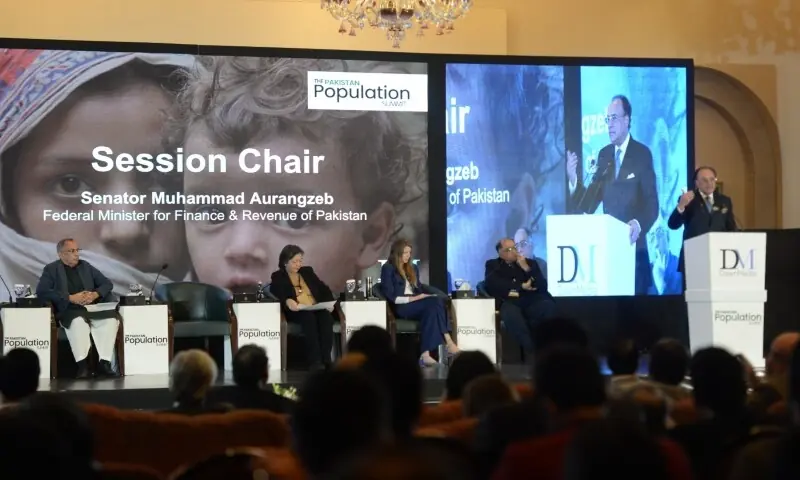

The second and final day of the ‘Pakistan Population Summit’ — a national dialogue on restoring balance and building sustainable futures — will begin in Islamabad shortly.
Organised by DawnMedia, the summit is bringing together politicians, economists, development specialists, private sector leaders, and experts to develop a shared vision as rapid population growth continues to place pressure on health systems, food and water security, and employment.
View the full agenda here.
On Monday, policymakers, experts, diplomats and lawmakers had expressed the unanimous view that prosperity was not possible if the number of mouths to feed kept rising. They argued that without managing the population in terms of resources, all of the government’s efforts — aimed at development, progress and social uplift — would amount to naught.
They were of the view that Pakistan was clearly out of balance in terms of population growth and distribution of resources as compared to its neighbours.
They also stressed that population management must be a key political agenda in Pakistan, as high population growth remained the main impediment to the country’s economic and human development.
Pakistan, with a population of over 241 million, is the fifth most populous country in the world, adding four to five million people every year. Its population growth rate of 2.40 per cent is the highest in South Asia. The rapid increase is outpacing employment opportunities, with official statistics showing the country will require 104m jobs by 2040.
Pakistan will not be able to achieve Sustainable Development Goals (SDGs) by 2030 if the current trajectory of population growth does not slow down; 13 of the 17 SDGs are directly or indirectly linked to population growth.
Rapid population growth in Pakistan also poses a serious challenge to socio-economic development. Unsustainable population pressures are depleting natural resources and adversely affecting socio-economic indicators, ultimately impacting the over well-being of the population.

