
}}
}}
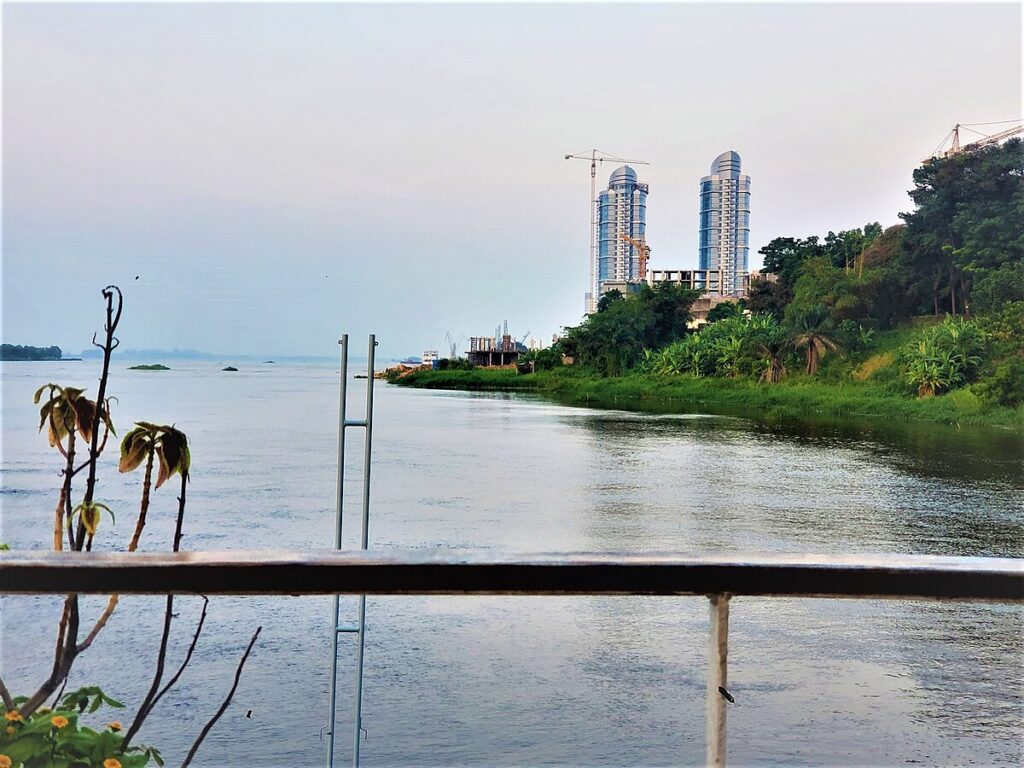
[[File:A view of Congo River from Kinshasa, Democratic Republic of the Congo (DRC).jpg|thumb|Congo River in Kinshasa where Jeannine Mukanirwa was born]]
[[File:A view of Congo River from Kinshasa, Democratic Republic of the Congo (DRC).jpg|thumb|Congo River in Kinshasa where Jeannine Mukanirwa was born]]
[[File:Ville de Bukavu.jpg|thumb|Bukavu]]
[[File: .jpg|thumb|]]
”’Jeannine Mukanirwa Tshimpambu”’ was born August 4, 1965, in [[Kinshasa]], [[Democratic Republic of the Congo]]. She was a Congolese women’s rights activist and a peace advocate from [[Bukavu]] in [[South Kivu]].<ref name=”:1″>{{Cite web |last=International |first=Amnesty |date=2001-03-28 |title=DR Congo, Deadly conspiracies? |url=https://www.ecoi.net/en/document/1413682.html |access-date=2025-12-04 |website=www.ecoi.net |language=en}}</ref> She founded Promotion and Support of Women’s Initiatives (PAIF). Her relentless work significantly shaped the gender equality movements in the Democratic Republic of the Congo (DRC) and beyond. Her activism focused on empowering women, defending human rights, and promoting peace. She has been recognised by [[Amnesty International]] for her work for women’s rights and peace promotion.<ref>{{Cite web |title=The Ginetta Sagan Award |url=https://www.amnestyusa.org/about-us/grants-and-awards/ginetta-sagan-award/ |access-date=2025-12-04 |website=Amnesty International USA |language=en-US}}</ref> Her influence was far beyond local communities; she was a symbol of courage for women in zones of conflict. She was a representative of the Congolese women’s struggles during the most violent periods of the country’s history.
”’Jeannine Mukanirwa Tshimpambu”’ was born August 4, 1965, in [[Kinshasa]], [[Democratic Republic of the Congo]]. She was a Congolese women’s rights activist and a peace advocate from [[Bukavu]] in [[South Kivu]].<ref name=”:1″>{{Cite web |last=International |first=Amnesty |date=2001-03-28 |title=DR Congo, Deadly conspiracies? |url=https://www.ecoi.net/en/document/1413682.html |access-date=2025-12-04 |website=www.ecoi.net |language=en}}</ref> She founded Promotion and Support of Women’s Initiatives (PAIF). Her relentless work significantly shaped the gender equality movements in the Democratic Republic of the Congo (DRC) and beyond. Her activism focused on empowering women, defending human rights, and promoting peace. She has been recognised by [[Amnesty International]] for her work for women’s rights and peace promotion.<ref>{{Cite web |title=The Ginetta Sagan Award |url=https://www.amnestyusa.org/about-us/grants-and-awards/ginetta-sagan-award/ |access-date=2025-12-04 |website=Amnesty International USA |language=en-US}}</ref> Her influence was far beyond local communities; she was a symbol of courage for women in zones of conflict. She was a representative of the Congolese women’s struggles during the most violent periods of the country’s history.
== Early life and Education ==
== Early life and Education ==
Mukanirwa grew up in the capital city of Kinshasa. She later lived her life in the Eastern part of the DR.<ref name=”:0″>{{Cite web |title=Shibboleth Authentication Request |url=https://www.hrw.org/news/2000/02/01/crackdown-civil-society-activists-eastern-congo |access-date=2025-12-04 |website=}}</ref> She spent much of her childhood in South Kivu and Goma. These areas were constantly affected by political Challenges and conflict that never rested.<ref name=”:0″ /> Being surrounded by the conflict shaped her. It gave her a strong sense of justice and a personal responsibility to stand up for people who were being overlooked or mistreated. At a young age, she was known for being very outspoken and not afraid to challenge unfair practices, especially if they were catered to young girls. She pushed herself very hard to succeed academically, which earned her a Licentiate in Project Management from IFAD and a graduate degree in Development Planning from ISDR Bukavu.<ref name=”:2″ /> Those experiences gave her the skills to create meaningful programs focused on women’s empowerment and peacebuilding, turning her passion into action. She has two children. She has two children.<ref name= medica>{{cite web| url = https://www.europarl.europa.eu/meetdocs/2009_2014/documents/droi/dv/5_07cvmukanirwa_/5_07cvmukanirwa_en.pdf| title = Participant’s Information: Presenting the participants of the international delegation: Jeannine Mukanirwa Tshimpambu| date = 2014| publisher = Medica Mondiale| access-date = 9 August 2021}}</ref>
Mukanirwa grew up in the capital city of Kinshasa. She later lived her life in the Eastern part of the DR.<ref name=”:0″>{{Cite web |title=Shibboleth Authentication Request |url=https://www.hrw.org/news/2000/02/01/crackdown-civil-society-activists-eastern-congo |access-date=2025-12-04 |website=}}</ref> She spent much of her childhood in South Kivu and Goma. These areas were constantly affected by political Challenges and conflict that never rested.<ref name=”:0″ /> Being surrounded by the conflict shaped her. It gave her a strong sense of justice and a personal responsibility to stand up for people who were being overlooked or mistreated. At a young age, she was known for being very outspoken and not afraid to challenge unfair practices, especially if they were catered to young girls. She pushed herself very hard to succeed academically, which earned her a Licentiate in Project Management from IFAD and a graduate degree in Development Planning from ISDR Bukavu.<ref name=”:2″ /> Those experiences gave her the skills to create meaningful programs focused on women’s empowerment and peacebuilding, turning her passion into action. She has two children. She has two children.<ref name=medica>{{cite web| url = https://www.europarl.europa.eu/meetdocs/2009_2014/documents/droi/dv/5_07cvmukanirwa_/5_07cvmukanirwa_en.pdf| title = Participant’s Information: Presenting the participants of the international delegation: Jeannine Mukanirwa Tshimpambu| date = 2014| publisher = Medica Mondiale| access-date = 9 August 2021}}</ref>
== The Beginning of Activism ==
== The Beginning of Activism ==
Mukanirwa began women’s rights activist work in 1989.<ref name=”medica” /> Jeannine, along with [[Immaculée Birhaheka]], founded Promotion et Appui aux Initiatives Féminines (PAIF) in 1989. Jeannine Mukanirwa, along with a single colleague and without external funding, organized women to educate them about their rights, particularly in the social and economic spheres. She offered tangible support through community-based projects that she funded herself. (PAIF) is a women’s rights organization in Goma.<ref name=”:1″ /> PAIF served as a crucial support system for thousands of women, providing education on legal rights, vocational training, and psychosocial support. PAIF focused on grassroots initiatives, believing that change starts at the community level. Her mission is to empower women and to become agents of peace and development. In 2001 she was serving as vice president of PAIF).
Mukanirwa began women’s rights activist work in 1989.<ref name=”medica” /> Jeannine, along with [[Immaculée Birhaheka]], founded Promotion et Appui aux Initiatives Féminines (PAIF) in 1989. Jeannine Mukanirwa, along with a single colleague and without external funding, organized women to educate them about their rights, particularly in the social and economic spheres. She offered tangible support through community-based projects that she funded herself. (PAIF) is a women’s rights organization in Goma.<ref name=”:1″ /> PAIF served as a crucial support system for thousands of women, providing education on legal rights, vocational training, and psychosocial support. PAIF focused on grassroots initiatives, believing that change starts at the community level. Her mission is to empower women and to become agents of peace and development. In 2001 she was serving as vice president of PAIF).
== Advocacy During Conflict ==
== Advocacy During Conflict ==
Congolese history was dominated by violence and cruelties during the Congo wars in the late 1990s.<ref name=”:2″>{{Cite journal |last=Tshite |first=Marie-Rose |date=2024-12-01 |title=Capturing Congolese Women’s Memories of War and Peacemaking |url=https://closeencountersinwar.org/wp-content/uploads/2024/12/tshite-congolese-women-memory-of-war-and-peacemaking.pdf |journal=Close Encounters in War Journal |language=en |volume=7 |pages=275–300 |issn=2704-8799}}</ref> Jeannine became an advocate for women’s rights, speaking out against sexual violence and mass killings. In 1999, she traveled from eastern DRC to Kinshasa to participate in a civil society meeting where she publicly revealed incidents in Mwenga, South Kivu, where women were reportedly buried alive, which gained national attention.<ref name=”:0″ /> This action brought international attention to the struggles of Congolese women. She began receiving threats and intimidation frequently. The increased threats came from the rebel and Rwandan authorities in eastern DRC. After she and her family had been repeatedly threatened, she left Goma to re-establish herself in Kinshasa.<ref name=”:0″ /> In the early 2000s, she condemned the [[Sexual violence in the Democratic Republic of the Congo|rape]] of women in the eastern Congo.
Congolese history was dominated by violence and cruelties during the Congo wars in the late 1990s.<ref name=”:2″>{{Cite journal |last=Tshite |first=Marie-Rose |date=2024-12-01 |title=Capturing Congolese Women’s Memories of War and Peacemaking |url=https://closeencountersinwar.org/wp-content/uploads/2024/12/tshite-congolese-women-memory-of-war-and-peacemaking.pdf |journal=Close Encounters in War Journal |language=en |volume=7 |pages=275–300 |issn=2704-8799}}</ref> Jeannine became an advocate for women’s rights, speaking out against sexual violence and mass killings. In 1999, she traveled from eastern DRC to Kinshasa to participate in a civil society meeting where she publicly revealed incidents in Mwenga, South Kivu, where women were reportedly buried alive, which gained national attention.<ref name=”:0″ /> This action brought international attention to the struggles of Congolese women. She began receiving threats and intimidation frequently. The increased threats came from the rebel and Rwandan authorities in eastern DRC. After she and her family had been repeatedly threatened, she left Goma to re-establish herself in Kinshasa.<ref name=”:0″ /> In the early 2000s, she condemned the [[Sexual violence in the Democratic Republic of the Congo|rape]] of women in the eastern Congo.
Congolese women’s rights activist
|
Jeannine Mukanirwa |
|
|---|---|
| Born | 1965 (age 59–60)
Kinshasa, Democratic Republic of the Congo
|
| Known for | Women’s rights activism and peace promotion |
| Children | 2 |
.jpg)

Jeannine Mukanirwa Tshimpambu was born August 4, 1965, in Kinshasa, Democratic Republic of the Congo. She was a Congolese women’s rights activist and a peace advocate from Bukavu in South Kivu.[1] She founded Promotion and Support of Women’s Initiatives (PAIF). Her relentless work significantly shaped the gender equality movements in the Democratic Republic of the Congo (DRC) and beyond. Her activism focused on empowering women, defending human rights, and promoting peace. She has been recognised by Amnesty International for her work for women’s rights and peace promotion.[2] Her influence was far beyond local communities; she was a symbol of courage for women in zones of conflict. She was a representative of the Congolese women’s struggles during the most violent periods of the country’s history.
Early life and Education
[edit]
Mukanirwa grew up in the capital city of Kinshasa. She later lived her life in the Eastern part of the DR.[3] She spent much of her childhood in South Kivu and Goma. These areas were constantly affected by political Challenges and conflict that never rested.[3] Being surrounded by the conflict shaped her. It gave her a strong sense of justice and a personal responsibility to stand up for people who were being overlooked or mistreated. At a young age, she was known for being very outspoken and not afraid to challenge unfair practices, especially if they were catered to young girls. She pushed herself very hard to succeed academically, which earned her a Licentiate in Project Management from IFAD and a graduate degree in Development Planning from ISDR Bukavu.[4] Those experiences gave her the skills to create meaningful programs focused on women’s empowerment and peacebuilding, turning her passion into action. She has two children. She has two children.[5]
The Beginning of Activism
[edit]
Mukanirwa began women’s rights activist work in 1989.[5] Jeannine, along with Immaculée Birhaheka, founded Promotion et Appui aux Initiatives Féminines (PAIF) in 1989. Jeannine Mukanirwa, along with a single colleague and without external funding, organized women to educate them about their rights, particularly in the social and economic spheres. She offered tangible support through community-based projects that she funded herself. (PAIF) is a women’s rights organization in Goma.[1] PAIF served as a crucial support system for thousands of women, providing education on legal rights, vocational training, and psychosocial support. PAIF focused on grassroots initiatives, believing that change starts at the community level. Her mission is to empower women and to become agents of peace and development. In 2001 she was serving as vice president of PAIF).

Advocacy During Conflict
[edit]
Congolese history was dominated by violence and cruelties during the Congo wars in the late 1990s.[4] Jeannine became an advocate for women’s rights, speaking out against sexual violence and mass killings. In 1999, she traveled from eastern DRC to Kinshasa to participate in a civil society meeting where she publicly revealed incidents in Mwenga, South Kivu, where women were reportedly buried alive, which gained national attention.[3] This action brought international attention to the struggles of Congolese women. She began receiving threats and intimidation frequently. The increased threats came from the rebel and Rwandan authorities in eastern DRC. After she and her family had been repeatedly threatened, she left Goma to re-establish herself in Kinshasa.[3] In the early 2000s, she condemned the rape of women in the eastern Congo.
Mukanirwa was first arrested in Kinshasa on December 12, 2000, and held at a DEMIAP detention centre, suspected of helping a relative from Kivu to flee the DRC. She was temporarily released on January 15, 2001.[1] On January 26, 2001, Jeannine was re-arrested and falsely charged in relation to the assassination of President Laurent-Désiré Kabila.[6] During her Detention, she was in harsh conditions at the Makayla prison, with wives of accused soldiers who were tortured. She was released a month later following the intervention of human rights groups, but the political environment forced her to move to Canada later that year. This action empowered her to advocate harder for women’s rights. She continued to be a proponent for women’s inclusion in peace processes and worked with international organizations to highlight gender-based violence in conflict zones.[1]
Mukanirwa began women’s rights activist work in 1989.[5] In 2001 she was serving as vice president of Promotion et Appui aux Initiatives Feminines (PAIF), a Congolese women’s rights organisation. On 26 January she was arrested by Congolese authorities for suspected involvement in the assassination of President Laurent-Désiré Kabila. She was released the following month and subsequently moved to Canada to avoid political persecution, but continued to work for PAIF.[6] In the early 2000s she condemned rape of women in the eastern Congo.[8] In 2002, Amnesty International accorded her its Ginetta Sagan Award for her work for women’s rights and peace promotion.[5][6]
Mukanirwa oversaw the release of a pamphlet on violence against women in the Congo in 2007.[9] In 2009 she became the coordinator of Medica mondiale‘s Peacebuilding Project in the Congo.[5] In 2018 she offered herself as a candidate to become President of the Democratic Republic of the Congo in the December elections.[10]

