
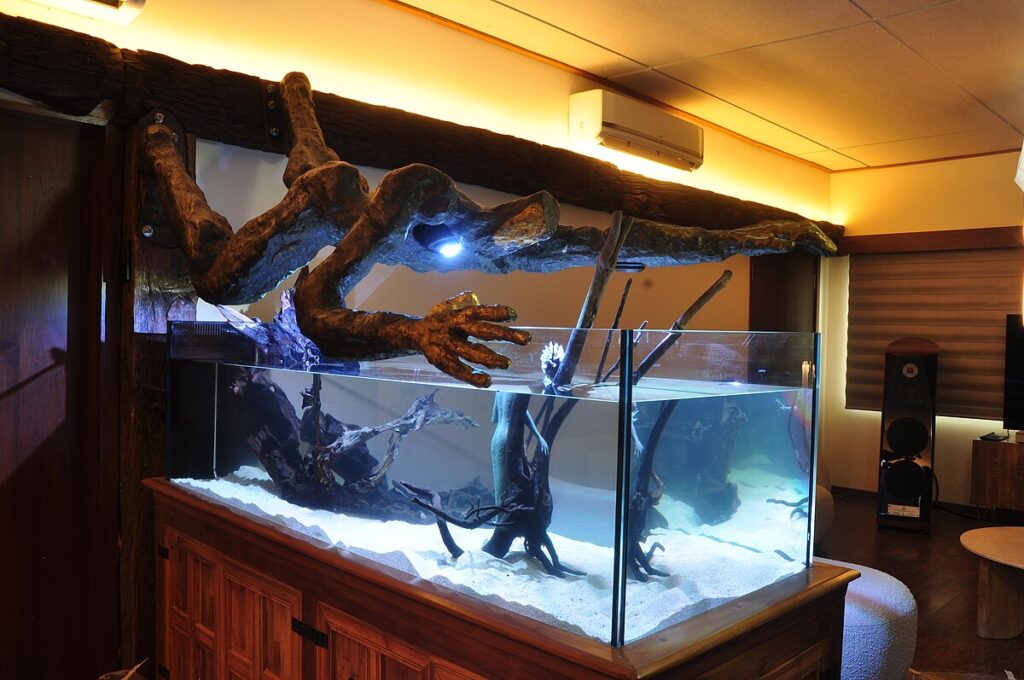
Aquascaping and freshwater ornamental fish culture, once concentrated in major metropolitan areas, have also spread to other regions. [[Kerala]] has seen increasing activity in centres such as [[Thiruvananthapuram]], [[Ernakulam]], and [[Thrissur]], while inland states, including [[Rajasthan]] and [[Madhya Pradesh]], have entered freshwater ornamental fish production.<ref>{{cite journal |title=Prospects of Ornamental Fish Culture in India |url=https://krishiscience.co.in/storage/app/finalpdf/vLj6anBfCQQh5JGgY3Kpkfh1SHtT4ohHjD3llS8s.pdf |journal=Krishi Science |access-date=23 August 2025}}</ref>
Aquascaping and freshwater ornamental fish culture, once concentrated in major metropolitan areas, have also spread to other regions. [[Kerala]] has seen increasing activity in centres such as [[Thiruvananthapuram]], [[Ernakulam]], and [[Thrissur]], while inland states, including [[Rajasthan]] and [[Madhya Pradesh]], have entered freshwater ornamental fish production.<ref>{{cite journal |title=Prospects of Ornamental Fish Culture in India |url=https://krishiscience.co.in/storage/app/finalpdf/vLj6anBfCQQh5JGgY3Kpkfh1SHtT4ohHjD3llS8s.pdf |journal=Krishi Science |access-date=23 August 2025}}</ref>
== Challenges Of Aquascaping ==
Aquascaping presents several technical and biological challenges. Excessive algae growth is a common problem, often caused by prolonged intense lighting, high nutrient levels, or imbalanced water conditions. Overcrowding fish in an aquascape can also degrade water quality and limit the healthy growth of the fish. In some cases, the introduction of non-native aquatic plants has led to ecological concerns. <ref>{{cite journal |last=Anaswara S. J.; Rafeekher Muhammed; Hasna P. M. |title=Aquascaping: A Review |journal=Agricultural Reviews |year=2024 |volume=1‑4 |doi=10.18805/ag.R-2651 |url=https://www.researchgate.net/publication/382829230_R-2651_1-4_REVIEW_ARTICLE_Aquascaping_A_Review |access-date=17 September 2025}}</ref>
== Notable people ==
== Notable people ==
Aquascaping hobby and industry in India

Aquascaping in India refers to the practice of designing and maintaining underwater landscapes within aquariums across the Indian subcontinent.[1]
History
In the early 2000s, fueled by easier access to imported supplies, and inspired by Japanese and European trends, aquascaping in India began to develop. Hobbyists drew inspiration from artists like Takashi Amano, creating nature-style and biotope aquariums that mimic natural habitats.[2][3][4]
Applications of aquascaping in India
By 2009, Indian aquarium enthusiasts had begun adopting a nature-inspired aquascaping style, moving beyond traditional fishbowls. Reports noted the use of carbon dioxide injection, imported lighting, filtration, and scavenger shrimp to maintain ecological balance, with regular partial water changes keeping upkeep manageable.[5] By the early 2020s, aquascaping in India had grown into a recognized activity involving detailed design and skill, with hobbyists investing in advanced filtration, enriched substrates, and specialized lighting, reflecting a shift from casual fish-keeping towards an art-driven practice.[6] Aquascapes can be created in a range of styles, including Dutch, Japanese, natural, rock formation, jungle, biotope, and paludarium.[7]
Public engagement
The Namma Bengaluru Aquarium in Bengaluru reopened in 2024 and put up themed aquascaping galleries which display underwater landscapes. The aquarium also offers workshops and sells plants and supplies on site.[8]
Integration into architecture
Aquascaping techniques have been applied in architectural projects in India. The Pool Yard House in Panchkula, Haryana (2017), included a glazed pool wall developed with aquascaping expertise as part of its residential landscape design.[9]
Economic significance
While current exports of ornamental fish from India are still limited, the country has been described as a “sleeping giant” in the sector because of its natural resources and scope for growth. Estimates suggest that annual export earnings could exceed US$20 million if fully developed.[10]
Regional spread
Aquascaping and freshwater ornamental fish culture, once concentrated in major metropolitan areas, have also spread to other regions. Kerala has seen increasing activity in centres such as Thiruvananthapuram, Ernakulam, and Thrissur, while inland states, including Rajasthan and Madhya Pradesh, have entered freshwater ornamental fish production.[11]
Notable people
- Abhik Mazumdar – A Delhi-based aquascaper, Mazumdar designs biotope aquariums that recreate natural ecosystems, such as coral reefs and mangrove estuaries, for private residences and corporate spaces.[4][12]
- Devagya Uikey – Winner of the Biotope Aquarium Contest (BAC) 2023 in the Southern, Western & Central Asia category, for his recreation of a natural aquatic habitat.[13]
Events and workshops
Aquascaping workshops have become a regular feature at national pet expositions.[14][15]
See also
References
- ^ Bhandari, Prakash (4 January 2014). “Aquarium hobby trends in the state, boosts ornamental fish farming”. The Times of India. Retrieved 8 August 2025.
- ^ Mukherjee, Madhumita & Pradeep, H. (2012). AQUASCAPING AND TRADE IN INDIA
- ^ Agrawal, Radhika (20 August 2021). “The quiet rise of aquascaping in Indian cities”. Hindustan Times. [1].
- ^ a b Sengupta, Durga (11 April 2004). “Mermaids, Anyone?”. Business Today. [2].
- ^ “Sea at home!”. Bangalore Mirror. 23 June 2009. Retrieved 17 August 2025.
- ^ Suvarna, Prajwal (27 February 2021). “A hobby that doubles up as serious art”. Deccan Herald. Retrieved 10 September 2025.
- ^ Kumari, Kammara Meena (2021). “Art and science of aquascaping”. The Pharma Innovation Journal. 10 (6 (Special)): 240–245. Retrieved 17 September 2025.
- ^ Fathima, Iffath (22 December 2024). “Aquascaping blooms in Namma Bengaluru Aquarium”. Bangalore Mirror. Retrieved 8 August 2025.
- ^ “One of a kind! Pool Yard House”. EPCANDI. 2017. Retrieved 17 August 2025.
- ^ “Lecture 11: Ornamental Fish Culture” (PDF). Centurion University of Technology and Management. Retrieved 23 August 2025.
- ^ “Prospects of Ornamental Fish Culture in India” (PDF). Krishi Science. Retrieved 23 August 2025.
- ^ “One of a kind!”. EPC & I. Northern Lights Communications. n.d. Retrieved 17 August 2025.
Pool Yard House, designed for an elderly couple … Project Name: Pool Yard House. Location: Sec–7, Panchkula, Haryana, India. Built-up area: 496 Sq. Mt. Completed in: 2017. Principal Architect: Ar. Badrinath Kaleru.
- ^ “Craft a Unique Indian Biotope Aquarium: A Beginner’s Guide”. Aqua Matsya. [3].
- ^ cite news
|last=Fathima
|first=Iffath
|title=Aquascaping blooms in Namma Bengaluru Aquarium
|url=https://bangaloremirror.indiatimes.com/bangalore/others/aquascaping-blooms-in-namma-bengaluru-aquarium/articleshow/116544791.cms
|work=Bangalore Mirror
|date=22 December 2024
|access-date=8 August 2025 - ^ “Aquascaping Workshop at PETEX India”. [4].

