
From Wikipedia, the free encyclopedia
Content deleted Content added
|
Tags: Mobile edit Mobile web edit
|
Tags: Mobile edit Mobile web edit
|
||
| Line 8: | Line 8: | ||
|
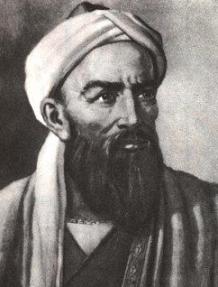
[[File:Al biruni 28-02-2010.jpg|alt=Al_biruni_28-02-2010|thumb|Iranian polymath [[Al-Biruni]], described by historian Walter J. Fischel as the “greatest Muslim Hebraist”<ref name=”auto1”>{{cite book | last1=Khanbaghi | first1=Aptin | title=The Fire, the Star and the Cross: Minority Religions in Medieval and Early Modern Iran | date=22 February 2006 | publisher=Bloomsbury | isbn=978-0-85771-266-0 | url=https://books.google.com/books?id=l7WKDwAAQBAJ&dq=Muslim+Hebraist&pg=PA47 }}</ref>]] |
[[File:Al biruni 28-02-2010.jpg|alt=Al_biruni_28-02-2010|thumb|Iranian polymath [[Al-Biruni]], described by historian Walter J. Fischel as the “greatest Muslim Hebraist”<ref name=”auto1”>{{cite book | last1=Khanbaghi | first1=Aptin | title=The Fire, the Star and the Cross: Minority Religions in Medieval and Early Modern Iran | date=22 February 2006 | publisher=Bloomsbury | isbn=978-0-85771-266-0 | url=https://books.google.com/books?id=l7WKDwAAQBAJ&dq=Muslim+Hebraist&pg=PA47 }}</ref>]] |
||
|
Some Muslim scholars have opposed the concept of ”[[tahrif]]” (which holds that [[Islamic holy books|previous revelations of God]] have been corrupted), believing that it is permissible to quote the [[Torah in Islam|Torah]] and the [[Gospel in Islam|Gospel]]. These include the 15th-century Muslim Hebraist [[Ibrahim ibn Umar al-Biqa’i]] (d. 1480), who did not prohibit the use of the Gospel or the Torah in interpreting the Qur’an. This can be seen in various verses in his tafsir (commentary of the Qur’an) titled ”Nazm al-Durar fi Tanasub al-Ayat wa-al-Suwar” ([[Arabic]]: نـظـم الـدرر في تـنـاسـب الآيـات و الـسـور). For al-Biqa’i, quoting from the Torah, Gospel and other previous revelations of God is an act that is permitted by the [[Sharia]]. Al-Biqa’i drew extensively on the [[Hebrew Bible]] and the [[New Testament]] as sources to elucidate certain Qur’anic verses.<ref name=”auto2″/><ref name=”auto”>{{cite book | last1=Saleh | first1=Walid | title=In Defense of the Bible: A Critical Edition and an Introduction to al-Biqāʿī’s Bible Treatise | date=30 September 2008 | publisher=BRILL | isbn=978-90-474-3378-1 | url=https://books.google.com/books?id=VUSwCQAAQBAJ }}</ref><ref name=”:3″>{{Cite book |last=al-Biqa’i |title=Nazm al-Durar fi Tanasub al-Ayat wa-al-Suwar |date=2006 |publisher=Dar Al Kutub Al Ilmiyah |isbn=9782745151339 |editor-last=Ghalib al-Mahdi |editor-first=A.R. |location=Beirut, Lebanon}}</ref><ref name=”McCoy2021″ /> Intellectual figures who impacted al-Biqa’i’s work included al-Haralli and al-Asbahani.<ref>{{Cite book |last=Saleh |first=Walid A. |title=In Defense of the Bible: A Critical Edition and an Introduction to al-Biqa’i’s Bible Treatise |publisher=Koninklijke Brill NV |location=Leiden, Netherlands |year=2008 |publication-date=2008}}</ref> Al-Biqa’i believed that quoting from the previous revelations of God is only permitted in terms of stories and sagas of the past.<ref name=”umar”/> Aside from this, al-Biqa’i favoured the use of rhetorical and logical coherence as the primary tool for interpretation of the Qur’an.<ref name=”auto”/><ref name=”:3″/> |
Some Muslim scholars have opposed the concept of ”[[tahrif]]” (which holds that [[Islamic holy books|previous revelations of God]] have been corrupted), believing that it is permissible to quote the [[Torah in Islam|Torah]] and the [[Gospel in Islam|Gospel]]. These include the 15th-century Muslim Hebraist [[Ibrahim ibn Umar al-Biqa’i]] (d. 1480), who did not prohibit the use of the Gospel or the Torah in interpreting the Qur’an. This can be seen in various verses in his tafsir (commentary of the Qur’an) titled ”Nazm al-Durar fi Tanasub al-Ayat wa-al-Suwar” ([[Arabic]]: نـظـم الـدرر في تـنـاسـب الآيـات و الـسـور). For al-Biqa’i, quoting from the Torah, Gospel and other previous revelations of God is an act that is permitted by the [[Sharia]]. Al-Biqa’i drew extensively on the [[Hebrew Bible]] and the [[New Testament]] as sources to elucidate certain Qur’anic verses.<ref name=”auto2″/><ref name=”auto”>{{cite book | last1=Saleh | first1=Walid | title=In Defense of the Bible: A Critical Edition and an Introduction to al-Biqāʿī’s Bible Treatise | date=30 September 2008 | publisher=BRILL | isbn=978-90-474-3378-1 | url=https://books.google.com/books?id=VUSwCQAAQBAJ }}</ref><ref name=”:3″>{{Cite book |last=al-Biqa’i |title=Nazm al-Durar fi Tanasub al-Ayat wa-al-Suwar |date=2006 |publisher=Dar Al Kutub Al Ilmiyah |isbn=9782745151339 |editor-last=Ghalib al-Mahdi |editor-first=A.R. |location=Beirut, Lebanon}}</ref><ref name=”McCoy2021″ /> Intellectual figures who impacted al-Biqa’i’s work included al-Haralli and al-Asbahani.<ref>{{Cite book |last=Saleh |first=Walid A. |title=In Defense of the Bible: A Critical Edition and an Introduction to al-Biqa’i’s Bible Treatise |publisher=Koninklijke Brill NV |location=Leiden, Netherlands |year=2008 |publication-date=2008}}</ref> Al-Biqa’i believed that quoting from the previous revelations of God is only permitted in terms of stories and sagas of the past.<ref name=”umar”/> Aside from this, al-Biqa’i favoured the use of rhetorical and logical coherence as the primary tool for interpretation of the Qur’an.<ref name=”auto”/><ref name=”:3″/> |
||
|
Al-Biqa’i also defended the use of quoting the Gospels and the Torah due to the [[Ijma|consensus]] of the Muslim community. He said that the tradition of intertextual quoting between the revelations of God or more specifically quoting the Torah and the Gospel, has become commonplace in the [[Muslim world]]. He also revealed that the tradition of quoting has become ijma’ sukuti (silent agreement). This was evidenced by the number of commentaries that practiced quotation, including [[Al-Kashshaaf|Tafsir al-Kashshaf]] written by [[al-Zamakhshari]], and [[Tafsir al-Kabir]] authored by [[Fakhr al-Din al-Razi]].<ref name=”umar”/> Al-Biqa’i also stated that the Shafi’i mufti of [[Mecca|Makkah]] supported his views and praised his work and was eager to obtain a copy of his Qur’anic commentary.<ref>{{cite book | last1=Galadari | first1=Abdulla | title=Qur’anic Hermeneutics: Between Science, History, and the Bible | date=20 February 2020 | publisher=Bloomsbury Academic | isbn=978-1-350-15210-6 | url=https://books.google.com/books?id=j_9aEAAAQBAJ&dq=Muslim+Hebraist&pg=PA182 }}</ref> |
Al-Biqa’i also defended the use of quoting the Gospels and the Torah due to the [[Ijma|consensus]] of the Muslim community. He said that the tradition of intertextual quoting between the revelations of God or more specifically quoting the Torah and the Gospel, has become commonplace in the [[Muslim world]]. He also revealed that the tradition of quoting has become ijma’ sukuti (silent agreement). This was evidenced by the number of commentaries that practiced quotation, including [[Al-Kashshaaf|Tafsir al-Kashshaf]] written by [[al-Zamakhshari]], and [[Tafsir al-Kabir]] authored by [[Fakhr al-Din al-Razi]].<ref name=”umar”/> Al-Biqa’i also stated that the Shafi’i mufti of [[Mecca|Makkah]] supported his views and praised his work and was eager to obtain a copy of his Qur’anic commentary.<ref>{{cite book | last1=Galadari | first1=Abdulla | title=Qur’anic Hermeneutics: Between Science, History, and the Bible | date=20 February 2020 | publisher=Bloomsbury Academic | isbn=978-1-350-15210-6 | url=https://books.google.com/books?id=j_9aEAAAQBAJ&dq=Muslim+Hebraist&pg=PA182 }}</ref> |
||
Revision as of 16:18, 8 December 2025
Field of Islamic studies
Muslim Hebraists (Arabic: المسلمون العبرازيم) are Muslims who use the Bible, generally referred to in quranic studies as the Tawrat and the Injil, to interpret the Qur’an.[1][2] Muslim Hebraists allow intertextual studies between the Islamic holy books, and reject the concept of wholesale tahrif (which holds that previous revelations of God have been corrupted).[3][4][5]
The Islamic methodology of tafsir al-Qur’an bi-l-Kitab (Arabic: تفسير القرآن بالكتاب) refers to interpreting the Qur’an with/through the Bible.[2] This approach adopts canonical Arabic versions of the Bible, including the Tawrat and the Injil, both to illuminate and to add exegetical depth to the reading of the Qur’an.[6]
History

Some Muslim scholars have opposed the concept of wholesale tahrif (which holds that previous revelations of God have been corrupted), believing that it is permissible to quote the Torah and the Gospel. These include the 15th-century Muslim Hebraist Ibrahim ibn Umar al-Biqa’i (d. 1480), who did not prohibit the use of the Gospel or the Torah in interpreting the Qur’an. This can be seen in various verses in his tafsir (commentary of the Qur’an) titled Nazm al-Durar fi Tanasub al-Ayat wa-al-Suwar (Arabic: نـظـم الـدرر في تـنـاسـب الآيـات و الـسـور). For al-Biqa’i, quoting from the Torah, Gospel and other previous revelations of God is an act that is permitted by the Sharia. Al-Biqa’i drew extensively on the Hebrew Bible and the New Testament as sources to elucidate certain Qur’anic verses.[5][8][9][2] Intellectual figures who impacted al-Biqa’i’s work included al-Haralli and al-Asbahani.[10] Al-Biqa’i believed that quoting from the previous revelations of God is only permitted in terms of stories and sagas of the past.[4] Aside from this, al-Biqa’i favoured the use of rhetorical and logical coherence as the primary tool for interpretation of the Qur’an.[8][9]
Al-Biqa’i also defended the use of quoting the Gospels and the Torah due to the consensus of the Muslim community. He said that the tradition of intertextual quoting between the revelations of God or more specifically quoting the Torah and the Gospel, has become commonplace in the Muslim world. He also revealed that the tradition of quoting has become ijma’ sukuti (silent agreement). This was evidenced by the number of commentaries that practiced quotation, including Tafsir al-Kashshaf written by al-Zamakhshari, and Tafsir al-Kabir authored by Fakhr al-Din al-Razi.[4] Al-Biqa’i also stated that the Shafi’i mufti of Makkah supported his views and praised his work and was eager to obtain a copy of his Qur’anic commentary.[11]
Other notable Muslim mufassirun (commentators) or philosophers of the Bible and Qur’an who weaved biblical texts together with Qur’anic ones include Al-Jahiz (d. 868), Abu al-Hakam Abd al-Salam bin al-Isbili of al-Andalus (better known as Ibn Barrajan) (d. 1141), Hamid al-Din al-Kirmani (d. 1021), Shams al-Din al-Daylami (d. 1197), the Brethren of Purity, Yusuf bin Hilal al-Safadi (d. 1296), and Syed Ahmed Khan (d. 1898).[12][13][14][15][16][17][18] According to historian Walter J. Fischel, the Iranian polymath Al-Biruni was “the greatest Muslim Hebraist”.[7]
Views
According to Al-Biruni, the Hebrew Bible is “comparatively free from confusion” whereas the Septuagint, a Greek translation of the Hebrew text, is garbled to a greater extent. While he viewed the Hebrew text favorably in terms of preservation, he was critical of specific Christian interpretations of certain biblical passages, such as Daniel 9:24-27, dismissing both Jewish and Christian interpretations related to messianic prophecies.[19] Al-Biruni also argued that the process of translation from the original Hebrew of the Jewish scripture to the Syriac texts of the Christians had altered the meaning of the words. These alterations were described as deliberate. He noticed the differences between the four gospels and detailed how Christians explained the differences between the genealogies found in Matthew and Luke. He also spoke of other gospels which the Marcionites, Bardesanites and Manicheans possessed and their contradictory nature. As he considered these to be different recessions of the Gospel he argued in summary that they were of little value.[20] As a result, Al-Biruni had more confidence in the Tawrat than in the Christian sources due to the translations the latter made from the original.[21]
Neverthekess, Al-Biruni believed that the existing gospels still contained genuine parts of the Injeel and could serve as a historical source. Thus, Al-Biruni quoted and paraphrased verses from the gospels, including those in the Gospel of Matthew and the Gospel of John, one example being the quote attributed to Jesus: “Do not mind the fury of kings in speaking the truth before them. They only possess your body, but they have no power over your soul”.[22]
Al-Biruni was as unequivocal in rejecting beliefs unacceptable to Muslims as he was in condemning unfair criticism of other faiths, such as Christianity. Though he criticised the Trinity, he believed that the Tawrat and Injeel use the words “father” and “son” in a metaphorical, as well as a literal, sense.[23]
Ibrahim Al-Biqa’i notably emphasized the Ten Commandments, signifying a break from previous Muslim scholarly silence. He also quoted extensively from the parables of Jesus as told in the Gospels, apparently a first in any Islamic text, in order to illustrate the wisdom and prophecy of Jesus.[5]
External links
References
- ^ Saleh, Walid A. (2008). “A Fifteenth-Century Muslim Hebraist: Al-Biqāʿī and His Defense of Using the Bible to Interpret the Qurʾān”. Speculum. 83 (3): 629–654. doi:10.1017/S0038713400014615.
- ^ a b c McCoy, R. Michael (2021-09-08). Interpreting the Qurʾān with the Bible (Tafsīr al-Qurʾān bi-l-Kitāb). Brill. ISBN 978-90-04-46682-1.
- ^ Christian W. Troll. “Bible and Qur’an in Dialogue” (PDF). www.sankt-georgen.de.
- ^ a b c Umar Albiqa’i, Ibrahim (June 1, 2023). “Embrassing previous traditions through intertextual interpretation”. Universitas Islam Negeri Sunan Ampel Surabaya. 13 – via NOMOR.
- ^ a b c “(PDF) A Fifteenth-Century Muslim Hebraist: Al-Biqā’ī and His Defense of Using the Bible to Interpret the Qur’ān”. ResearchGate.
- ^ “Preface”. Interpreting the Qurʾān with the Bible (Tafsīr al-Qurʾān bi-l-Kitāb). Brill. 8 September 2021. ISBN 978-90-04-46682-1.
- ^ a b Khanbaghi, Aptin (22 February 2006). The Fire, the Star and the Cross: Minority Religions in Medieval and Early Modern Iran. Bloomsbury. ISBN 978-0-85771-266-0.
- ^ a b Saleh, Walid (30 September 2008). In Defense of the Bible: A Critical Edition and an Introduction to al-Biqāʿī’s Bible Treatise. BRILL. ISBN 978-90-474-3378-1.
- ^ a b al-Biqa’i (2006). Ghalib al-Mahdi, A.R. (ed.). Nazm al-Durar fi Tanasub al-Ayat wa-al-Suwar. Beirut, Lebanon: Dar Al Kutub Al Ilmiyah. ISBN 9782745151339.
- ^ Saleh, Walid A. (2008). In Defense of the Bible: A Critical Edition and an Introduction to al-Biqa’i’s Bible Treatise. Leiden, Netherlands: Koninklijke Brill NV.
- ^ Galadari, Abdulla (20 February 2020). Qur’anic Hermeneutics: Between Science, History, and the Bible. Bloomsbury Academic. ISBN 978-1-350-15210-6.
- ^ “A Mid-Ninth-Century Arabic Translation of Isaiah? Glimpses from al-Jāḥiẓ”. Senses of Scripture, Treasures of Tradition: 325. December 5, 2017. doi:10.1163/9789004347403_015 – via www.academia.edu.
- ^ Casewit, Yousef (2016). “A Muslim Scholar of the Bible: Prooftexts from Genesis and Matthew in the Qur’an Commentary of Ibn Barrajān of Seville (D. 536/1141)”. Journal of Qur’anic Studies. 18: 1–48. doi:10.3366/jqs.2016.0221.
- ^ Mc Laughlin, Fiona (2018). “Fallou Ngom, Muslims beyond the Arab World: The Odyssey of ʿAjamī and the Murīdiyya, AAR Religion, Culture, and History (New York: American Academy of Religion and Oxford University Press, 2016). Pp. 336. $105.00 cloth. ISBN: 9780190279868”. International Journal of Middle East Studies. 50 (4): 826–828. doi:10.1017/S0020743818001083.
- ^ Casewit, Yousef (27 April 2017). The Mystics of al-Andalus. Cambridge University Press. ISBN 978-1-107-18467-1.
- ^ Enes Büyük. “An Original Approach to the Relationship Between Tafsīr and the Bible: Al-Ṣafadī’s Dialogue with Two Sacred Texts”. www.mdpi.com.
- ^ “Imtezaaj, Urdu Research Journal, UOK – Welcome”. imtezaaj.uok.edu.pk. Retrieved 2022-09-21.
- ^ Howard, Damian (2011-03-08). Being Human in Islam: The Impact of the Evolutionary Worldview. Routledge. ISBN 978-1-136-82026-7.
- ^ “The Four Kingdom Schema and the Seventy Weeks in the Arabic Reception of Daniel”. brill.com.
- ^ “Muslim Evangelism | Discussion of Islam, Muhammad & the Quran / The Injil in Islamic thinking”. www.message4muslims.org.uk.
- ^ Bjørnbekk, Vibeke Moe (June 17, 2024). “Narratives about Jews among Muslims in Norway: A qualitative interview study”. Walter de Gruyter GmbH & Co KG – via Google Books.
- ^ Starr, S. Frederick (December 5, 2009). “Rediscovering Central Asia”. The Wilson Quarterly: 33–43.
- ^ “BĪRŪNĪ, ABŪ RAYḤĀN vii. History of Religions”.

