
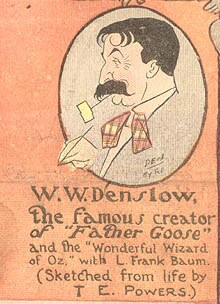
THOMAS E. POWERS
THOMAS EDWARD POWERS (cartoonist)
[edit]
{{short description|American cartoonist
{{other people||Thomas Powers (disambiguation)
{{Use mdy dates|date=April 2025
|
Thomas E. Powers |
|
|---|---|
| Born |
Thomas Edward Powers July 4, 1870 |
| Died | August 14, 1939 (aged 69) |
| Occupations | Editorial cartoonist, comic-strip and animation artist, landscape painter |
| Years active | 1889–1937 |
| Spouse(s) | Louise Hyde Powers (m.1895–1939; his death) |
https://archive.org/details/movingpicturewor27newy/page/250/mode/2up
https://archive.org/details/motography151elec/page/106/mode/1up?view=theater&q=Powers
Thomas Edward Powers (most often credited as T. E. Powers, although also Tom Powers and TEP; July 4, 1870 – August 18, 1939) was an American editorial cartoonist, comic-strip artist, and caricaturist whose drawings were published in newspapers throughout the United States between 1889 and 1937. Powers, who was reported to be President Theodore Roosevelt‘s favorite “political cartoonist”, spent 41 years of his career employed by the vast newspaper chain of William Randolph Hearst.[1][2] The Wisconsin native’s drawings were also widely used in commercial advertisements in the early 1900s, and between 1915 and the early 1920s, he supervised as well the production of animated shorts that were presented in both domestic and foreign cinemas as part of Hearst-Vitagraph newsreels and in other releases by Hearst’s International Film Service. Given the scope, popularity, and influence of Powers’ work on American journalism, politics, and popular culture, he ranks among the leading satirical artists of the early twentieth century.[3]
https://chroniclingamerica.loc.gov/lccn/sn84026749/1918-06-30/ed-1/seq-37/
Early life and initial jobs
[edit]
Thomas Powers was born in 1870 in Milwaukee, Wisconsin.[1] In his youth he moved with his parents and siblings to Kansas City, Missouri, where he obtained the remainder of his public-school education as well as his first jobs. Tom demonstrated at an early age a natural talent for drawing cartoons, an ability that got him in trouble at school for decorating blackboards in his classrooms with unflattering portraits of his teachers.[3] His playful artwork also cost him his first job as a clerk in a local grocery, where he was fired for sketching caricatures of his boss on sheets of the store’s wrapping paper.[4] He was then employed by a lithographer in Kansas City. Over 50 years later, in its 1939 obituary for Powers, the New York Herald Tribune quotes the cartoonist’s comments about that job, recollections that he had shared originally during an interview with the news magazine Editor & Publisher in 1906:
“When I was about seventeen years of age, I went to work for a lithographer who estimated that I was well worth $2 a week. I also received a goodly supply of advice on the subject of saving money. But, in spite of all he said, I squandered my money, with carelessness, recklessness and negligence…My employer said that I would never be able to draw. I was offended and resigned….”[3]
By 1889, however, after Powers obtained another position in Kansas City, the self-taught artist finally managed to save sufficient funds to leave Missouri and relocate to Chicago to enroll in formal art classes and to secure a better-paying job as an illustrator or cartoonist. While attending school at night, young “T. E.” worked days for the Chicago Daily News under the direction of Victor Lawson, who hired the cartoonist after seeing some of his pen-and-ink drawings.[2] Powers then did additional work for the Chicago Herald before he accepted a “lucrative offer” in 1894 from newspaper editor Arthur Brisbane to move to New York City to join the staff of The World, which was owned by Joseph Pulitzer.[4][5] Two years later, Brisbane joined the Hearst Corporation‘s newspaper chain and transferred to the New York Evening Journal. Powers soon followed Brisbane, a move that marked yet another successful recruitment of a popular journalist by newspaper magnate William Hearst, who at the time was waging an intense circulation war against Pulitzer.[6][a]
Hearst newspaper chain
[edit]
After T. E. Powers joined The Journal in 1896, Pulitzer enticed the cartoonist to return to The World with an improved contract. Hearst Newspapers countered again with an even more attractive offer for Powers. A court trial soon ensued over this employment contest, with Hearst ultimately prevailing. From that year onward, Powers spent the remainder of his long career working for Hearst’s newspaper empire.[7]
- [Example of comic strips]
Powers quickly became one of William Heart’s favorite artists as he developed a series of assorted comic strips that through syndication were published in newspapers across the United States. His single-panel cartoons and strips regularly portrayed and lampooned the everyday challenges faced by New Yorkers and residents in other urban environments as they coped with the rigors of parenthood, confrontations with troublesome neighbors, transportation woes, with changing fashion trends in clothing, as well as with various other political, social, and economic issues in city halls. During the early 1900s, Powers also regularly depicted living in urban communities as well as the problems faced by the growing number of city workers living in rural locations, where they often struggled commuting to work and with other recurring problems such as swarms of mosquitoes[8]. He began drawing “How’d You’d Like to be Charlie?” in 1900 and many other cartoon titles over the next two decades, such as Our Moving Pictures”, “Mike and Mike”, “Mr. Nobody Holme”, “Mrs. Trubble”, “Never Again,” “The Down-and-Out Club”, “Sam the Drummer”, “Married Life From the Inside”, “Charlie and George”, and “The League of Husbands”.[9][10][b]
He also drew a comment on fellow artist George Herriman, speculating on how he invented the famous ‘Krazy Kat’ comic. T. E. Powers also did political illustrations for the Political Round-Up column in Hearst’s Magazine, July – Dec 1913. His political cartoons had a wide following and often contained two elf-like characters, “Joy” and “Gloom”, who were among the artistic trademarks of his work. Among his other cartoon series are
The two strips speak to both ends of America: the relatively normal and the relatively rebellious.
Powers’ distinction was the first American to draw a newspaper color comic strip.
https://archive.org/details/movingpicturewor11newy/page/423/mode/1up
The popularity of Powers’ comic strips and political cartoons quickly spread among American newspaper customers during the early 1900s. To enhance the theme and establish the emotional tone for the intended messages of his pen-and-ink drawings, he began adding to them two elf-like characters: an ever-grinning, round-headed female figure he named “Joy”; the other, a male figure—he called “Gloom”—who sports a pointed black beard, black hat, and a glum expression.[5][9] At times the pair appear together in Powers’ cartoons and sometimes separately, occupying spaces in the foreground of his comic panels or tucked into corners of scenes. Soon the small characters evolved into widely recognized trademarks of Powers’ work and were “generally employed”, as described by The New York Times, “as pictorial footnotes to his editorial cartoons.”[2]. By 1912, the Chicago publishers Reilly and Britton decided to capitalize on the growing popularity of Powers’ little characters by releasing a 72-page compilation of his cartoons titled Joys and Glooms: A Book of Drawings by T. E. Powers. In the foreword, the publisher and artist greet readers with the following upbeat message:
“May this book cause the Joys to banish the Glooms from among those who turn these pages . . . Beat the drum; and troops of Joy will scatter the regiments of Misery, Anguish, Revenge, Worry, Jealousy and Envy. Optimism will pluck handfuls out of the beard of Old Grouch. . . Don’t be a Gloom. Be a Joy. It’s so easy.
Throughout Joys and Glooms, cartoon panels by Powers humorously portray marriage, health issues, superstitions, and even poetry, such as Ernest Thayer‘s “Casey at the Bat“, a mock-heroic poem about baseball originally published in the San Francisco Examiner in 1888. drawings with a marching troop off Glooms to
“The characters “Joy” and “Gloom” which he used so often, cavorted in the corners of his cartoon. If optimism was in order, “Joy” chased “Gloom,” and vice versa. “Gloom” was a mournful imp with a black beard, and “Joy” wore an eternal grin.”
“Preservation funded by The David and Lucile Packard Foundation
Joys and Glooms (1921) International Newsreel Corp.. Based on the comic strip by T.E. Powers. Animation: John C. Terry. 35mm, approx. 3 min.”
(https://www.cinema.ucla.edu/events/2004-07-22/ucla-festival-preservation-2004)
Political caricatures and editorial cartoons
[edit]
.jpg)
Powers’ cartoons were admired by his contemporaries not only for their humor but also for their uncomplicated style.[9] In its obituary for the artist in August 1939, The Sun newspaper in Baltimore alludes to the deceptive simplicity of his drawings and reveals the cartoon that was Powers’ personal favorite:
Using a relatively simple line-drawing technique, which looked easy to duplicate but was not, Mr. Powers had a gift for caricature. His own favorite cartoon was one he drew of President Calvin Coolidge sawing wood. Mr. Coolidge liked the drawing and his request for the original, on White House stationery, was one of the cartoonist’s most cherished mementos…While conceding that few caricatures were flattering, Mr. Powers once observed that he had encountered few men who objected to being caricatured. “In fact,” he said, “most of them seem to like it.”[9]
Powers’ exaggerated, highy stylized depictions of people were also often applied to illustrate newspaper coverage of political events and presentations of human-interest stories. In 1901, for instance, in the New York World, his pen-and-ink work complemented press reports about Edward M. Shepard‘s unsuccessful second run for the mayorship of New York City. Powers’ drawing of Shepard (left) in October that year captured the Tammany Hall candidate as he sat “evading questions put to him by reporters” at a campaign gathering.[11]
James Hazen Hyde
https://www.newyorkhistoryblog.com/2013/01/james-hazen-hyde-a-gilded-age-scandal.html
Support for Theodore Roosevelt
[edit]
Despite William Hearst’s past and recurring political and personal disagreements with Theodore Roosevelt, T. E. Powers was reported to be Theodore Roosevelt‘s favorite newspaper cartoonist during the Republican president’s term of office from 1901 to 1909.[5] During that period, Powers regularly produced editorial cartoons that championed Roosevelt’s efforts to enact and enforce anti-trust legislation, federal food and drug safety inspections, and to advance other progressive policies.[12] His editorial drawings also frequently showcased the investigations of many reform-minded reporters or “muckrakers“, who sought to uncover both corporate and government corruption in the United States and to encourage their prosecution. Overall, Powers’ drawings actively promoted the political and economic interests of the Hearst newspaper chain and reflected the personal opinions of its owner, William Randolph Hearst, on matters affecting the direction of United States foreign and domestic policies.[13]
The Hearst crusade technique, which advocated “moral and progressive thought in the community,” appeared daily. Editorials and pronouncements, coupled with political cartoons by such talented artists as Frederick Opper, Winsor McCay, and T. E. Powers, crusaded for such important local and national issues as municipal subways, public school reforms, a fair and judicial enforcement of laws by city and state officials, food safety and public health issues, women’s suffrage, child labor laws, an aggressive foreign policy by the United States, and the expansion and modernization of the nation’s naval fleet.[14]
https://archive.org/details/williamrandolphh00benp/page/41/mode/2up?q=Powers
https://archive.org/details/williamrandolphh00benp/page/61/mode/2up?q=Powers
https://archive.org/details/williamrandolphh0000litt/page/180/mode/2up?q=Powers
economic interests and military power globally, establish tighter health and safety standards for food production and distribution in the United States.
https://strippersguide.blogspot.com/2006/09/ep-1939-te-powers-obituary.html
Mr. Powers first attracted the attention of Theodore Roosevelt when he pictured the President threatening tall, silk-hatted figures labeled “The Trusts” with the then famous “big stick.” His satirical thrusts at “grafting politicians” or others whose right to public office he challenged, however, usually were tempered with broad humor. Powers’ 1901 caricature of New York City’s police chief William Stephen Devery being “perfumed” at a beauty parlor to mask the stench of the official’s widespread reputation for bribery and extortion.
Sued for libel, 1907
[edit]
For criticizing and graphically lampooning well-connected political officials and wealthy industrialists in the United States, Powers and publisher Arthur Brisbane were periodically threatened physically or targeted with legal actions. One example of the latter is the 1907 lawsuit filed by Chicago mayoral candidate Frederick Busse, who included the two journalists in his $150,000 libel case ($5,060,000 today) against the Hearst Corporation.[15] In his action, Busse alleged that Hearst and his “cartoonist from New York” [Powers] not only maliciously damaged the Republican candidate’s reputation—depicting him during the political campaign as a “gunfighter” associated with intimidation and banditry—but also that Hearst and his employees outside the state of Illinois had “taken charge of the Democratic newspaper campaign” in Chicago.[15]
Animated shorts, 1915—1921
[edit]
Many of the cartoon characters and storylines in those shorts had been developed earlier by Powers for his newspaper comic strips.
In 1914, William Hearst expanded his International News Service wire syndicate into the International Picture Service, a syndicate formed to create newsreels, when newsreels were an entirely new idea. The success of the Hearst Newsreel led the media magnate to create International Film Service (IFS) in 1915. The purpose of this company was to translate Hearst’s top comic strip properties into “living comic strips”, to be added to the tail-end of the newsreels. For Hearst, the purpose of these cartoons was to be the same as the comics: to increase the circulation of his newspapers. The fact that former Hearst employees Winsor McCay, George McManus, and Bud Fisher were all doing very well with animated cartoons based on their Hearst comic strips (“Little Nemo“, The Newlyweds, and Mutt and Jeff) may have had something to do with it as well, since Hearst was a sore loser.
To lead this new studio, Hearst did what he usually did: lured the best talent away from his competitors with the promise of the kind of huge salary only a Hearst could afford. The supervisor was Gregory La Cava, who had animated for the Raoul Barré studio. La Cava was given director credit for all of the IFS cartoons. IFS cartoons were the first comic strip properties to give proper credit to the director and animators, as opposed to just the creator of the comic (their credit was in tiny print on the screen, but it was there). With him came William Nolan and Frank Moser, the fastest animators in the business. Hearst even hired Raoul Barré, head of another animation studio, to animate his first series and teach the new hires how animation was done.
IFS jumped into eight different series right from the start. This was possible only because of La Cava’s extraordinary organization skills. On the other hand, the quality suffered. IFS cartoons are indeed “living comic strips”, with little motion and many dialog balloons instead of the intertitles used by most other animation studios. As a result, they are not very interesting to look at today. The studio did give birth to one enduring series, however: Krazy Kat. IFS was also the first studio for a whole host of future animation talent: Vernon Stallings, Walter Lantz, Ben Sharpsteen, Jack King, John Foster, Grim Natwick, Burt Gillett and Isadore Klein.
World War I proved the death-knell for IFS. Hearst had been pursuing an aggressive pro-German position for decades under the assumption that German immigrants were the core of his newspaper consistency. As a result, International News Service lost its credibility. The spiraling debt this created forced Hearst to cut out his least-profitable business, and that was IFS. The entire staff was laid off on July 6, 1918, a date referred to in animation history as “Black Monday”. But Hearst still cared about his animated properties, so he licensed them to John C. Terry’s studio. When that studio folded a year later, he licensed his former competitor, Bray Productions, to make the IFS cartoons. The deal lasted from 1919 to 1921, when the IFS-Bray agreement broke off; with the final few cartoons released in early 1921.
By 1914, Barré and Nolan felt confident enough to start their own studio, totally independent of Edison and dedicated 100% to animation. This Barré-Nolan Studio was probably the first of its kind (although Bray Productions also had a good claim to the title). The main title produced by the new studio was a series of inserts for the mostly live-action Animated Grouch Chaser series, distributed by Edison.
International Film Service (IFS) was an American animation studio created to exploit the popularity of the comic strips controlled by William Randolph Hearst. In 1916, William Randolph Hearst, multi-millionaire and newspaper magnate, started a rival animation studio called International Film Service and hired most of Barré’s animators, including Bill Nolan, by paying them more money than Barré could provide. Barré was reduced to being a contractor for IFS, animating the series Phables. After seven cartoons, he quit.

Between 1915 and 1921, Powers is credited with drawing, writing, or supervising the production of at least 18 silent animated cartoons, which IFS also marketed in those years as “living comic strips”. “animated satires” based on his characters. In January 1916, the International Film Service released the silent animated cartoon Mr. Nobody Holme Buys a Jitney. Those shorts were regular features in Hearst-Vitagraph newsreels, which were distributed semi-weekly and presented in thousands of theaters across the United States.[16]
https://archive.org/details/motography151elec/page/106/mode/1up?view=theater&q=Powers
Hearst-Vitagraph semi-weekly news film
https://www.imdb.com/name/nm0694632/?ref_=fn_nm_nm_1
https://www.loc.gov/item/00694018/
Later, in the early 1920s, another series of cartoons based on T. E. Powers’ popular comic-strip characters Joy and Gloom were distributed to theaters. Drawn by John Coleman Terry in consultation with Powers, one example of those animated comedies is preserved in the UCLA Film and Television Archive and is available for viewing on the streaming service Youtube.[17]
[?] International Newsreel Corporation or International News Reel Corporation? production. / From a comic strip by T.E. Powers. Animation by John C. Terry (John Coleman Terry). / Standard 35mm spherical 1.33:1 format.
Examples of Powers’ drawings used in advertising
[edit]
Some of the characters that Powers developed for his comic strips and featured in his editorial cartoons were adopted for commercial advertising by an array of manufacturers in the United States. In 1910, for example, the Kinney Brothers Tobacco Company of New York included in Tobacco insert card, 1910, from the “Mutt and Jeff” series (T88), issued with Sweet Caporal Cigarettes by. The comic strip was created by Bud Fisher, and the backs of the cards state they were illustrated by Bud Fisher, T.E. Powers, R.L. Goldberg, Tad (Dorgan), and Gus Mager.
https://www.metmuseum.org/art/collection/search/785127?sortBy=Relevance&ft=Thomas+E.+Powers&offset=0&rpp=40&pos=8
used in Carbons
[[File:ArmoryShow poster.jpg|thumb|180px|Armory Show poster
Cartoons in various formats were not Powers only interests artistically. He was also an accomplished painter, particularly of landscapes, and over the years his works were displayed in prestigious national and international exhibitions. Two of his landscapes, for example, were included in the International Exhibition of Modern Art in New York City in 1913. Also known as the “Armory Show“, that event showcased the contemporary works of notable American painters and sculptors as well as European masters in those media.[18]
Association of American Painters and Sculptors
Powers married only once, in 1895, to Louise Hyde, a native of Stafford, Connecticut.[19][c] Subsequent federal census records and the cartoonist’s obituaries indicate that the couple had no children, and that during their 44-year marriage the Powers resided at various locations in New York as well as in Connecticut. While they resided in New York City for many years, “Tom” and Louise by 1910 had moved to Norwalk, Connecticut, to a farm situated approximately 50 miles northeast of downtown Manhattan.[20] There Powers continued to produce his drawings and send them to the city for printing and release.[20] The rural atmosphere of Connecticut provided the popular cartoonist with welcomed distractions and relief from his relentless publication schedules. The New York Herald Tribune later quoted Powers’ comments about the personal enjoyment he derived from living in Norwalk, as well as the enjoyment veteran farmers in the area had watching him “work the soil”:
My favorite recreation is farming. It’s the best kind of sport in the world and is real fun, not only for myself but for the neighbors as well. They seem greatly amused. I don’t know why but that’s the status of the situation.[3]
The couple maintained their farm for another two decades, even after they later purchased another house in New York to serve as their primary residence, a property located on Long Island at 323 West Pine Street in Long Beach.[9] By the mid-1930s, however, after decades of producing thousands of drawings for publications, Powers began to curtail his work substantially due to failing health.[9] He finally retired in 1937 to the Long Beach residence], also he continued to produce occasional cartoons for publication until September the following year.
By early 1939, Powers had quit drawing entirely and spent his days confined to a wheelchair when not in bed.[9] Then on the morning of August 14, 1939—after battling what Powers’ obituaries describe as a “two-year illness”—he died at home in his sleep.[5][9] Obituaries also report that his butler and caretaker, Nicholas Russell, found the retired artist dead in bed.[3] After a brief memorial service, Powers’ body was cremated at the New York and New Jersey Crematory in Union City, New Jersey.[21] He was survived by his wife Louise, two brothers, and his sister. Louise remained in New York City until her death in the Bronx on December 27, 1944.[19][22]
Fresh Pond Crematory and Columbarium Also known as Mount Olivet Crematory, US Columbarium
Middle Village, Queens County, New York, USA[23]
Preservation of Powers’ work
[edit]
Powers produced more than 15,000 drawings for publication during his long career.[1] Many of those works survive in printed form in numerous archival copies of newspapers and journals that originally circulated between the late 1890s and 1930s.[5]
Smithsonian American Art Museum
https://www.sil.si.edu/DigitalCollections/art-design/artandartistfiles/vf_details.cfm?id=94054
https://www.metmuseum.org/art/collection/search/785134
Some of his original pen-and-ink drawings also survive in public and private collections throughout the United States. For example, 14 of his India ink political cartoons are part of the Caroline and Erwin Swann Collection of Caricature & Cartoon that is preserved in the Prints and Photographs Division of the Library of Congress in Washington, D.C. One of those drawings, titled “Banquet Scene”, depicts, as described in that collection, “Men and animals gather at banquet tables in a hall labeled ‘Down & Outs.’ They are political losers associated with incompetence, corruption, scandal, and electoral defeat, about to feast on crow.”
Other archived examples of Powers’ in either original or published works are held in repositories across the United States. In New York, at the Syracuse University, selections of his editorial cartoons and comic strips form part of the “General Cartoon Collection” preserved in the campus library.[24] Full copies of Powers’ 1912 volume Joys & Glooms: A Book of Drawings are also readily available in both digitized formats and in hard-copy editions in library collections. [25] That 72-page publication features an array of the cartoonist’s most popular characters, showcasing foremost his little “mood” figures Joy and Gloom.[26]
https://www.loc.gov/item/00694015/
Cartoons preserved at UCLA
https://www.cinema.ucla.edu/events/2004-07-22/ucla-festival-preservation-2004
- ^ The New York American (originally the New York Journal, renamed American in 1901) was a morning paper; the New York Evening Journal, an afternoon paper. Both newspapers were published by Hearst from 1895 until 1937, when the American and Evening Journal merged.
- ^ The cited cartoon titles, as well as others created by Powers, can be seen by searching “T. E. Powers” between the years 1900 and 1920 in the Library of Congress online database “Chronicling America: Historic American Newspapers”, which is referenced herein.
- ^ The spelling of Louise’s name varies in some records, at times being cited “Louisa”, such as in the United States Census of 1900 for Manhattan, New York.
- ^ a b c “T. E. Powers, Cartoonist, Dies at 69”, Hartford Courant (Hartford, Connecticut), August 15, 1939, p. B1. Retrieved via ProQuest Historical Newspapers (Ann Arbor, Michigan); subscription access through The University of North Carolina at Chapel Hill Library, September 13, 2024.
- ^ a b c “Thomas E. Powers. Long a Cartoonist…Dies at 69”, obituary, The New York Times, August 15, 1939, p.26. Retrieved via ProQuest, September 18, 2024.
- ^ a b c d e “T. E. Powers, 69, Retired Hearst Cartoonist, Dies…”, obituary, New York Herald Tribune, August 15, 1939, p. 12. Retrieved via ProQuest, September 17, 2024.
- ^ a b “Tom Powers: Cartoonist”, The Moving Picture World (New York, N.Y.), January 8, 1916, p. 251. Retrieved via Internet Archive, September 17, 2022.
- ^ a b c d e “T. E. Powers Dies; Noted Cartoonist Had Been Ill 2 Years”, The Evening Star (Washington, D.C.), August 14, 1939, A-10. Retrieved via “Chronicling America: Historic American Newspapers”, Library of Congress, September 16, 2022.
- ^ Hoff, Syd. Editorial Political Cartooning. New York: Stravon Educational Press, 1976, p. 100.
- ^ Swanberg, William Andrew. Citizen Hearst: A Biography of William Randolph Hearst (New York, NY: Scribner, 1961), p. 82.
- ^ Examples of the cited
- ^ a b c d e f g h “Thomas E. Powers, Cartoonist, Dies…”, The Sun (Baltimore, Maryland), August 15, 1939, p. 4. Retrieved via ProQuest, September 16, 2020.
- ^ https://chroniclingamerica.loc.gov/lccn/sn83045462/1939-08-14/ed-1/seq-10/#date1=1939&index=2&rows=20&words=cartoonist+Cartoonist+Noted+noted&searchType=basic&sequence=0&state=&date2=1939&proxtext=Noted+Cartoonist&y=0&x=0&dateFilterType=yearRange&page=1
- ^ The evening world. [volume] (New York, N.Y.), 12 Oct. 1901. Chronicling America: Historic American Newspapers. Lib. of Congress. <https://chroniclingamerica.loc.gov/lccn/sn83030193/1901-10-12/ed-1/seq-8/>
- ^ examples of cartoons
- ^ examples of cartoons
- ^ https://archive.org/details/williamrandolphh00benp/page/41/mode/2up?q=Powers
- ^ a b Busse Sues Hearst…Republican Candidate for Mayor Objects to Being Pictured as Gunfighter”, news item, Indianapolis Morning Star (Indianapolis Indiana), March 30, 1907, p. 1. Retrieved via ProQuest, September 19, 2022.
- ^ “Cartoonist Powers to Draw for Hearst-Vitagraph”, Motion Picture News (New York, N.Y.), January 15, 1916, p. 249. Retrieved via Internet Archive (San Francisco, CLifornia), September 23, 2022.
- ^ “JOYS AND GLOOMS (1921)”, video of T. E. Powers’ characters in animated short created by John C. Terry under the supervision of Powers. Copy preserved in the UCLA Film and Television Archive, Los Angeles, California; retrieved via YouTube, September 18, 2022.
- ^ “Database of Modern Exhibitions (DoME)European Paintings and Drawings 1905-1915”. Universität Wien, Der Wissenschaftsfond, Vienna, Austria. Retrieved 27 May 2021.
- ^ a b “New York, New York City Municipal Deaths, 1795-1949”, database, Louise H. Powers, December 27, 1944, Certificate Number 27634. Retrieved via FamilySearch online archives, Salt Lake City, Utah, September 13, 2022.
- ^ a b “Thirteenth Census of the United States Census: 1910 Population”, database with images, Thomas E. Powers and Louise Powers, Norwalk, Fairfield County, Connecticut, May 3, 1910; Enumeration District (ED) 93, sheet 16A, U.S. Census Bureau, Department of Commerce and Labor; microfilm image of original census page, National Archives and Records Administration (NARA), Washington, D.C. Retrieved via FamilySearch, Salt Lake City, Utah, September 28, 2022.
- ^ “T. E. Powers’s Body Cremated”, The New York Times, August 17, 1939, p. 27. Retrieved via ProQuest, September 12, 2022.
- ^ “POWERS, Louise H.”, The New York Times, obituaries, December 28, 1944, p. 19. Retrieved via ProQuest, September 14, 2022.
- ^ https://www.findagrave.com/memorial/245503889/t_e-powers
- ^ “General Cartoon Collection”, inclusive dates: 1870-1995, Special Collections Research Center, Syracuse University Library, Syracuse, New York. Retrieved May 17, 2025.
- ^ https://clio.columbia.edu/catalog/ht100818223?counter=1
- ^ https://archive.org/details/gri_33125014432682
{{DEFAULTSORT:Powers, Thomas E.}
[[:Category:1870 births
[[:Category:1939 deaths
[[:Category:19th-century American cartoonists]
[[:Category:20th-century American cartoonists
Category:American caricaturists
[[:Category:American editorial cartoonists
[[:Category:Artists from Wisconsin
[[:Category:Artists from Milwaukee, Wisconsin
[[:Category:20th-century American male artists]
[[:Category:American illustrators
[[:Category:American comic strip cartoonists]
[[:Category:American humorists]
[[:Category:American satirists
[[:Category:American anti-corruption activists
[[:Category:Newsreels
[[:Category:American animators
In addition to being barred by various review boards and prompting revisions to the Production Code, the film became a central issue in a highly publicized murder that occurred outside Chicago in October 1947. That homicide involved a 12-year-old boy, Howard Lang, who used a switchblade and a block of concrete to kill a seven-year-old playmate.[1] During Lang’s trial, his lawyers argued that the boy had watched Born to Kill less than three weeks prior to the killing[2] and that the film’s violence triggered in their young client a form of temporary insanity.[3] Although the boy was found guilty and sentenced to 22 years confinement in the state penitentiary,[4] the Illinois Supreme Court later overturned his conviction, ruling that he was too young to understand his actions.[5] Lang was then retried and acquitted on those grounds.[6] The presiding judge in that second trial recommended the establishment of laws to censor violent films like Born to Kill and to hold theater managers criminally liable for showing them.[6]
—————
In 1948, 12-year-old Howard Lang was convicted for using a switchblade and a piece of concrete to kill a seven-year-old boy outside Chicago the previous year.[1] Lang’s lawyers argued that he had watched Born to Kill less than three weeks prior to the homicide[2] and that the film’s violence triggered a form of temporary insanity.[3] The Illinois Supreme Court overturned Lang’s conviction, finding that he was too young to understand his actions.[7] He was then acquitted following a retrial, but the judge recommended laws to censor violent films and hold theater managers liable for exhibiting them.[8]
- ^ a b Murder Trial Begins For Chicago Boy Of 12″, Los Angeles Times, February 17, 1948, p. 2. Retrieved via ProQuest, October 2, 2023. Cite error: The named reference “LAT2” was defined multiple times with different content (see the help page).
- ^ a b “Bans Film From Court”, Boxoffice, April 6, 1948, p. 64. Retrieved via Internet Archive, October 2, 2023. Cite error: The named reference “BO3” was defined multiple times with different content (see the help page).
- ^ a b “‘Born to Kill’ Movie Cited In Mitigation For Boy Slayer Lang”, Chicago Daily Tribune, March 20, 1948, p. 3. Retrieved via ProQuest, September 29, 2020. Cite error: The named reference “CDT2” was defined multiple times with different content (see the help page).
- ^ Fitzpatrick, Rita (1948). “Lang Weeps Over 22 Year Murder Term”, Chicago Daily Tribune, April 21, 1948, p. 1. Retrieved via ProQuest, October 3, 2023.
- ^ “Illinois Supreme Court”, news item, The St. Petersburg Times (Florida), January 20, 1949, p. 1.
- ^ a b “LANG ACQUITTED BY JUDGE IN 2D MURDER TRIAL: State Plans New Move to Confine Him”, Chicago Daily Tribune, April 27, 1949. p. 7.
- ^ “Illinois Supreme Court”, news item, The St. Petersburg Times (Florida), January 20, 1949, p. 1.
- ^ “LANG ACQUITTED BY JUDGE IN 2D MURDER TRIAL: State Plans New Move to Confine Him”, Chicago Daily Tribune, April 27, 1949. p. 7.
Born in 1899 in Providence, Rhode Island, George Macready was the elder of two children of Grace C. (née Clark) and George Peabody Macready Sr., who worked as a superintendent at a local cotton mill.[1][2] Young George graduated from the Classical High School in Providence in 1917 and then enrolled at Brown University, where he majored in mathematics, was a member of Delta Phi fraternity, and earned a letter serving as the school’s football team manager.[3] While attending Brown, Macready on September 12, 1918 registered for military service during World War I, although the conflict ended before he was inducted. Later, prior to his graduation from the university in 1921, Macready was seriously injured in an automobile accident when the Ford Model T in which he was riding skidded off an icy road and hit a telephone pole. In the collision he was hurled through the windshield of the car and sustained a long gash to his right cheek, which was stitched up by a nearby veterinarian.[source] The injury left Macready with a permanent scar that gave him a distinctive appearance, one that would later influence the types of acting roles he was offered by casting directors in film and television productions. The scar, coupled with Macready’s deep voice and his precise diction, often made him an ideal, if not stereotypical, choice to portray authoritarian or villainous characters.[source]
After graduating from Brown, Macready initially employed at a bank in Providence before moving to New York City to work as a newspaper reporter. There he soon became involved in stage acting, a career He claimed to have been descended from the 19th-century Shakespearean actor William Macready.
——— EXPANDED ANNE CORNWALL ENTRY ———
Anne Cornwall (born Anna Mary Reardon; January 17, 1897 – March 2, 1980) was an American dancer, singer, and actress whose career on stage and in motion pictures spanned over four decades, from her early work as a chorus girl after graduating from high school in 1916 to her film performances in starring roles, as supporting characters, and in bit parts from 1918 to 1960. Cornwall’s credited and uncredited screen appearances, as cross-referenced from current filmographies and from available period newspapers and trade publications, total no less than 70 productions. Her most notable performances were in silent films and early talkies, including such theatrical releases as The Knife (1918), The World To Live In (1919), The Girl in the Rain (1920), Her Gilded Cage (1922) with Gloria Swanson, The Flaming Frontier (1926) opposite Hoot Gibson, the comedy-drama College (1927) with Buster Keaton, and the Hal Roach short Men O’ War (1929) featuring Laurel and Hardy.
Anna Reardon was born in Brooklyn, New York, in 1897, the only child of Eleanor (née Thomson of Scotland) and Pennsylvania native John Reardon.[1][2][3] By 1905, Eleanor had relocated with Anna, leaving Brooklyn and traveling 130 miles northward to reside in Catskill, New York, where, according to the New York State census that year, Eleanor worked as a “servant” in the household of the James Becker family at 68 Williams Street.[4] The circumstances surrounding Eleanor’s move to Catskill remain unverified, namely whether her husband John had died or whether the couple had divorced at some point. Federal records, however, suggest that it was the latter. The United States census of 1900 shows that only Eleanor and three-year-old Anna were living together as boarders in the home of Emma A. Webb in Brooklyn. That census also documents that Eleanor still identified herself as being married, not as a widow. In 1906, presumably after her formal divorce from John, she wed Alfred Hand Cornwall, who worked as a plumber in Catskill.[3]
Additional details about Anna’s childhood and teenage years growing up in Catskill can be gleaned from references to her in period film-industry publications and newspaper articles. With specific regard to her formal schooling, the 1924 edition of the Stars of the Photoplay states only that she was educated in “Catskill, N.Y”.[5][6] That information is confirmed by a 1916 notice by Catskill’s newspaper The Examiner, which identifies that year’s graduates from the local high school, including “Anna Cornwall”.[7]
Some insight into Cornwall’s stage career prior to her transition to motion pictures is revealed in short biographical entries about her in trade publications circulated between 1918 and 1930.[5][6] At what age Anna, later “Anne”, began to perform professionally on stage is uncertain, although Picture-Play Magazine in its April 1925 issue refers to her being a former “child dancer of the New York stage”.[8] Motion Picture Classic in its October 1920 issue also describes in more detail how Cornwall initially gained her experience in entertainment as a chorus girl and singer in musical theatre. In an article titled “How Young is Anne?”, the New York monthly provides additional background on Cornwall’s motivation to act in films and about her actual move from stage to screen: [9]
All her life she’s wanted to be an a[c]tress. Finally the desire got so burning that she couldn’t stand it any longer. She simply announced that she was going to try her luck in the chorus, got herself a job and learnt to dance. Her first season [1916] was in the New York ensemble. Next season saw her doing a small singing and dancing bit in another musical comedy, Oh, Look! in which the Dolly Sisters and Harry Fox were featured. And then one day she surprised her sisters in the chorus by announcing her intention of “breaking into” pictures. She went to the World studios in the East and was cast in a very small part with Alice Brady. After that she went back to her show, danced some more, and got a call to be in another picture with Miss Brady….[9]
With further regard to Cornwall’s pre-film career, Universal Pictures‘ magazine The Moving Picture Weekly identifies at least one specific Broadway location where she had performed as a dancer and singer. The periodical in its June 12, 1920 issue states, “Miss Cornwall formerly was one of the prettiest chorus girls who played in the series of intimate musical shows presented at the Princess Theatre” located on West 39th Street in New York City.[10]
The earliest references to “Anne Cornwall” in film-industry publications date from January 1918. Some examples of those references from that month can be found in issues of the widely read Chicago-based film journal Motography and its New York counterpart Motion Picture News.[11] These periodicals and others cite Cornwall in their news updates about Universal developing a film adaptation of the 1917 Broadway play The Knife.[12] Starring Alice Brady in its adaptation, the studio assigned the project’s production to Select Pictures Corporation, a company that Universal officially purchased and integrated into its overall operations later that year.[13] In its January 5 issue, Motion Picture News lists Cornwall as among the supporting players in The Knife.[14] The periodical then provides another update on the production a week later, announcing that the fledgling actress and the rest of the cast were preparing to leave Select’s facilities on Fifty-Sixth Street in Manhattan and travel to Jacksonville, Florida to film “Southern scenes” at Emerson Plantation.[15]
The remainder of 1918 and 1919 brought more screen roles to Cornwall, two of which were parts in additional films starring Alice Brady, In the Hollow of Her Hand and The Indestructible Wife. Anne also garnered more industry attention and public notice for her appearances as the bride in The World To Live In, as Cecile in The Firing Line, and in an uncredited role in Prunella.[13][16] Another role she played at that time was as an angler in Quest of the Big ‘Un,[17] a short comedic documentary released in August 1918 “on the skills and techniques of river fishing”.[18] Shot on location in Catskill, New York and directed by her future husband Charles Maigne, Cornwall as “the charming young lady” was able to demonstrate on screen her real-life expertise in fly-fishing for trout, a sport she had enjoyed since her youth and growing up in Catskill.[19]
The Girl in the Rain
[edit]
Following Cornwall’s initial work as an uncredited and credited player in short films, as well as in features starring Alice Brady, Anne began receiving more substantial parts. The next decade proved to be the most active and successful period of her motion-picture career as she worked for a variety of studios. In addition to Select Pictures and Universal, she was cast in productions by Artcraft Pictures, First National Pictures, Warner Bros., RKO, Fox, Christie Film Company, Educational Pictures, Paramount, United Artists, Hal Roach Studios, Pathé, and by several independent companies whose film projects were arranged through and distributed to theaters by Associated Exhibitors[6]
Cornwall in January 1920 received additional positive reviews as a supporting character in The Copperhead with Lionel Barrymore as the film’s lead. The director of the production was once again Charles Maigne, whom Cornwall would marry the next year.[2] After that project with Paramount, she was cast in her first starring role by Universal in The Path She Chose about a plucky “handicapped lass”.[20] The Moving Picture World in its review of her performance in that melodrama wrote, “Anne Cornwall has an intelligent conception of the part she plays and is exceptionally well cast in the role of a young woman reared in a home of unsound principles who struck out for herself.”[21] According to Motion Picture Classic, however, it was two particular films in 1920 that significantly elevated the actress’s status with studio executives and her popularity among theatergoers. One was the previously mentioned film The Copperhead; the other was The Girl in the Rain in which Cornwall co-starred with Lloyd Bacon:
Almost everything Anne has ever done on the screen has been with her [Alice Brady]—until she played the ingenue role in “The Copperhead” with Lionel Barrymore. That role, of course, established her. The Universal people saw her work and decided to “import” her to their West Coast studios. And there she was, working in one of those downtrodden-factory-girl parts in a story called “The Girl in the Rain”….[9]
For her portrayal of Judith in The Girl in the Rain, Cornwall received increasingly more coverage in trade journals and magazines.[22] Universal’s “recent stellar find”[22] also drew widespread interest from newspapers throughout the United States, even extending into the territory of Alaska. The Girl in the Rain finally arrived in faraway Juneau nearly a year after the film’s initial release. The territorial capital’s local newspaper, The Alaska Daily Empire, announced in its June 25, 1921 issue that the 50-minute film was to be presented at the local cinema:
…”The Girl in the Rain,” a Universal feature starring Anne Cornwall…is to be seen at the Palace Theater tonight and Sunday matinee…the story takes on special interest because it introduced a new star in the person of Anne Cornwall, a former musical comedy favorite who is comparatively new to the screen.[23]
Not all reactions to The Girl in the Rain were positive. J. G. Varnell, the owner of the Princess Theater in Piedmont, Alabama gave a very succinct, dismissive review of the film and of the actress’s performance in a 1921 issue of the Exhibitors Herald: “Very poor. Nothing to it. Tame little story with a tame little actress.”[24] Cornwall after her work on The Girl in the Rain played the title character in La La Lucille. That film, released in July 1920, had a storyline based on another Broadway musical comedy.[25][26] Unfortunately, the elaborate five-reeler is currently classified by film historians as “presumed lost“.[27][28]
Cornwell took a year-long break from making films after marrying Charles Maigne in February 1921. Her filmography confirms that hiatus from acting, showing no 1921 releases of productions in which she performed. The 1924 edition of Stars of the Photoplay states that Cornwall’s absence from acting was longer than that, noting then that “She has been away from the screen for several years, but is steadily winning her way back into the hearts of the fans.”[5] Contrary to that publication’s contention, the actress definitely returned to film work by early 1922, not “several years” later. She played Betty Alden, a major supporting character for the lead Richard Barthelmess in First National Pictures’ romantic dramaThe Seventh Day, released February 6.[13] Cornwall is also credited with performing in two additional productions for Paramount in 1922: as the “invalid sister” in Her Gilded Cage, released in April, and as Lady Jane Carr in To Have and to Hold, released in October.[29]
Between 1923 and 1931, Anne continued to secure starring roles or parts as important supporting characters. She appeared in at least 32 more “photoplays” during those years, working with some of the most popular performers of that era. She was cast again with Lionel Barrymore, co-starring with him in the 1925 crime drama The Wrongdoers, as well as opposite Western cowboy star Hoot Gibson in The Flaming Frontier (1926). Later, with Cornwall already being recognized in the media as “One of the leading comediennes of two-reel comedies”,[30] she played Buster Keaton‘s girlfriend in College (1927) and as Stan Laurel‘s romantic interest in the comedy short Men O’ War (1929), the latter being her first performance in a sound film.[13] Three other early pre-Code “talkies” in which she was cast are Warner’s eight-minute “bedroom farce” The Baby Bandit (1930) with Bobby Watson,[31][32] the crime drama The Widow from Chicago (1930) for First National, and High Stakes (1931), an RKO comedy with Lowell Sherman.[33]
Cornwall was also returning periodically to perform on stage in this period. One such occurrence was in 1930, when the nation’s leading entertainment newspaper Variety announced in its January 29 issue that she had made her debut earlier in the month at the Dufwin Theatre in Oakland, California playing the lead in a revival of Kolb and Dill‘s 1923 Broadway comedy Give and Take.[34][35]
“57 Inches of Talent”
[edit]
“Of all the small-sized actresses in Hollywood”, observed the movie fan magazine Photoplay in 1925, “Anne Cornwall is about the tiniest.”[36] Such comments about the “Baby Star’s” size are noted frequently in contemporary publications.[36] The brunette actress was indeed unusually short in height for an adult, a physical characteristic that proved to be both an advantage and disadvantage in her casting over the years. Her petite size brought her many screen roles playing little sisters, precocious teens, “‘half pint'” heroines, and 95-pound (43 kg) “baby Venus de Milos“;[37] but, conversely, her lack of height also often precluded her from being cast opposite much taller performers. Nevertheless, Universal Pictures exhibited great confidence in the ability of the company’s “dainty piece of femininity” to draw large audiences.[38] In the June 19, 1920 issue of The Moving Picture Weekly, Universal’s promotional add for The Girl in the Rain offers an explanation why audiences were inherently attracted to the studio’s small performer: “THERE is something very appealing in the personality of ANN [sic] CORNWALL, particularly when she plays the part of a young girl in dire distress”.[39]
Cornwall’s reported height varied from source to source over the years, ranging from one inch to three inches under five feet. The Moving Picture Weekly lists her in 1920 as being a mere 4 feet, 9 inches (145 cm). In an article published in its June issue, the news journal describes the 23-year-old actress as “57 Inches of Talent”,[40] adding that Cornwall herself often joked about her height. The Weekly in that same article recounts how easily she could be mistaken publicly for a child:
Anne is so tiny that on a recent trip from Los Angeles to San Francisco, she wagered a friend she could ride for half fare. Curling her feet under her on the chair and letting down her dark-brown curls, she handed the conductor a child’s ticket, and it was punched without a word. After she had collected the amount of the wager (this seems to be necessary as a character episode), she explained the matter to the conductor and paid him the balance of the fare.[40]
In another feature article about Cornwall published in June 1926, one titled “The Tiniest Girls in Pictures”, Picture-Play Magazine compares and ranks the respective heights of 16 leading actresses who were deemed the smallest performers in America cinema. The monthly magazine judges Anne once again to be the shortest among her colleagues, although by the magazine’s measuring tape she stood 4 feet, 10.5 inches (149 cm). Film star Mary Pickford followed Cornwall as the second shortest at 4 feet, 11 inches (151 cm).[41]
In 1925 Anne Cornwall was chosen by the Western Association of Motion Picture Advertisers (WAMPAS) as one of its “Baby Stars” in the American film industry.[42] The annual honor, established three years earlier, involved the selection of 13 young actresses (15 in 1932) who WAMPAS believed showed great potential for stardom as they continued their “long, uphill climb [to] cinematic success”.[43] In addition to Cornwall, the other actresses selected as the “Baby Stars of 1925” were Betty Arlen, Violet Avon, Olive Borden, June Marlowe, Ena Gregory, Madeline Hurlock, Natalie Joyce, Joan Meredith, Evelyn Pierce, Dorothy Revier, Duane Thompson, and Lola Todd.[43] The “WAMPAS Frolic”, the official ceremony to award Anne and the other 1925 inductees with “certificates of merit”, was held February 5, 1926 in the auditorium of the Ambassador Hotel in Los Angeles.[43]
Either due to Cornwall’s personal choices after her second marriage in 1931 or in response to casting decisions by studio executives, she once again stepped back from acting. She appeared only occasionally on screen over the next three decades. Not only did the number of her film appearances drop dramatically after 1931 but so did the quality of her roles, devolving over time to minor uncredited parts in assorted productions. Her available filmographies show that from 1932 until her last film role in 1960, she was cast in only 21 known productions. Her next part in a motion picture was not until 1937, the same year she separated from her second husband, Ellis Taylor.[44] That year she played a small uncredited role as an alternate juror in Paramount’s screwball comedy True Confession.[13] The timing of Cornwall’s return to studio work suggests that she may have needed some additional income at the time to support herself and the son she had five years earlier with Taylor. Then, in 1938 and 1939, she managed to secure additional minor parts in two very popular movies, as a secretary in You Can’t Take It with You and as a reporter in Mr. Smith Goes to Washington.[45]
Cornwall through the 1940s and 1950s continued to play uncredited minor characters and bit parts in a wide range of films to help support herself and her son Peter. A number of her returns to the screen mentioned in industry magazines in those decades have not been listed in previously printed and current online filmographies of her work. Some of those unlisted releases include The Great John L (1945), Whistle Stop (1946), and The Woman in White (1948).[46] Later, according to her filmography compiled by the American Film Institute, her final screen appearance, again uncredited, is in the 1960 science-fiction comedy Visit to a Small Planet starring Jerry Lewis.[13]
When not working on motion pictures and later in semi-retirement, Cornwall pursued a variety of pastimes. The petite actress, who was a sports enthusiast, quickly gained a reputation early in her Hollywood career for her skills and determination to excel in any recreational contest. In her biographical profile published in Who’s Who on the Screen in 1920, the editors of that studio reference note, “…even though diminutive in size Miss Cornwall easily holds her own in athletic competition”.[17] Fishing and hunting, though, were her favorite activities ever since childhood and residing in upstate New York in a town adjacent to the Hudson River and Catskill Creek, a 46-mile-long tributary of the Hudson teeming with trout and surrounded by forests full of wild game.[19] In an interview with Picture-Play Magazine for its January 1921 issue, she describes her experience as an angler and her first outing hunting with a shotgun:
The [film] company worked Sunday, but I went fishing at Big Bear. Caught one trout. But the Sunday before, at Catalina I got seven barracuda, a lot of mackerel, and one shark. That’s no fish story—it’s so. My, I was surprised when all the tackle went overboard like a shot. Finally I got him up to the boat—and he was a seven-foot shark—and they were just going to gaff him when the hook broke. But what I like is trout fishing. Dry fly and two-and-a-half ounce rod. You have to go after them. None of this dangling the bait and waiting for a flabby old fish to nab it…. I like hunting. I remember my first gun. It was a regular doublebarreled shotgun, and it looked as big as a cannon to me. I shot a squirrel, and the gun made so much noise I thought it was broken. While I was looking at the gun I lost track of the squirrel. Or maybe I blew it to pieces.[19]
Cornwall for years was also active in local and regional dog shows as reported by Photoplay in 1924:
THE motion picture industry was well represented in the recent California dog showheld in Hollywood. Mrs. Elliott Dexter’s two beautiful shepherd dogs, both champions, won everything in their class. Al Christie, producer of the Christie comedies, also came away with a number of blue ribbons tucked under his arm. Enid Bennett showed her beautiful Chow, “Buddha,” in the puppy class and captured honors, as did Anne Cornwall (Mrs. Charles Maigne) with her Scottish terrier.[47]
During the final decades of her life, particularly in the 1950s, Cornwall also donated an appreciable amount of her personal time in Hollywood promoting and serving on the board of directors of the Screen Actors Guild.[48]
Cornwall married twice, the first time to writer/director Charles Maigne in Babylon, New York, on February 12, 1921.[2] By the autumn of 1929, their relationship had declined to the point that film-industry publications reported the couple had been living apart for nearly a year.[49] Then, on November 28, 1929, just before “their divorce suit was about to be settled in court”, 50-year-old Charles died at Letterman Army Hospital in San Francisco from a “breakdown” in his health.[49][50]
Cornwall remarried two years after Charles Maigne’s death. Contemporary newspapers announced in the latter half of September 1931 that she had eloped with Ellis Wing Taylor Sr, a prominent architect in Los Angeles and a renowned yachtsman.[51] The couple traveled from California to Arizona, where they married in Yuma on September 16.[51] Thirteen months later, they had their only child, Peter Tracy Taylor, who was born on October 12, 1932. Anne and Ellis Taylor separated in 1937, with “the former actress” filing “for separate maintenance” for herself and their son.[44] Following her divorce from Ellis, Cornwall continued to use his surname, at least in her personal life, until 1940, when the federal census that year confirms she was officially divorced and that the couple’s seven-year-old Peter was living with her in Los Angeles.[52] A decade later, the 1950 census shows that Anne had reverted to using “Cornwall” both personally and professionally. That census also shows that she continued to identify herself as divorced, as being head of household, and her employment status still as “Acting” at “Movie Studio”.[53]
Cornwall, at age 83, died of arteriosclerosis and “circulatory failure” at Beverly Manor Convalescent Hospital in Van Nuys, California in March 1980.[54] At the time she was still residing with her son in North Hollywood.[54] Cornwall was buried at Glen Haven Memorial Park in Sylmar, California, located just a short distance north of Van Nuys.[55] Her mother Eleanor Thomson Cornwall and her half-brother Charles Alfred Cornwall preceded her in death and are also buried at Glen Haven.[55]
- ^ “New York, New York City Births, 1846-1909”, New York Municipal Archives, Manhattan. Retrieved via FamilySearch archives, Salt Lake City, Utah, November 28, 2025.
- ^ a b c Marriage certificate of Anna “Mariea” Reardon to Charles Maigne, Babylon, New York, February 12, 1921; document identifies bride’s parents, “John Reardon” of the United States and “Eleanor Thomson” from Scotland; “New York, County Marriages, 1778-1848; 1908-1937.” FamilySearch archives, November 17, 2025.
- ^ a b United States census of 1910, Catskill, New York; entries document that Eleanor and Alfred Cornwall [misspelled “Cornell”] had been married for four years by 1910 and confirm that Pennsylvania was the birthplace of Anna R[eardon]’s biological father John Reardon. FamilySearch, December 2, 2025.
- ^ “New York State Census, 1905: Enumeration of Inhabitants”, Catskill, New York, Eleanor and Anna Reardon living in household of James Becker and daughter Emily F. Becker, June 1, 1905; digital copy of original document. FamilySearch, December 2, 2025.
- ^ a b c “Anne Cornwall”, Stars of the Photoplay (Chicago: Photoplay Magazine, 1924); entries with portraits and biographical sketches of film stars, p. [51]. Retrieved via Internet Archive (San Francisco, California), November 17, 2025.
- ^ a b c “Ann [sic] Cornwall”,1930 Motion Picture News Blue Book (New York, N.Y.: Motion Picture News, Inc.), p. 52. Internet Archive, November 13, 2025.
- ^ “Catskill High School Grads, 1901-1928”, transcription of published newspaper clippings from The Examiner (Catskill, New York). Retrieved via RootsWeb, a subsidiary of Ancestry.com, Lehi, Utah, November 14, 2025.
- ^ “The New Baby Stars”, Picture-Play Magazine (New York, N.Y.), 1922, p. 95. Internet Archive, November 27, 2025.
- ^ a b c Handy, Truman B. (1920. “How Young is Anne” Motion Picture Classic (Brooklyn, New York), October 1920, pp. 23, 71. Internet Archive, November 18, 2025.
- ^ “‘The Girl in the Rain’ A Special Cornwall”, The Moving Picture Weekly (New York City: Universal Pictures), June 12, 1920, p. [4]. Internet Archive, November 25, 2025.
- ^ “Buys ‘The Knife’ For Screen Presentation”, Motography (Chicago, Illinois), January 5, 1918, p. 24; “Select Secures ‘The Knife'”, Motion Picture News (MPN), January 5, 1918, p. 99. Internet Archive, December 7, 2025.
- ^ “The Knife” presented at the Bijou Theatre April 12, 1917–June 1917. Internet Broadway Database (Manhattan, New York: The Broadway League); hereinafter cited “IBDB”. Retrieved November 12, 2025.
- ^ a b c d e f “Anne Cornwall”, filmography, American Film Institute (AFI) catalog, Los Angeles, California hereinafter cited “AFI”. Accessed November 11, 2025. Cite error: The named reference “AFI” was defined multiple times with different content (see the help page).
- ^ “Select Secures ‘The Knife'”, MPN, January 5, 1918, p. 99. Internet Archive, November 24, 2025.
- ^ “‘The Knife’ Gets Scenes in Florida”, MPN, January 12, 1918, p. 249. Internet Archive, December 6, 2025.
- ^ “‘The World To Live In'”, Motion Picture Classic, April 1919, p. 30. Internet Archive, December 10, 2025.
- ^ a b “Charles, Donald Fox and Silver, Milton L. (eds.),“ANNE CORNWALL”, Who’s Who on the Screen (New York, N.Y.: Ross Publishing, 1920), p. 232. Internet Archive, December 4, 2025.
- ^ “The Quest of the Big ‘Un”, Internet Movie Database, a subsidiary of Amazon; hereinafter cited “IMDb”. Accessed December 7, 2025.
- ^ a b c “A Wee, Bonnie Lassie”, Picture-Play Magazine (Manhattan, New York: Street & Smith Corporation), January 1921, pp. 21, 91-92; “KEEPING UP WITH RUDOLPH”, MPN, p. 953. Internet Archive, December 10, 2025.
- ^ “Old-Time Plot Handicaps New Star’s First One”, Wid’s Daily (New York City: Wid’s Films and Film Folks), May 9, 1920, p. 30. Internet Archive, December 15, 2025.
- ^ “‘The Path She Chose'”, The Moving Picture World (New York, N.Y.: Chalmers Publishing Company), May 29, 1920, p. 1237. Internet Archive, December 14, 2025.
- ^ a b “‘THE GIRL IN THE RAIN’ A SPECIAL CORNWALL”, The Moving Picture Weekly, June 12, 1920, p. 4. Internet Archive, December 5, 2025.
- ^ “Story of Old Virginy at the Palace Tonight”, The Alaska Daily Empire (Juneau), June 25, 1921, p. 3. Retrieved via Chronicling America, Library of Congress, Washington, D.C., November 25, 2025.
- ^ “Universal”, Exhibitors Herald, February 12, 1921, p. 86. Internet Archive, December 16, 2025.
- ^ “Publicity Page for ‘La La Lucille'”, The Moving Picture Weekly, July 21, 1929, pp. 4-5. Internet Archive, December 10, 2025.
- ^ “La La Lucille”, Broadway play that originally ran at Henry Miller’s Theatre (now Stephen Sondheim Theatre) May 26–October 11, 1919. IBDB, December 6, 2025.
- ^ “7,200 Lost U.S. Silent Feature Films (1912-29) National Film Preservation Board”, running updated list (current as of October 23, 2019), “Girl In The Rain, The (1920), Rollin Sturgeon”, p. 50, film number 2256. National Film Preservation Board, Library of Congress, Washington, D.C. Retrieved December 16, 2025.
- ^ “La La Lucille” (1920), Progressive Silent Film List compiled by Carl Bennett. Retrieved online via the Silent Era Company, November 24, 2925.
- ^ Shirk, A. H. (1922).“Paramount Views / Her Gilded Cage”, Paramount PEP, August 28, 1922, p. 12. Internet Archive, December, 19, 2025.
- ^ “Educational Announces List Of Releases for February”, Moving Picture World, January 22, 1927, p. 277.
- ^ “3758 Baby Bandit, The” (1930), “Film Buyers Section: The Short Features [With Sound]”, Exhibitors Herald-World (Chicago, Illinois), October 18, 1930, p. 19.
- ^ Kelly, Burt (1930). Review of “The Baby Bandit”, Publix Opinion (New York City: Publix Theatres Corporation), October 3, 1940, p. 4.
- ^ “Casts of Current Photoplays/’High Stakes'”, Photoplay, July 1931, p. 136.
- ^ “Dufwins Week Change”, Variety, January 29, 1930, p. 83, col. 4. Internet Archive, December 7, 2025.
- ^ “Give and Take” presented at 49th Street Theatre, Manhattan, New York, January 15 to June 1, 1923. IBDB, December 8, 2025.
- ^ a b “Just A Baby Star”, Photoplay, December 1925, p. 51. Internet Archive, November 30, 2025.
- ^ “Anne Cornwall is Lightest Comedienne” The Sun (Baltimore, Maryland), July 25, 1925, p. E5. Retrieved by subscription via ProQuest Historical Newspapers, November 29, 2025.
- ^ “How It All Started”, Universal Weekly (New York, N.Y.), January 23, 1926, p. 13. Internet Archive, December 3, 2025.
- ^ “THE GIRL IN THE RAIN”, The Moving Picture Weekly, June 19, 1920, p. [24]. Internet Archive, December 6, 2025.
- ^ a b “Publicity Page for ‘The Girl in the Rain”, subheading “57 inches of talent”, July 10, 1920, p. 7. Retrieved via Internet Archive, November 17, 2025.
- ^ “The Tiniest Girls in Pictures” by Helen Ogden, Picture-Play Magazine (New York, N.Y.), June 1926, pp. 86-87, 104. Internet Archive, November 29, 2025.
- ^ “Wampas Baby Stars of 1922 – 1934 with Photos of Each Class”. Immortal Ephemera. February 5, 2013. Retrieved June 24, 2018.
- ^ a b c “Thirteen ‘Baby Stars of 1925’ Selected by Writers of Hollywood”, Photoplay, March 1925, pp. 28-29. Internet Archive, December 11, 2025.
- ^ a b “News From the Dailies”/”Coast”, Variety, January 6, 1937, p. 223, col. 3. Internet Archive, December 7, 2025.
- ^ Anne Cornwall filmography. IMDb.
- ^ “STUDIO NEWS & PROGRAM NOTES”, Showmen’s Trade Review, February 22, 1947, p. 43. Internet Archive, December 17, 2025.
- ^ “Gossip—East and West”, Photoplay, January 1924, p. 131, col. 2. Internet Archive, November 23, 2025.
- ^ “Screen Actors Guild, Inc.” Motion Picture Production Encyclopedia: 1950, pp. 659-660; “Screen Actors Guild”, The 1951 Film Daily Year Book of Motion Pictures, p. 833; “SAG MEET SET” Telecasting, November 3, 1952, p. 92. Internet Archive, December 16, 2025.
- ^ a b “Airplane Unites Estranged Pair”, South Bend News-Time (South Bend, Indiana), December 5, 1929, p. 17. Retrieved via Chronicling America, Library of Congress, November 23, 2025.
- ^ “Breakdown is Fatal”, The Evening Star (Washington, D.C.), November 29, 1929, p. 21, col. 1. Chronicling America (LOC), November 23, 2025.
- ^ a b “Becomes Bride”, Chicago Daily Tribune, September 17, 1931, p. 7. Retrieved via subscription to ProQuest Historical Newspaper (Ann Arbor Michigan), November 8, 2025.
- ^ Household of “Ann C[ornwall] Taylor”, United States census, 1940, Los Angeles, California; digital copy of original document. FamilySearch, December 7, 2025.
- ^ “Cornwall, Anne”, United States census,1950, digital copy of original document. FamilySearch, December 7, 2025.
- ^ a b “California, Death Index, 1940-1997”, image of original certificate of death (#0190-011006) for Anne Cornwall and “Reordan” [sic] March 2, 1980; Los Angeles County records, Sacramento, California. FamilySearch archives, November 12, 2025.
- ^ a b “Anne Cornwall (1897-1980)”, Glen Haven Memorial Park, Sylmar, California; memorial 8751765. Retrieved via Find a Grave, a subsidiary of Ancestry.com, Lehi, Utah, November 29, 2025.
UNUSED Cornwall text and references
[edit]
https://archive.org/details/paramountpepjanj06unse/page/14/mode/2up?q=Anne+Cornwall
https://archive.org/details/pictureplaymagaz15unse/page/n587/mode/2up?q=Anne+Cornwall
“a petite brunette with much ability and charm”
https://archive.org/details/paramountpepjanj06unse/page/n171/mode/2up?q=Anne+Cornwall
Her guilded cage (1922)

