
[[Category:Ministers of foreign affairs of the Maldives]]
[[Category:Ministers of foreign affairs of the Maldives]]
[[Category:Maldivian diplomats]]
[[Category:Maldivian diplomats]]
[[Category:Maldivian physicians]]
[[Category:Alumni of Royal College, Colombo]]
[[Category:Alumni of Royal College, Colombo]]
[[Category:World Health Organization officials]]
[[Category:World Health Organization officials]]
Maldivian politician and diplomat (1946–2013)
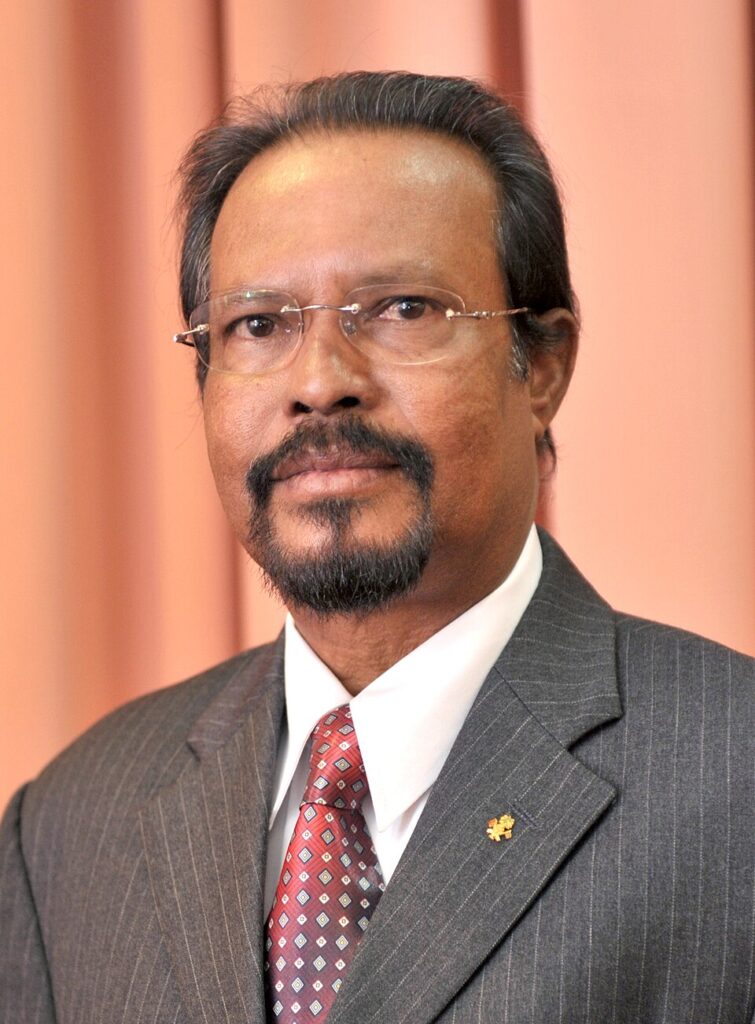
Dr. Abdul Samad Abdulla (10 March 1946 – 25 August 2013) was a Maldivian physician, diplomat, and politician, widely regarded as one of the first doctors in the Maldives. Over a career spanning medicine, public health, and international affairs, he served in senior positions with the World Health Organization (WHO)—including communicable-disease coordination in the SEARO region—and represented the Maldives at the United Nations General Assembly, later becoming the nation’s Minister of Foreign Affairs from 2012 until his death in 2013.
He helped lay the foundations of the Maldives’ modern health-care system, directed national responses to major public-health crises in the 1970s and 1980s, and went on to represent the country abroad as High Commissioner to Bangladesh and Foreign Minister.
Early life and education
Abdul Samad Abdulla was born on 10 March 1946 in Gaafu Dhaalu Thinadhoo, Maldives. He was the son of Abdullah Moosa (Abdullah Khatheeb) and the grandson of Moosa Manikfaanu (Hirihamaathi Kaleygefaan)—prominent figures in Maldivian business and politics who faced persecution during the administration of President Ibrahim Nasir.
He received his secondary education at Royal College, Colombo in Sri Lanka, and later pursued medical studies at the Leningrad Institute of Medicine in the former Soviet Union (now First Pavlov State Medical University of St. Petersburg), where he qualified as a physician.[1]
In 1984 he completed a master’s degree in tropical diseases at the Institute of Tropical Medicine, Antwerp in Belgium. His postgraduate research and thesis focused on optimising the use of health workers in communities lacking doctors and designing decentralised primary health-care systems.[2]
Medical and public-health career
Returning to the Maldives in the 1970s, Samad Abdulla began his work in the Ministry of Health, as a practising physician and later as a senior public-health administrator. He was among the first to organise the distribution of health workers across island health facilities, and promoted community-based care models where cadred medical doctors were scarce.[3]
During the late 1970s under President Maumoon Abdul Gayoom, he played an active part in health-sector reforms including expansion of immunisation programmes, establishment of basic healthcare in all atolls, and development of a structured primary health-care system. Efforts also included decentralising services by equipping atoll health centres with trained staff and doctors.
He contributed to initiatives such as training programmes for traditional birth attendants (TBAs) to strengthen maternal and child health, disease-eradication projects (targeting tuberculosis, leprosy, HIV/AIDS) in partnership with WHO, and expanded immunisation campaigns that contributed to declines in maternal and child mortality.[4][5][6][7]
He also took roles with the World Health Organization, including service as Coordinating Officer of Communicable Disease Control in the South-East Asia Regional Office (SEARO).[8]
Diplomatic career
In 2008, he was appointed High Commissioner of the Maldives to Bangladesh, serving until 2012 and strengthening co-operation in education, health, and trade.
On 5 March 2012, he was sworn in as Minister of Foreign Affairs under President Mohamed Waheed Hassan Manik, succeeding Ahmed Naseem (politician).[9] As minister, he sought to rebuild the Maldives’ international standing following the 2012 political transition, representing the country at the United Nations General Assembly, SAARC Ministerial Meetings, and numerous bilateral forums.[10] He also served twice as acting Minister of Health during temporary vacancies in 2012 and 2013.[11]
Illness and death
In August 2013, while in Singapore for kidney treatment, Samad Abdulla developed chest pains following a dialysis session and was admitted to Mount Elizabeth Hospital, where he later suffered a heart attack and passed away at 01:05 a.m. on 25 August 2013, aged 67.[12]
The government declared a three-day period of national mourning, with flags flown at half-mast.[13] His funeral was held in Singapore following noon prayers, and he was buried at Choa Chu Kang Cemetery; funeral prayers in absentia were observed across the Maldives.[14]
[15]
Honours and legacy
President Waheed described his death as a national tragedy. Later that year, he was posthumously awarded the Order of Izzuddin, one of the Maldives’ highest state honours.[16]
The Thinadhoo Regional Hospital was renamed the Dr Abdul Samad Memorial Hospital (ASMH) in recognition of his lifelong contributions to medicine and public service.[17]
Samad Abdulla is remembered as a pioneer of Maldivian medicine, a principal architect of the country’s early health infrastructure, and a public servant who bridged the nation’s formative years of health development and its emergence on the international stage.
Personal life
He was married to Ameena Ali, and the couple had three children.[18] Friends and colleagues described him as dedicated, modest, and deeply committed to the well-being of the Maldivian people.

