


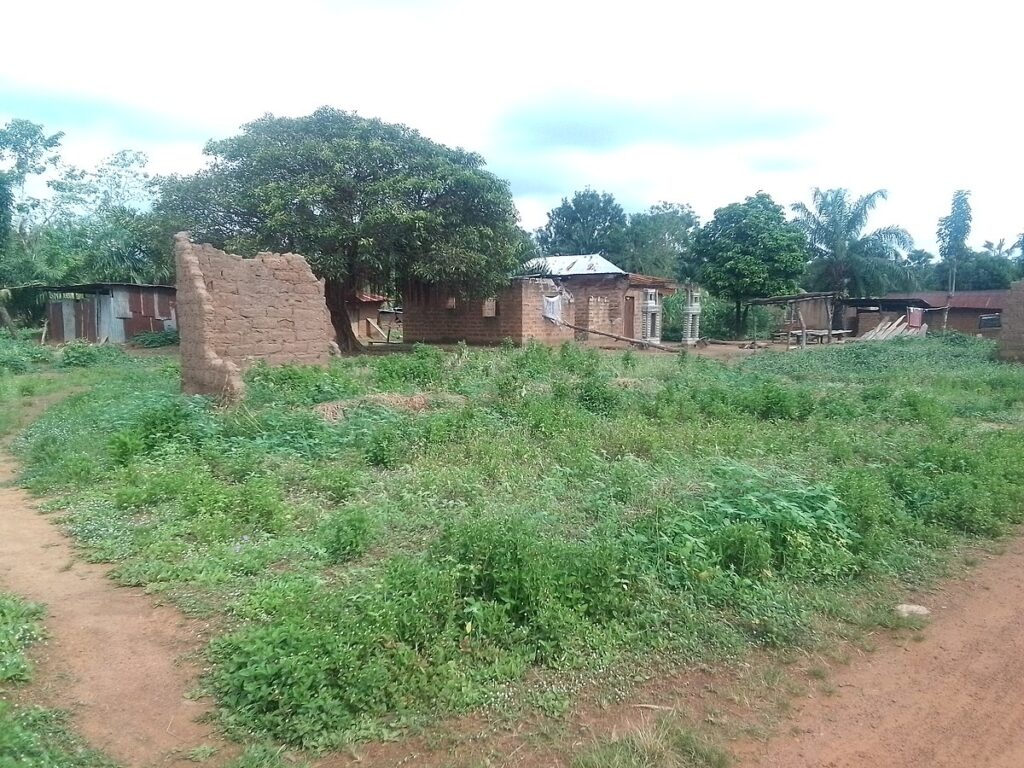
== Geography ==
== Geography ==
”’Akpanta”’ lies within the southern Benue [[savanna]] belt of [[North Central|north-central]] [[Nigeria]], characterized by a mixture of [[woodland]] and open [[grassland]] [[vegetation]]. The [[landscape]] is gently undulating, with sandy-loam soils distributed along the [[River Ochekwu]] [[floodplain]], supporting both seasonal and [[alluvial]] farming. Average annual [[rainfall]] is estimated at about 1,700 millimetres, typically concentrated between April and October.<ref>{{cite report |title=Benue State Environmental and Soil Survey Report |publisher=Benue State Ministry of Agriculture and Natural Resources |year=2021 |pages=33–35 |url=https://benuestate.gov.ng/environment-survey-report-2021.pdf |access-date=2 November 2025}}</ref>
”’Akpanta”’ lies within the southern Benue [[savanna]] belt of [[North |north-central]] [[Nigeria]], characterized by a mixture of [[woodland]] and open [[grassland]] [[vegetation]]. The [[landscape]] is gently undulating, with sandy-loam soils distributed along the [[River Ochekwu]] [[floodplain]], supporting both seasonal and [[alluvial]] farming. Average annual [[rainfall]] is estimated at about 1,700 millimetres, typically concentrated between April and October.<ref>{{cite report |title=Benue State Environmental and Soil Survey Report |publisher=Benue State Ministry of Agriculture and Natural Resources |year=2021 |pages=33–35 |url=https://benuestate.gov.ng/environment-survey-report-2021.pdf |access-date=2 November 2025}}</ref>
[[File:Wooden bridge connect Ebini to Akpanta.jpg|thumb|Photo of local wooden crafted [[bridge]] across river Ochekwu connect Akpanta and Ebini Communities. This is crafted by localist to enable easy transportation of goods and services using trucks]]
[[File:Wooden bridge connect Ebini to Akpanta.jpg|thumb|Photo of local wooden crafted [[bridge]] across river Ochekwu connect Akpanta and Ebini Communities. This is crafted by localist to enable easy transportation of goods and services using trucks]]
Rural community in Benue State
Community in Benue State, Nigeria
Akpanta is a rural community located in Apa Local Government Area of Benue State, Nigeria. It lies about 14 kilometres (8.7 mi) east of Ugbokpo, the headquarters of Apa LGA. Akpanta is bordered by Ugbobi to the east, Olegogba to the northeast, Inyapu to the northwest, Ochumekwu to the west, Okwuji to the southwest, Ankpali to the south, and part of Odugbo to the southeast. The River Ochekwu forms its southern boundary and provides water for irrigation, domestic use, and fishing activities. Studies on surface water systems in central Nigeria highlight the ecological and agricultural importance of small rivers like Ochekwu to rural communities in Benue State.[1][2][3]

Akpanta is an Idoma-speaking agrarian settlement with an estimated population of about 2,000 people. The inhabitants are predominantly smallholder farmers engaged in subsistence and seasonal agriculture, cultivating staple crops such as rice, bean, millet, yam, cassava, maize, and groundnut. The community maintains long-standing economic ties with nearby Ugbokpo and Ugbobi, serving as a modest local hub for the exchange of food crops and palm oil trade.
The people of Akpanta belong to the Idoma ethnic group, one of the major indigenous groups of Benue State, Nigeria. The Idoma are known for their rich oral traditions, artistic expressions, and masquerade performances that convey social and spiritual values.[4] They share close cultural and linguistic ties with other Idoma-speaking communities, reflecting a shared heritage built around kinship, land, and community leadership.[5] Traditional occupation among the Idoma, including the people of Akpanta, revolves around farming, fishing, and local trade — activities that continue to define the rural economy of the region.[6][7] The Idoma people are also noted for their hospitality and resilience, maintaining vibrant cultural practices such as traditional festivals, age-grade systems, and communal farming.[8][9]
History

Oral traditions trace the founding of Akpanta to early Idoma settlers who migrated from neighbouring settlements such as Edikwu, Umogidi, Odugbo, Ugbokpo, Ikobi, and Agatu during the precolonial era in search of fertile agricultural land along the banks of River Ochekwu. The community gradually developed as a small agrarian settlement, sustaining itself through subsistence and small-scale commercial farming. Scholarly studies on the agricultural life of Apa Local Government Area note that most rural inhabitants, including those in Akpanta, rely heavily on seasonal crop cultivation and smallholder farming systems.[10][11][12]

During the colonial era, Akpanta was under the Otukpo Native Authority as part of the larger Idoma Division. Following administrative reorganization after Nigeria’s independence, it became part of the newly constituted Apa District. With the creation of local governments in 1991, Akpanta was officially recognized as a settlement within Apa Local Government Area.[13]
In recent years, Akpanta has been affected by violence associated with the wider farmer–herder conflict across Benue State. Reports have documented armed attacks, the burning of homes, and the displacement of residents between 2023 and 2025.[14][15]
Geography
Akpanta lies within the southern Benue savanna belt of north-central Nigeria, characterized by a mixture of woodland and open grassland vegetation. The landscape is gently undulating, with sandy-loam soils distributed along the River Ochekwu floodplain, supporting both seasonal and alluvial farming. Average annual rainfall is estimated at about 1,700 millimetres, typically concentrated between April and October.[16]

The area supports extensive cultivation of rice, yam, cassava, maize, and other staple crops, along with scattered stands of oil palm and shea trees, which form part of the community’s natural economic resources.[17][18]
Ecological surveys classify Akpanta’s terrain within the lower Benue valley drainage basin, which features periodic flooding that enriches the soil for dry-season farming. Satellite and environmental data indicate that the Ochekwu River system provides critical support for local water supply and small-scale irrigation.[19][20]
In recent years, the wider region around southern Benue, including Akpanta and adjoining settlements, has faced environmental and human security pressures linked to the ongoing herder–farmer conflict and seasonal migration patterns.[21]
People and culture

The people of Akpanta belong to the Idoma ethnic group and uphold cultural traditions such as the Ocho New Yam Festival and Alekwu ancestral feast, observed annually. The community’s leadership is overseen by a traditional head under the Apa District Council of Chiefs. Christianity is predominant, with Methodist, Catholic, Anglican, and Pentecostal congregations.[22]
Economy
Agriculture remains the backbone of Akpanta’s local economy. The community’s residents largely engage in subsistence and small-scale commercial farming, cultivating crops such as yam, cassava, rice, maize, and melon. Women’s groups and family cooperatives are active in palm-oil processing and petty trading, often serving as key participants in rural value chains linking Akpanta to nearby markets in Ugbokpo and Oweto.[23]
Despite its agrarian productivity, the community’s economy has faced severe setbacks due to recurrent violent incursions attributed to armed herders and militia groups operating in southern Benue State. Multiple reports document that farmlands, food stores, and local trade routes were destroyed during attacks that left many residents displaced and livelihoods disrupted.[24][25][26][27][28][29]
Agricultural output and household income in Akpanta have declined as a result, with displacement limiting access to arable land and local markets. Recovery efforts are gradually emerging through community-based reconstruction programs and smallholder cooperative initiatives seeking to restore farming and palm-oil production in the aftermath of the violence.[30]
Infrastructure and services

Akpanta has a modest but functional rural infrastructure typical of many communities in southern Benue State. The settlement hosts one public primary school and a community-built secondary school, while basic healthcare is provided through a small health post managed by local volunteers and visiting health workers. Studies have shown that the efficiency of primary health centres in Benue is limited by poor infrastructure, inadequate staffing, and low government funding, conditions reflected in Akpanta’s experience.[31][32]
Access roads linking Akpanta to Ugbokpo and adjoining communities remain untarred and are often impassable during the rainy season, constraining economic activities and emergency response. Most households depend on wells, boreholes, and the River Ochekwu for domestic water needs. Energy supply is limited; residents rely mainly on solar panels and small petrol generators for lighting and basic household use.[33]
Development and humanitarian support
In the aftermath of the 2024 Akpanta attacks, several reports indicated that the Federal Ministry of Humanitarian Affairs, Disaster Management and Social Development and the Benue State Emergency Management Agency announced the distribution of relief materials and rehabilitation of boreholes to assist displaced residents of Akpanta and neighboring communities.[34]
However, community leaders and residents reportedly disputed the claims, stating that “no visible evidence” of government intervention had been observed at the affected sites. Independent assessments also documented ongoing displacement, destruction of farmlands, and loss of livelihoods in the wider Apa region following renewed herder-related violence.[35][36]
Broader commentary on the persistence of such conflicts in southern Benue has drawn both local and international attention, with observers highlighting the humanitarian implications and the limited effectiveness of relief coordination mechanisms.[37]
Challenges

Akpanta faces multiple developmental and security challenges common to rural communities in southern Benue State. Recurrent armed violence linked to the wider farmer–herder conflict has resulted in periodic displacement, loss of lives, and destruction of property.[38] The April 2024 assault on Akpanta led to extensive damage to homes, churches, and schools, severely impacting social and economic stability.
Beyond insecurity, studies highlight rising youth unemployment, limited access to agricultural support, and poor rural infrastructure as major constraints to development in the Apa region.[39][40] Poor access roads, limited water infrastructure, and the absence of reliable electricity remain persistent challenges.
Research further shows that insecurity, coupled with weak health and education systems, has worsened poverty and limited access to essential services in Akpanta and surrounding villages.[41][42][43]
Variant name
Several news outlets and articles misspelled the community as “Akpata” or “Akwanta” or “Apata”. Local government maps and traditional authorities confirm the correct spelling as “Akpanta”. The variation has contributed to inconsistent indexing of news coverage.
See also
References
- ^ “Assessment of surface water quality and rural livelihoods in central Nigeria” (PDF). International Journal of Research and Review. 9 (8). 2022. Retrieved 2 November 2025.
- ^ “Hydrological variability and community adaptation in the Lower Benue Basin of Nigeria”. African Journal of Water Resources. 12 (2). 2025. doi:10.1080/23570008.2025.2483013. Retrieved 2 November 2025.
- ^ Abowei, J. F. N. (2021). “Salinity, dissolved oxygen, pH and surface water characteristics in the inland rivers of Nigeria”. Advance Journal of Food Science and Technology. Retrieved 2 November 2025.
- ^ “Idoma Tribe in Benue State”. Rex Clarke Adventures. 27 July 2024. Retrieved 2 November 2025.
- ^ “Idoma”. Encyclopaedia Britannica. Retrieved 2 November 2025.
- ^ “The Idoma People of Benue State”. I am Benue. Retrieved 2 November 2025.
- ^ “History and Culture of the Idoma People”. Naijabiography. Retrieved 2 November 2025.
- ^ “6 Fun Facts About the Idoma People of Nigeria”. Edugist. 17 August 2023. Retrieved 2 November 2025.
- ^ “The Idoma Tribe: History, Culture, and Traditions”. 101 Last Tribes. Retrieved 2 November 2025.
- ^ Onyeje, O. P. (2019). “A study of women farmers’ agricultural information needs and accessibility: A case study of Apa Local Government Area of Benue State, Nigeria” (PDF). International Scholars Journals. Retrieved 2 November 2025.
- ^ Ejeh, E. I. (2017). “A study of women farmers agricultural information needs and accessibility: A case study of Apa Local Government Area of Benue State”. Academia.edu. Retrieved 2 November 2025.
- ^ “Socio-economic development and rural livelihoods in Apa Local Government Area of Benue State”. Hummingbird Journal of Arts, Education and Development. 10 (12). 2023. Retrieved 2 November 2025.
- ^ “Rural community structures and development planning in Benue State” (PDF). Nigerian Association for the Humanities and Social Sciences Journal. 10 (12). 2023. Retrieved 2 November 2025.
- ^ “Suspected herdsmen kill 45 persons in Benue, many injured”. The Gazette. 20 April 2023. Retrieved 2 November 2025.
- ^ “Conflict and agrarian livelihoods in Benue State, Nigeria”. International Scholars Journals. 2019. Retrieved 2 November 2025.
- ^ Benue State Environmental and Soil Survey Report (PDF) (Report). Benue State Ministry of Agriculture and Natural Resources. 2021. pp. 33–35. Retrieved 2 November 2025.
- ^ “Apa Local Government Area”. Finelib. Retrieved 2 November 2025.
- ^ “List of towns and villages in Apa LGA”. Nigeria Zip Codes. 25 February 2014. Retrieved 2 November 2025.
- ^ “Akpanta, Benue State, Nigeria – Geographic Feature”. Mindat.org. Retrieved 2 November 2025.
- ^ Country Report: Nigeria 2023 (PDF) (Report). European Country of Origin Information Network (ECOI). 2023. Retrieved 2 November 2025.
- ^ “Preliminary discourse on Fulani warfare in southern Benue and allied matters”. Daybreak News. 15 May 2024. Retrieved 2 November 2025.
- ^ Ejeh, A. O. (2020). Culture and Customs of the Idoma People. Benue Cultural Bureau. p. 118. ISBN 978-978-957-012-6.
- ^ “Attack on Apa and Naka Communities: Police Actions”. Federal Ministry of Information and National Orientation. 7 June 2025. Retrieved 2 November 2025.
- ^ “Fulani herdsmen kill nine in Benue”. The Street Journal. 12 May 2025. Retrieved 2 November 2025.
- ^ “Benue police confirm deadly attacks in Apa, Naka”. Lagos Television. 3 June 2025. Retrieved 2 November 2025.
- ^ “Five feared killed in fresh Benue attack”. The Punch. 14 May 2025. Retrieved 2 November 2025.
- ^ “Group claims over 89 killed in Benue council in 3 months”. Ripples Nigeria. 22 April 2025. Retrieved 2 November 2025.
- ^ “Agony, tears, blood in Plateau, Benue”. The Sun. 30 April 2025. Retrieved 2 November 2025.
- ^ “Benue massacre continues as suspected herdsmen kill nine in Apa, Agatu”. Idoma Voice. 19 May 2025. Retrieved 2 November 2025.
- ^ “Attack on Apa and Naka Communities: Police Actions”. Federal Ministry of Information and National Orientation. 7 June 2025. Retrieved 2 November 2025.
- ^ “Infrastructural challenges plague PHCs’ efficiency in Benue State, residents bewail”. The Middle Belt. 18 March 2024. Retrieved 2 November 2025.
- ^ “Rural Healthcare, Energy, and Transportation Challenges”. Infrastructure and Sustainable Development in Rural Nigeria. IntechOpen. 2023. doi:10.5772/intechopen.108530. ISBN 978-1-83768-162-4. Retrieved 2 November 2025.
- ^ “Contract for the upgrading of 19 primary healthcare centres in Benue State”. Global Tenders. 2024. Retrieved 2 November 2025.
- ^ Rural Infrastructure and Humanitarian Assessment: Apa and Otukpo Areas (PDF) (Report). Federal Ministry of Humanitarian Affairs, Disaster Management and Social Development. 2024. pp. 42–44. Retrieved 2 November 2025.
- ^ “Over 45 feared killed as herdsmen renew attacks on sleepy Benue communities”. Economy Footprint. 5 April 2023. Retrieved 2 November 2025.
- ^ “Nine killed by suspected herders in Benue”. ThisDay. 17 May 2023. Retrieved 2 November 2025.
- ^ “Trump’s war threat on Nigeria: Soludo fires back, says Christians are killing Christians as global tensions rise”. Time Nigeria. 5 May 2023. Retrieved 2 November 2025.
- ^ “15 villagers killed in Benue”. Daily Trust. 17 April 2024. Retrieved 2 November 2025.
- ^ “A study of women farmers’ agricultural information needs and accessibility: A case study of Apa Local Government Area of Benue State” (PDF). International Scholars Journals. 2020. Retrieved 2 November 2025.
- ^ “Socioeconomic impacts of herder–farmer conflicts in rural Benue communities” (PDF). Nigerian Academy of Humanities Studies Journal. 2023. Retrieved 2 November 2025.
- ^ “Assessing primary healthcare delivery and rural resilience in Benue State”. Tropical Nigerian Health Journal. 2023. Retrieved 2 November 2025.
- ^ Adediran, S. O.; Adegbe, C. S. (2024). “Socioeconomic effects of rural violence and agricultural disruptions in Middle Belt Nigeria”. Hummingbird Journal of Agricultural Economics and Development. doi:10.70382/hujaeed.v4i8.004. Retrieved 2 November 2025.
- ^ Nudegbesi, Abraham Monday; Akinola, Blessing Taiwo (2025). “Youth unemployment and the sustainability of rural livelihoods in conflict-prone areas of Benue State”. International Journal of Scientific Development and Research. 10 (4): b279 – b284. Retrieved 2 November 2025.



