


From Wikipedia, the free encyclopedia
Content deleted Content added
|
|
|||
| Line 15: | Line 15: | ||
|
==Fashion== |
==Fashion== |
||
|
Camel is the color of a specific type of [[overcoat]] known as a ”polo coat” or ”camel-hair coat”. In a 1951 ”[[Collier’s]]” magazine fashion article, it is said camel colored polo coats are proper to wear in the summer, in the country and in the [[U.S. South]], but [[navy blue]] overcoats are proper to wear in the city and in autumn, winter and spring. |
Camel is the color of a specific type of [[overcoat]] known as a ”polo coat” or ”camel-hair coat”. In a 1951 ”[[Collier’s]]” magazine fashion article, it is said camel colored polo coats are proper to wear in the summer, in the country and in the [[U.S. South]], but [[navy blue]] overcoats are proper to wear in the city and in autumn, winter and spring. |
||
|
==See also== |
==See also== |
||
Latest revision as of 08:47, 25 November 2025
Pale brown color
| Camel | |
|---|---|
| Hex triplet | #C19A6B |
| sRGBB (r, g, b) | (193, 154, 107) |
| HSV (h, s, v) | (33°, 45%, 76%) |
| CIELChuv (L, C, h) | (66, 47, 52°) |
| Source | ISCC-NBS[1] |
| ISCC–NBS descriptor | Light yellowish brown |
| B: Normalized to [0–255] (byte) | |

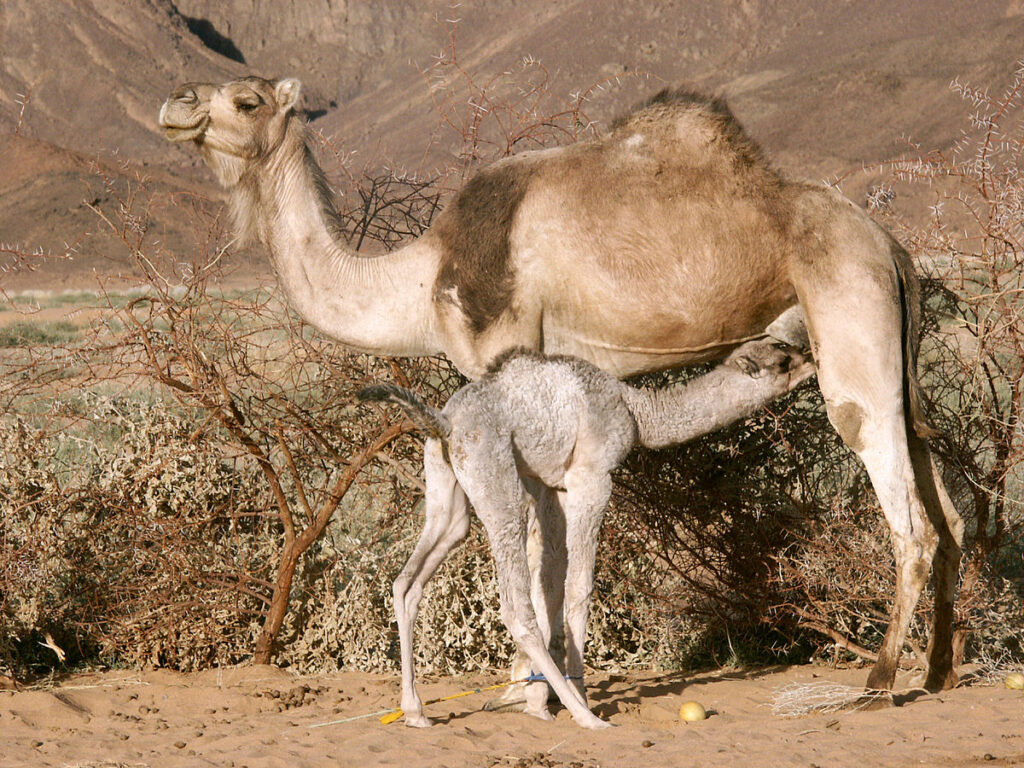
Camel is a color that resembles the color of the hair of a camel.
The first recorded use of camel as a color name in English was in 1916.[2]
The normalized color coordinates for camel are identical to fallow, wood brown and desert, which were first recorded as color names in English in 1000,[3] 1886,[4][a] and 1920,[6] respectively.
Camel is the color of a specific type of overcoat known as a polo coat or camel-hair coat. In a 1951 Collier’s magazine fashion article, it is said camel colored polo coats are proper to wear in the summer, in the country and in the U.S. South, but navy blue overcoats are proper to wear in the city and in autumn, winter and spring. Even today, it is a type of coat that is widely used in fashion.
- ^ After recording “wood brown” in his 1886 book, Robert Ridgway further refined the details of its color coordinates in his 1912 publication.[5]
- ^ ISCC-NBS
- ^ Maerz & Paul, p. 191; Color Sample of Camel: p. 49 Plate 15 Color Sample A6
- ^ Maerz & Paul, p. 195; Color Sample of Fallow: p. 47 Plate 12 Color Sample B5
- ^ Ridgway (1886), pp. 36, 54, 117; Color Sample of Wood Brown: Plate III fig. 19
- ^ Ridgway (1912), p. 40; Color Sample of Wood Brown: Plate XL
- ^ Maerz & Paul, p. 203; Color Sample of Desert: p. 47 Plate 12 Color Sample I7




