


==Early service and Padstow ownership==
==Early service and Padstow ownership==
Soon after completion, ”Clio” was purchased by Avery, a long-established merchant house based in Padstow, Cornwall. At this time Padstow was a recognised Lloyd’s surveying port with an active deep-water trade. ”Clio” became one of the principal vessels carrying emigrants from Cornwall to Quebec and returning with timber cargoes for Padstow’s expanding shipyards. Two surviving passenger diaries provide first-hand accounts of life on board during her Atlantic crossings.
Soon after completion, ”Clio” was purchased by Avery, a long-established merchant house based in Padstow, Cornwall. At this time Padstow was a recognised Lloyd’s surveying port with an active deep-water trade. ”Clio” became one of the principal vessels carrying emigrants from Cornwall to Quebec and returning with timber cargoes for Padstow’s expanding shipyards. Two surviving passenger diaries provide first-hand accounts of life on board during her Atlantic crossings.
==Command and later operations==
==Command and later operations==
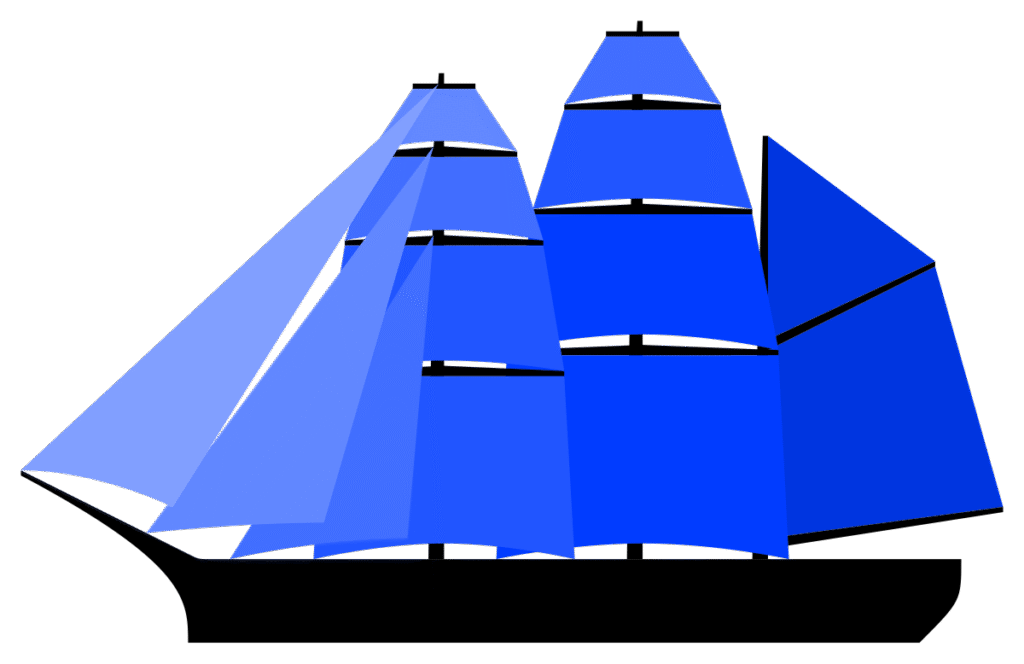
Clio (1838) was a Nova Scotia-built barque carrying timber and emigrants; lost 1866.

Clio was a three-masted barque of 473 tons, built in 1838 at Granville, Nova Scotia, from black birch, pine and oak. Registered at St John’s, Newfoundland, she spent her career on the transatlantic timber and emigrant routes between Britain and Canada. Clio regularly carried Cornish emigrants to Quebec and returned with timber cargoes for shipyards in Cornwall. She remained in service until 1866, when she was reported as “abandoned at sea” on 3 July. [1]
Construction and registration
Clio was built in 1838 at Granville, Nova Scotia, using black birch, pine and oak. She measured 473 tons and was completed as a three-masted barque. On launching she was registered at St John’s, Newfoundland, before entering transatlantic service. [2]
Early service and Padstow ownership
Soon after completion, Clio was purchased by Avery, a long-established merchant house based in Padstow, Cornwall. At this time Padstow was a recognised Lloyd’s surveying port with an active deep-water trade. Clio became one of the principal vessels carrying emigrants from Cornwall to Quebec and returning with timber cargoes for Padstow’s expanding shipyards. Two surviving passenger diaries provide first-hand accounts of life on board during her Atlantic crossings. [3]
Command and later operations
Command of Clio initially rested with Avery and Brown until 1845, when Edward Rawle and Robert Easthorpe took over. By the early 1850s her size made entry over the Doom Bar increasingly difficult, and Padstow ceased to be her home port. She continued to operate on the Quebec route from Falmouth, Plymouth and occasionally Gloucester. By 1865 she was owned by J. Moore of Stonehouse, Devon. The final entry in her record states that she was “abandoned at sea” on 3 July 1866.
History
First, she was sold to Avery, the well-established Padstow merchant house. As a brand new deep water square rigger owned by Padstow, a full Lloyd’s surveying port, trading from Padstow to Quebec City and other North American ports taking substantial numbers of emigrants and returning with prime timber for Padstow’s expanding shipyards in some ways she marks the zenith of Padstow shipping. At least two diaries exist describing the transatlantic journeys[4][5]
Rawle and Easthorpe (master) took over from Avery and Brown (master) in 1845, until 185- when the problem of passing the Doom Bar persuaded them that she was too big for Padstow. She carried on as a Quebec trader, sailing from Falmouth and Plymouth and even from Gloucester. In 1865 J. Moore of Stonehouse, Devon was her owner, and her record ends with the note “Abandoned at Sea 3 July 1866”.
Side information
In April/May 1855, the Clio sailed for Quebec. Her sister ships were the John, Siam and Oriental. The Captain of Clio was William Symons, the others being Edward Rawle (John), Charles Rawle (Siam) and Henry Tom (Oriental).
The Rawles originated from Boscastle, the others from Padstow. The Rawles were a ship-owning family. Joint owners (certainly of the John) were; Thomas Ham, 10 Prospect Street, Plymouth; William Williams, draper, of Padstow; Robert Williams Avery, ship owner, 3 Charles Place, Plymouth; Philip Rawle the Younger, ship owner, 37 Gibbon Street, Plymouth; Philip Rawle the Elder of Boscastle, ship owner, 2 Gibbon Street, Plymouth; James Moore, merchant clerk of Richmond Walk, Plymouth.
The ‘John’ sank in 1855 after it struck the Manacles Rock, off St Keverne, on the coast of Cornwall, and more than one hundred and ninety passengers were drowned.[6]
An advertisement dated 11 August 1848 reads The ship “Clio”, Robert EASTHOPE, Commander, now at Padstow, will leave that place for Quebec with passengers the 15th inst. Apply to: The agent for Mevagissey, Mr. Joseph KITTO; For St. Austell, Mr. CHAPMAN, Porthpean; or at Mr. AVERY’s Offices, Boscastle and Padstow.
Known sailings
The dates below were supplied, by Captain George Hogg of the National Maritime Museum Cornwall.
The dates of Clio sailings from Padstow are as follows….
(WB) West Briton other dates from… (BPP) British Parliamentary Papers.
- 20 March 1840 (WB)
- 19 June 1840 (WB)
- 16 April 1841 (WB)
- 25 June 1841 (WB)
- 7 August 1841
- 22 April 1842 (WB)
- 24 June 1842 (WB)
- 12 August 1842
- 1 April 1843
- 1 June 1843
- 11 August 1843 (WB)
- 5 April 1844 from Malpas, Truro. (WB)
- 23 April 1847 (WB)
- 3 April 1848 (see diary of Thomas Rundell)
- 11 August 1848 (WB)
- 4 April 1849 arrived Quebec May 1849
- 15 February 1850 (approx. from Malpas, Truro.) (WB)
- ?? Jun 1850 from Malpas, Truro. (WB)
- 15 April 1853 (Falmouth, Cardiff, Quebec) (RCG)
References
External links
The above information comes from [1] with permission.



