
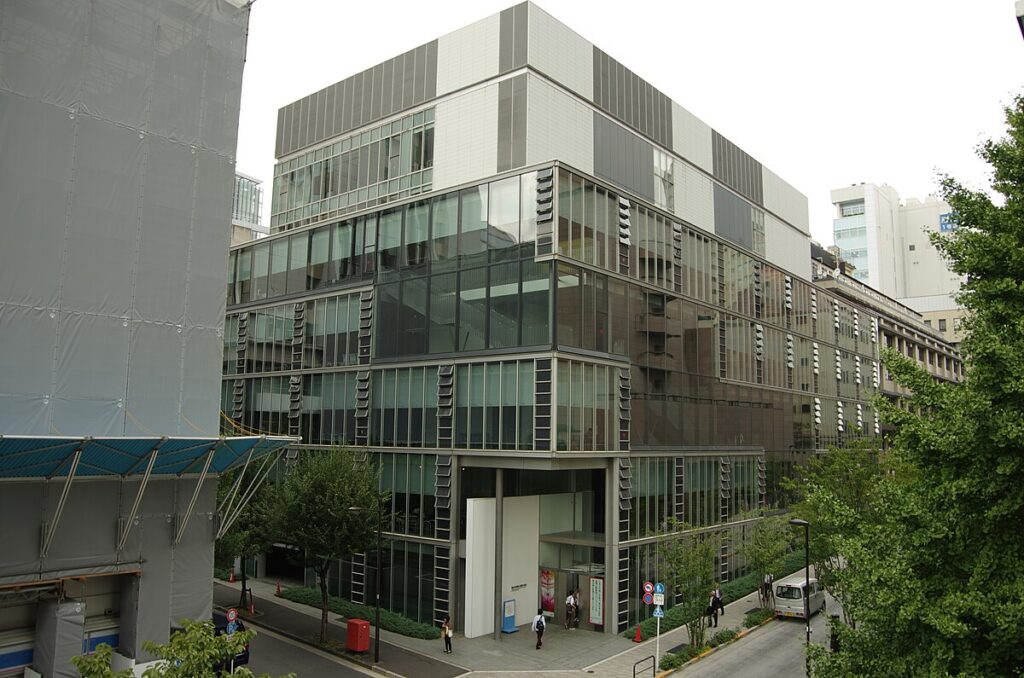
}}</ref>
}}</ref>
Together, these institutes promote interdisciplinary research in fields such as advanced materials, [[civil engineering]], [[fluid dynamics]], and aerospace technology.<ref>{{cite web |title=Research Facilities |url=https://www.cst.nihon-u.ac.jp/graduate_school/research/facilities/ |website=Nihon University College of Science and Technology |language=ja |access-date=10 November 2025}}</ref>
Together, these institutes promote interdisciplinary research in fields such as advanced materials, [[civil engineering]], [[fluid dynamics]], and aerospace technology.<ref>{{cite web |title=Research Facilities |url=https://www.cst.nihon-u.ac.jp/graduate_school/research/facilities/ |website=Nihon University College of Science and Technology |language=ja |access-date=10 November 2025}}</ref>
== Research and extracurricular activities ==
== Research and extracurricular activities ==


The College of Science and Technology, Nihon University (in Japanese 日本大学理工学部, Nihon Daigaku Rikōgakubu; commonly CST) is the faculty of Nihon University devoted to education and research in science and technology. The Graduate School of Science and Technology, Nihon University (日本大学大学院理工学研究科) conducts education and research in theoretical and applied science and technology at the graduate level.[1]
Common abbreviations include “Nichidai Riko” (日大理工), “Nichidai Rikōgakubu” (日大理工学部), and “CST“.[2]
Overview
The college traces its origins to the establishment of the Nihon University Higher Technical School in 1920 and was upgraded in 1928 to the Nihon University Faculty of Engineering, the second science-and-technology university among private institutions in Japan. In 1958 it was renamed the College of Science and Technology. To date, it has produced a total of roughly 200,000 graduates. The Department of Transportation Systems Engineering is accredited by JABEE (Japan Accreditation Board for Engineering Education); graduates are exempted from the first-stage national Professional Engineer examination.[3]
The college hosts the Research Institute of Science and Technology (RIST)[4] and the Institute of Quantum Science[5], among other advanced research facilities, which are recognized both in Japan and internationally.[6] The college actively engages in joint and commissioned research with public research agencies and industry and has produced numerous results.[7]
Known as “Nichidai of structural engineering,” (Nichidai is Nihon University) the Department of Architecture has its origins in the architecture department established at the inception of the school and has offered distinctive architectural education built up over many years.
CST currently comprises 14 departments.[8]
First-year students in Civil Engineering, Architecture, Mechanical Engineering, Electrical Engineering, Applied Molecular Chemistry, Physics, and Mathematics study at the Funabashi Campus; from their second year onward they study at the Surugadai Campus. Students in other departments study at the Funabashi Campus for all years.[9]
History

The College of Science and Technology traces its origins to the founding of the Nihon University Higher Technical School in 1920. It became the Faculty of Engineering in 1928 and was renamed the College of Science and Technology in 1958. During the postwar expansion, new departments and a graduate school were established, and the Research Institute of Science and Technology was founded in 1963.[10]
From the 1970s through the 1990s, the college added departments such as Oceanic Architecture and Engineering, Aerospace Engineering, and Electronic Engineering, while older programs like Pharmacy branched off to form independent colleges. The Funabashi Campus opened in 1996, and the Institute of Quantum Science succeeded the earlier nuclear institute in 2002.[11]
In the 21st century, CST expanded interdisciplinary fields such as information science, real estate science, and quantum engineering. A new Surugadai Building No.1 was completed in 2003, followed by the “Tower Schola” complex in 2018. The college celebrated its 100th anniversary in 2020.[12]
Notable alumni
Politicians
Business
Academia and research
Technology
Architecture
Culture
Sports
- Nariyuki Masuda – Cyclist
- Noboru Onoe – Mountaineer; entrepreneur; CEO of OMC Co., Ltd.; chairman, Japan Food Machinery Manufacturers’ Association
Research institutes and facilities
The College of Science and Technology maintains numerous specialized research centers and laboratories across its Surugadai and Funabashi campuses. Major facilities include the Research Institute of Science and Technology, the Advanced Materials Science Center, and the Research Center for Micro Functional Devices, which supports nanotechnology and micro-engineering studies in clean-room environments.[13]
The Information Education and Research Center was the first in Japan to be certified as a Dassault Systèmes test center for 3D design and PLM training. Other notable facilities include the CST Science & Technology Materials Center (CST MUSEUM), Techno-Place 15—a multi-purpose experimental complex that has received both the BCS and Good Design Awards—and the Large-Scale Structures Testing Center, equipped for seismic and structural analysis.[14]
Together, these institutes promote interdisciplinary research in fields such as advanced materials, civil engineering, fluid dynamics, and aerospace technology.[15]
Research and extracurricular activities
The College of Science and Technology is active in both academic research and student engineering projects. In 2014, its student-built nanosatellite SPROUT was successfully launched aboard an H-IIA rocket, following earlier successes such as the SEEDS CubeSat project launched in 2008.[16]
CST students have also achieved world-class results in the Space Elevator Technology Competition, setting an unofficial altitude record of 1,200 meters in 2013, and have won multiple titles at Japan’s long-running Bird-Man Rally for human-powered aircraft.[17]
Other notable student groups include Enjin-kai, a mechanical engineering team competing in the All-Japan Student Formula and Formula SAE events, and the Nihon University Glider Club, which has won several national and regional championships.[18]
See also
References
- ^ “About the College of Science and Technology”. Nihon University College of Science and Technology. Retrieved 10 November 2025.
The College of Science and Technology (CST) of Nihon University is dedicated to education and research in science and technology, covering a wide range of disciplines from basic science to applied engineering.
- ^ “日本大学理工学部について”. 日本大学理工学部公式サイト (in Japanese). Retrieved 10 November 2025.
日本大学理工学部(略称:日大理工、日大理工学部、CST)は、理工学の教育・研究を行う日本大学の学部である。
- ^ 交通システム工学科. “交通システム工学科JABEE認定学科”. 理工学部学科情報. Retrieved 2015-11-19.
交通システム工学科は、日本大学理工学部で唯一のJABEE(日本技術者教育認定機構)認定学科で、卒業生は国家資格で難関の「技術士」の一次試験が免除され、登録申請により技術士補(建設部門)の資格が取得できる。
- ^ Research Institute of Science & Technology. “日本大学理工学部 理工学研究所”. Nihon University College of Science and Technology. Retrieved 2015-11-19.
- ^ Institute of Quantum Science, Nihon University. “量子理工学専攻”. Quantum Science and Technology. Retrieved 2015-11-19.
- ^ “大学院理工学研究科ガイドブック[10.9MB] 2016” (PDF). Retrieved 2015-11-19.
- ^ 研究事務課. “事業概要”. Nihon University College of Science and Technology. Retrieved 2015-11-19.
- ^ “College of Science and Technology — Departments”. Nihon University (official). Retrieved 10 November 2025.
Lists the 14 departments: Civil Engineering; Transportation Systems Engineering; Architecture; Oceanic Architecture and Engineering; Town Planning and Design; Mechanical Engineering; Precision Machinery Engineering; Aerospace Engineering; Electrical Engineering; Electronic Engineering; Computer Engineering; Materials and Applied Chemistry; Physics; Mathematics.
- ^ “Departments (学科情報)”. Nihon University College of Science and Technology (in Japanese). Retrieved 10 November 2025.
土木工学科/建築学科/機械工学科/電気工学科/物質応用化学科/物理学科/数学科:1年次=船橋キャンパス、2年次以降=駿河台キャンパス。他学科は全学年=船橋キャンパス。
- ^ “理工学部の沿革 (History of the College of Science and Technology)”. Nihon University College of Science and Technology (in Japanese). Retrieved 10 November 2025.
1920年に日本大学高等工学校として創設され、1928年に日本大学工学部となり、1958年に理工学部と改称された。
- ^ “理工学部の沿革 (History of the College of Science and Technology)”. Nihon University College of Science and Technology (in Japanese). Retrieved 10 November 2025.
1977年に海洋建築工学科、航空宇宙工学科、電子工学科を設置。薬学科は1988年に分離独立し薬学部となった。1996年には習志野校舎を船橋校舎と改称。2002年に日本大学原子力研究所を量子科学研究所に改組。
- ^ “History”. Nihon University College of Science and Technology (in Japanese). Retrieved 10 November 2025.
- ^ “研究所・研究施設一覧”. Nihon University College of Science and Technology (in Japanese). Retrieved 10 November 2025.
理工学部は駿河台キャンパスと船橋キャンパスに多数の研究センター・研究施設を有し、先端的な科学技術研究を推進している。
- ^ “日本大学理工学部情報教育研究センターが、日本初のダッソー・システムズ認定テストセンターに。”. Nihon University College of Science and Technology (in Japanese). 3 October 2015. Retrieved 10 November 2025.
理工学部情報教育研究センターは、3Dエクスペリエンス企業ダッソー・システムズによる学生向け認定プログラムの日本初の認定テストセンターに選定された。
- ^ “Research Facilities”. Nihon University College of Science and Technology (in Japanese). Retrieved 10 November 2025.
- ^ “SPace Research On Unique Technology (SPROUT)”. Nihon University College of Science and Technology — Nano Satellite Project (in Japanese). Retrieved 10 November 2025.
2014年5月24日、H-IIAロケット24号機により打ち上げられた日本大学製超小型人工衛星「SPROUT」は、船橋キャンパスで信号を受信し、打ち上げ成功が確認された。
- ^ “第5回宇宙エレベーターチャレンジ開催 念願の1000メートル越えを達成”. 週刊アスキー (Weekly ASCII) (in Japanese). 21 August 2013. Retrieved 10 November 2025.
日本大学理工学部精密機械工学科の学生チームが、宇宙エレベーターチャレンジSPEC2013で世界初となる高度1200メートルのテザー到達を記録した。
- ^ “Student Projects and Clubs”. Nihon University College of Science and Technology (in Japanese). Retrieved 10 November 2025.
External links
- Aerospace Engineering links

