


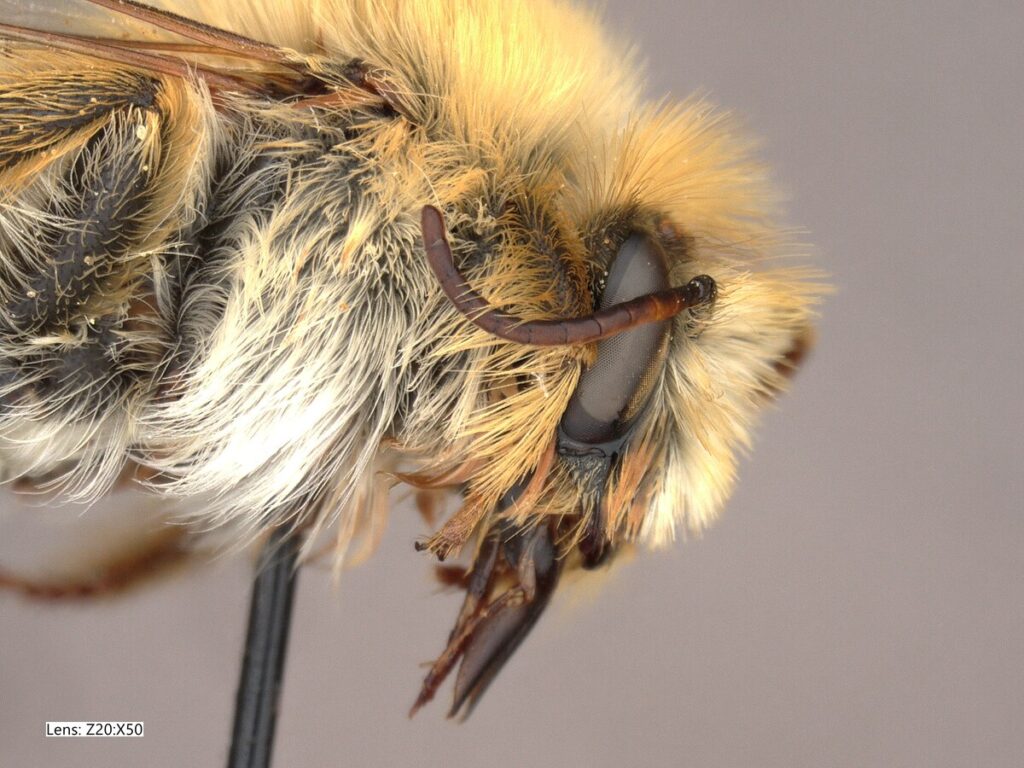
The [[genus]] ”[[Dasypoda]]” is traditionally divided into four [[subgenus|subgenera]]:<ref>Michez D, Terzo M, & Rasmont P (2004). Phylogénie, biogéographie et choix floraux des abeilles oligolectiques du genre ”Dasypoda” Latreille 1802 (Hymenoptera: Apoidea: Melittidae). ”Annales de la Société Entomologique de France (N.S.)”, 40, 421–435.</ref> ”Dasypoda sensu stricto” (the group of the widespread pantaloon bees ”[[Dasypoda hirtipes]]” and ”Dasypoda morawitzi”),<ref name=”:0″>{{Cite journal |last=Radchenko |first=Vladimir G. |date=2016-11-07 |title=A new widespread European bee species of the genus ”Dasypoda” Latreille (Hymenoptera, Apoidea) |url=http://biotaxa.org/Zootaxa/article/view/zootaxa.4184.3.4 |journal=Zootaxa |volume=4184 |issue=3 |page=491 |doi=10.11646/zootaxa.4184.3.4 |pmid=27988775 |issn=1175-5334|url-access=subscription }}</ref> ”Heterodasypoda” (the species group of ”[[Dasypoda radchenkoi]]”),<ref name=”:1″>{{Cite journal |last=Radchenko |first=Vladimir G. |date=2017-11-16 |title=A new bee species of the genus ”Dasypoda” Latreille (Hymenoptera, Apoidea) from Portugal with comparative remarks on the subgenus ”Heterodasypoda” Michez |url=https://www.mapress.com/zt/article/view/zootaxa.4350.1.10 |journal=Zootaxa |volume=4350 |issue=1 |pages=164–176 |doi=10.11646/zootaxa.4350.1.10 |pmid=29245572 |issn=1175-5334|url-access=subscription }}</ref><ref name=”radchenkoi”>{{Cite journal |last1=Ghisbain |first1=Guillaume |last2=Michez |first2=Denis |last3=Rosa |first3=Paolo |last4=Ferreira |first4=Sonia |last5=Wood |first5=Thomas J. |date=2023-07-24 |title=Unexpected discovery of a near cryptic “Dasypoda” species from southern Spain (Hymenoptera: Melittidae) |url=https://www.osmia-journal-hymenoptera.com/osmia-11-6.html |journal=Osmia |volume=11 | language=en |pages=27–38 |doi= 10.47446/OSMIA11.6 |doi-access=free }}</ref> ”Microdasypoda” (the group of the small-sized ”Dasypoda crassicornis” and ”Dasypoda schwarzi”),<ref name=”:2″>{{Cite journal |last1=Radchenko |first1=Vladimir G. |last2=Ghisbain |first2=Guillaume |last3=Michez |first3=Denis |date=2022-09-15 |title=A new bee species of the genus ”Dasypoda” Latreille (Hymenoptera, Apoidea) from Northwest Africa with comparative remarks on the subgenus ”Microdasypoda” Michez |url=https://www.researchgate.net/publication/363565805 |journal=Zootaxa |volume=5188 |issue=1 |pages=74–86 |doi=10.11646/zootaxa.5188.1.4 |pmid=37044794 |s2cid=252329374 |issn=1175-5334}}</ref> and ”Megadasypoda” (the subgenus of the large-sized pantaloon bees ”Dasypoda braccata” and ”Dasypoda vulpecula”).<ref name=”:3″>{{Cite journal |last1=Radchenko |first1=Vladimir G. |last2=Ghisbain |first2=Guillaume |last3=Michez |first3=Denis |date=2019-11-20 |title=Redescription of three rare species of ”Dasypoda” bees with first description of ”D. iberica” and ”D. tibialis” females (Hymenoptera, Apoidea, Melittidae) |url=https://www.researchgate.net/publication/337367835 |journal=Zootaxa |volume=4700 |issue=3 |pages=zootaxa.4700.3.2 |doi=10.11646/zootaxa.4700.3.2 |pmid=32229973 |s2cid=213086677 |issn=1175-5334}}</ref> The morphology of the male of ”Dasypoda delectabilis” is largely similar to other species belonging to the subgenus ”Heterodasypoda”, which led the authors of the original description to place the species into this subgenus.<ref name=”delectabilis” /> The same authors however noted that the morphology of ”Dasypoda delectabilis” is intriguing due to the presence of unexpected characters shared by representatives of the subgenus ”Dasypoda sensu stricto”.<ref name=”delectabilis” /> The phylogenetic position of the species is currently unknown. After its description at the [[University of Mons]], the holotype was sent to the [[Naturalis Biodiversity Center]], in [[The Netherlands]] where it is now hosted.<ref name=”delectabilis” />
The [[genus]] ”[[Dasypoda]]” is traditionally divided into four [[subgenus|subgenera]]:<ref>Michez D, Terzo M, & Rasmont P (2004). Phylogénie, biogéographie et choix floraux des abeilles oligolectiques du genre ”Dasypoda” Latreille 1802 (Hymenoptera: Apoidea: Melittidae). ”Annales de la Société Entomologique de France (N.S.)”, 40, 421–435.</ref> ”Dasypoda sensu stricto” (the group of the widespread pantaloon bees ”[[Dasypoda hirtipes]]” and ”Dasypoda morawitzi”),<ref name=”:0″>{{Cite journal |last=Radchenko |first=Vladimir G. |date=2016-11-07 |title=A new widespread European bee species of the genus ”Dasypoda” Latreille (Hymenoptera, Apoidea) |url=http://biotaxa.org/Zootaxa/article/view/zootaxa.4184.3.4 |journal=Zootaxa |volume=4184 |issue=3 |page=491 |doi=10.11646/zootaxa.4184.3.4 |pmid=27988775 |issn=1175-5334|url-access=subscription }}</ref> ”Heterodasypoda” (the species group of ”[[Dasypoda radchenkoi]]”),<ref name=”:1″>{{Cite journal |last=Radchenko |first=Vladimir G. |date=2017-11-16 |title=A new bee species of the genus ”Dasypoda” Latreille (Hymenoptera, Apoidea) from Portugal with comparative remarks on the subgenus ”Heterodasypoda” Michez |url=https://www.mapress.com/zt/article/view/zootaxa.4350.1.10 |journal=Zootaxa |volume=4350 |issue=1 |pages=164–176 |doi=10.11646/zootaxa.4350.1.10 |pmid=29245572 |issn=1175-5334|url-access=subscription }}</ref><ref name=”radchenkoi”>{{Cite journal |last1=Ghisbain |first1=Guillaume |last2=Michez |first2=Denis |last3=Rosa |first3=Paolo |last4=Ferreira |first4=Sonia |last5=Wood |first5=Thomas J. |date=2023-07-24 |title=Unexpected discovery of a near cryptic “Dasypoda” species from southern Spain (Hymenoptera: Melittidae) |url=https://www.osmia-journal-hymenoptera.com/osmia-11-6.html |journal=Osmia |volume=11 | language=en |pages=27–38 |doi= 10.47446/OSMIA11.6 |doi-access=free }}</ref> ”Microdasypoda” (the group of the small-sized ”Dasypoda crassicornis” and ”Dasypoda schwarzi”),<ref name=”:2″>{{Cite journal |last1=Radchenko |first1=Vladimir G. |last2=Ghisbain |first2=Guillaume |last3=Michez |first3=Denis |date=2022-09-15 |title=A new bee species of the genus ”Dasypoda” Latreille (Hymenoptera, Apoidea) from Northwest Africa with comparative remarks on the subgenus ”Microdasypoda” Michez |url=https://www.researchgate.net/publication/363565805 |journal=Zootaxa |volume=5188 |issue=1 |pages=74–86 |doi=10.11646/zootaxa.5188.1.4 |pmid=37044794 |s2cid=252329374 |issn=1175-5334}}</ref> and ”Megadasypoda” (the subgenus of the large-sized pantaloon bees ”Dasypoda braccata” and ”Dasypoda vulpecula”).<ref name=”:3″>{{Cite journal |last1=Radchenko |first1=Vladimir G. |last2=Ghisbain |first2=Guillaume |last3=Michez |first3=Denis |date=2019-11-20 |title=Redescription of three rare species of ”Dasypoda” bees with first description of ”D. iberica” and ”D. tibialis” females (Hymenoptera, Apoidea, Melittidae) |url=https://www.researchgate.net/publication/337367835 |journal=Zootaxa |volume=4700 |issue=3 |doi=10.11646/zootaxa.4700.3.2 |pmid=32229973 |s2cid=213086677 |issn=1175-5334}}</ref> The morphology of the male of ”Dasypoda delectabilis” is largely similar to other species belonging to the subgenus ”Heterodasypoda”, which led the authors of the original description to place the species into this subgenus.<ref name=”delectabilis” /> The same authors however noted that the morphology of ”Dasypoda delectabilis” is intriguing due to the presence of unexpected characters shared by representatives of the subgenus ”Dasypoda sensu stricto”.<ref name=”delectabilis” /> The phylogenetic position of the species is currently unknown. After its description at the [[University of Mons]], the holotype was sent to the [[Naturalis Biodiversity Center]], in [[The Netherlands]] where it is now hosted.<ref name=”delectabilis” />



