


While several European countries, particularly the United Kingdom, are grappling with a surge in what is being dubbed the ‘super flu’, Pakistani health experts say the situation “warrants caution, but there is no need to panic” as the condition is caused by an existing virus undergoing some genetic shifts.
According to the World Health Organisation (WHO), the surge is driven primarily by influenza A(H3N2) and an emerging subclade known as subclade K, a drifted variant of H3N2 with multiple genetic changes from related viruses.
The WHO confirms that influenza activity has increased globally in recent months, with an early rise in flu activity being observed in several countries.
It is important to note that the current epidemiological data do not show that subclade K causes more severe disease than previous strains. However, its early spread ahead of the typical season curve is important, and vaccination remains one of the most effective public health measures to reduce severe illness and hospitalisation.
WHO emphasises that influenza remains common and continues to evolve seasonally through gradual genetic change, requiring ongoing surveillance and vaccine updates. Vaccination is still expected to offer protection against the range of circulating viruses, including drifted subclades, and is particularly important for high‑risk groups.
Situation in Pakistan
While it has increased hospitalisations in Europe, specialists note that Pakistan’s smaller elderly population and established seasonal patterns mean the local impact is likely to remain less severe, though still significant.
In Islamabad, former Punjab health minister and International Advisor for the Royal College of London, Dr Javed Akram, told Dawn that the virus has undergone mutation, which can increase risk in vulnerable groups.
“Once the flu converts into pneumonia, patients, especially children, aged persons, and those who suffer with comorbidity have more chances to be shifted to ventilators,” he said. “I suggest that people should be vaccinated against influenza before the start of winter.”
Dr Akram, who is also Chairman of the Pakistan Society of Internal Medicine, added that the vaccine, on average, reduces 70 per cent chances of influenza, suggesting that all healthcare staff should be vaccinated as they not only become more vulnerable to the illness but can also become carriers of the virus.
Dr Rana Safdar, an expert in emerging infectious diseases who led Pakistan’s Covid-19 response, said Pakistan was currently in the peak flu transmission window. He explained that while young people drive community spread, severe complications emerge primarily in older individuals and those with chronic illnesses. “Very few elderly Pakistanis get the flu vaccine, leaving them vulnerable each winter,” he said.
He confirmed that the new H3N2 subclade K — responsible for the UK surge — is also being detected in Pakistan. “Although the strain is antigenically different from what the WHO selected for the 2025–26 flu vaccine, vaccination will still reduce the risk of severe disease.”
He warned that dense fog blanketing parts of the country may worsen transmission. “Measures are very much standard with stress on masks, handwashing and distancing from persons with symptoms. When symptomatic, patients shouldn’t rush for antibiotics but take good rest and use hot liquids alongside healthy food,” he suggested.
Microbiologist Professor Javaid Usman said diagnosing flu purely on symptoms was nearly impossible due to the circulation of many respiratory viruses at this time of year, including rhinoviruses, parainfluenza, RSV and SARS-CoV-2. “The best time to get vaccinated — as they call it the ‘Sweet Spot’ — is September to October because it takes at least two weeks to build effective immunity to protect a person,” Dr Usman said.
At the National Institutes of Health (NIH), Chief of Public Health Laboratories Dr Muhammad Salman confirmed that seasonal influenza was widespread globally as well as in Pakistan. “A new vaccine is introduced every year in August, and I suggest that it should be administered to aged people and those who are immunocompromised.”
‘Sharp increase across Punjab’
In Lahore, senior medical experts are reporting a “sharp” rise in super flu cases, particularly in densely populated urban centres. Families living in multi-storey buildings, people frequenting crowded markets, and those attending weddings are among the most exposed due to close physical proximity.
Senior Principal Medical Officer and consultant Dr Masood Akhtar Sheikh said the strain was contributing to “a sharp increase in cases across major Punjab cities, including Lahore, Gujranwala, Rawalpindi and Faisalabad.”
“No deaths linked to the variant have been reported in Pakistan, but the number of patients presenting with flu and chest complications has risen. Children are acting as super-spreaders within households, often transmitting the virus to elderly family members.”
Dr Sheikh noted that the current surge is compounded by routine seasonal flu, Covid-19 and RSV infections, warning that international travel may accelerate spread, as seen in the UK, where this season has been compared to the severe 2017–18 flu wave.
Senior physician Dr Mohammad Arshad, who served as the former head of the emergency department at Lahore’s Shaikh Zayed Hospital, recommended oseltamivir for high-risk patients, saying it can reduce disease duration and severity. It is, however, not needed to treat all patients.
“The patient should wear an N95 mask, practise frequent handwashing, and maintain proper ventilation of indoor rooms,” he recommended, adding that a patient should maintain good hydration and proper nutrition for early recovery.
He also emphasised that the flu vaccine remains strongly recommended for everyone over six months of age.
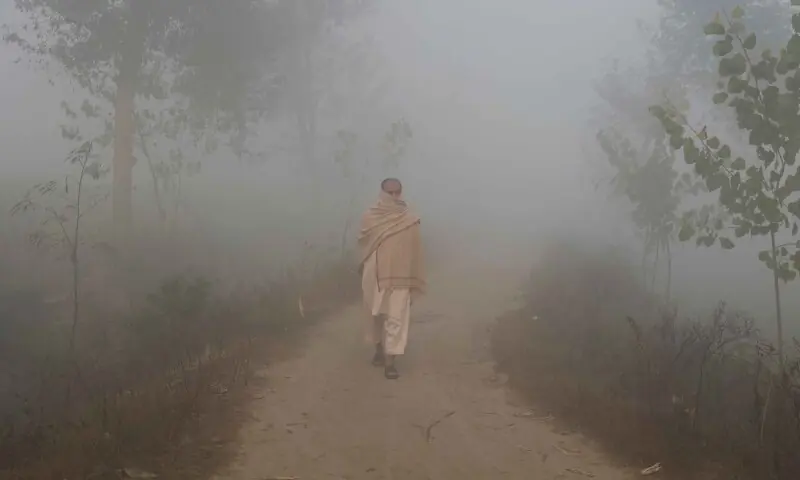
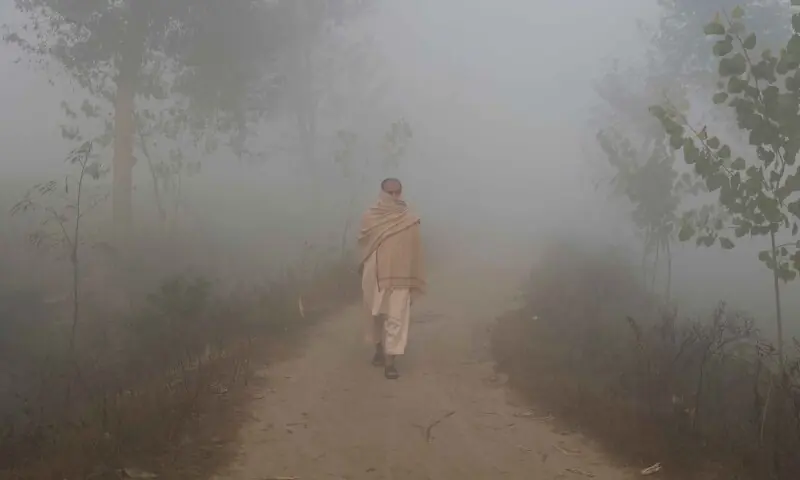
Header image: A man covers himself with a shawl to protect from the cold, as he walks amid fog in Peshawar on November 20. — Reuters



