


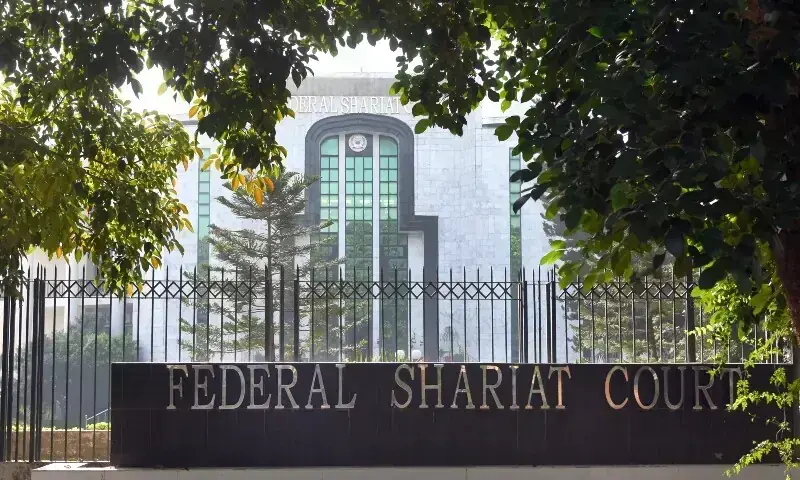
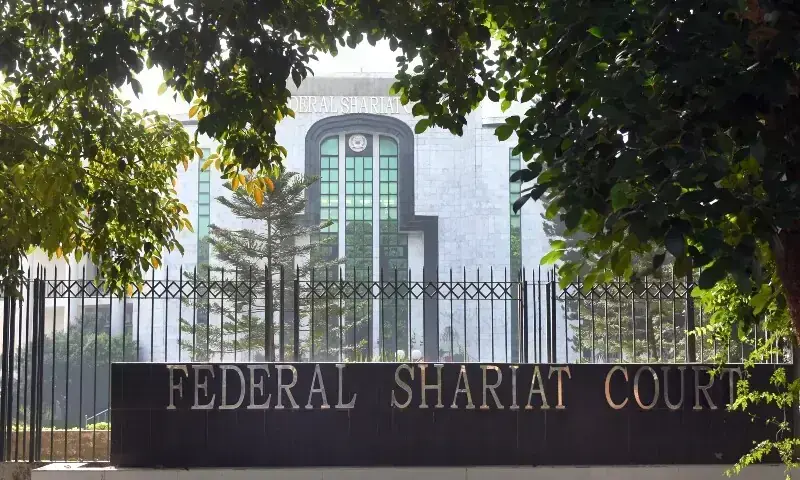
ISLAMABAD: The planned relocation of the Islamabad High Court (IHC) to its old premises in the congested Sector G-10 has been put on hold, as the Federal Constitutional Court (FCC) — which earlier sought to retain the IHC building on Constitution Avenue as its principal seat — is now preparing to move to the Federal Shariat Court (FSC).
Sources confirmed that shifting of FCC record to the FSC building will begin today (Saturday), though it may take several days to fully transfer files, systems and administrative units.
IHC Bar President Syed Wajid Ali Gillani and Secretary Manzoor Ahmed Jajja held multiple meetings with Law Minister Azam Nazeer Tarar to convey their concerns.
The law minister had recently said that a decision regarding relocation would be made only after consulting lawyers’ bodies.
Once keen on retaining the prized Constitution Avenue premises of the Islamabad High Court, the newly formed court will begin the process of shifting its record today
Initially, the FCC was supposed to establish its offices at the FSC. However, stiff resistance from the Shariat Court judges forced the newly-formed court to commence operations from the IHC building instead. Following the oath-taking ceremony of the FCC judges at the IHC earlier last month, the new court was temporarily allotted several courtrooms. The FCC administration then began seriously considering keeping the same building permanently — a move that caused unease within the high court.
Amid speculations about a possible relocation, IHC Chief Justice Sardar Mohammad Sarfraz Dogar visited the old G-10 building last week to evaluate its suitability.
Justice Dogar inspected various sections of the renovated facility, including the Chief Justice Block, and reviewed the pace and quality of repair work. The district judiciary briefed him on administrative matters, ongoing upgrades, and the heavy workload of the family courts operating there.
Officials said the chief justice’s visit was aimed at determining whether the old structure — surrounded by workshops, car washes, low-cost eateries and shops — could feasibly accommodate the daily traffic, staff and litigants of a constitutional court.
Plans to shift the IHC back to its old premises have created a clear divide among lawyers. While the District Bar Association supports the proposal, the IHC Bar Association strongly opposes it, arguing that the G-10 building — which currently handles a heavy docket of family matters — lacks the infrastructure needed for the high court’s expanded operations.
Before the IHC’s shift to Constitution Avenue a few years ago, the record room held around 65,000 files. Today, that number has swelled to over 200,000, with pending cases rising from around 10,000 to 18,000. Lawyers maintain that relocating to a smaller, outdated facility would cripple judicial efficiency.
The ongoing tug-of-war over the Constitution Avenue premises resembles “a joint family squeezed into an ancestral home,” with each side citing space shortages and competing needs.
Interior Minister Mohsin Naqvi had reportedly finalised the FSC building as the FCC’s permanent home days before the 27th Amendment was tabled in parliament. Under the plan, the four FSC judges — who have a relatively small backlog of 56 petitions — were to be shifted to the IHC’s third floor, where four new courtrooms were being prepared by the CDA.
To facilitate temporary operations, the IHC administration allotted seven courtrooms to the FCC. However, after senior staff — many drawn from the SC — assumed duties, space shortages became more evident. The FCC chief justice was accommodated in Courtroom No. 2, previously used by Justice Mohsin Akhtar Kayani, a move that reportedly caused discomfort within the high court.
Published in Dawn, December 6th, 2025



