


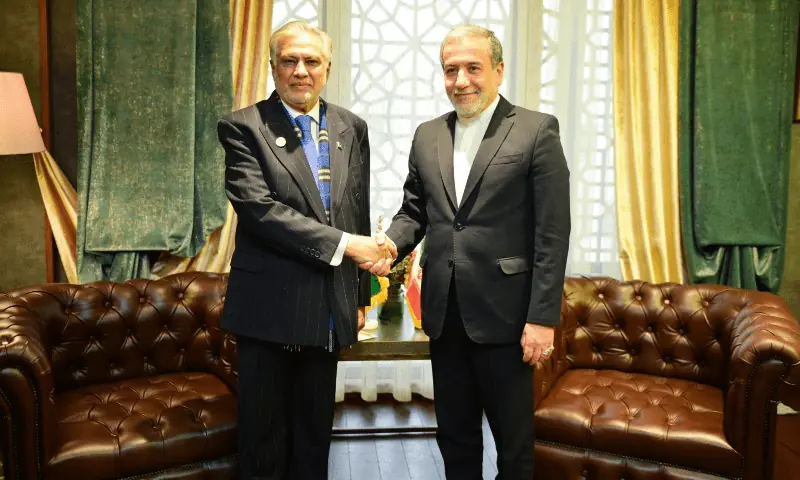
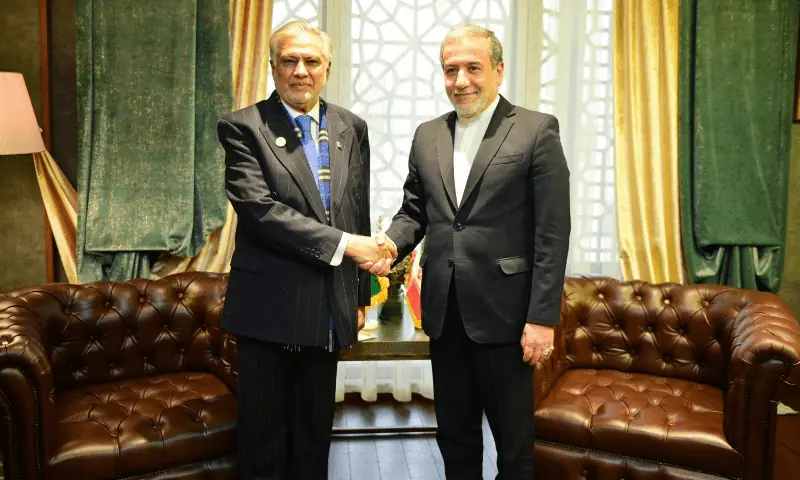
Deputy Prime Minister and Foreign Minister Ishaq Dar spoke with Foreign Minister of Iran Abbas Araghchi over the phone once again on Wednesday, according to the Foreign Office (FO).
According to a post by the FO on social media, the two leaders “discussed regional developments and underscored the importance of dialogue and diplomacy”.
They agreed to continue close engagement and coordination, the statement added.
The two foreign ministers have engaged in multiple phone calls since the start of the new year.
Earlier in January, the two foreign ministers had spoken on the phone, during which Dar expressed concern over the evolving regional situation.
Alongside that call, Prime Minister Shehbaz Sharif also spoke with Iranian President Dr Masoud Pezeshkian on the same day, with the two leaders exchanging views on the “evolving regional situation”.
Dar and Araghchi had also already spoken the weekend prior, when Dar received a call from Araghchi while on a visit to Dubai.
Dar had expressed his hope for peace and stability in Iran in another phone call with the Iranian foreign minister, in which the two diplomats discussed the situation in Iran and the wider region.
Pakistan, Turkiye remaining ‘in close coordination’: FO
Separately, earlier today, the FO said that the foreign minister also held a telephone conversation with Turkish Foreign Minister Hakan Fidan.
“The two leaders exchanged views on regional and international developments, discussed matters of mutual interest, and agreed to remain in close coordination,” it said.
According to Turkish President Tayyip Erdogan, Turkiye has been working hard to prevent US-Iran tensions from tipping the Middle East into a new conflict, as the two adversaries signal that disagreement over Tehran’s missile arsenal threatens to torpedo a deal.
Tensions have run high amid a US naval buildup near Iran, following the violent crackdown against anti-government demonstrations last month.
Trump, who stopped short of carrying out threats to intervene during the crackdown, has since demanded that Tehran make nuclear concessions and sent a flotilla to its coast.
Turkiye was doing its best to prevent an escalation, said Erdogan, who has spent years cultivating a close relationship with Trump while expanding Ankara’s diplomatic influence across the Middle East and beyond.
Turkiye, which shares a 530 kilometre border with Iran, has often expressed opposition to military operations targeting the Islamic Republic.
The country had originally been expected to host a round of talks between the US and Iran in Istanbul in an attempt to de-escalate the dispute. However, the meeting was later shifted to Oman.



