
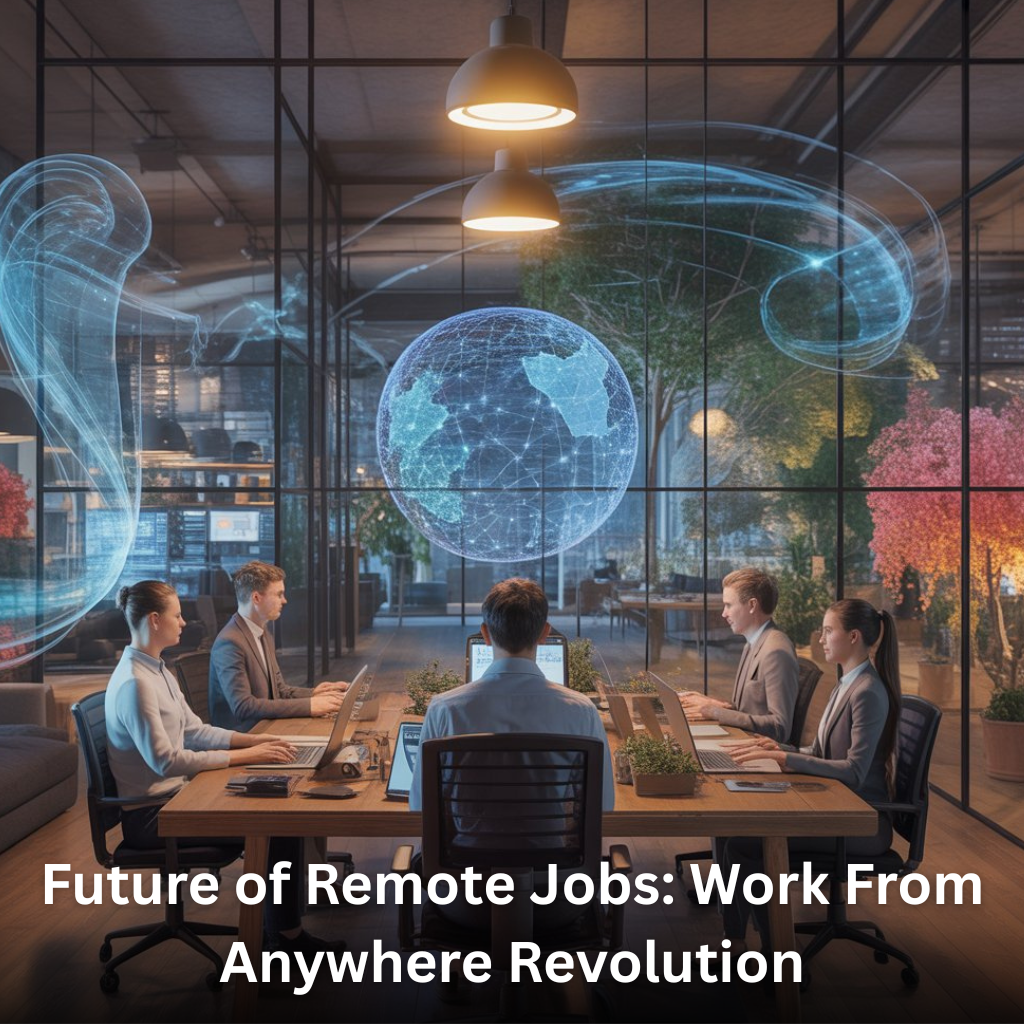
The conversation around the future of remote jobs trend is no longer a debate about whether remote work will last—it’s about how fast it will evolve and reshape industries worldwide. What began as a crisis-driven shift during the COVID-19 pandemic has now transformed into a long-term workplace revolution. From hybrid models to fully remote enterprises, businesses are reimagining productivity, employee engagement, and talent acquisition.
In fact, a recent World Economic Forum report shows that nearly half of employers in developed economies are embracing cross-border hiring, while workers themselves prioritize flexibility even above salary. For many, the choice is clear: the freedom to work remotely is not a perk—it’s the future.
The Permanent Acceleration of Remote Work
The pandemic accelerated a trend that had already begun. Companies realized that productivity didn’t collapse when employees worked from home—on the contrary, in many cases, it improved. Employees discovered a healthier work-life balance, reduced commuting stress, and gained back valuable hours of their day.
A recent FlexJobs survey shows that nearly 95% of employees prefer to have hybrid or remote work options available.Employers too are recognizing the cost benefits of remote-first policies, such as reduced real estate expenses and access to a global talent pool. This creates a win-win scenario, making the remote jobs trend an enduring reality.
Key Trends Defining the Future of Remote Jobs
Cross-Border “Work-From-Anywhere” Hiring
One of the most defining shifts is the rise of cross-border recruitment. Companies in Australia, the U.S., and Europe increasingly hire internationally to address skill shortages. For example, Australian firms are actively employing tech specialists from South Asia and Eastern Europe. This trend not only reduces hiring costs but also increases diversity and innovation within teams.
Expansion Beyond Tech and IT
Initially, remote jobs were synonymous with software engineers, designers, and IT specialists. However, remote opportunities are now expanding across industries:
- Healthcare: Telehealth roles, online therapy, and digital patient care.
- Education: Virtual teaching, tutoring, and online training programs.
- Finance & Legal: Remote tax consultants, accountants, and legal advisors.
- Customer Support: 24/7 global call centers operated entirely online.
This diversification means that remote work is not just for tech-savvy professionals anymore—it’s becoming mainstream across nearly every sector.
Chronoworking: Productivity by Your Body Clock
The traditional 9-to-5 structure is being challenged by chronoworking, where employees align work hours with their natural circadian rhythms. Night owls can work late without penalty, while early risers thrive in morning schedules. This flexible model boosts productivity, reduces burnout, and is especially appealing to younger generations who value autonomy over rigid schedules.
Rise of Virtual Workplace Platforms
The future of remote jobs will also be powered by technology. Tools like Microsoft Teams, Slack, and Zoom have become standard, but the next wave involves virtual workplace ecosystems—immersive platforms where employees can collaborate as if in a digital office. These innovations foster real-time communication, brainstorming, and even virtual “watercooler” moments.
Digital Nomad Lifestyle
The digital nomad trend—professionals working while traveling—is now more than a niche movement. Countries like Portugal, Thailand, and Estonia are offering digital nomad visas to attract this new class of workers. While appealing, this lifestyle also raises challenges around taxation, healthcare, and long-term stability, issues governments must now address.
Benefits of the Remote Jobs Trend
Cost Savings: Businesses save millions on office leases and overhead costs.
Diversity and Inclusion: Hiring from different regions encourages cultural diversity and broader perspectives.
Environmental Impact: Reduced commuting lowers carbon emissions and traffic congestion.
Challenges on the Horizon
Although remote work offers many advantages, it also comes with certain challenges.
Cybersecurity and Data Privacy
Remote setups increase the risk of data breaches. Companies must invest in secure networks, VPNs, and employee training to reduce vulnerabilities.
Employee Isolation
Remote professionals often face loneliness and disconnection from their teams. Without intentional community-building, this can reduce morale and engagement.
Work-Life Boundaries
The blurred line between home and office often leads to burnout. Employers need clear policies and wellness initiatives to protect workers.
Global Inequality
Remote opportunities are concentrated in developed economies, while rural areas and developing nations face infrastructure barriers such as weak internet access and unreliable electricity.
Preparing for the Future
What Employers Should Do
- Adopt Flexible Policies: Hybrid and chronoworking options keep workers engaged.
- Invest in Technology: Secure platforms and virtual offices improve collaboration.
- Train Managers: Leaders must learn how to motivate and evaluate performance remotely.
- Ensure Compliance: Companies hiring internationally must navigate tax, visa, and labor laws.
What Employees Should Do
- Focus on Skills: Demand is high for digital literacy, cybersecurity, and communication skills.
- Build an Online Brand: LinkedIn portfolios and personal websites help secure global opportunities.
- Prioritize Mental Health: Remote workers must balance productivity with well-being.
- Stay Adaptive: New technologies and job categories are emerging quickly.
Case Studies: Remote Jobs in Action
Healthcare Transformation
Telemedicine is now a $100B industry. Doctors and nurses provide consultations online, reducing hospital strain and increasing access to healthcare in rural regions.
Education Shift
Platforms like Coursera and Udemy show how remote teaching is no longer limited to schools. Teachers can reach thousands globally, creating both new income streams and educational opportunities.
Tech & Startups
Global startups are building entire teams without physical offices. For instance, GitLab, valued at over $4 billion, is a fully remote company with employees spread across 60+ countries.
FAQs
Q1: Will remote jobs replace office jobs entirely?
Not entirely—hybrid models will dominate, blending remote flexibility with occasional in-office collaboration.
Q2: Are remote jobs sustainable for the long term?
Yes. With advancing technology and growing demand, remote work is more sustainable now than ever before.
Q3: What industries will see the biggest remote growth?
Tech, healthcare, finance, education, and customer support are leading, but nearly all industries are adopting some level of remote integration.
Q4: How can remote workers avoid burnout?
By setting clear work-life boundaries, taking breaks, and engaging in social or team-building activities.
Q5: Do remote workers earn less than office workers?
Not always. High-paying roles in tech and healthcare often match or exceed traditional office salaries.
Conclusion
The future of remote jobs trend is dynamic and progressive. By expanding across sectors, enabling chronoworking, and offering global opportunities, remote work is transforming how we think about careers. Yet as exciting as that is, navigating cybersecurity, inclusion, and workplace isolation will require thoughtful strategy.
Adapting to this shift means embracing technology, flexibility, and connection—building a future where work truly knows no boundaries.
Related : Writozy

