
From Wikipedia, the free encyclopedia
Content deleted Content added
|
Tags: Mobile edit Mobile web edit
|
Tags: Mobile edit Mobile web edit
|
||
| Line 49: | Line 49: | ||
|
The mosque survived natural weathering and earthquakes that struck the [[Xichang]] area during the Daoguang period. In 1990, restoration work was undertaken through the joint efforts of the Sichuan Provincial Cultural Relics and Archaeology Research Institute, Panzhihua Cultural Relics Management Office, and Miyi County Cultural Center, focusing on reinforcing the Wangyue Tower (Moon-Viewing Pavilion).<ref name=”sichuan”>{{cite web |title=攀枝花市副市长李明调研督导文物安全工作 |url=https://wwj.sc.gov.cn/scwwj/szdt/2021/7/16/5bae9a02203449c6ae28ce0a67d3cff7.shtml |archive-url=https://archive.ph/i7xC5 |archive-date=2025-11-07 |access-date=2025-11-07 |website=Sichuan Provincial Cultural Heritage Administration}}</ref> |
The mosque survived natural weathering and earthquakes that struck the [[Xichang]] area during the Daoguang period. In 1990, restoration work was undertaken through the joint efforts of the Sichuan Provincial Cultural Relics and Archaeology Research Institute, Panzhihua Cultural Relics Management Office, and Miyi County Cultural Center, focusing on reinforcing the Wangyue Tower (Moon-Viewing Pavilion).<ref name=”sichuan”>{{cite web |title=攀枝花市副市长李明调研督导文物安全工作 |url=https://wwj.sc.gov.cn/scwwj/szdt/2021/7/16/5bae9a02203449c6ae28ce0a67d3cff7.shtml |archive-url=https://archive.ph/i7xC5 |archive-date=2025-11-07 |access-date=2025-11-07 |website=Sichuan Provincial Cultural Heritage Administration}}</ref> |
||
|
In 1991, the mosque was designated as a Provincial- |
In 1991, the mosque was designated as a Provincial- Cultural , the only ancient architectural site with this status in Panzhihua.<ref>四川省人民政府川府发(1991)50号文件《关于公布第三批省级重点文物保护单位的通知》</ref><ref name=”boya”/> In 2021, Panzhihua Vice Mayor Li Ming conducted research and supervision of the mosque’s cultural relic safety.<ref name=”sichuan”/> |
||
|
== See also == |
== See also == |
||
Revision as of 20:26, 7 November 2025
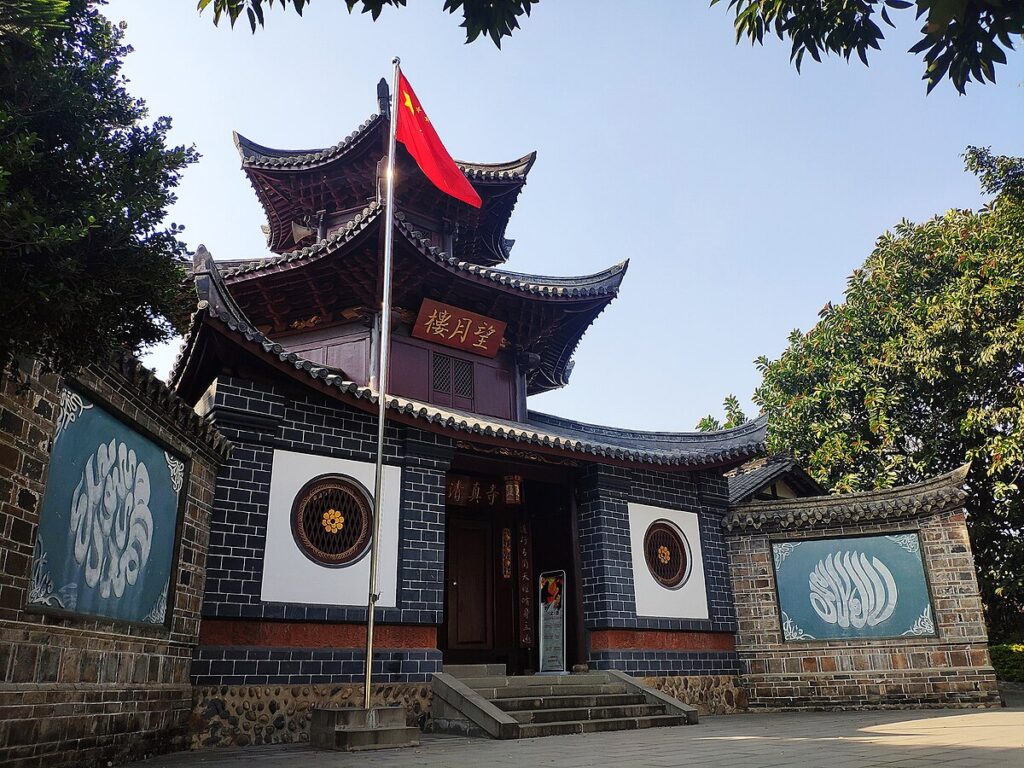
The Guabang Mosque[a] (Chinese: 挂榜清真寺; pinyin: guà bǎng qīng zhēn sì) is located in Tianba Village, Baima Town, Miyi County, Sichuan Province.
History
The mosque was constructed in 1703 during theQing dynasty (42nd year of Emperor Kangxi‘s reign).[1] According to historical records preserved on two stone tablets within the mosque complex, subsequent renovations and expansions were carried out during the Qianlong, Jiaqing, and Daoguang reigns.
The mosque survived natural weathering and earthquakes that struck the Xichang area during the Daoguang period. In 1990, restoration work was undertaken through the joint efforts of the Sichuan Provincial Cultural Relics and Archaeology Research Institute, Panzhihua Cultural Relics Management Office, and Miyi County Cultural Center, focusing on reinforcing the Wangyue Tower (Moon-Viewing Pavilion).[2]
In 1991, the mosque was designated as a Sichuan Provincial-level Protected Cultural Heritage Site, the only ancient architectural site with this status in Panzhihua.[3][1] In 2021, Panzhihua Vice Mayor Li Ming conducted research and supervision of the mosque’s cultural relic safety.[2]
See also
References
- ^ Guabang Mosque is also known as the Wangyuelou Mosque, Tianba Mosque, and Miyi Mosque.

