


From Wikipedia, the free encyclopedia
Content deleted Content added
|
|
|||
| Line 2: | Line 2: | ||
|
”’Harm Geert Muller”'(HGM)<ref name=”AutoIW-1″>{{Cite web |url=https://www.chessprogramming.org/Harm_Geert_Muller |title=Harm Geert Muller |website=Chess Programming Wiki |publisher=chessprogramming.org |date=2025-11-15 |access-date=30 November 2025}}{{Creative Commons text attribution notice|cc=bysa3|from this source=yes}}</ref>, a Dutch physicist<ref>{{Cite web |url=https://www.researchgate.net/scientific-contributions/Harm-Geert-Muller-2163560160 |title=Harm-Geert Muller |website=ResearchGate |publisher=ResearchGate GmbH |location=Berlin, Germany |access-date=2025-12-02 |quote=Physicist affiliated with AMOLF (Amsterdam) and University of Vienna; co-author of the landmark 2001 ”Science” paper on attosecond pulses and multiple highly cited works in strong-field and attosecond physics}}</ref> and since 1976 computer chess programmer. He wrote a blitz program for the [[PDP-11]] and programs for the 6800 and 6502 8-bit µ-Processors, released under the name Usurpator, which competed in several Dutch Computer Chess Championships. In 1986 HGM came up with a matchbox computer with a 65SC816 CPU for the purpose of running Usurpator<ref name=”DOCCC1986″>{{Cite journal |last=van Oosterwijk Bruyn |first=Jaap |title=Nona retains her Title |journal=ICCA Journal |volume=9 |issue=3 |pages=152–154 |date=September 1986 |url=https://www.chessprogramming.org/images/9/94/ICCA86-3.pdf |access-date=30 November 2025}}</ref>, competing three times until 1990.<ref name=”Matchbox1990″>{{Cite journal |last=Muller |first=Harm Geert |title=A Matchbox Chess Computer |journal=ICCA Journal |volume=13 |issue=4 |pages=193–199 |date=December 1990 |url=https://www.chessprogramming.org/images/5/5f/ICCA90-4.pdf |format=PDF |access-date=2025-12-02}}</ref> |
”’Harm Geert Muller”'(HGM)<ref name=”AutoIW-1″>{{Cite web |url=https://www.chessprogramming.org/Harm_Geert_Muller |title=Harm Geert Muller |website=Chess Programming Wiki |publisher=chessprogramming.org |date=2025-11-15 |access-date=30 November 2025}}{{Creative Commons text attribution notice|cc=bysa3|from this source=yes}}</ref>, a Dutch physicist<ref>{{Cite web |url=https://www.researchgate.net/scientific-contributions/Harm-Geert-Muller-2163560160 |title=Harm-Geert Muller |website=ResearchGate |publisher=ResearchGate GmbH |location=Berlin, Germany |access-date=2025-12-02 |quote=Physicist affiliated with AMOLF (Amsterdam) and University of Vienna; co-author of the landmark 2001 ”Science” paper on attosecond pulses and multiple highly cited works in strong-field and attosecond physics}}</ref> and since 1976 computer chess programmer. He wrote a blitz program for the [[PDP-11]] and programs for the 6800 and 6502 8-bit µ-Processors, released under the name Usurpator, which competed in several Dutch Computer Chess Championships. In 1986 HGM came up with a matchbox computer with a 65SC816 CPU for the purpose of running Usurpator<ref name=”DOCCC1986″>{{Cite journal |last=van Oosterwijk Bruyn |first=Jaap |title=Nona retains her Title |journal=ICCA Journal |volume=9 |issue=3 |pages=152–154 |date=September 1986 |url=https://www.chessprogramming.org/images/9/94/ICCA86-3.pdf |access-date=30 November 2025}}</ref>, competing three times until 1990.<ref name=”Matchbox1990″>{{Cite journal |last=Muller |first=Harm Geert |title=A Matchbox Chess Computer |journal=ICCA Journal |volume=13 |issue=4 |pages=193–199 |date=December 1990 |url=https://www.chessprogramming.org/images/5/5f/ICCA90-4.pdf |format=PDF |access-date=2025-12-02}}</ref> |
||
|
==Scientific research== |
|||
|
==References== |
|||
|
|
He collaborated closely with Pierre Agostini on the experimental demonstration of the first train of attosecond pulses in 2001, a breakthrough that formed one of the cornerstones of the research awarded the 2023 Nobel Prize in Physics. |
||
|
<ref name=”nobel-agostini”>{{cite web |
<ref name=”nobel-agostini”>{{cite web |
||
|
|url = https://www.nobelprize.org/prizes/physics/2023/agostini/interview/ |
|url = https://www.nobelprize.org/prizes/physics/2023/agostini/interview/ |
||
| Line 43: | Line 43: | ||
|
}}</ref> |
}}</ref> |
||
|
==Chess coding== |
|||
|
In addition, Muller has been invited as the main speaker at events dedicated to the attosecond Nobel Prize, underscoring his continuing expertise in the field. |
|||
|
<ref name=”amolf60″>{{cite book |
|||
|
|url = https://amolf.nl/wp-content/uploads/2016/03/Impact_60-years-AMOLF_ENG.pdf |
|||
|
|title = Impact: 60 years AMOLF |
|||
|
|publisher = AMOLF |
|||
|
|year = 2016 |
|||
|
|pages = 36, 56 |
|||
|
|access-date = 2025-12-02 |
|||
|
}}</ref> |
|||
|
==Comeback== |
|||
|
After 15 years “out of business”, HGM is back with his minimalist chess engine [[Micro-Max]], the [[chess variants]] engine [[Fairy-Max]], the closed source programs Joker and Spartacus<ref name=”joker2011″>{{Cite web |url=http://www.talkchess.com/forum3/viewtopic.php?f=2&t=41187&start=10 |title=Re: Any joker1114w Updates? |author=Harm Geert Muller |website=Computer Chess Club (CCC) |date=2011-11-06 |access-date=30 November 2025}}</ref>, the Chinese Chess engine [[HaQiKi D]], and the [[Shogi]] engine [[Shokidoki]]. HGM is involved in extending the Chess Engine Communication Protocol specification to Version 2, also addressing various chess and chess like game variants, and further covering Checkers, Go, Amazons, and [[Reversi]] (Othello). The didactic open source engine [[KingSlayer]] published in fall 2015 is intended to be an inspiration for beginning chess programmers. His open source engine [[CrazyWa]] plays Shogi and Chess variants with piece drops with boards up to 11×11, with up to 16 droppable piece types, and 15 promoted piece types.<ref name=”AutoIW-1″/> |
After 15 years “out of business”, HGM is back with his minimalist chess engine [[Micro-Max]], the [[chess variants]] engine [[Fairy-Max]], the closed source programs Joker and Spartacus<ref name=”joker2011″>{{Cite web |url=http://www.talkchess.com/forum3/viewtopic.php?f=2&t=41187&start=10 |title=Re: Any joker1114w Updates? |author=Harm Geert Muller |website=Computer Chess Club (CCC) |date=2011-11-06 |access-date=30 November 2025}}</ref>, the Chinese Chess engine [[HaQiKi D]], and the [[Shogi]] engine [[Shokidoki]]. HGM is involved in extending the Chess Engine Communication Protocol specification to Version 2, also addressing various chess and chess like game variants, and further covering Checkers, Go, Amazons, and [[Reversi]] (Othello). The didactic open source engine [[KingSlayer]] published in fall 2015 is intended to be an inspiration for beginning chess programmers. His open source engine [[CrazyWa]] plays Shogi and Chess variants with piece drops with boards up to 11×11, with up to 16 droppable piece types, and 15 promoted piece types.<ref name=”AutoIW-1″/> |
||
Latest revision as of 13:24, 3 December 2025

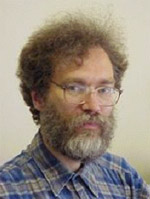
Harm Geert Muller(HGM)[1], a Dutch physicist[2] and since 1976 computer chess programmer. He wrote a blitz program for the PDP-11 and programs for the 6800 and 6502 8-bit µ-Processors, released under the name Usurpator, which competed in several Dutch Computer Chess Championships. In 1986 HGM came up with a matchbox computer with a 65SC816 CPU for the purpose of running Usurpator[3], competing three times until 1990.[4]
Scientific research
[edit]
He collaborated closely with Pierre Agostini on the experimental demonstration of the first train of attosecond pulses in 2001, a breakthrough that formed one of the cornerstones of the research awarded the 2023 Nobel Prize in Physics.
[5]
This collaboration involved teams from the FOM Institute for Atomic and Molecular Physics (AMOLF) in Amsterdam, led by Muller, and the Centre d’Études de Saclay in France.
[6]
The RABBIT technique (Reconstruction of Attosecond Beating By Interference of Two-photon Transitions), co-developed by Muller at AMOLF, was fundamental to the work that earned Agostini the Nobel Prize.
[7]
Muller served as a group leader at AMOLF, where he contributed to several highly cited publications, including the 2001 Science paper that is listed among the institute’s most impactful articles between 1988 and 2010.
[8]
After 15 years “out of business”, HGM is back with his minimalist chess engine Micro-Max, the chess variants engine Fairy-Max, the closed source programs Joker and Spartacus[9], the Chinese Chess engine HaQiKi D, and the Shogi engine Shokidoki. HGM is involved in extending the Chess Engine Communication Protocol specification to Version 2, also addressing various chess and chess like game variants, and further covering Checkers, Go, Amazons, and Reversi (Othello). The didactic open source engine KingSlayer published in fall 2015 is intended to be an inspiration for beginning chess programmers. His open source engine CrazyWa plays Shogi and Chess variants with piece drops with boards up to 11×11, with up to 16 droppable piece types, and 15 promoted piece types.[1]
HGM’s Shogi engine Shokidoki won silver in 5*5 Shogi at the 15th Computer Olympiad[10], gold at the 17th Computer Olympiad[11], gold in Shogi and Mini-Shogi at the 18th Computer Olympiad 2015, and also won the 2015 UEC Cup.[12] (9th UEC Mini-Shogi Tournament).[1][13]
Selected publications
[edit]
- Muller, Harm Geert (1981). Usurpator 6502 6800 computerschaak (in Dutch). Nijmegen: Wolfkamp.
- Muller, Harm Geert (December 1990). “A Matchbox Chess Computer” (PDF). ICCA Journal. 13 (4): 193–199. Retrieved 2025-11-30.
- Muller, Harm Geert (2000). “Multiphoton ionization at AMOLF” (PDF). Van A tot Q on line. Retrieved 2025-11-30.
- Paul, P. M.; Toma, E. S.; Breger, P.; Mullot, G.; Augé, F.; Balcou, Ph.; Muller, Harm Geert; Agostini, P. (2001-05-25). “Observation of a Train of Attosecond Pulses from High Harmonic Generation”. Science. 292 (5524): 1689–1692. doi:10.1126/science.1059413. Retrieved 2025-11-30.
- Eckle, Petrissa; Smolarski, Mathias; Schlup, Philip; Muller, Harm Geert; Biegert, Jens; Staudte, André; Schöffler, Markus; Dörner, Reinhard; Keller, Ursula (July 2008). “Attosecond angular streaking”. Nature Physics. 4 (7): 565–570.
- Eckle, Petrissa; Pfeiffer, Adrian N.; Cirelli, Claudio; Staudte, André; Dörner, Reinhard; Muller, Harm Geert; Büttiker, Markus; Keller, Ursula. “Attosecond Ionization and Tunneling Delay Time Measurements in Helium”. Science. 322 (5907): 1525–1529.
- Scrinzi, Armin; Muller, Harm Geert (2009). “Attosecond Pulses: Generation, Detection, and Applications”. In Brabec, Thomas (ed.). Strong Field Laser Physics. Springer Series in Optical Sciences. Vol. 134. New York: Springer.
- Muller, Harm Geert (March 2009). “Toledo Nanochess” (PDF). ICGA Journal. 32 (1): 48–49. Retrieved 2025-11-30.
- Muller, Harm Geert (December 2015). “SHOKIDOKI wins MiniShogi Tournament” (PDF). ICGA Journal. 38 (4): 240–241. Retrieved 2025-11-30.




