


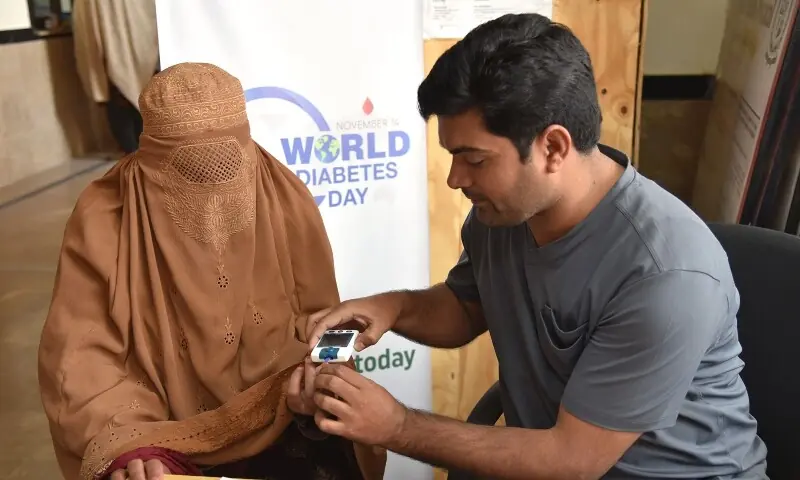
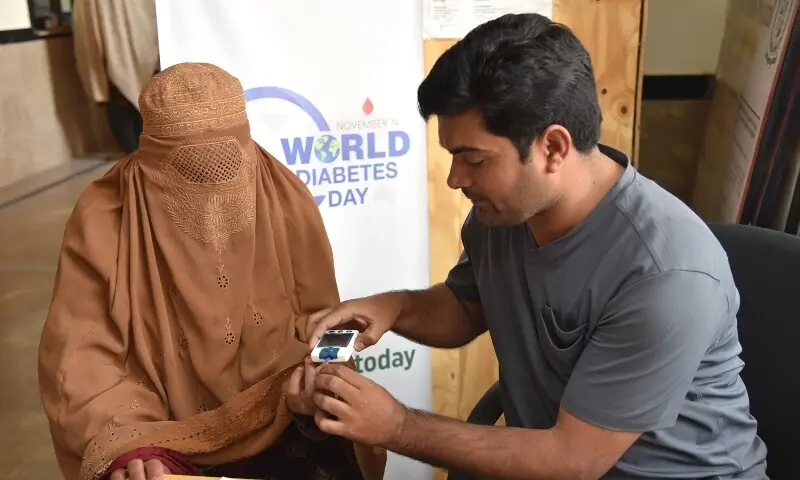
The health ministry and the World Health Organisation warned on Friday that one in three adults in the country was affected by diabetes.
In a press release issued on World Diabetes Day, both warned that “diabetes affects 34.5 million people in Pakistan, including one in three adults. Pakistan has the highest diabetes burden globally — in percentage terms — and hosts more than 40 per cent of the total estimated cases in the Eastern Mediterranean Region.”
They said they were partnering to organise special diabetes screening activities in medical facilities, urging people to adopt a healthy lifestyle and encouraging the early detection of a “silent killer that can affect people of any age”.
The press release said that four in 10 people affected by diabetes in the region were not aware of it, increasing their risk of serious health complications such as blindness, kidney failure, heart attacks, stroke and lower limb amputation.
It added that Type 2 diabetes could be prevented and the consequences of all types of diabetes minimised or delayed by maintaining a healthy diet, staying physically active, detecting the disease early, seeking treatment when needed, avoiding tobacco and reducing sugar intake.
“Today, we observe World Diabetes Day to highlight the rising burden of diabetes in Pakistan. The Ministry of Health, through the Prime Minister’s Diabetes Programme, is promoting early detection, free screening and healthier lifestyles. I urge all citizens to know their risk, get tested and take simple steps like healthy eating and physical activity,” Health Minister Syed Mustafa Kamal was quoted as saying in the press release.
Meanwhile, WHO representative and Head of Mission in Pakistan Dr Luo Dapeng said: “Diabetes is a silent killer, but we can all do our part to protect ourselves and our families by adopting a healthy lifestyle and regular medical checkups.
“Prevention is always the best cure, and WHO will stand with Pakistan and its people to combat a disease that can be prevented or minimised through early detection and timely treatment.”
The press release concluded that globally, the number of people living with diabetes rose from 200m in 1990 to 830m in 2022, adding that the disease was rising more rapidly in low and middle-income countries than in high-income countries.



