


===Babi studies: ”Ganj-i penhan”===
===Babi studies: ”Ganj-i penhan”===
His book, ”Ganj-i penhan”, is about Babi studies and is cataloged by major reference libraries.<ref name=”Columbia-Dihqan”>{{cite web|url=https://clio.columbia.edu/quicksearch?q=hushmand+dihqan&commit=Search#gsc.tab=0&gsc.q=hushmand%20dihqan&gsc.page=1|title=Quicksearch for Hushmand Dihqan|publisher=[[Columbia University Libraries]]|website=Clio|access-date=2025-11-24}}</ref><ref name=”NZCat”>”گنج پنهان : سرگذشت وآثار جناب قدوس/گنج پنهان (Ganj-i penhan: Sarguzasht va Asar-i Hazrat-i Quddus)”. {{cite web|url=https://library.abs.org.nz/cgi-bin/koha/opac-MARCdetail.pl?biblionumber=23984|title=New Zealand National Baha’i Reference Library catalog|access-date=2025-11-26}}</ref> This book is the first independent study about [[Quddús]] (Mullá Muḥammad ʻAlí-i-Bárfurúshi), a prominent disciple of the [[Báb]].<ref name=”Dehghan-Ganj”>{{cite book|last1=Dehghan|first1=Hooshmand|title=Ganje penhan: sargozasht va asare hazrate ghodoos|year=2016|publisher=Adel|location=Germany}}</ref>
His book, ”Ganj-i penhan” is about Babi studies and is cataloged by major reference libraries.<ref name=”Columbia-Dihqan”>{{cite web|url=https://clio.columbia.edu/quicksearch?q=hushmand+dihqan&commit=Search#gsc.tab=0&gsc.q=hushmand%20dihqan&gsc.page=1|title=Quicksearch for Hushmand Dihqan|publisher=[[Columbia University Libraries]]|website=Clio|access-date=2025-11-24}}</ref><ref name=”NZCat”>”گنج پنهان : سرگذشت وآثار جناب قدوس/گنج پنهان (Ganj-i penhan: Sarguzasht va Asar-i Hazrat-i Quddus)”. {{cite web|url=https://library.abs.org.nz/cgi-bin/koha/opac-MARCdetail.pl?biblionumber=23984|title=New Zealand National Baha’i Reference Library catalog|access-date=2025-11-26}}</ref> This book is the first independent study about [[Quddús]] (Mullá Muḥammad ʻAlí-i-Bárfurúshi), a prominent disciple of the [[Báb]].<ref name=”Dehghan-Ganj”>{{cite book|last1=Dehghan|first1=Hooshmand|title=Ganje penhan: sargozasht va asare hazrate ghodoos|year=2016|publisher=Adel|location=Germany}}</ref>
Ganj-i-Penhan contains the life and works of Quddus. Some of Quddús’ works are published for the first time in this book.{{sfn|Dehghan|2016|loc=p. 161}} These works include a number of rare manuscripts of Quddús, which are compared in seven different manuscript and Arabic versions. In other words, it is in this section that Dehghan provides a critical edition of Quddús’s manuscripts. {{sfn|Dehghan|2016|loc=pp. 163–169}}
Ganj-i-Penhan contains the life and works of Quddus. Some of Quddús’ works are published for the first time in this book.{{sfn|Dehghan|2016|loc=p. 161}} These works include a number of rare manuscripts of Quddús, which are compared in seven different manuscript and Arabic versions. In other words, it is in this section that Dehghan provides a critical edition of Quddús’s manuscripts. {{sfn|Dehghan|2016|loc=pp. 163–169}}
[[File:Athar-al-Quddusyyah.jpg|thumb|upright=0.8|<span style=”font-size: 90%;”>A manuscript of Āthār al-Quddūsiyya handwritten by Riḍvān ʿAlī, the son of [[Subh-i-Azal]], as referenced on page 167 of ”Ganj-i Penhan”.</span>]]
[[File:Athar-al-Quddusyyah.jpg|thumb|upright=0.8|<span style=”font-size: 90%;”>A manuscript of Āthār al-Quddūsiyya handwritten by Riḍvān ʿAlī, the son of [[Subh-i-Azal]], as referenced on page 167 of ”Ganj-i Penhan”.</span>]]
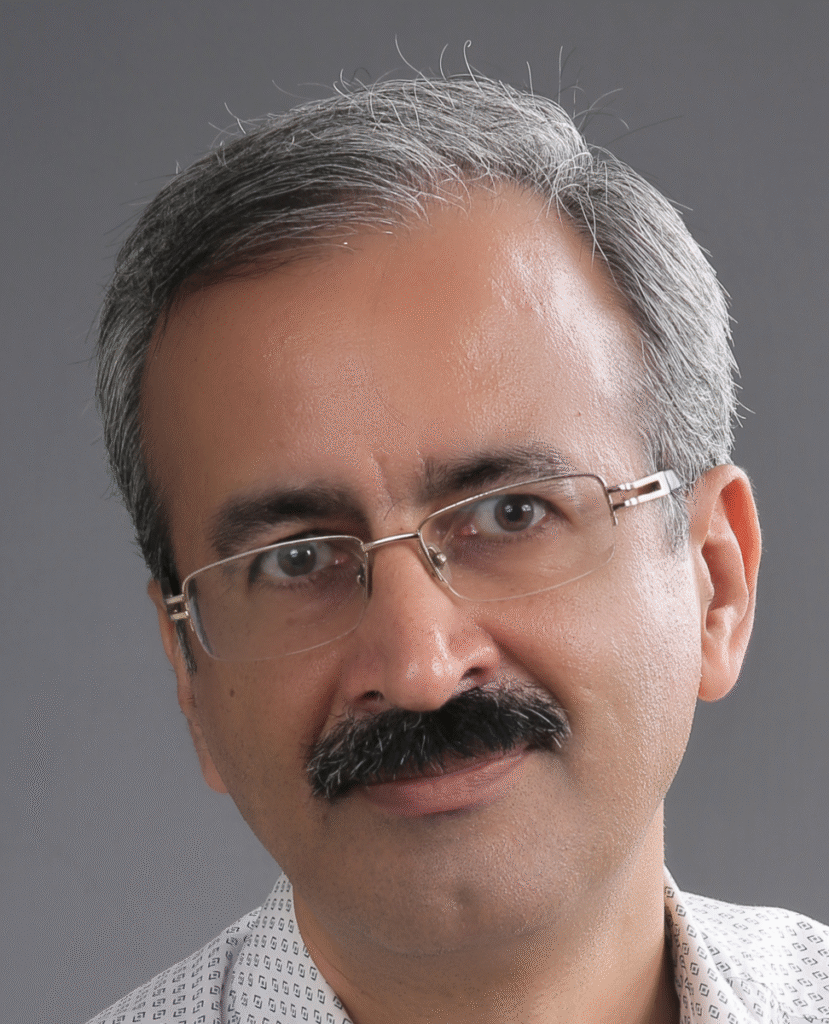
An Iranian Baháʼí historian
|
Hushmand Dehqan |
|
|---|---|
 |
|
| Known for | Babi studies and Islamic mysticism |
| Discipline | Writer, Historian |
| Notable works | Ganj-i penhan (The Hidden Treasure: The Life and Works of Quddús) |
Hooshmand Dehghan (also Hūshmand Dihqān) is a Baháʼí Iranian scholar noted for his research in Babi studies and Islamic mysticism (Sufism). His work, including the book Ganj-i penhan on the life of Quddús, has been significantly cited by academics such as Professor Boris Handal and acknowledged by scholars like Stephen Lambden. He is also known for being denied formal education in Iran due to his Baháʼí Faith and subsequent imprisonment for his religious beliefs.
Early life and education
[edit]
Dehghan was denied formal education in Iran due to his Baháʼí Faith,[1] Later in his career, he developed skills in translation through self-study.[2] His first translation was a book about Mawlana (Rumi); however, the manuscript was never published. After completing the translation of the book, he realized that the author had simultaneously prepared a Persian version of the text alongside the English original.[3]
Dehghan’s scholarly work is detailed in the sections below:
Babi studies: Ganj-i penhan
[edit]
His book, Ganj-i penhan (in Persian: گنج پنهان) is about Babi studies and is cataloged by major reference libraries.[4][5] This book is the first independent study about Quddús (Mullá Muḥammad ʻAlí-i-Bárfurúshi), a prominent disciple of the Báb.[6]
Ganj-i-Penhan contains the life and works of Quddus. Some of Quddús’ works are published for the first time in this book. These works include a number of rare manuscripts of Quddús, which are compared in seven different manuscript and Arabic versions. In other words, it is in this section that Dehghan provides a critical edition of Quddús’s manuscripts.

One of these versions is a collection called آثار القدوسیه (Āthār al-Quddūsiyya), which includes ten manuscripts of Quddús that were transcribed by the early Bábís. Edward Granville Browne, the famous orientalist, had also found this collection in the British Museum, but as Dehghan argues, Brown had mistakenly identified the name of the collection as ابحار القدوسیه (” Abhār al-Quddūsiyya”). [10]
Dehghan also analytically and critically corrects several historical errors of the Bábí period for various reasons: He deeply doubts the authenticity of Mahdī Qulī Mīrzā, Naser al-Din Shah Qajar‘s cousin’s letter to Quddús; He corrects and determines the exact year, month, and day of the change of the names of Bárfurúsh and Bábul based on reports in old newspapers;
Unlike Abbas Amanat, who estimates Quddus’s birth year as 1819,[13] Dehghan determines the year 1822 based on historical evidence;
In some positions, Dehghan also challenges some of the historical conclusions found in Ẓuhūr al-Ḥaqq, a book by the notable Baháʼí historian, Fazel Mazandarani. This methodological rigor has been confirmed by Professor Boris Handal, a scholar of Bábí studies. Handal introduces Dehghan as a historical consultant (p. ix) and evaluates several aspects of his findings. Handal’s analysis shows that Dehghan managed to fill gaps in Quddús’ biography, providing details about his family structure (p. 7), his intellectual background (pp. 24–25), and the route of his travels. Dehghan records key narratives such as Quddús’s debate with Karím Khán Kirmání (p. 88) and describes in detail his suffering in the final hours of his life, including an estimate of the 800 steps he walked on the way to lynching, and documenting Quddús’s psychological resilience in the face of public abuse and insults (pp. 327, 329).
Handal confirms that Dehghan’s inference that Quddús had frequent meetings with the Báb at Karbala is based on abundant historical evidence (pp. 27–28). At the same time, Dehghan’s work demonstrates the depth of his critical methodology in reconstructing Bábí history, particularly by drawing on the history of the photographic industry to decisively reject the authenticity of the image widely attributed to Quddús (p. 500). [16]
Dehghan’s scholarly work in Islamic mysticism is primarily focused on Ibn Arabi and Mawlana (Rumi), distinguished by its meticulous attention to textual and philosophical detail.
Studies on Ibn Arabi
He authored extensive commentary and explanations on Ibn Arabi’s mystical school in a translation of one of William Chittick‘s books, “Ibn ‘Arabi: Heir to the Prophets” (Persian title: ابن عربی، وارث انبیا). His translation and explanations have received attention in academic journals. Fatemeh Aghaya, PhD in Shiite Sects, among others, compares Dehghan’s translation with several other translations of Chittick’s book and writes: Dehghan has included good and useful research on Ibn Arabi’s terminology in his translation.[17]
Dehghan’s annotations systematically engage with the fundamental concepts and epistemology of the Akbarian tradition (Akbarism):
Terminological precision and ontology: Dehghan clarifies the core terminology used by Ibn Arabi and traces their roots. He offers a detailed analysis of the Immutable Entities al-A’yān al-Thābitah (الاعیان الثابته), defining them as “God’s eternal knowledge” which possess an “additive existence” wujūd iḍāfī (وجود اضافی) in the divine knowledge (p. 65, n. 1).[18] He points out that the origin of this concept is rooted in the Mu’tazilite theological idea of the “subsistent non-existent” al-ma’dūm al-thābit (المعدوم الثابت) (p. 63, n. 1).[18] He also provides the original Arabic text for nearly all quotations from Al-Futuhat al-Makkiyya and Fuṣūṣ al-Ḥikam, thereby ensuring textual rigor (pp. 220–222).[18]
The nature of unmediated knowledge: Dehghan meticulously documents Ibn Arabi‘s unique epistemological claim of unmediated reception of knowledge (knowledge received directly from God), including the assertion that his major works were “received verbatim from the spiritual realm.” He contextualizes this claim by referencing similar assertions made by earlier and later mystics such as ‘Abd al-Jabbār al-Niffarī and Shaykh Ahmad al-Aḥsā’ī (p. 124, n. 1).[18]
Cosmology and the perfect human: He links the cause of existence, the Movement of Love Ḥarakat Ḥubbīyya (حرکت حُبّیه), to the Hadith of A Hidden Treasure Kanz Makhfī (کنز مخفی) (p. 176, n. 1 & 2).[18] He also clarifies the status of the Perfect Human Insān al-Kāmil (انسان الکامل) by citing the famous dictum ascribed to ‘Ali ibn Abi Talib regarding man as the “Microcosm” ālam ṣaghīr (عالم صغیر) by form and the “Macrocosm” ‘ālam kabīr (عالم کبیر) by spiritual rank, referencing the exegesis of Jāmī (p. 177, n. 1).[18]
Integration of Shi’i theology: Dehghan integrates the Imami Shi’i perspective into the analysis of universal concepts, such as the interpretation of the “creation of Adam in the image of God” khalaqa Ādama ‘alā ṣūratihi (خلق آدم علی صورته). He cites the Imams’ interpretation that the pronoun “His” refers back to Adam to avoid anthropomorphism (tashbīh) (p. 29, n. 1).[18] He also establishes a convergence between Ibn Arabi‘s concept of the ‘god of belief’ Ilāh al-Mu’taqad (اله المعتقد) and the Shi’i theological tradition which rejects the limitation of God by human imagination (p. 170, n. 1).[18]
Studies on Mawlana (Rumi)
Dehghan’s research includes studies on Rumi, as presented in a 2024 academic article published in Aasoo. The article analyzes Rumi’s development as a mystic poet, focusing on the influence of his environment.
The cultural context of konya:
Dehghan argues that Rumi’s poetic transformation was a direct result of the cultural and social landscape of Konya, the Seljuk Empire capital and a diverse, multi-ethnic center.
Environmental Influence: He posits that Rumi, having been a jurist in Balkh, would likely have remained one had he stayed. However, the open, multicultural society of Konya prioritized poetry and music as key elements of social identity.
The shift from jurist to poet: Citing Rumi’s own account—that in his homeland, “nothing was more disgraceful than poetry,” but in Konya, he turned to verse to avoid boring his audience— Dehghan emphasizes the external pressure of the host society.
Pervasiveness of Music: Through reports from chroniclers like Shams al-Din Ahmad Aflaki, the article highlights the ubiquity of instruments and singing in the streets of Konya, indicating that music was an integral part of daily life.
Rumi’s artistic fusion:
Dehghan’s analysis concludes that Rumi eventually integrated these social and artistic norms, a process catalyzed by his encounter with Shams Tabrizi.
Shams’s role: Shams’s profound respect for music, which he elevated to the level of “pure speaking revelation,” and his advocacy of Sama (audition and spinning) provided the intellectual and spiritual framework for Rumi’s new approach.
Integration of arts and mysticism: Dehghan demonstrates that Rumi combined poetry, music, and mysticism in his ghazals and the Masnavi. This fusion is evident in Rumi’s extensive use of “rhythmic” or “surging” meters (“وزنهای خیزابی”) that were suitable for accompanying drums (daf) and group dancing, connecting his spiritual poetry closely with folkloric music traditions.
Spontaneous composition: The analysis includes historical accounts of Rumi spontaneously composing verses while dancing in Sama, often in response to everyday sounds and rhythms, such as the tapping of a goldsmith’s hammer.[19]
Stephen Lambden, a scholar at the University of California, Merced includes Dehghan in a list of notable Bahai historians. He writes, “Among Bahā’ī writers who wrote about the Bāb and his writings one should consult the often prolific literary output of (to be selective) Mirza Abū al-Faḍl Gulpayiganī […] Hasan Balyuzi; Alessandro Bausani; Denis MacEoin; Abbas Amanat; Moojan Momen […] Juan Cole […] Hooshmand Dehqan […].”[20]
Lambden writes about Dehghan’s book, Ganj-i penhan: sargozasht va asar-i hazrat-i Quddus, “An important volume about the life and writings of Muhammad `Ali Barfurushi entitled Quddus.” He adds “it includes important Tablets [Sacred Writings], Ziyarat-Namah [Visitation Tablet] and other materials addressed by the Báb to this important 18th Huruf al-Hayy [the first eighteen disciples of the Báb].” [20]
Boris Handal, a professor of Educational Technologies at the University of Notre Dame Australia and researcher in Bábí and Baháʼí studies, cites Dehghan, 123 times in his own book, “Quddús: First in Rank”. Handal devotes several pages (pp. 26–28) of his book to discussing Dehqan’s historical views about Quddús.[16]
Persecution and imprisonment
[edit]
Dehghan was arrested in Gorgan in the fall of 2012 during a wave of arrests of Baha’is in Golestan Province.[21][22] He was initially sentenced to a total of six years in prison for his adherence to the Baha’i faith, on charges including “membership in an illegal Baha’i organization with the intent to undermine national security” and “propaganda against the regime.”[23][24] This initial sentence was later reduced to one year in prison by the Court of Appeal in January 2016. He was subsequently re-arrested in June 2017 and transferred to Gorgan’s Amirabad Prison to serve his sentence.[25][26][27] and conditionally released from prison after having completed one-third of his sentence.[28]
در کافه اگزیستانسیالیستی At the Existentialist Café in Persian.[29]
عالمگیر: کوید -۱۹ جهان را تکان میدهد “Pandemic! COVID-19 Shakes the World” in Persian. [30]
- ^ “انگیزه ها از نداشته ها می آید نه داشته ها”. IBNA (in Persian). Retrieved 2025-11-26.
- ^ Zandi, Hamid (14 November 2019). “دختر تحصیلکرده: داستان کسی که از گلهداری به هاروارد رفت [Educated Girl: The Story of Someone Who Went from Herding to Harvard]” (PDF). Shahrvand Newspaper (in Persian). p. 9. Archived from the original (PDF) on 30 December 2019.
- ^ Dehghan, Hooshmand (2010). “Nokhostin Tarjome (The First Translation)” (PDF). Motarjem Journal (Translator’s Quarterly) (in Persian) (69): 159–160.
- ^ “Quicksearch for Hushmand Dihqan”. Clio. Columbia University Libraries. Retrieved 2025-11-24.
- ^ “گنج پنهان : سرگذشت وآثار جناب قدوس/گنج پنهان (Ganj-i penhan: Sarguzasht va Asar-i Hazrat-i Quddus)”. “New Zealand National Baha’i Reference Library catalog”. Retrieved 2025-11-26.
- ^ Dehghan, Hooshmand (2016). Ganje penhan: sargozasht va asare hazrate ghodoos. Germany: Adel.
- ^ Browne, Edward G. (1918). Materials for the Study of the Babi Religion. Cambridge: University Press. pp. 208–210.
- ^ Amanat, Abbas (1989). Resurrection and renewal: The making of the Babi movement in Iran, 1844-1850. Cornell University Press. p. 181. ISBN 978-0-8014-2098-6.
- ^ a b Handal, Boris. “Quddús: First in Rank” (PDF). Baháʼí Library Online. Retrieved 2025-11-24.
- ^ Aghaya, Fatemeh (2023). “Dehghan’s Translation of Chittick’s Book on Ibn Arabi and Its Terminology”. Interdisciplinary Studies on the Quran and Hadith. 4 (1): 81–99. Retrieved 2025-11-26.
- ^ a b c d e f g h Dehghan, Houshmand (2014). Ibn ‘Arabi, Vāris-i Anbiyā’. Payam-e Emrooz.
- ^ “مولانا و چالش معنویت طربناک [Mawlana and the Challenge of Joyful Spirituality]”. Aasoo (in Persian). 2024-06-25. Retrieved 2025-11-26.
- ^ a b Lambden, Stephen N. “Bibliography II: The Bab and the Babi Religion – Select Western Sources”. University of California, Merced. Retrieved 2025-11-24.
- ^ “HOUSHMAND DEHGHAN”. United4Iran. Retrieved 2025-11-26.
- ^ “Two Dozen Iranian Baha’is Sentenced to Six to Eleven Years for Practicing Their Faith”. Center for Human Rights in Iran. 2 February 2016. Retrieved 2025-11-26.
- ^ “صدور احکام طولانی مدت زندان برای ۲۴ بهایی در استان گلستان [Long-term Prison Sentences Issued for 24 Baháʼís in Golestan Province]”. BBC Persian (in Persian). 28 January 2016. Retrieved 2025-11-26.
- ^ “Heavy Sentences Imposed on Baha’is of Gorgan, Gonbad-e Qabus and Minudasht”. Iran Press Watch. 26 January 2016. Retrieved 2025-11-26.
- ^ “Several Baha’is Begin Prison Sentences in Golestan Province”. Iran Press Watch. Retrieved 2025-11-26.
- ^ WUNRN. “Iran – 24 Individuals of Baha’i Faith Imprisoned Because of Their Religion – Women & Men”. Retrieved 2025-11-26.
- ^ “Iran Jails 24 Baha’is”. Radio Free Europe/Radio Liberty. 2016-01-28. Retrieved 2025-11-26.
- ^ “HRANA: Four Bahai Citizens Were Released from Golestan Province”. Iran Bahai Persecution. 2021-01-26. Retrieved 2025-11-26.
- ^ “‘At the Existentialist Café’ Released in Persian”. Financial Tribune. 20 January 2017. Retrieved 27 November 2025.
- ^ “Slavoj Zizek ‘Pandemic!’ translated into Persian”. Tehran Times. 5 May 2020. Retrieved 27 November 2025.



