


From Wikipedia, the free encyclopedia
Content deleted Content added
|
|
|||
| Line 19: | Line 19: | ||
|
# ”Opu-Egerebite”: This stage is meant for young ladies aged between 18 and 21, as well as those slightly older. During the Opu-Egerebite ceremony, the young women tie a waist wrapper called Ikaki, along with popo and damask fabrics, paired with matching blouses. |
# ”Opu-Egerebite”: This stage is meant for young ladies aged between 18 and 21, as well as those slightly older. During the Opu-Egerebite ceremony, the young women tie a waist wrapper called Ikaki, along with popo and damask fabrics, paired with matching blouses. |
||
|
# ”Bibite”: The Bibite stage is reserved for women aged 40 and above. In this stage, the women wear traditional garments such as the intorica George wrapper and the lili-inji wrapper. The Bibite stage holds the highest level of [[Social distinction|honour and respect]] within the Iria ceremony in [[Kingdom of Bonny|Bonny]] and [[Opobo]], and it receives special attention and reverence. |
# ”Bibite”: The Bibite stage is reserved for women aged 40 and above. In this stage, the women wear traditional garments such as the intorica George wrapper and the lili-inji wrapper. The Bibite stage holds the highest level of [[Social distinction|honour and respect]] within the Iria ceremony in [[Kingdom of Bonny|Bonny]] and [[Opobo]], and it receives special attention and reverence. |
||
|
== See more == |
|||
|
* [[List of festivals in Nigeria|List of Festival in Nigeria]] |
|||
|
* [[Culture of Nigeria]] |
|||
|
==References== |
==References== |
||
Latest revision as of 23:50, 3 January 2026
Nigerian festival
| Language | Ibani Ijaw |
|---|---|
| Meaning | Womanhood Celebration |
| Region of origin | Ibani Ijaw Region, Nigeria |


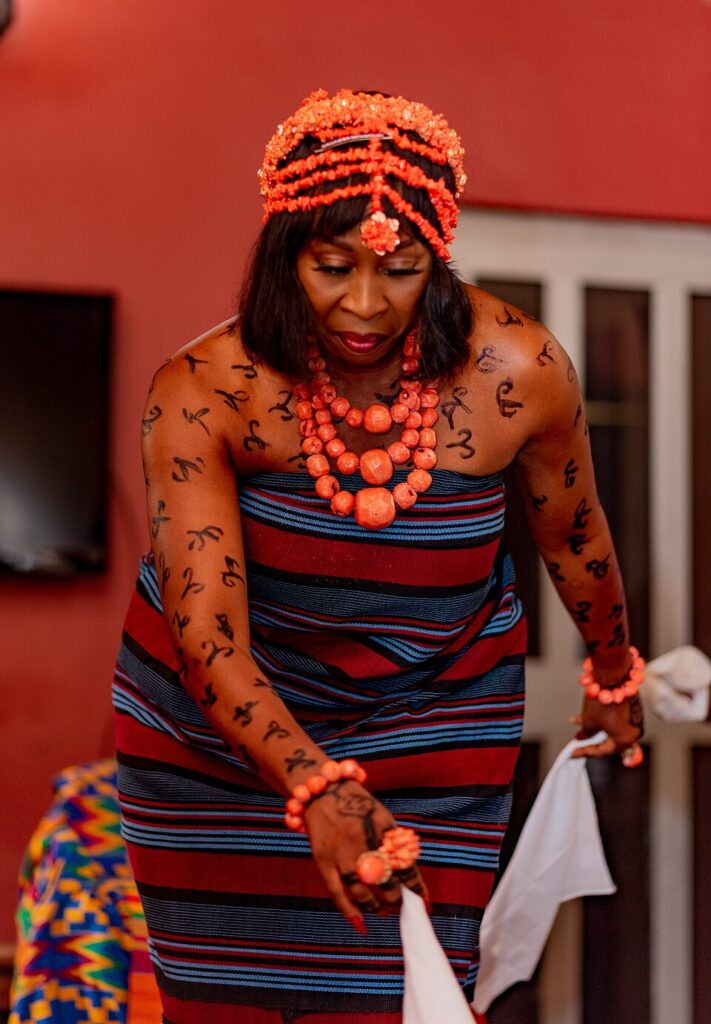
The Iria ceremony is a festival celebrated by the Ijaw ethnic group in Rivers State, Nigeria.[1] It is a significant cultural event that marks the transition of a woman from one stage of womanhood to another within the Ijaw community. The festival is primarily observed in the Ibani kingdoms located in the Bonny and Opobo-Nkoro Local Government Areas of Rivers State.[2]
The first stage of the Iria ceremony is considered a rite of passage for young girls as they reach puberty and begin to mature physically. Prior to this stage, a girl child runs naked around the neighborhood, but once she reaches the age of puberty, her parents acquire a wrapper for her. The presentation of this wrapper to the girl marks a special day, and is celebrated with great enthusiasm. An Iria initiate is referred to in the Ibani language as an Iriabo.[3][1]
The festival consists of three stages, each corresponding to different age groups. If any of the prior stages haven’t been performed by a prospective initiate to the final Bibite stage, as sometimes occurs, they will each be done before proceeding to it:[2]
- Kala-Egerebite: The Kala-Egerebite stage is designated for girls aged between 12 and 15. On the day of the ceremony, the girls wear a single wrapper known as SUU on their chest, along with light beads as adornments.
- Opu-Egerebite: This stage is meant for young ladies aged between 18 and 21, as well as those slightly older. During the Opu-Egerebite ceremony, the young women tie a waist wrapper called Ikaki, along with popo and damask fabrics, paired with matching blouses.
- Bibite: The Bibite stage is reserved for women aged 40 and above. In this stage, the women wear traditional garments such as the intorica George wrapper and the lili-inji wrapper. The Bibite stage holds the highest level of honour and respect within the Iria ceremony in Bonny and Opobo, and it receives special attention and reverence.




