


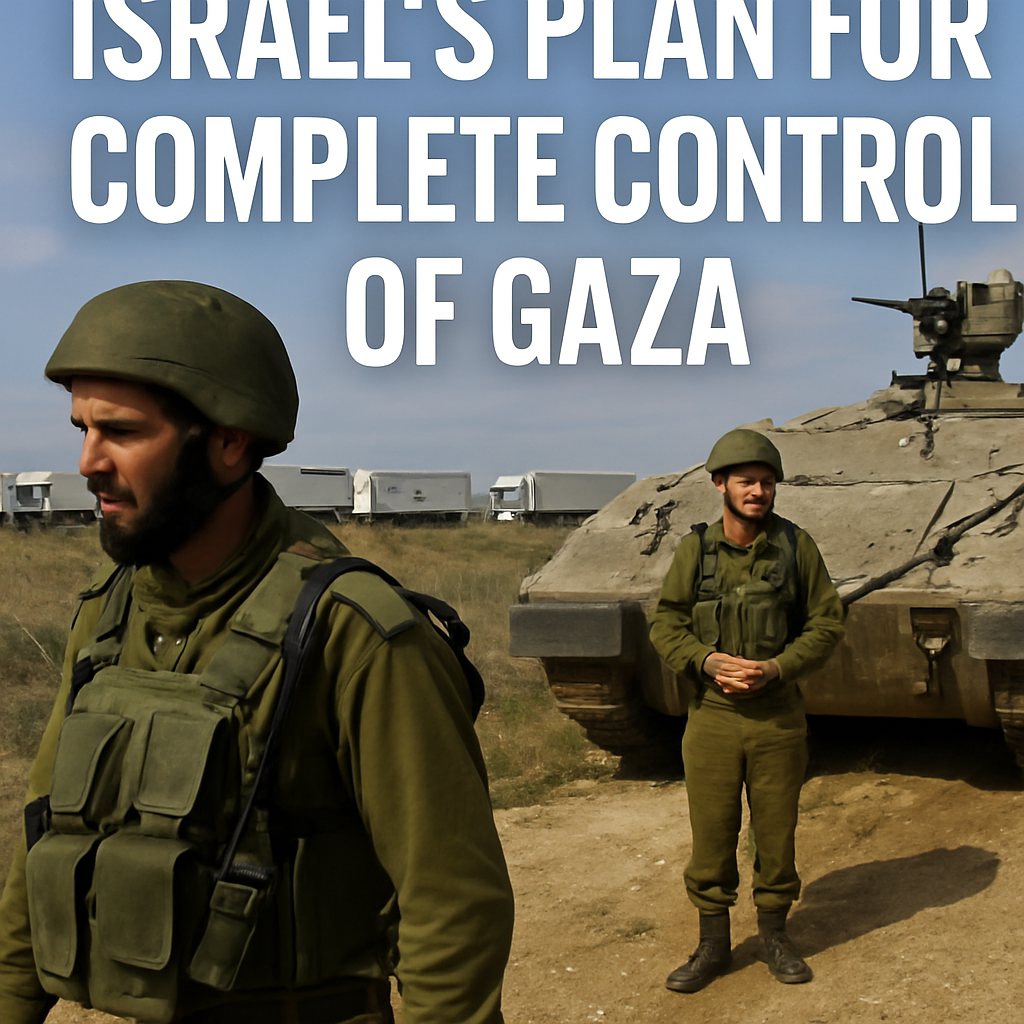
Israel’s Bold Gaza Strategy Sparks Global Attention
In a sweeping shift in regional policy, Israel has unveiled a bold plan to assume full military control of Gaza City, drawing both international attention and domestic debate. The move, approved by Prime Minister Benjamin Netanyahu’s security cabinet, aims to reshape Israel’s security landscape but has stirred controversy among regional powers and families of hostages still held by Hamas.
The Israel Gaza control strategy has surfaced as a defining moment in the ongoing conflict, emphasizing Israel’s determination to stabilize the region on its terms.
🗺️ Cabinet Decision Marks Major Strategic Pivot
On August 7, 2025, Israel’s top security officials approved a multi-phase plan to tighten its grip on Gaza, sparking a flurry of diplomatic activity. Officials cite national security as the primary motive, while critics argue that the approach could escalate tensions.
Highlights of the Cabinet Resolution:
- Full military control over Gaza City
- Extended presence of Israeli forces in conflict zones
- Long-term disengagement from Hamas-led administration
- Increased humanitarian corridors for civilians
👪 Hostage Families and Arab States Voice Concerns
The announcement has triggered an emotional response from families of remaining hostages, many of whom fear the operation could endanger their loved ones. At the same time, Arab League nations and organizations like the United Nations have warned against unilateral governance, emphasizing the need for Palestinian institutions to play a leading role.
“Stability in Gaza cannot be achieved through force alone,” stated a UN Middle East envoy.
(Source: Reuters)
📉 Humanitarian Crisis Worsens in the Enclave
As the Israel Gaza control operation intensifies, international NGOs including UNICEF and Médecins Sans Frontières report rapidly deteriorating humanitarian conditions. Malnutrition among children and disruption in aid delivery remain critical issues.
| Key Impact Areas | Status |
|---|---|
| Child Malnutrition | High (UNICEF Alert) |
| Medical Supplies | Critically Low |
| Access to Aid | Severely Limited |
| Civilian Displacement | Increasing |
🛡️ What Netanyahu’s Government Aims to Achieve
This military initiative, while controversial, reflects Netanyahu’s renewed commitment to “reclaiming security sovereignty.” The plan also includes:
- Boosting surveillance across southern borders
- Enhancing counter-terror infrastructure
- Establishing buffer zones to deter militant incursions
Netanyahu has described the effort as “a necessary step to ensure lasting peace.”
Internal Link
How Militants Are Using AI & Drones in Pakistan
Explore how emerging tech is reshaping conflict zones like Gaza and beyond.
External Link
Reuters – Middle East News
Follow verified updates on Gaza and Israel’s evolving stance.
📈 Global Reactions and Diplomatic Backlash
| Country | Reaction |
|---|---|
| Egypt | Called for immediate de-escalation |
| Jordan | Expressed concern over civilian safety |
| USA | Urged caution and protection of human rights |
| EU | Stressed the importance of a two-state solution |
🧠 What This Means for Regional Stability
The Israeli plan to take full control of Gaza has broader implications beyond the immediate conflict zone. It could reshape power dynamics not only between Israel and Palestine, but also across the Middle East, where countries like Egypt, Jordan, and Saudi Arabia maintain a delicate balance of diplomacy.
If successful, Israel’s strategy might be seen as a model of assertive defense, but failure or prolonged occupation could worsen regional instability and fuel anti-Israel sentiments across the Muslim world. Analysts warn that a lack of clear exit strategy or absence of humanitarian guarantees could backfire diplomatically.
For many Palestinians, the move raises fears of long-term displacement and loss of sovereignty. Meanwhile, Israel’s political allies in the West remain cautious, balancing support for Israel’s right to self-defense with concerns over human rights and international law.
As events continue to unfold, the Israel Gaza control narrative is shaping into one of the most consequential geopolitical stories of 2025—one that will define not just military tactics, but the region’s future path toward peace or deeper division.
💬 Analysts Say: A Geopolitical Gamble or Strategic Clarity?
Experts remain divided. Some view this as Israel’s “clearest show of strength” in years, while others fear the long-term fallout. The lack of a clear governance plan post-military control raises questions about what comes next for Gaza’s political future.
🧭 Conclusion
Israel’s decision to assert full control over Gaza represents a bold recalibration of its security and diplomatic posture. While the operation seeks to neutralize militant threats, its broader success will depend on balancing military goals with humanitarian responsibility and international cooperation.
Related : writozy


