


==Academic Work==
==Academic Work==
Ivan Vajsov’s scholarly work focuses on the processes of Neolithisation in the Balkans, as well as the Neolithic, Eneolithic (Chalcolithic) and Early Bronze Age cultures in Bulgaria. He is known for his research in the following areas:
Ivan Vajsov’s scholarly work focuses on the processes of Neolithisation in the Balkans, as well as the Neolithic, Eneolithic (Chalcolithic) and Early Bronze Age cultures in Bulgaria. He is known for his research in the following areas:
===Proto-Bronze Age (Proto-Bronze Cultural Horizon)===
===Proto-Bronze Age (Proto-Bronze Cultural Horizon)===
Bulgarian archaeologist (1957)
|
Ivan Vajsov |
|
|---|---|
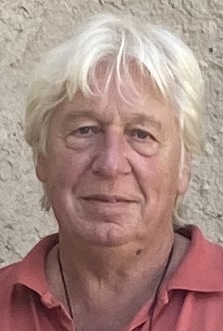
 Vajsov in 2023 |
|
| Born |
Ivan Augustiniv Vajsov (1957-02-26) 26 February 1957 |
| Occupation | Archaeologist |
| Years active | 1981—2025 |
| Known for | The Neolithic and Eneolithic period in Bulgaria |
Ivan Vajsov is a Bulgarian archaeologist specializing in prehistory.
Ivan Vajsov was born on 26 February 1957 in the town of Piešťany, Slovakia, into a Slovak–Bulgarian family. His parents are Avgustin Vajs and Henrieta Todorova. After their separation, he lived in Sofia.
Ivan Vajsov completed his primary education at the 93rd School “Alexander Todorov – Balan” in Sofia. In 1975, he graduated from the National High School of Applied Arts “St. Luka” (Sofia, Bulgaria) with a specialization in artistic woodcarving. He later undertook an internship at the Conservation and Restoration Laboratory of the National Institute for Immovable Cultural Heritage under the Ministry of Culture (Bulgaria).
Between 1975 and 1977, he completed his mandatory military service in Yambol and Pleven. From 1977 to 1981, he studied archaeology at Comenius University in Bratislava, specializing in prehistory under Professor Bohuslav Novotný. In 1984, he obtained a Doctor of Philosophy (PhDr) degree from the same university.
Vajsov briefly worked at the Regional Historical Museum, Targovishte (1981) and at the Regional Historical Museum, Dobrich (1982). Since 1982, he has been employed at the National Archaeological Museum, Bulgaria at the Bulgarian Academy of Sciences, where his academic career has been based. He has worked as a prehistory specialist in the Institute’s Department of Prehistory and has served as the department’s secretary.[1]
Ivan Vajsov’s scholarly work focuses on the processes of Neolithisation in the Balkans, as well as the Neolithic, Eneolithic (Chalcolithic) and Early Bronze Age cultures in Bulgaria. He is known for his research in the following areas:
Proto-Bronze Age (Proto-Bronze Cultural Horizon)
[edit]
Vajsov has significantly contributed to the study of the transitional period between the Eneolithic and the Bronze Age, introducing into scholarly use the concept of the “Proto-Bronze Age” (Proto-Bronze Cultural Horizon). [2][3],
Earliest Metal Daggers in Europe
[edit]
Vajsov is also known for his research on the emergence of the earliest metal daggers in Europe — considered the first metal stabbing weapons on the continent.[4] His work links the earliest metal daggers with developing social hierarchies, technological innovation, and long-distance exchange networks during the late 5th and early 4th millennium BC.
He also authored a study on the earliest daggers in Bulgaria, highlighting their typology, distribution, and cultural context. [5]
Early Neolithic (Monochrome Neolithic) in Central Northern Bulgaria
[edit]
Vajsov conducted research on the earliest, so-called Monochrome Neolithic in Central Northern Bulgaria, contributing to the identification, stratigraphy, and cultural characteristics of this phase. [6][7][8]
Vajsov has also participated in geophysical survey and archaeological research projects at the Neolithic settlement of Koprivets, utilizing non-invasive methods to map settlement structures and stratigraphy.[9]
Anthropomorphic Figurines and Theoretical Approaches
[edit]
Vajsov is widely recognized for his research on prehistoric anthropomorphic figurines, with a particular focus on their formal typology and the specific techniques employed in the plastic construction of anatomical features.[10] His work departs from traditional symbolic or cult-based interpretations, favouring instead a more contextual and structural analysis of these artefacts.
Influenced by structuralist theory and the works of Jean Piaget, Vajsov views knowledge not as a simple accumulation of facts, but as an internally organised (structured) system. This paradigm shapes his methodological approach, particularly in examining the internal logic, formal organisation, and conceptual models underlying figurine production. He has expressed scepticism towards the universalist theory that interprets prehistoric anthropomorphic figurines predominantly as representations of a “Great Mother Goddess” [11][12][13][14][15][16]
Drawing also on some of the ideas of Pierre Bourdieu regarding the hierarchical relationship between habitus and habitat, Vajsov explores social status differentiation and its reproduction in prehistoric society. Through this lens, he interprets phenomena such as the widespread occurrence of fragmented female ceramic figurines and the notable presence of male figurines in some prehistoric sites.[17]
Geoarchaeology and Research in the Durankulak Region
[edit]
Vajsov is known for his contributions to the archaeological and geoarchaeological investigation of the Durankulak Archaeological Complex and the prehistoric tell on the “Big Island” in Durankulak, as well as the wider Durankulak Lake basin and the adjacent Black Sea shelf. His work in this field integrates archaeology, geology, geomorphology, and non-invasive methods, contributing to a broader understanding of the environmental dynamics and human occupation of the region over the long term.
He has participated in and co-authored studies involving large-scale geoarchaeological surveys, underwater explorations, and shoreline investigations that shed light on prehistoric settlement dynamics, palaeogeographic changes, and coastal interactions.[18]
He has also presented synthetic overviews of the cultural development of the Durankulak region from the 5th millennium BC to the 10th century AD, emphasising its significance for understanding the emergence of complex societies in the Western Black Sea region[19]
In addition, Vajsov has co-authored studies on underwater non-invasive investigations in Durankulak Lake, applying modern scanning and survey techniques to detect submerged archaeological features and palaeo-landscapes.[20]
Greek–Bulgarian Archaeological Project: Promachon–Topolnica
[edit]
Vajsov is also known for his involvement in the Greek–Bulgarian research project investigating the Neolithic settlement of Promachon–Topolnica, located on the modern border between Bulgaria and Greece. His contributions include studies on cultural interactions, exchange networks, and communication patterns between prehistoric communities in the Struma/Strymon River Valley.
His work within the project addresses both material culture and chronology, with a particular focus on decorated pottery and its use as a chronological marker. [21][22][23]
Use of Drones and 3D Digital Documentation in Archaeology
[edit]
Since 2007, Vajsov has been using unmanned aerial vehicles (UAVs / drones) for the creation of detailed field documentation and 3D models of terrain and archaeological structures. His work is among the early applications of drone-based surveying techniques in Bulgarian archaeology, contributing to the development of advanced methods for non-invasive documentation, spatial analysis, and site monitoring.[24]
Computerization and Quantitative Methods in Archaeology
[edit]
Vajsov has also worked on the introduction of computer-based methods in archaeology, focusing on the application of seriation and correspondence analysis as tools for chronological stratification and comparative study of archaeological complexes. His early publications in this field contributed to the adoption of computational approaches during a period when such methods were not yet widely used in Bulgarian archaeological research.[25]
Collaborative Publications
[edit]
Vajsov is also known for his collaborative publications with Henrieta Todorova, particularly the foundational monograph The Neolithic Age in Bulgaria[26] and the volume Copper Age Jewellery from Bulgaria, published in the prestigious Prähistorische Bronzefunde series.[27]
External links
- ^ Information from the official website of NAIM–BAS
- ^ Иван Вайсов. Състояние на проучванията на т.нар. „Преходен период в България” – Археология 1992/2. Sofia 1992, 45–49. (Издава Археологически институт с музей при Българската академия на науките, ISSN 0324-1203).
- ^ Ivan Vajsov. Das Grab 982 und die Protobronzezeit in Bulgarien. – In: H. Todorova (ed.). Durankulak, Band II, Die prähistorischen Gräberfelder. Tail 1, 2. Sofia, 2002, 159–176. (Publikation of Deutsches Archäologisches Institut – Berlin, Publishing House Anubis Ltd., ISBN 954-426-465-5).
- ^ Vajsov, I. Die frühesten Metalldolche Südost- und Mitteleuropas (The Earliest Metal Daggers of South-Eastern and Central Europe). – Praehistorische Zeitschrift 68, 1993/1, 103–145.
- ^ Ivan Vajsov. Die frühesten Metalldolche Südost-und Mitteleuropas (The earliest metal daggers South Eastern and Central Europe) – Praehistorische Zeitschrift 68, 1993/1, 103–145) and Ivan Vajsov. The earliest daggers Bulgaria (original title: Die früheste dolche Bulgariens – Anatolica XVIII, 1992, 61-69)
- ^ Попов, В., Вайсов, И. Спасителни разкопки на праисторическото селище край с. Копривец. – Археологически открития и разкопки (Annual Archaeological Reports) през 1991 (София 1992), 9–11., 1992, ISSN:1313-0889, 9-11
- ^ Тодорова—Вайсов, Неолитните култури в България. — В: Х. Тодорова, И. Вайсов. Навокаменната епоха в България (края на седмото-шесто хилядолетие преди новата ера) София 1993, 94—147.
- ^ NEOLITHIC SETTLEMENT KOPRIVEC. Geophysical Survey and Archaeological Research 2013. (Bulgaria, Central North Bulgarian)
- ^ Neolithic Settlement Koprivets. Geophysical Survey and Archaeological Research 2013 (Central North Bulgaria).
- ^ Vajsov, I. “The Typology of the Anthropomorphic Figurines from Northeastern Bulgaria.” In: James Harvey Gaul, In Memoriam, In the Steps of James Harvey Gaul, Volume 1, Sofia 1998, 107–140.
- ^ Иван Вайсов. Антропоморфната пластика на културата Градешница. — Изкуство 9—10, София 1981, 46—50.
- ^ Ivan Vajsov. Die Idole aus den Gräberfeldern aus Durankulak. In: H. Todorova (ed), DURANKULAK, BAND II. Die prähistorischen Gräberfelder (Sofia 2002), 257—266.
- ^ Иван Вайсов. Духовен живот на неолитното население в България. – In: Хенриета Тодорова, Иван Вайсов. Новокаменната епоха в България (края на седмото хилядолетие преди новата ера). София 1993, 187–235.
- ^ Иван Вайсов. Антропоморфната прастика на култура Хаманджия. — Сборник Добруджа 9, Варна 1992, 35-70.
- ^ Ivan Vajsov. La sculptur anthropomrphe du site néolithique Oussoé pres de village d’Asparouhovo, départament de Varna. – StPr 10, 103-141.
- ^ Иван Вайсов. Антропоморфная пластика из праисторического поселения Курило—Кременица Софийского округа – StPr 7, 33-63.
- ^ Vajsov, I.; Chukalev, K.; Evlogiev, Y.; Tsankov, H.; Karastoyanova, N. “Neolithic Settlement Izvor: An Initial Colony on the Eastern Periphery of the Vinča Culture.” In: Serdica–Sredets–Sofia, Vol. 8, Sofia 2020, 63–67.
- ^ Vajsov, I. et al. “Geoarchaeological Surveys in the Durankulak Region.” In: Todorova, H. (ed.), Durankulak, Band III. Rahden/Westf. 2016 (Verlag Marie Leidorf GmbH, ISBN 978-3-86757-015-2).
- ^ Ivan Vajsov. Durankulak. The Door to Civilization (presentation, Kavarna, 29 August 2023).
- ^ Vajsov, I.; Prahov, N.; Velkovski, K. “Underwater Non-Destructive Studies on Durankulak Lake.” In: Archaeological Discoveries and Excavations 2021, Book 1, Sofia 2022, 275–281 (in press).
- ^ PROMACHON-TOPOLNICA. Contacts and communication breakdowns in the distant past at the modern Bulgarian-Greek border.
- ^ Ch. Koukouli-Chryssanthaki, H. Todorova, I. Aslanis, I. Vajsov, M. Valla. Promachon-Topolnica: A Greek-Bulgarian Archaeological Project. – In: H. Todorova, M. Stefanivic and G. Ivanov (eds.). The Struma/Strymon River Valley in Prehistory. In The Steps of James Harvey Gaul, Vol. 2 (Sofia, 2007), 43–78.
- ^ Ivan Vajsov. Promachon-Topolnica. A Typology of Painted Decorations and Its Use as a Chronological Marker. – In: H. Todorova, M. Stefanivic and G. Ivanov (eds.). The Struma/Strymon River Valley in Prehistory. In The Steps of James Harvey Gaul, Vol. 2 (Sofia, 2007), 79–120
- ^ “Results from the Use of a Drone for the Preparation of Detailed Field Documentation of the Neolithic Settlement of Koprivets (2012–2013).”
- ^ Vajsov, I. “Computerization in Archaeology: Some Problems of Seriation.” Interdisciplinarni Izsledvanija XVI, 1989, 42–63.
- ^ Todorova, H.; Vajsov, I. The Neolithic Age in Bulgaria. Sofia 1993 (Naука и изкуство Publishing House, ISBN 954-02-0075-X).
- ^ Todorova, H.; Vajsov, I. Der kupferzeitliche Schmuck Bulgariens. Prähistorische Bronzefunde, XX/6, Stuttgart 2001 (Franz Steiner Verlag, ISBN 3515076166).



