


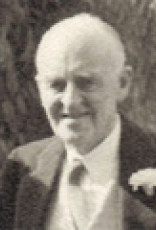
English cricketer, soldier, legal scholar
|
James William Cecil Turner |
|
|---|---|
 |
|
| Born | (1886-10-02)2 October 1886 |
| Died | 29 November 1968(1968-11-29) (aged 82) |
| Alma mater | Queen’s College, Cambridge |
| Occupation(s) | Legal scholar, Soldier, Cricketer |
| Organization | Trinity Hall, Cambridge |
| Known for | Criminal law, Roman law |
| Notable work | Russell on Crime, Kenny’s Outlines of Criminal Law |
| Allegiance |  |
| Branch |  |
| Rank | Second lieutenant |
| Unit | Royal Field Artillery |
| Battles / wars | Great War |
| Awards | Military Cross |
| Batting | Right-handed |
| Years | Team |
| 1911–1921 | Worcestershire |
|
Source: [1], 10 September 2007
|
|


James William Cecil Turner (2 October 1886–29 November 1968) was an English first-class cricketer, soldier, and a legal scholar of criminal law and Roman law at the University of Cambridge.
As a cricker, he played 46 matches for Worcestershire either side of the First World War, as well as appearing twice for H. K. Foster’s XI.
As a scholar, he was a Fellow and Bursar of Trinity Hall, Cambridge from 1926 until 1952.[1]
Turner was born on 2 October 1886 in Farnborough, Kent. He was educated at King Edward’s School, Birmingham, and at Queens’ College, Cambridge, where he gained a First in Part I of the Classical Tripos in 1909 before switching to law and completing Part II of the Law Tripos in 1910.
Before the outbreak of the Great War, he had started to read for the Bar and he played cricket at County level for Worcestershire.[2]
Turner was called up for military service during the First World War in late 1915 and served in France with the Royal Field Artillery as a Second Lieutenant. He was awarded the Military Cross for gallantry. The citation records that, after withdrawing his battery under heavy fire, he returned under continued enemy fire to rescue his wounded battery sergeant who had been left behind. After serving in Cologne with the occupying forces, he was demobilised in 1920.[2]
Turner made his debut for Worcestershire against Essex at Amblecote on 31 July 1911, scoring 27 and 11 in a crushing innings-and-228-run defeat.[3]
A further five appearances that season brought Turner little success, and nor did a handful more the following season. In 1913 he played a solitary match for H. K. Foster’s XI, but he wasn’t seen again in first-class cricket until after the First World War.
Turner’s return to the game, against Gloucestershire at Worcester in June 1919, saw him make his first half-century: he hit 72 in the second innings of a drawn match.[4]
However, he did not again pass 30 that season, although he did pick up the first of his two first-class wickets when he accounted for Warwickshire‘s Frederick Santall at Worcester at the end of August.[5]
1920 saw Turner both hit another half-century — 85 against Warwickshire in August[6]
— and take his other wicket — that of Sussex‘s George Stannard.[7]
The following year, which proved to be his last in the game, Turner scored his only century, hitting 106 against Northamptonshire, though Worcestershire suffered a 356-run defeat, which as of 2007 remains Northants’ greatest-ever margin of runs victory.[8][9]
Turner twice captained the Worcestershire side: against Warwickshire at Birmingham in 1919, and against Glamorgan at St Helens in 1921.[10]



