


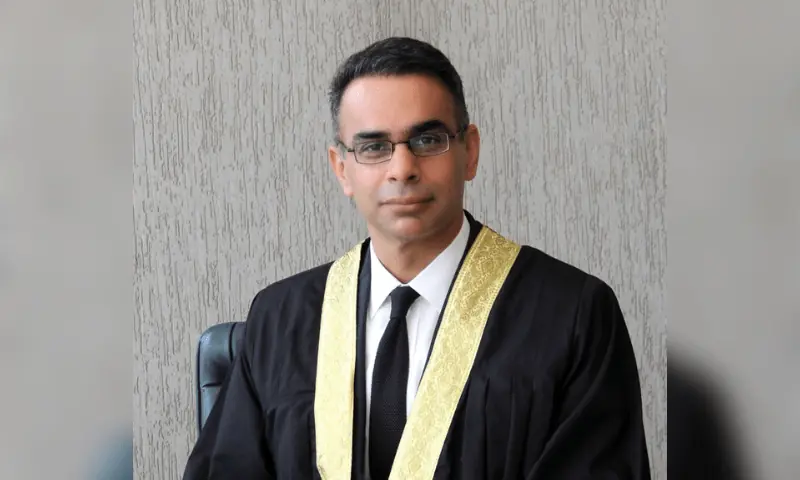
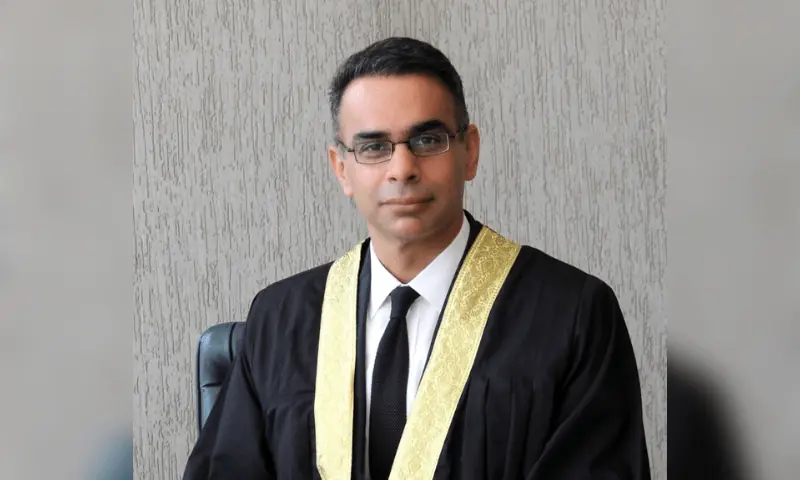
ISLAMABAD: Justice Babar Sattar of the Islamabad High Court (IHC) has ruled that the government cannot appoint judges to courts and tribunals solely by executive authority, declaring that judicial oversight is “constitutionally indispensable” to safeguard the independence of the judiciary.
In a 73-page judgement, the judge asserted that a “judicial nod cannot be ruled out” for appointments to judicial bodies within the Islamabad Capital Territory.
The federal government, he emphasized, cannot use its administrative powers to appoint officials to judicial posts “without effective and meaningful consultation with the Islamabad High Court”.
The ruling came in response to a petition by lawyer Ammar Sehri, who asked the court to enforce a 2010 law ensuring all courts and tribunals in the capital operate under the high court’s supervision, as mandated by the Constitution.
Invoking legal theory and history, Justice Sattar warned against unchecked executive power and the rise of “autocratic legalism,” a system where legal frameworks are manipulated to consolidate power behind a veneer of legality.
“The preservation of legal form without substantive legality transforms law into an instrument of arbitrary authority,” he wrote. “The erosion of judicial independence does not always occur through open defiance of law but through its selective invocation.”
The judge observed that despite a constitutional mandate to separate the judiciary from the executive branch, “the executive continues to undermine judicial independence by retaining control over appointments and administration of special courts and tribunals”.
The judgement cited the government’s practice of appointing judges to fiscal and special tribunals, such as the Appellate Tribunal Inland Revenue and the Customs Appellate Tribunal, without proper judicial consultation.
Justice Sattar ruled that such mechanisms, which allow bureaucrats to exercise judicial powers, violate the constitutional separation of powers.
“Appointments to courts and tribunals discharging judicial functions cannot be left to the executive’s discretion,” he ruled. “The Islamabad High Court must have a decisive and supervisory role in the process.”
Justice Sattar added that tribunals performing judicial work “must be manned, supervised, and controlled by the judiciary alone”.
Addressing Islamabad High Court Act’s Section 6, the judge noted that all local tribunals fall under the IHC’s supervision.
He lamented that more than a decade after the law passed, many local courts are still staffed by judges borrowed from provincial judiciaries, a practice he said undermines the independence of Islamabad’s own judiciary.
The court rejected the government’s argument that appointments to some tribunals were purely administrative matters, holding that they were “judicial offices” requiring adherence to constitutional principles.
Justice Sattar ruled that even when a law grants appointment power to the prime minister or the federal government, it must be exercised only after “effective, meaningful and purposive consultation” with the high court’s chief justice.
Bypassing this consultation risks “transforming the rule of law into an instrument of executive dominance,” Sattar wrote.
“No democracy can survive if the power to appoint, remove, or discipline judges is wielded by the very executive they are meant to hold accountable,” he said.
The judgement concluded with a stark warning.
“Autocratic legalism thrives when legality is stripped of its moral core,” Justice Sattar wrote. “The judiciary’s role is not to defend the government’s convenience but to defend the Constitution’s conscience.”
Published in Dawn, November 13th, 2025



