
The struggle for judicial independence has returned — only this time, the fight comes not from generals but from within the courts themselves.
History has a strange way of rhyming. Sometimes it repeats as farce, sometimes as tragedy — and sometimes, in Pakistan, it comes back wearing the same last name.
The last time a Justice Dogar was in the news, the country was under military rule. When Musharraf imposed an emergency in November 2007, Justice Abdul Hameed Dogar took oath under a Provisional Constitutional Order (PCO) and validated his actions. After the judiciary was restored, contempt proceedings were initiated against Justice Dogar for endorsing the dictator’s actions and violating an order of the court. In Abdul Hameed Dogar vs Federation (2011), Justice Dogar claimed that his actions were, “under confusion, misconception and misunderstanding” He pleaded that he was “really sorry”. Justice Abdul Hameed Dogar, who had supported a military dictator, was ultimately required to place himself at the mercy of the post-restoration judiciary.
Nearly a decade later, the judiciary faces another crisis. This time, with Justice Sarfraz Dogar at the centre. On September 16, an Islamabad High Court (IHC) bench led by Justice Dogar restrained his fellow judge, Justice Tariq Mehmood Jahangiri, from holding court and performing judicial functions. For context, Justice Jahangiri is a signatory to the six judges’ letter alleging executive interference in the judiciary, and was one of the petitioners challenging Justice Dogar’s transfer to the IHC.
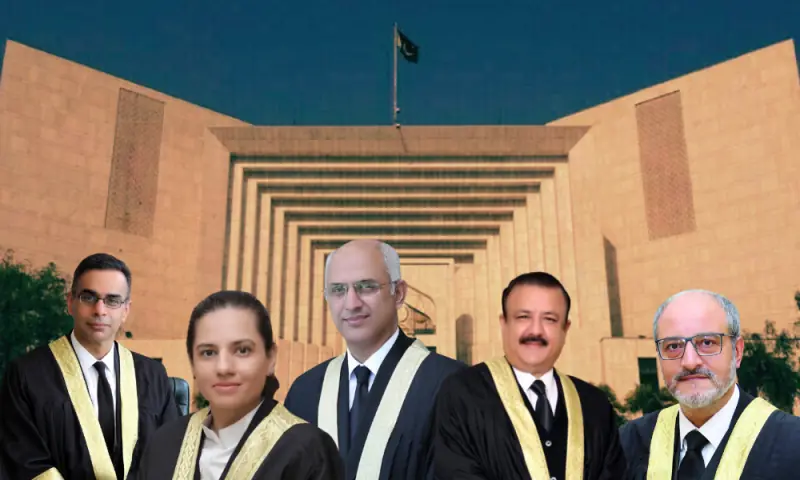
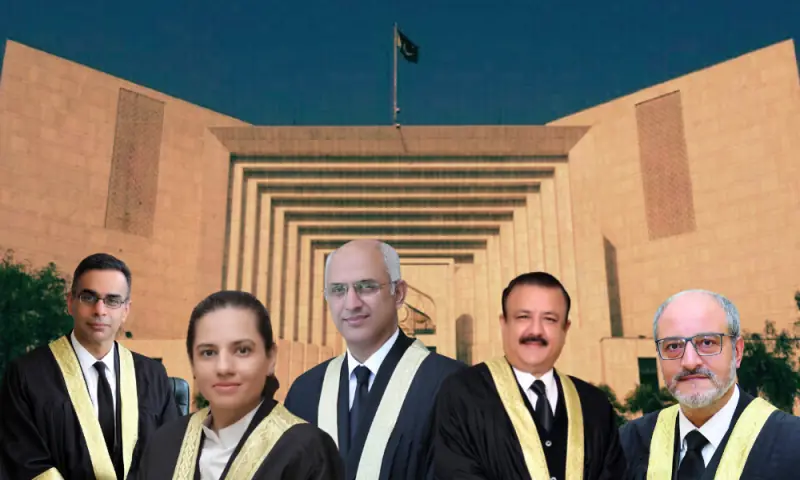
Yesterday, five brave judges of the IHC fought back. The judges approached the highest court pleading that this was “a desperate measure of the last resort”, and that “there hangs a big question mark over whether we are being governed by rule of law or rule of men”. There is a powerful visual of the five judges entering the Supreme Court (SC) for justice. Justice Jahangiri appealed Justice Dogar’s order restraining him from holding court. The other judges challenged various administrative decisions taken by Justice Dogar, and questioned the ability of one High Court judge to restrain another from exercising judicial functions.
It bears mentioning that the present situation would not have been possible without the consent of the Chief Justice Yahya Afridi. It was CJP Afridi who gave his consent for the transfer of judges from other provinces to the IHC. There is, however, still time to reverse part of the damage that has been caused and stop further erosion of judicial independence.
Sidelining independent judges
When General Yahya Khan sought to restrain a judge from exercising judicial functions, the President’s Order No. 27 of 1970 was passed. As per Yahya Khan’s law, if the Supreme Judicial Council (SJC) was inquiring into the conduct of a judge, the president could require the judge to go on leave.
When the Supreme Court was hearing Chaudhary Iftikhar’s case, it held: “Even General Yahya Khan, as the President and the Chief Martial Law Administrator of the country never claimed any divine rights in the matter of suspending a Superior Court Judge or in the matter of restraining him from exercising his judicial powers and enacted a law for the purpose … whether it was during the constitutional and the democratic rule or whether it was during the days when martial law stood clamped in the country and the Constitution stood abrogated, the executive, including the head of the state never asserted any inherent powers to suspend judges or to send them on forced leave or even to restrain them from acting as such judges. Even during the martial law regimes when no constitutional security existed for the Judges guaranteeing them their tenure in office, the Presidents/the Chief Martial Law Administrators made specific legislative provisions for such a purpose.”
The law was eventually struck down.
Crucially, the SC, in Chaudhary Iftikhar’s case, went so far as to hold that a judge cannot be restrained from judicial work. Per this case, even the SJC did not have the power to order a judge to go on “leave”; the SJC can only render a report to the president that a judge be removed from office. The court ruled that even a temporary bar on a judge in the matter of discharging his constitutional duties amounts to removal, which is not permissible.
The order by Justice Dogar “restraining” Justice Jahangiri from holding court cites no legal provision in its support; he does not even attempt to explain the legal basis on which one high court judge could prevent another from exercising judicial functions, even on an interim basis. This is because there is no such authority. General Yahya Khan passed a law to shield his unconstitutional actions. Justice Dogar’s order mentions no law or authority.
The five IHC judges assert that the judges are being punished for decisions that members of the executive found disagreeable. When Justice Jahangiri was appointed head of the election tribunal for Islamabad constituencies, the Election Commission of Pakistan (ECP) sought to replace him with a retired judge. Justice Mohsin Akhtar Kayani has been passing orders against the executive in cases of enforced disappearances. Justice Babar Sattar’s ruling that ordered the removal of the Pakistan Telecommunication Authority (PTA) Chairman was suspended the very next day by a divisional bench. He was also prevented from proceeding in a case where he held that there is a mass surveillance system capable of monitoring millions of citizens.
Courageous decisions are being suspended, independent judges are being sidelined, and judicial independence itself is under siege.
Criminalising opposition
Lawyers at the IHC staged a protest on Friday against Justice Dogar’s actions. In the aftermath, Islamabad High Court Bar Association (IHCBA) President Wajid Gilani registered an FIR against several lawyers. Instead of resisting executive interference in the judiciary, the IHCBA president chose to target lawyers who were standing up for judicial independence. The FIR includes provisions from anti-terrorism laws. This case joins the long list of cases in our regrettable history where terrorism laws have been misused to stifle opposition. The videos of the protest are widely available online for all to see what is being labelled as ‘terrorism’.
An independent bar association is vital to safeguard the judiciary from external pressures and to provide a collective voice for the legal community. A compromised bar association, on the other hand, enables and emboldens the executive.
Under this president, the IHCBA withdrew its support for the five judges who had challenged Justice Dogar’s transfer and seniority. In another remarkable press conference, the IHCBA president expressed his support and welcomed a 27th amendment to the Constitution; an amendment that has still not been made public was being eagerly supported. To date, the IHCBA has issued no statement condemning Justice Dogar’s recent actions. In this silence, and in the positions it has chosen instead, the association has revealed exactly where it stands.
The office of the President of the Bar carries trust, responsibility, and the duty to represent and defend the legal fraternity. By initiating criminal proceedings against fellow lawyers, those very values have been betrayed.
Approaching the Supreme Court
As the judiciary faces a moment of crisis, it falls to the SC and the chief justice to determine their course.
The independence of the courts is not an abstract principle — it is the foundation of every citizen’s right to justice. When that independence is undermined, so too is the protection of constitutional rights. An attack on independent judges is an attack on the very access to justice.
The time to act was when the 26th Amendment was passed. The Supreme Court did not. As we approach a year to the date the 26th Amendment was passed, the credibility of the judiciary has suffered considerably, and the destruction of judicial independence is evident. If the SC and the chief justice are to preserve what remains of institutional integrity, continued inaction can no longer be an option.

