
History
| ← Previous revision | Revision as of 18:02, 2 October 2025 | ||
| Line 6: | Line 6: | ||
|
==History==
|
==History==
|
||
|
The movement was born at the behest of Davide Lazzaretti of [[Arcidosso]], a carter of humble origins, who, after some prophetic visions, began in his hometown and in the small villages of
|
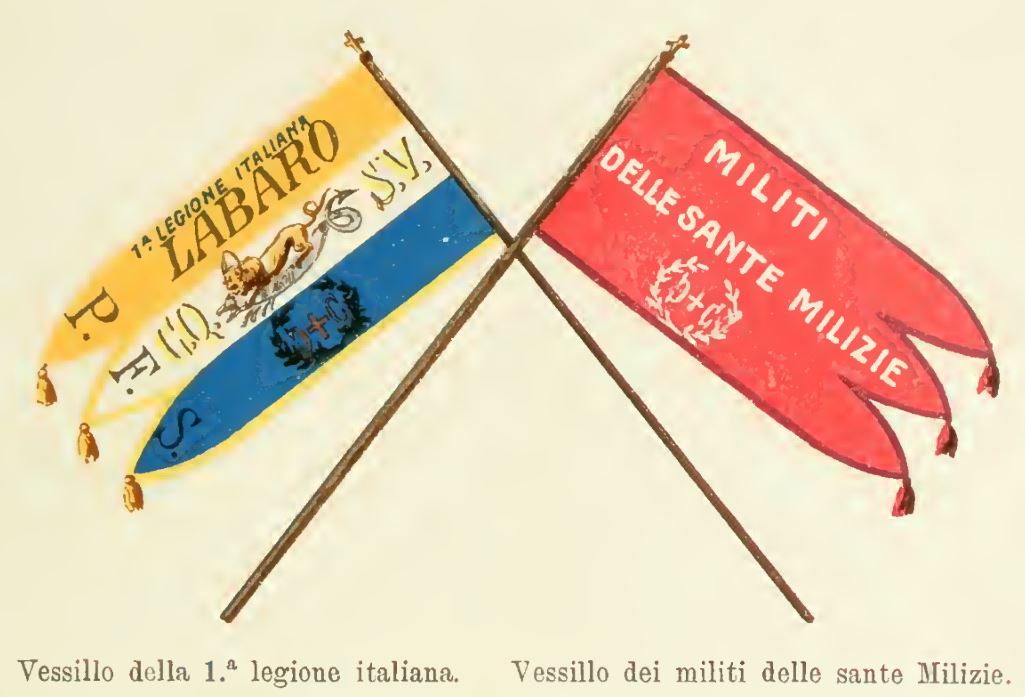
The movement was born at the behest of Davide Lazzaretti of [[Arcidosso]], a carter of humble origins, who, after some prophetic visions, began in his hometown and in the small villages of Monte Labbro ([[Zancona]], [[Macchie]], Rondinelli) to gather disciples and proselytes with the common aim of reforming [[Catholic]] religiosity, in direct relation with the social issues, in view of a new era of Christianity. According to Jurisdavidic theology, human history was to be divided into three eras, called ‘laws’: the ‘law of justice’, whose bearer is [[Moses]]; the ‘law of grace’, whose bearer is [[Jesus Christ]]; and the ‘law of right’, whose bearer is Lazzaretti himself. The [[Catholic Church]], with the papacy seen as an institution far removed from mankind, was to be reformed, and the Jurisdavidic Church proposed itself as the bearer of new messages: the abolition of the [[celibacy]] of priests, the end of [[Roman rites]], the wicked in [[Hell]] only temporarily, and finally saved. In the 1870s, Davide Lazzaretti founded three significant religious institutes: the Holy League, also known as the Christian Brotherhood ([[1870]]), with charitable aims; the Institute of Penitential and Penitent Hermits ([[1871]]), a strictly religious organisation, imbued with the [[millenarian]] and messianic spirit; and the Society of Christian Families ([[1872]]), the most important of the institutions from a social point of view, aiming to build a community in which its adherents would work and pool their goods according to the original primitive spirit of the Christian churches. Particular importance should be given to the system of electing the community’s governing bodies: Davide instituted [[universal suffrage]], with the vote extended to women, when this was still a distant thought in Italy and the rest of Europe. The institutions constituted an attempt to anticipate aspects of a broad [[eschatological]] vision, in the fulfilment of the divine will (the three institutions symbolically represent the three [[theological virtues]]: charity, faith and hope respectively) that would lead to the beginning of the new era.
|
||
|
==References==
|
==References==
|
||

