


From Wikipedia, the free encyclopedia
Content deleted Content added
Latest revision as of 19:43, 4 December 2025
Muslim community found in India and Pakistan
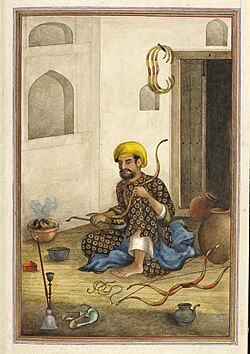
The Kamangar community of Chiniot is a distinct lineage settled in the historic neighborhood of Mohallah Kamangran. The name of the neighborhood itself is derived from the ancestral profession of the family (**Kamangars**, or bow-makers). Unlike other Kamangar groups, the Chiniot family identifies as Sunni Rajputs (Chohan clan).
History and Settlement
[edit]
The Kamangars of Chiniot identify as **Chohan Rajput** by lineage. The community’s settlement in Chiniot is estimated to be over 350 years old. This timeline is substantiated by the foundation date of the local mosque, Jamia Masjid Noor Kamangran, which bears an inscription dating its construction to **1129 AH (c. 1716 CE)**.[1]
The name Kamangar translates to “bow-maker” (from Persian Kaman meaning bow, and Gar meaning maker). While originally weapon-makers, the family later became renowned for Naqqashi (engraving) and intricate wood carving. According to the local history, an ancestor of the family, **Nawwab Abdul Wahdat**, was a master craftsman whose work reportedly contributed to the ornamentation of the Shahi Mosque in Chiniot and the Wazir Khan Mosque in Lahore.[2]
The Tazia Tradition
[edit]
The Kamangars of Mohallah Kamangran, who are **Sunni** Muslims, maintain a significant Muharram tradition involving the crafting of a unique wooden Tazia (replica shrine).
- **Craftsmanship:** The Tazia is noted for its minute, hand-made wooden patterns and lack of modern mechanical joinery, preserving an art form passed down through generations.
- **History:** This tradition was established prior to the creation of Pakistan.[3]
- **Purpose:** The original intent of this Tazia was to serve as a unifying symbol, gathering Muslims of the region onto a single platform to strengthen community bonds during the pre-Partition era.[4]
The annual procession takes place on the 9th and 10th of Muharram.
-

19th-century depiction of a Kamdangar (bow-maker) from the Tashrih al-aqvam manuscript (1825), illustrating the ancestral profession.
-

Historical photograph of the Kamangar Tazia and community gathering in Mohallah Kamangran, believed to pre-date the partition of 1947.
-

Inscription inside Jamia Masjid Noor Kamangran, noting the construction date of 1129 AH (1716 CE) as evidence of the family’s settlement.
-

Excerpt from the local history book Tarikh-e-Chiniot (تاریخ چنیوٹ), detailing the family’s ancestor Nawwab Abdul Wahdat and their contributions to local architecture.
,_f.357v_-_BL_Add._27255.jpg)


- ^ Inscription on Jamia Masjid Noor Kamangran, Chiniot.
- ^ Excerpt from the book Tarikh-e-Chiniot (تاریخ چنیوٹ), detailing Nawwab Abdul Wahdat’s contributions to local architecture.
- ^ Historical photograph of the Tazia and community gathering (pre-Partition).
- ^ Oral history verified by local community members, noted in the context of the Tazia’s pre-Partition origins.




