


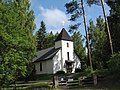
59°17′23″N 25°36′13″E / 59.28972°N 25.60361°E / 59.28972; 25.60361

(formerly Estonian Orthodox)
59°22′05″N 25°01′36″E / 59.36806°N 25.02667°E / 59.36806; 25.02667
Burned after a Soviet bombing strike during the Tallinn offensive in 1944 and has been in ruins ever since.
59°22′28″N 25°11′21″E / 59.37444°N 25.18917°E / 59.37444; 25.18917

59°17′24″N 24°07′22″E / 59.29000°N 24.12278°E / 59.29000; 24.12278

There is a chapel located within the churchyard, from the 19th century.
59°13′50″N 23°59′57″E / 59.23056°N 23.99917°E / 59.23056; 23.99917

Also known simply as “Risti Church”
Contains the oldest church bell in Estonia.
(formerly Estonian Orthodox)
59°13′40″N 24°00′50″E / 59.22778°N 24.01389°E / 59.22778; 24.01389
59°24′58″N 24°36′06″E / 59.41611°N 24.60167°E / 59.41611; 24.60167
14th century
59°26′45″N 25°07′27″E / 59.44583°N 25.12417°E / 59.44583; 25.12417

There is a chapel located within the churchyard, from either the 17th or the 18th century.
59°21′35″N 24°55′22″E / 59.35972°N 24.92278°E / 59.35972; 24.92278

There are two chapels located within Jüri churchyard, both from the 19th century.
59°20′06″N 25°20′11″E / 59.33500°N 25.33639°E / 59.33500; 25.33639

59°18′28″N 24°25′46″E / 59.30778°N 24.42944°E / 59.30778; 24.42944

There are six chapels located within Keila churchyard, two from the turn of the 18th to the 19th century, two from the 19th century and two from the 2nd half of the 19th century.
59°18′27″N 24°24′50″E / 59.30750°N 24.41389°E / 59.30750; 24.41389
59°18′36″N 24°25′17″E / 59.31000°N 24.42139°E / 59.31000; 24.42139
59°18′32″N 24°25′00″E / 59.30889°N 24.41667°E / 59.30889; 24.41667
(formerly Catholic)
59°29′25″N 25°36′22″E / 59.49028°N 25.60611°E / 59.49028; 25.60611
Fell into ruins during the Polish–Swedish War of 1600–1611.
59°11′17″N 25°10′01″E / 59.18806°N 25.16694°E / 59.18806; 25.16694

There are two chapels located within Kose churchyard, from the 18th century and from 1898.
(formerly Lutheran)
59°12′26″N 25°05′36″E / 59.20722°N 25.09333°E / 59.20722; 25.09333

59°26′42″N 25°26′12″E / 59.44500°N 25.43667°E / 59.44500; 25.43667

There is a chapel located within Kuusalu churchyard, from the 19th century.
59°26′37″N 25°26′38″E / 59.44361°N 25.44389°E / 59.44361; 25.44389
59°36′29″N 25°30′08″E / 59.60806°N 25.50222°E / 59.60806; 25.50222

59°34′31″N 25°43′29″E / 59.57528°N 25.72472°E / 59.57528; 25.72472

59°34′33″N 25°43′14″E / 59.57583°N 25.72056°E / 59.57583; 25.72056
59°35′09″N 25°43′24″E / 59.58583°N 25.72333°E / 59.58583; 25.72333

59°29′07″N 25°01′15″E / 59.48528°N 25.02083°E / 59.48528; 25.02083

59°28′54″N 24°58′02″E / 59.48167°N 24.96722°E / 59.48167; 24.96722
59°16′05″N 24°50′11″E / 59.26806°N 24.83639°E / 59.26806; 24.83639

59°32′25″N 24°31′46″E / 59.54028°N 24.52944°E / 59.54028; 24.52944

59°06′14″N 24°18′34″E / 59.10389°N 24.30944°E / 59.10389; 24.30944
.jpg)
There is a chapel located within the churchyard, from the 2nd half of the 19th century.
59°06′21″N 24°19′10″E / 59.10583°N 24.31944°E / 59.10583; 24.31944
(formerly Catholic)
59°13′39″N 24°08′27″E / 59.22750°N 24.14083°E / 59.22750; 24.14083
.jpg)
59°21′03″N 24°03′09″E / 59.35083°N 24.05250°E / 59.35083; 24.05250

59°21′02″N 24°03′26″E / 59.35056°N 24.05722°E / 59.35056; 24.05722
59°20′57″N 24°03′17″E / 59.34917°N 24.05472°E / 59.34917; 24.05472

59°21′15″N 24°03′07″E / 59.35417°N 24.05194°E / 59.35417; 24.05194

59°21′11″N 24°03′35″E / 59.35306°N 24.05972°E / 59.35306; 24.05972

(formerly Lutheran)
59°18′21″N 23°56′02″E / 59.30583°N 23.93389°E / 59.30583; 23.93389

Fell into disrepair during the Soviet occupation as the Pakri Islands were governed by the Soviet military. Partly restored in the 21st century.
(formerly Lutheran)
59°19′44″N 24°00′20″E / 59.32889°N 24.00556°E / 59.32889; 24.00556

Fell into disrepair during the Soviet occupation as the Pakri Islands were governed by the Soviet military. Only the bell tower survives.
59°16′55″N 25°22′21″E / 59.28194°N 25.37250°E / 59.28194; 25.37250

Chapel of ease of Kose Church
59°37′09″N 24°59′57″E / 59.61917°N 24.99917°E / 59.61917; 24.99917

59°26′19″N 24°30′03″E / 59.43861°N 24.50083°E / 59.43861; 24.50083

59°30′15″N 24°54′30″E / 59.50417°N 24.90833°E / 59.50417; 24.90833

59°33′31″N 24°48′27″E / 59.55861°N 24.80750°E / 59.55861; 24.80750

(formerly Lutheran)
59°25′15″N 24°58′57″E / 59.42083°N 24.98250°E / 59.42083; 24.98250

Fell into disrepair during the Great Northern War.
59°18′10″N 24°40′10″E / 59.30278°N 24.66944°E / 59.30278; 24.66944
59°26′13″N 24°44′21″E / 59.43694°N 24.73917°E / 59.43694; 24.73917
,_Tallin,_Estonia,_2012-08-05,_DD_09.JPG)
Also known as the “Dome Church” (Toomkirik) or the “Episcopal Dome Church” (Piiskoplik Toomkirik), after the German word for “cathedral” (Dom).
Seat of the Archbishop of Tallinn, the primate of the Estonian Evangelical Lutheran Church
59°26′12″N 24°44′21″E / 59.43667°N 24.73917°E / 59.43667; 24.73917
59°26′17″N 24°44′45″E / 59.43806°N 24.74583°E / 59.43806; 24.74583

59°26′06″N 24°44′32″E / 59.43500°N 24.74222°E / 59.43500; 24.74222

59°25′54″N 24°44′20″E / 59.43167°N 24.73889°E / 59.43167; 24.73889

Dedicated to Charles XI of Sweden.
The first wooden Charles’ Church was built in 1670 on the former site of the St. Anthony’s Chapel nearby. It was burned down for strategic purposes by the defending Swedes during the Great Northern War in 1710. In 1863, the Temporary Charles’ Church was built at another nearby site to serve during the construction of the current Charles’ Church.
It is one of only two churches in Estonia with two spires.
59°26′01″N 24°44′44″E / 59.43361°N 24.74556°E / 59.43361; 24.74556

59°26′15″N 24°42′46″E / 59.43750°N 24.71278°E / 59.43750; 24.71278

59°25′28″N 24°45′59″E / 59.42444°N 24.76639°E / 59.42444; 24.76639

(formerly Lutheran)
59°26′09″N 24°44′33″E / 59.43583°N 24.74250°E / 59.43583; 24.74250

Distinguished from the other St. Nicholas’ churches in Tallinn in Estonian by usage of the Estonian name “Nigul”.
Was badly damaged during the March Bombing of 1944. Now houses the ecclesiastical art department of the Art Museum of Estonia.
(formerly Lutheran)
59°25′56″N 24°44′34″E / 59.43222°N 24.74278°E / 59.43222; 24.74278
Was later also called the “St. Barbara’s Church”. The church was demolished ca. 1535
(formerly Lutheran)
59°26′37″N 24°44′51″E / 59.44361°N 24.74750°E / 59.44361; 24.74750
The first St. Gertrude’s Chapel was built at the site in 1438–1450 and demolished in 1535. The church was built in 1544 and was burnt down for strategic reasons during the 1571 Siege of Tallinn during the Livonian War.
59°25′52″N 24°44′23″E / 59.43111°N 24.73972°E / 59.43111; 24.73972
The first wooden Charles’ Church was built in 1670 on the former site of the St. Anthony’s Chapel nearby. It was burned down for strategic purposes by the defending Swedes during the Great Northern War in 1710. In 1863, the Temporary Charles’ Church was built to serve during the construction of the current Charles’ Church nearby. The Temporary Charles’ Church was demolished upon its completion in 1870.
59°26′17″N 24°45′10″E / 59.43806°N 24.75278°E / 59.43806; 24.75278
.jpg)
(formerly Lutheran)
59°26′29″N 24°44′52″E / 59.44139°N 24.74778°E / 59.44139; 24.74778

The church was ceded to Baptists during the Soviet occupation of Estonia in 1950.
59°26′46″N 24°44′09″E / 59.44611°N 24.73583°E / 59.44611; 24.73583

59°26′23″N 24°46′33″E / 59.43972°N 24.77583°E / 59.43972; 24.77583
.JPG)
(formerly Evangelical, thereafter Methodist)
59°25′37″N 24°44′48″E / 59.42694°N 24.74667°E / 59.42694; 24.74667
59°26′03″N 24°44′23″E / 59.43417°N 24.73972°E / 59.43417; 24.73972
59°25′41″N 24°42′53″E / 59.42806°N 24.71472°E / 59.42806; 24.71472
59°25′36″N 24°44′54″E / 59.42667°N 24.74833°E / 59.42667; 24.74833
59°26′17″N 24°44′56″E / 59.43806°N 24.74889°E / 59.43806; 24.74889

Seat of the Apostolic Administrator, the primate of the Catholic Church in Estonia.
59°26′17″N 24°44′58″E / 59.43806°N 24.74944°E / 59.43806; 24.74944

Dedicated to St. Catherine of Siena. The main church, St. Catherine’s Church, is disused.
59°26′25″N 24°42′55″E / 59.44028°N 24.71528°E / 59.44028; 24.71528
(Ukrainian Greek Catholic)
59°26′29″N 24°44′45″E / 59.44139°N 24.74583°E / 59.44139; 24.74583

(formerly Catholic)
59°26′16″N 24°44′54″E / 59.43778°N 24.74833°E / 59.43778; 24.74833

Central building of the former St. Catherine’s Monastery of the Dominican Order.
Burned down after the Reformation in the 1530s and was repurposed. Currently a concert and conference hall.
(formerly Catholic)
59°25′48″N 24°44′31″E / 59.43000°N 24.74194°E / 59.43000; 24.74194
The chapel was occasionally also called the “St. Anthony’s Church” and the existence of a separate church and chapel cannot be ruled out.
The chapel or the church gave name to the Tõnismäe (“St. Anthony’s Hill”) subdistrict of Tallinn. The chapel was likely demolished during the Livonian War, either strategically by the defending Swedes or by the Muscovites laying siege to the town in 1570–1571 and 1577. In 1670, the first, wooden Charles’ Church was built on the same location. It was burned down for strategic purposes by the defending Swedes during the Great Northern War in 1710. The later Temporary Charles’ Church and the current Charles’ Church were built to nearby sites.
59°26′24″N 24°45′37″E / 59.44000°N 24.76028°E / 59.44000; 24.76028
.jpg)
(formerly Lutheran)
59°26′23″N 24°44′37″E / 59.43972°N 24.74361°E / 59.43972; 24.74361

Was originally built for the church of the St Michael’s Monastery of the Cistercian Order which was closed in 1629 and the church was thereafter given to the Swedish St. Michael’s Congregation. In 1734, it was turned into an Orthodox church.
(formerly Estonian Orthodox)
59°26′14″N 24°45′13″E / 59.43722°N 24.75361°E / 59.43722; 24.75361
Chapel of ease of first the Cathedral of the Transfiguration of Our Lord and thereafter of the Tallinn Church of the Entry of the Mother of God into the Temple, which itself was a chapel of ease of the Pühtitsa Convent of Kuremäe. The chapel was demolished in 1922.
(formerly Estonian Orthodox)
59°26′21″N 24°44′13″E / 59.43917°N 24.73694°E / 59.43917; 24.73694

Was a chapel of ease of the Tallinn Church of Bishop St. Nicholas the Miracle-Maker.
Was demolished in 1922.
(formerly Estonian Orthodox)
59°26′09″N 24°45′42″E / 59.43583°N 24.76167°E / 59.43583; 24.76167

Chapel of ease of the Pühtitsa Convent of Kuremäe, Ida-Viru County.
Demolished during the Soviet occupation in 1960.
(formerly Estonian Orthodox)
59°25′31″N 24°45′24″E / 59.42528°N 24.75667°E / 59.42528; 24.75667
Burned down in the March Bombing of 1944.
59°26′09″N 24°44′21″E / 59.43583°N 24.73917°E / 59.43583; 24.73917

Dedicated to St. Alexander Nevsky, the Grand Prince of Novgorod, known in Estonia for his leadership in the Battle of the Ice.
Seat of the Metropolitan of Tallinn and All Estonia, the primate of the Estonian Orthodox Church of Moscow Patriarchate.
59°26′21″N 24°44′56″E / 59.43917°N 24.74889°E / 59.43917; 24.74889

Distinguished from the other St. Nicholas’ churches in Tallinn in Estonian by usage of the Russian name “Nikolai”.
59°26′22″N 24°44′49″E / 59.43944°N 24.74694°E / 59.43944; 24.74694

59°25′49″N 24°45′36″E / 59.43028°N 24.76000°E / 59.43028; 24.76000

Dedicated to the Our Lady of Kazan icon of the Nativity of the Mother of God (Mary, mother of Jesus)”, the original icon being from Kazan, Russia.
59°25′30″N 24°45′22″E / 59.42500°N 24.75611°E / 59.42500; 24.75611

Old Believer
59°25′51″N 24°42′57″E / 59.43083°N 24.71583°E / 59.43083; 24.71583

(formerly Catholic)
59°26′02″N 24°45′42″E / 59.43389°N 24.76167°E / 59.43389; 24.76167
.jpg)
59°25′57″N 24°48′38″E / 59.43250°N 24.81056°E / 59.43250; 24.81056
59°27′04″N 24°50′24″E / 59.45111°N 24.84000°E / 59.45111; 24.84000
Also known as the “Lasnamäe Church”.
59°26′57″N 24°42′00″E / 59.44917°N 24.70000°E / 59.44917; 24.70000
.jpg)
Also known as the “Baltic Cotton Factory’s Settlement Church”.
59°27′41″N 24°40′13″E / 59.46139°N 24.67028°E / 59.46139; 24.67028

The first St. Nicholas’ church in Kopli was built in 1913 and was located in the territory of the Russian-Baltic shipyard nearby; it burned down in 1934. It is distinguished from the other St. Nicholas’ churches in Tallinn in Estonian by usage of the Latin name “Nikolaus”.
59°26′06″N 24°38′24″E / 59.43500°N 24.64000°E / 59.43500; 24.64000

Chapel of ease of Tallinn St. John’s Church.
59°24′33″N 24°41′51″E / 59.40917°N 24.69750°E / 59.40917; 24.69750
Also known as the “Mustamäe Church”.
59°23′08″N 24°40′43″E / 59.38556°N 24.67861°E / 59.38556; 24.67861

59°23′29″N 24°42′10″E / 59.39139°N 24.70278°E / 59.39139; 24.70278
.jpg)
59°23′30″N 24°41′49″E / 59.39167°N 24.69694°E / 59.39167; 24.69694

59°23′06″N 24°41′29″E / 59.38500°N 24.69139°E / 59.38500; 24.69139

59°23′09″N 24°40′42″E / 59.38583°N 24.67833°E / 59.38583; 24.67833
59°23′09″N 24°39′55″E / 59.38583°N 24.66528°E / 59.38583; 24.66528
59°23′02″N 24°40′36″E / 59.38389°N 24.67667°E / 59.38389; 24.67667

59°22′47″N 24°43′43″E / 59.37972°N 24.72861°E / 59.37972; 24.72861

59°29′18″N 24°52′36″E / 59.48833°N 24.87667°E / 59.48833; 24.87667
(formerly Catholic)
59°27′59″N 24°50′10″E / 59.46639°N 24.83611°E / 59.46639; 24.83611
.jpg)
Burned down in two consecutive Russian raids during the Livonian War in 1575 and 1577.
59°28′02″N 24°50′10″E / 59.46722°N 24.83611°E / 59.46722; 24.83611

Dedicated to St. Bridget of Sweden
(formerly Lutheran)
59°27′48″N 24°50′01″E / 59.46333°N 24.83361°E / 59.46333; 24.83361

59°28′11″N 24°52′02″E / 59.46972°N 24.86722°E / 59.46972; 24.86722

59°15′53″N 24°44′06″E / 59.26472°N 24.73500°E / 59.26472; 24.73500

59°11′45″N 24°58′00″E / 59.19583°N 24.96667°E / 59.19583; 24.96667

59°27′29″N 25°21′14″E / 59.45806°N 25.35389°E / 59.45806; 25.35389

59°31′05″N 24°48′43″E / 59.51806°N 24.81194°E / 59.51806; 24.81194
59°31′15″N 24°48′29″E / 59.52083°N 24.80806°E / 59.52083; 24.80806



