


Pakistan’s energy crisis is not just about power cuts; it is about survival. Every summer, citizens brace for rolling blackouts as peak shortfalls rise into the thousands of megawatts. Behind the flickering lights lies a deeper malaise: circular debt in the power sector that has ballooned into trillions of rupees, an import bill for petroleum that drains over $15 billion annually, and a grid so inefficient that nearly a fifth of generated electricity is lost before it reaches consumers. This is not an energy system — it is a fiscal black hole.
Successive governments have tried patchwork fixes, but the crisis has only deepened. Today, the installed capacity of Pakistan’s power system stands at around 46,000 megawatts, yet average actual generation hovers closer to 14,000 to 15,000 megawatts.
The reasons are depressingly familiar: underutilised plants, poor transmission, losses from theft, and above all, the crushing weight of contracts with independent power producers (IPPs) that guarantee capacity payments in hard currency, regardless of whether electricity is generated or consumed. These “take-or-pay” contracts lock the government into paying billions each year even when demand falls short, a structural flaw that feeds directly into the circular debt cycle.
That cycle is staggering. By mid-2025, the government itself acknowledged stockpiles of circular debt in the range of Rs1.6–2.4 trillion. To keep the system afloat, it has had to negotiate a Rs1.275tr (about $4.5bn) bank facility — essentially new borrowing to pay old obligations.
Small modular reactors offer flexibility — a unit can be deployed to power an industrial cluster, a remote mining operation, or even a desalination plant
In effect, Pakistan is mortgaging its future to keep the lights on today. Meanwhile, the annual energy import bill remains in the $15–18bn range, a constant drain on foreign reserves that leaves the economy exposed to global oil shocks.
Against this bleak backdrop, panels have spread across rooftops and farms, cutting diesel costs and reducing dependency on erratic grid supply. On the surface, this looks like a climate-friendly success. But the picture beneath is more complicated — and more dangerous.
A Reuters investigation earlier this year reported that some 650,000 solar-powered tube wells are now in operation, allowing farmers to pump groundwater at virtually no cost. The result has been an explosion of water-intensive crops like rice, with cultivation expanding by roughly 30 per cent between 2023 and 2025, even as groundwater levels in Punjab plunged to critical depths.
This is the solar paradox: free energy has removed the natural restraint that diesel once imposed. Instead of conserving scarce water, it has enabled farmers to pump around the clock, accelerating aquifer depletion and threatening Pakistan’s long-term food security. The unintended consequence is that a “green” energy boom is undermining the very resource base on which agriculture depends.
However, SMRs are not an off-the-shelf solution — commercial rollouts are still at an early stage global and financing will be complex with safety and oversight non-negotiable
Pakistan, then, faces a trilemma: unaffordable energy, unsustainable debt, and vanishing water. What is the way out?
It lies not in abandoning renewables, but in anchoring them with a technology that can provide clean, reliable, round-the-clock power without over-pumping aquifers or draining foreign exchange. That technology is nuclear power — but not in the old model of massive, decades-long megaprojects.
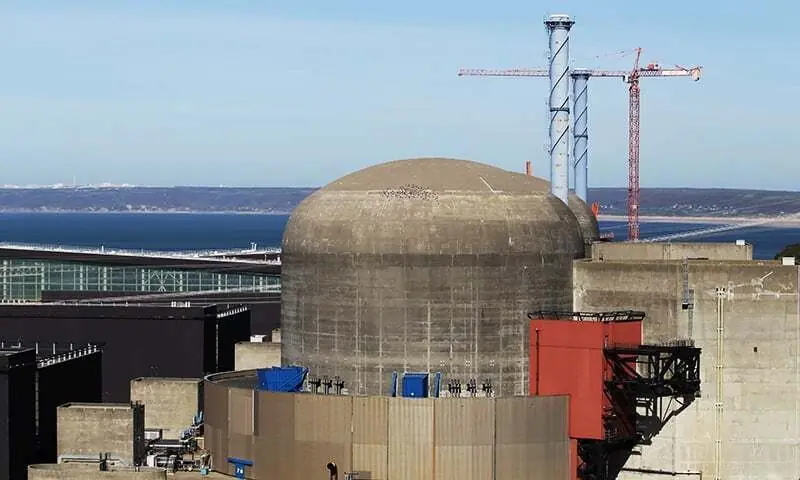
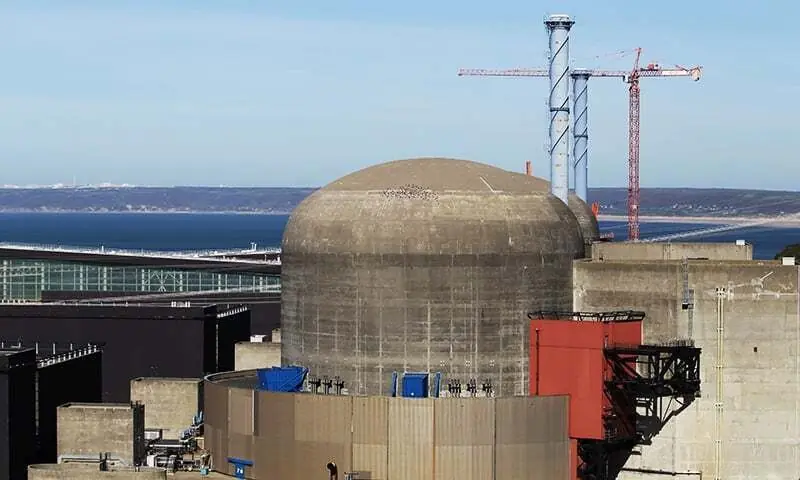
Instead, Pakistan should look seriously at small modular reactors (SMRs) and portable microreactors.
SMRs are designed to be built in factories, shipped in modules, and installed faster and at lower upfront cost than traditional reactors. They offer flexibility: a unit can be deployed to power an industrial cluster, a remote mining operation, or even a desalination plant.
Unlike solar, they are not hostage to the sun’s cycles; unlike gas, they are not tethered to volatile global markets. Nuclear fuel costs are a relatively small share of operating expenses, making reactors far less sensitive to price swings than oil or LNG plants. Some SMR designs also use closed-loop or air-cooled systems, reducing the heavy water demands of conventional plants and making them compatible with arid regions.
For Pakistan, the advantages are compelling. An SMR programme would diversify the energy mix, reduce the dependence on imported fuels, and add dependable baseload power that could stabilise the grid.
It would also strengthen energy sovereignty by building on existing nuclear expertise: Pakistan already operates several large nuclear plants with the support of international partners and has a trained cadre of engineers and regulators. Extending that capability into microreactors is a logical next step.
The challenges are real. SMRs are not an off-the-shelf solution; commercial rollouts are still at an early stage globally, and financing will be complex. Safety, waste management, and international oversight must be non-negotiable. But none of these hurdles are insurmountable.
The writer is the former head of Citigroup’s emerging markets investments and author of ‘The Gathering Storm’
Published in Dawn, The Business and Finance Weekly, October 6th, 2025



