


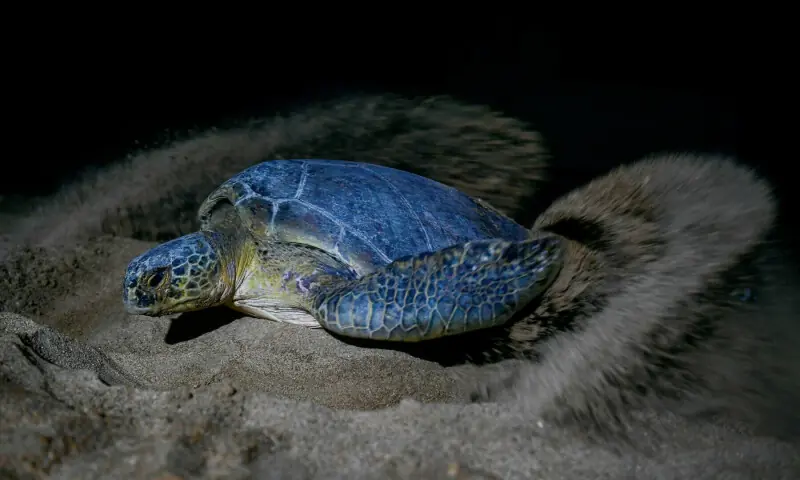
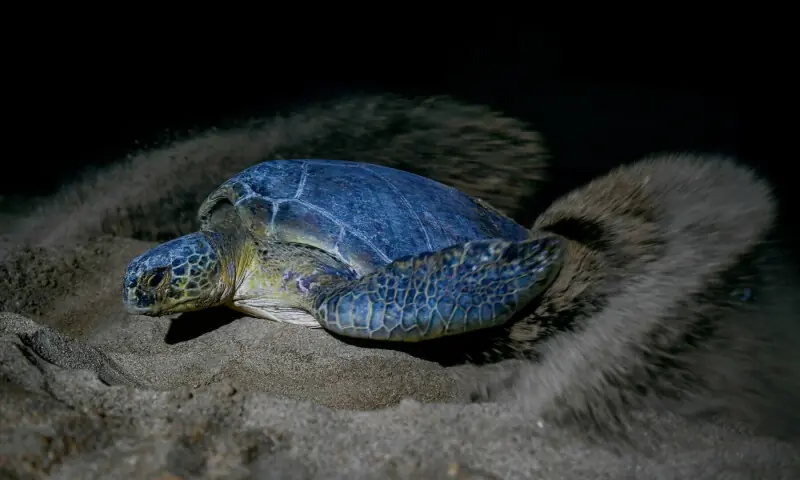
In a bid to conserve marine biodiversity, Pakistan has launched a project — estimated to cost Rs90 million — to protect sea turtles during shrimp trawling using Standardised Turtle Excluder (TEDs), the maritime affairs ministry said on Thursday.
Sea turtles along Pakistan’s coast face many anthropogenic threats, including habitat degradation, plastic pollution, and entanglement in fishing gears such as deep-sea trawlers. Pakistan’s shrimp exports to the US have been banned since 2017 because fishermen were not using the TED in their nets, endangering turtles.
A TED is a specialised mechanism fitted into shrimp trawl nets that allows sea turtles and other large marine animals to escape while retaining shrimp, the statement said.
“Federal Minister for Maritime Affairs Muhammad Junaid Anwar Chaudhry has announced the launch of a PKR 90 million initiative aimed at protecting sea turtles during shrimp trawling operations, as part of broader efforts to sustain marine biodiversity and ensure the long-term health of ocean resources,” a statement from the ministry said.
It added that the project aimed to distribute and install TEDs at zero cost to fishermen.
“Shrimp trawling often results in the capture of large quantities of non-target marine species. When sea turtles become trapped in nets, they are unable to surface for air and can drown,” the statement quoted the maritime minister as saying.
The project will also feature “capacity-building workshops, hands-on training for trawler crews, and data collection to monitor the devices’ impact on shrimp catch efficiency and net performance,” the statement read.
The minister stressed that TEDs “would significantly reduce the accidental capture of endangered sea turtles, mitigate concerns from fishermen over shrimp loss and net damage, and pave the way for Pakistan to regain US certification — essential for resuming shrimp exports to the American market.”
“The project aligns with Pakistan’s international commitments on marine sustainability and biodiversity conservation, ensuring compliance with global seafood traceability and sustainability standards,” Chaudhry was quoted as saying.
This initiative will showcase Pakistan’s commitment to responsible marine resource management, enhancing its reputation in the global seafood trade, Chaudhry added.
Pakistan currently sells shrimp at a comparatively low rate of about $2 per kilogram, the minister said, noting that with TED compliance and improved international certification, the price could rise to $6 per kilogram, unlocking new opportunities in lucrative markets including the US, EU, and Gulf Cooperation Council (GCC) countries.
He urged the Karachi Fisheries Harbour Authority, Sindh Fisheries Department, and Marine Fisheries Department to ensure immediate and full TED compliance, both at sea and at dockside, the statement read.
Cautioning about risks associated with non-compliance, the minister said, “One hundred per cent TED compliance and credible enforcement will be ensured.
Meanwhile, on the economic front, Pakistan’s current shrimp exports are around $100m per year, Chaudhry said, stressing that investing in TED compliance could “potentially triple export volumes and open access to premium markets such as the European Union and Canada.”
“The project is being supported by the Trade Development Authority of Pakistan (TDAP), Pakistan Fisheries Exporters Association (PAKFEA), Sindh Trawler Owners Fisheries Association (STOFA), Karachi Fish Harbour Authority (KFHA), Sindh Marine Fisheries Department (SFD), and Fishermen’s Cooperative Society (FCS),” the statement read.
According to a World Wildlife Fund (WWF) study from 2012, around 30,000 sea turtles were annually caught in the tuna gillnet fisheries of the country.
Entanglement in fishing nets is the most serious threat to marine turtles. It was estimated that about three per cent of entangled turtles were dying due to drowning or mishandling onboard fishing vessels.



