
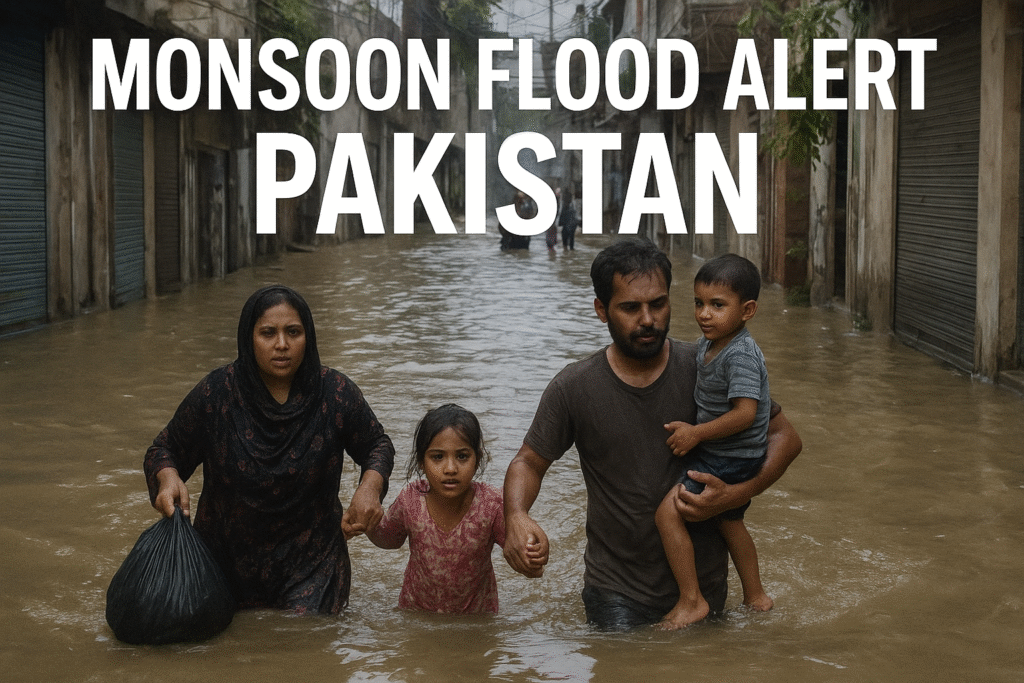
Nation on high alert as fresh monsoon wave triggers flooding, landslide threats, and emergency warnings
As a seventh, and possibly the most intense, monsoon wave approaches Pakistan, the nation faces an escalating monsoon flood alert. The Pakistan Meteorological Department (PMD) has forecast widespread rain, thunderstorm activity, and the possibility of flash floods and landslides across multiple provinces starting August 17, lasting until August 22.
The alerts issued by both PMD and Provincial Disaster Management Authorities (PDMAs) have raised concerns of a national-scale emergency. From northern mountainous terrain to densely populated urban centers, this monsoon phase threatens lives, infrastructure, and livelihoods.
Regions at Risk Amid Monsoon Flood Alert
According to detailed forecasts from PMD, the following areas are expected to receive moderate to very heavy rainfall, raising alarms of urban flooding, mudslides, and river overflow:
Northern Pakistan (Gilgit-Baltistan, KP, Kashmir)
- Gilgit-Baltistan (Skardu, Hunza, Diamer, Ghizer, Shigar, Astore)
- Khyber Pakhtunkhwa (Swat, Dir, Chitral, Kohistan, Shangla, Mansehra, Abbottabad, Peshawar, D.I. Khan, Bannu)
- Azad Jammu & Kashmir (Muzaffarabad, Kotli, Bhimber, Neelum Valley)
Expected Impact:
Widespread rain with scattered heavy falls may cause flash floods in nullahs and rivers, as well as landslides and mudslides in high-altitude areas.
Punjab – North and South
- Northern Punjab: Islamabad, Rawalpindi, Murree, Attock, Chakwal, Jhelum
- Central Punjab: Lahore, Faisalabad, Gujranwala, Sialkot, Sheikhupura
- Southern Punjab: Multan, Bahawalpur, Dera Ghazi Khan, Rajanpur
Expected Impact:
Urban flooding likely in low-lying areas. Riverine flooding along Sutlej, Ravi, and Indus possible due to upstream inflows and India’s water release.
Sindh and Balochistan
- Sindh: Karachi, Hyderabad, Thatta, Badin, Umerkot, Tharparkar, Sukkur, Larkana
- Balochistan: Zhob, Khuzdar, Gwadar, Lasbela, Kech, Awaran
Expected Impact:
Scattered downpours may intensify into severe thunderstorms. Coastal areas could face local flooding, especially in Gwadar and Karachi.
Forecasted Risk Zones – Tabular Overview
| Region | Dates | Rainfall Severity | Flood Risk Type | Additional Notes |
|---|---|---|---|---|
| KP & GB | Aug 17–19 | Very heavy | Flash floods, landslides | Road closures likely |
| Punjab (North) | Aug 17–19 | Heavy to very heavy | Urban and river floods | Potential overflow in nullahs |
| Sindh | Aug 17–22 | Moderate to heavy | Urban flooding | Karachi, Hyderabad at risk |
| Balochistan | Aug 17–21 | Scattered heavy | Hill torrents | Eastern Balochistan vulnerable |
| South Punjab | Aug 18–20 | Scattered heavy | Hill torrents, river flood | DG Khan & Rajanpur affected |
Water Bodies and Reservoir Status
Major Dams and Rivers under Pressure
- Tarbela Dam: 98% full
- Mangla Dam: 68% full
- Indus River: Medium-level flood at Kalabagh, Chashma
- Sutlej River: Low flood at Ganda Singh Wala
- Chenab & Jhelum Rivers: Normal flow, risk of sudden rise
India Releases Water
India has reportedly released 50,000 cusecs of water from upstream into shared rivers, compounding flood risks in South Punjab and Sindh. This coincides with glacial melt from the north, pushing river levels dangerously close to flood thresholds.
Disaster Response and Warnings
PDMA Punjab Issues Red Alert
The Provincial Disaster Management Authority (PDMA) Punjab issued a red alert for multiple districts, urging citizens near riverbanks to evacuate if necessary. Emergency rescue units have been mobilized in Rawalpindi, Lahore, Sialkot, and Multan
NDMA Prepares for Evacuation Support
The National Disaster Management Authority (NDMA) has advised all provincial units to stay fully operational, with relief camps, food supplies, and medical support ready. Helicopters are also on standby in case of blocked road access in GB and KP.
Urban Flooding and Landslide Concerns
Flashpoints of Urban Flood Risk
Several urban areas are at high risk of waterlogging and infrastructure strain:
- Islamabad & Rawalpindi: Heavy rain may paralyze traffic, disrupt power
- Lahore: Already water-saturated; further rain may cause sewer overflow
- Karachi: Poor drainage raises alarm of stagnant water and disease spread
Mudslides in Northern Areas
Landslides are highly probable in Murree, Galiyat, Swat, Dir, and Gilgit. Tourists and local travelers are advised to avoid hilly roads and be cautious of sudden road blockages.
Climate Change & Increasing Flood Events
Why is Pakistan Facing Repeated Monsoon Floods?
Pakistan lies in a climate-vulnerable zone where monsoon systems have intensified in recent years due to:
- Rising Sea Temperatures
- Accelerated Glacial Melt
- Deforestation & Land Erosion
According to a recent UN Climate Report, Pakistan may face 40% more flood incidents by 2030 if climate mitigation efforts are not prioritized.
➡️ Read more: Climate Crisis and Pakistan’s Monsoon Challenges (Writozy)
Safety Guidelines for Citizens
- Avoid non-essential travel from Aug 17–22
- Stay away from riverbanks, nullahs, and low-lying areas
- Cooperate with rescue teams during evacuations
- Keep emergency kits ready (water, dry food, power banks)
- Follow real-time alerts via PMD and PDMA social channels
Government Urges Preparedness
The Ministry of Climate Change and provincial governments have released synchronized guidelines urging:
- Suspension of school activities in high-risk zones
- Closure of tourist points like Murree and Swat during peak rainfall
- Deployment of boats in flooded districts
- Reinforcement of river embankments and dams
External Support & International Response
International organizations like the Red Cross, UNDP, and World Bank are on standby for post-flood rehabilitation assistance. In past years, global partners contributed over $150 million in response to Pakistan’s flood emergencies.
🌐 External Link (Credible Source):
Anchor Text: Reuters Report: Over 300 Killed in Pakistan Floods
URL: https://www.reuters.com/business/environment/more-than-300-people-dead-pakistan-after-heavy-rains-floods-2025-08-16
Conclusion
With the seventh monsoon wave striking across Pakistan, the nation is under a widespread monsoon flood alert. Authorities have issued red warnings, dams are reaching critical capacity, and major cities are bracing for urban floods and infrastructure stress. As the situation unfolds between August 17 and 22, citizens are urged to stay informed, remain cautious, and follow all official safety instructions.
Related : Writozy

