
{{No footnotes|date=November 2025}}
{{No footnotes|date=November 2025}}
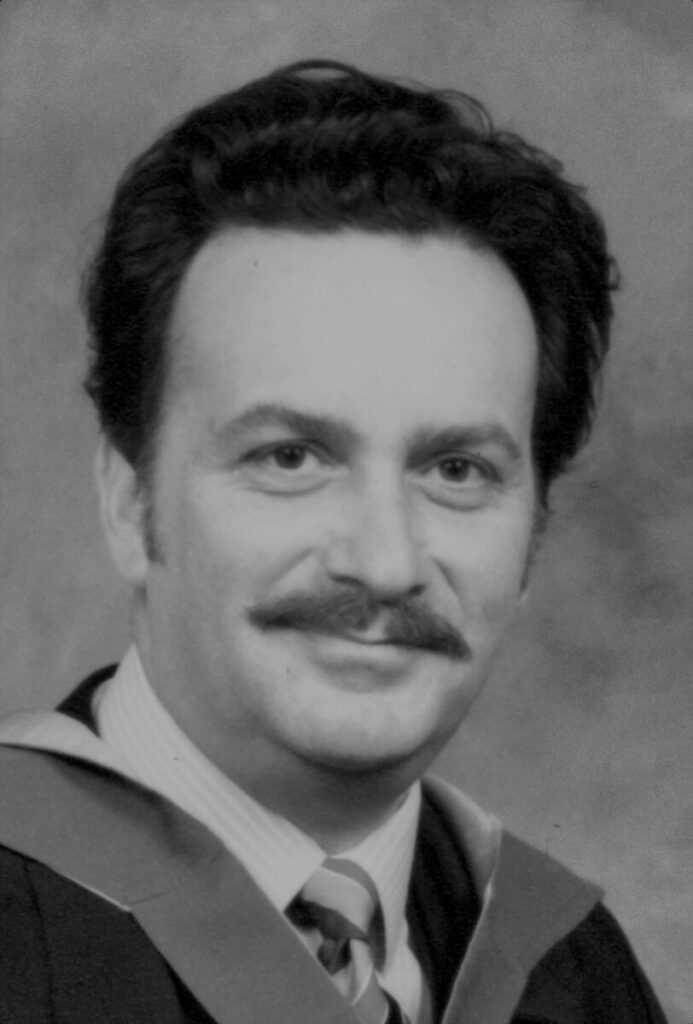
[[File:Portrait of Neville Courtenay Bower (1934-2007).jpg|alt=Neville Bower circa 1985. Black and white portrait photograph of an Anglo-Indian man with dark hair and a moustache wearing formal academic attire including a masters gown and hood.|thumb|Neville Bower circa 1985.]]
[[File:Portrait of Neville Courtenay Bower (1934-2007).jpg|alt=Neville Bower circa 1985. Black and white portrait photograph of an Anglo-Indian man with dark hair and a moustache wearing formal academic attire including a masters gown and hood.|thumb|Neville Bower circa 1985.]]
”’Neville Courtenay Bower”’ (3 October 1934 – 22 September 2007) was an Anglo-Indian British composer, concert pianist, and educator. He is best known for his solo piano repertoire, chamber music and contribution to song cycle repertory – particularly for the countertenor.
”’Neville Courtenay Bower”’ (3 October 1934 – 22 September 2007) was an Anglo-Indian British composer, concert pianist, and educator. He is best known for his solo piano repertoire, chamber music and contribution to song cycle repertory – particularly for the countertenor.
== Early life and education ==
== Early life and education ==
.jpg)
Neville Courtenay Bower (3 October 1934 – 22 September 2007) was an Anglo-Indian British composer, concert pianist, and educator. He is best known for his solo piano repertoire, chamber music and his contribution to modern song cycle repertory – particularly for the countertenor.
Early life and education
[edit]
Bower was born in Allahabad, India. He was first educated at schools in Allahabad, then Sherwood College, Nainital (1945-1949). Bower had shown great promise playing piano from a young age. In 1947 he achieved the highest examination mark in India from Trinity College London winning a special scholarship for the second year in succession;[1] later attaining ATCL in 1948 and LTCL in 1949.[2]
When his family emigrated to the United Kingdom in 1950, they settle in London; there, Bower attended Battersea Polytechnic where he matriculated in 1951. He enrolled at the Royal College of Music (RCM) in 1951, where he studied piano with Kendall Taylor, composition with Patrick Hadley, organ with Osborne Peasgood, clarinet with Ralph Clark and, accompaniment with Hilda Klien, and theory studies with Harry Stubbs. Bower graduated ARCM in 1952 for piano performance, then LRAM for teaching in 1956. Later in life he achieved a BA from the Open University in 1985, and FTCL for composition from Trinity College London in 1987, the later being examined by Geoffrey Bush.[3]
After graduating from the RCM in 1956 Bower spent two years teaching at a comprehensive – Manor Secondary Modern School, Ruislip – before returning to attempt a performance career. He worked as a ballet pianist at Ballet Rambert school, and performed recitals in London and Oxford. When the Holloway Recital Hall was refurbished in 1959, Bower performed a programme of piano-duos with Jessie Munro.[3]
In 1962 Bower performed Liszt’s first piano concerto with the Modern Symphony Orchestra under Arthur Dennington, in which he “captured much of the glitter and excitement in a performance which was essentially masculine and suited the work very well.” The critic noting his, “Octave runs and scale passages were commendably clean and accurate.”[4]
Bower’s masculine performance style was not to everyone’s taste, another critic wrote, “Although he [Bower] had quite a good command of the keyboard, he performed Beethoven’s reflective E Flat Sonata, Op. 27 (Quasi una Fantasia) in the manner of a Czerny study, and left Debussy’s mysterious L’Isle Joyesue in the state of a battlefield.”[5]
One of Bowers last outings as a concert pianist was the first Leeds International Piano Competition. Not long after, the injuries from a car accident ended the prospect of a performance career.[3]
Following the end of his concert pianist career Bower taught at Henry Compton School, Fulham; was music master at Ealing Grammar School (1967-1974); and Slough (Upton) Grammar School (1974-1986). After retiring from secondary teaching, he worked as a music examiner at London University (1987-1995).[3]
Bower wrote is first composition at the age of ten. His early music written in India was lost to harsh conditions and his family’s moving around. Bower wrote for the people around him; students, friends and colleagues. His first compositions published by Boosey & Hawkes were for school choirs (Op.1, Nos. 1-3).[6]
Bower’s works for organ are considered a significant contribution to the repertory of modern organ music. Eternal (Op. 32) for organ was premiered a Lichfield Cathedral in 1988 by Jonathan Rees-Williams.[7] The organist Kevin Bowyer described Eternal (Op. 32) as an “unjustly neglected piece of British organ music.”[8] Detailed descriptions of Bower’s organ works are included in a notable reference book for modern and contemporary organ music.[9]
His sacred music has been performed at many cathedrals and notable venues, including St George’s Chapel, Windsor Castle.[10] An entry containing Bower’s biography and a list of his sacred compositions are included in the Dictionary of Composers for the Church in Great Britain and Ireland.[11]
Bower made a notable contribution to modern vocal repertoire including four song-cycles and two song-sets. When countertenor Andrew Watts was asked about the artist who had influenced him the most, his answer included Bower.
“Another person would be Neville Bower, who was a concert pianist. He was head of music at my grammar school. He was very “old school” in his approach. We played piano duets together, he arranged pieces for me; in fact, when he retired and started composing, he wrote several song cycles which were dedicated to me and which I have performed.”[12]
Recordings and Broadcast
[edit]
Following Bower’s retirement from secondary teaching and turn to full-time composition in the 1980s, three of Bowers works were accepted, recorded and broadcast by BBC Radio 3; making his radio debut in his fifties. Evocation (Op. 14) for clarinet and piano was recorded by Jack Brymer and Ian Lake in a programme between Grand duo concertant by Weber and Sonatina by Joseph Horovitz – first broadcast in 1986,[13] and rebroadcast in 1987.[14] Paul Silverthorne and Julian Jacobson recorded Dance of Life (Op. 28) for viola and piano, for a 1990 broadcast alongside a Brahms sonata.[15] Andrew Ball recorded Prism (Op. 33, No. 1) in a programme of modern piano music; alongside works by Gerald Barry, Anthony Payne, and Simon Rowland-Jones – broadcast in 1992.[16]
In 2004 Andrew Watts and Iain Burnside gave a live performance broadcast of The Lamb (Op. 46, No. 2) on BBC Radio 3.[17] Songs of Innocence (Op. 46) features on the album A Countertenor Songbook by Andrew Watts and Iain Burnside,[18] which peaked at No. 8. in the U.K. Classical Music Chart.[19] subsequently Bower’s Piping Down the Valley Wild (Op. 46, No. 1) has been broadcast on radio a number of times; including during the programme Essential Classics on BBC Radio 3,[20] and on ABC Classic.[21]
List of Compositions by Genre
[edit]
- Our Lord And Our Lady, Op. 1, No. 1, for choir and piano (words by Hillaire Belloc; 1961)
- The Coming Of Spring, Op. 1, No. 2, for choir and piano (words by Buchanan; 1962)
- Carillion, Carilla, Op. 1, No. 3, For SSS(div.a3)A choir and piano (words by Belloc; 1965)
- Three Songs for Choir, Op. 2 (words by Longfellow; 1958)
- Snowflakes
- The Poet
- Song
- Esmeralda, Op. 5, for choir and percussion (words by Bower; 1958)
- Tu Creasti Domine, Op. 5a, for SSAA Choir (words by Belloc; 1959)
- Wisdom Of Job, Op. 16, for SATB choir (1968)
- Dance A Cachucha, Op. 27, arranged for choir and two pianos (G&S “The Gondoliers”; 1985)
- The Music Makers, Op. 36, for mixed ensemble (flute, B♭ clarinet, horn, piano, violn, viola, and cello) and choir or mixed voices (words by O’Shaughnessy; 1988)
- Psalm 121 : ‘I Will Lift Up Mine Eyes Unto The Hills’, Op. 45, for SSAA boy’s choir (1994)
- Chorale ‘The Call’, Op. 52a, for SATB choir (words by Herbert; 2000)
- Beyond Words, Op. 55, cantata for (div.a3)SATB chorus and orchestra (words by Eric Arthur Knight; 2006)
- Meditation (On The Birth Of Jesus), Op. 3, for bass and piano (1958)
- The Golden Sunset, Op. 4, for voice and piano (words by Longfellow; 1958)
- The Dream Follower, Op. 30, song-cycle for countertenor and piano (words by Thomas Hardy; 1986)
- The Dream Follower
- In the Mind’s Eye
- Read by Moonlight
- The Sun on the Letter
- Two Lips
- In Her Precincts
- Song of Hope
- To Life
- I Look Into My Glass.
- Three Songs for a Future Time, Op. 34, song-set for solo voice and piano (1979-87)
- Daydream (words by A.S.J. Tessimond, Melody by Hicks)
- The Desert (words by Belloc)
- Virtue [The Temple] (Words by George Herbert)
- The Path of Dreams, Op. 38, song-set for solo voice (baritone) and piano (1990)
- The Path of Dreams (words by Rupert Brooke)
- Acknowledgement (words by A.S.J. Tessimond)
- Requiscat (words by Oscar Wilde)
- Songs of Innocence, Op. 46, song-cycle for solo voice (mezzo or baritone) and piano (words by Blake; 1994)
- Introduction
- The Lamb
- Nurse’s Song
- Infant Joy
- A Cradle Song
- Spring
- The Divine Image
- Songs of Experience, Op. 47, song-cycle for solo voice (mezzo or baritone) and piano (words by Blake; 1994)
- Introduction: Hear the Voice of the Bard!
- Earth’s Answer
- The Clod And The Pebble
- A Poison Tree
- The Angel
- The Garden Of Love
- My Pretty Rose Tree
- The Sick Rose
- The Lily
- Ah! Sunflower
- Nightscape : ‘Nightfall in the City of Hyderabad’, Op. 49, for soprano, baritone, B♭ clarinet and piano (words by Naidu; 1996)
- Ghosts And Dreams, Op. 53, song-cycle for solo voice (mezzo or baritone) and piano (words by Hardy; 2000-1)
- A Night in November
- Something Tapped
- The Head Above the Fog
- An Upbraiding
- A Thought in Two Minds
- The Last Performance
- The Garden Seat
- Three Childrens Pieces, Op. 6, for piano (1959)
- Summer Day
- Sad Jumbo
- Dancing Snowflakes
- Festive Dance, Op. 7, for two pianos (1960)
- Piano Sonata, Op. 8 (1963)
- Holiday Pieces, Op. 10, for young pianists (1965-6)
- Intrada, Op. 11, for solo piano (1966)
- Fantasie-Preludes, Op. 12, for solo piano (1966)
- Escapements, Op. 13, for solo piano (1967)
- Two-Part Inventions, Op. 19 for young pianists (1981)
- Notturno, Op. 20, for piano (1976)
- Events : Music For Classroom Use, Op. 24, for six players on prepared piano (1981-2)
- Market Day
- The Meet
- Insects
- Night Music
- The Football Match
- Spring Dance, Op. 25a, arranged for two pianos (1974)
- Prism, Op.33, No. 1, soundscape for solo piano (1987)
- Greenscape, Op.33, No. 2, soundscape for solo piano (1987, Revised 2005)
- Llyn Cau, Op.33, No. 3, soundscape for solo piano (1988)
- Five-Finger Colours, Op. 2a, for young pianist (1987-1994)
- Purple Piece
- Sunlight Piece
- Moonlight Piece
- The Bells Of Rouen
- Snowscape
- Sarongen Gamelan
- The Gardens Of Villandry, Op. 40b, arranged for piano (first movement; 2005)
- Music for a While : A collection of piano pieces (Series 1), Op. 39 (1990)
- Musing
- Parade
- Chorale I
- Daydream
- Spree
- Lament
- Chorale II
- Colour Studies (Set 1), Op. 41, for solo piano (1992)
- Study In Violet
- Study In Peacock Blue
- Study In Celestial Blue
- Study In Indigo
- Colour Studies (Set 2), Op. 42, for solo piano (1992)
- Study In Green
- Study In Yellow
- Study In Orange
- Study In Scarlet
- Colour Studies (Set 3), Op. 43, for solo piano (1992)
- Study In Black (“Kali”)
- Study In Grey : Fugue In 3 Voices (“Greybeards In Bowlers”)
- Study In Brown
- Study In White (“Toccata”)
- Meditations, Op. 44, for solo piano (1993-4)
- Moderato Tranquillo
- Andante Sostenuto
- Sostenuto Moderato
- Pastorale Patetico
- Evocation
- Moderato Assai
- Lament For Bosnia, Op. 44a, for solo piano (1993)
- Why?, Op. 44b, for solo piano (1993)
- Music for a While : A collection of piano pieces (Series 2), Opus 48 (1995-6)
- Fairly Fast And Light
- ‘Hymnus’
- Andante con moto
- “Nathan’s Blues” Fairly slowly
- ‘Chorale’ Moderato
- ‘Tôdi’ (Raga) Andante ritmico
- “Ay Allah” Vivo, ma non troppo
- ‘Epilogue’ Lento, tranquillo
- Music for a While : A collection of piano pieces (Series 3), Op. 54 (2005)
- Prelude
- Ballad
- Song And Dance
- Scènes De La Ballerine : Music For Three Contrasting Dances, Op. 56, for piano (2007)
- Tempo alla marcia, con brio
- “Adage” Adagietto sostenuto
- ‘Valse’ Brisk, but not too fast
Chamber & Small Ensemble
[edit]
- Sonata for oboe and piano, Op. 9 (1966)
- Evocation, Op. 14, sound-piece for clarinet and piano (1969, revised 1981)
- Nta Villie Valli, Op. 17, for oboe and piano (Sicilian folk song; 1972)
- String Quartet “Dance Quartet”, Op. 22 (1979)
- Popular Song from Walton’s “Facade”, Op. 26, arrange for oboe, clarinet and piano (1981)
- Dance Of Life, Op. 28, sound-piece for viola and piano (1986)
- Ecstasy, Op. 29, sound-piece for cello and piano (1985)
- Glory, Op. 31, Sound-Piece For Trumpet and piano (1985-6)
- Eternal, Op. 32, chorale and fugue for organ (1987)
- The Music Makers, Op. 36, for mixed ensemble (flute, B♭ clarinet, horn, piano, violn, viola, and cello) and choir or mixed voices (words by O’Shaughnessy; 1988)
- Sections, Op. 37, for solo flute (1988)
- Nightscape : ‘Nightfall in the City of Hyderabad’, Op. 49, for soprano, baritone, B♭ clarinet and piano (words by Naidu; 1996)
- Sonata : Soundscape For Vincent, Op. 51, for violin and piano (edited by Lydia Mordkovitch; 1999)
- Beatitude and Chorale, Op. 52, for organ (2000)
Orchestra & Large Ensemble
[edit]
- Concertante, Op. 15, for oboe and orchestra (1971, Revised 1986)
- Concerto, Op. 18, for trumpet and orchestra (1973-4)
- Processional March, Op. 21, for school orchestra (1976)
- Two Pieces, Op. 23, for school orchestra (1979)
- Gymnopedie (Satie arr. Bower)
- “Valse”
- Spring Dance, Op. 25, for orchestra (1981)
- Prelude And Threnody, Op. 35, for double string orchestra (1989)
- The Gardens Of Villandry, Op. 40, soundscape for orchestra (1991-2)
- Naini, Op. 50, for large orchestra (1996-after 2003)
- Beyond Words, Op. 55, cantata for (div.a3)SATB chorus and orchestra (words by Eric Arthur Knight; 2006)
- Tal, Op. 57, for large orchestra (after 2003; incomplete companion of Naini, Op. 50)
Nathan Bowness’ Nom De Plume
[edit]
- Brazilian Street Song : “Choros” for 2-part descant recorder band (1994) or 2 solo descant recorders & piano (with optional percussion)
- ^ “Music Examination Results. 1947” (PDF). The Sherwoodian. XXXV: 16. 1948. Retrieved 25 November 2025.
- ^ “Practical Music Examination Results – 1949” (PDF). The Sherwoodian. XXXVI: 7 & 19. 1949. Retrieved 25 November 2025.
- ^ a b c d Wright, David C.F. (2006). The British Composer Series: Neville Bower. Retrieved 25 November 2025.
- ^ J.T. (11 May 1962). “Modern Symphony Orchestra : GLAZOUNOV GETS AIRING”. North London Press. p. 16. Retrieved 25 November 2025 – via British Newspaper Archive.
- ^ Spero, Carol Mary (26 April 1957). “The Recital Club”. Kensington News and West London Times. p. 3. Retrieved 25 November 2025 – via British Newspaper Archive.
- ^ Bower, Neville (2003). Catalogue of Works. United Kingdom: Nymet Music.
- ^ “City premiere for new work”. Lichfield Mercury. 6 May 1988. p. 2. Retrieved 26 November 2025 – via British Newspaper Archive.
- ^ Bowyer, Kevin (14 October 2017). Sounds from the Silent Land. University of Glasgow Memorial Chapel.
- ^ Bowyer, Kevin (2023). “The Development of New Organ Music in Britain”. In Laukvik, Jon (ed.). Historical Performance Practice in Organ Playing, Part 3: Modern and Contemporary Music (PDF). Stuttgart: Carus-Verlag. p. 366. ISBN 9783899484427.
- ^ Yumpu.com. “Neville Bower – Dr David Wright”. yumpu.com. Retrieved 2025-11-25.
- ^ Humphreys, Maggie; Evans, Robert (1997). Dictionary of Composers for the Church in Great Britain and Ireland. United Kingdom: Bloomsbury Publishing. p. 38. ISBN 9780720123302.
- ^ Hickman, Pamela (2015-09-29). “Pamela Hickman’s Music Interviews Blog: Talking to countertenor Andrew Watts (UK) about his career, today’s singers and performing early music in the 21st century”. Pamela Hickman’s Music Interviews Blog. Retrieved 2025-11-25.
- ^ “Jack Brymer and Ion Lake”. Radio Times. No. 3266. 28 June 1986. Retrieved 26 November 2025 – via BBC Porgramme Index.
- ^ “Jack Brymer and Ian Lake”. Radio Times. No. 3310. 2 May 1987. Retrieved 26 November 2025 – via BBC Programme Index.
- ^ “Brahms and Neville Bower”. Radio Times. No. 3470. 16 June 1990. Retrieved 26 November 2025 – via BBC Programme Index.
- ^ “Songs of Praise”. Radio Times. No. 3598. 12 December 1992. Retrieved 26 November 2025 – via BBC Programme Index.
- ^ “BBC – In Tune – 22 June 2004”. www.bbc.co.uk. Retrieved 25 November 2025.
- ^ “A Countertenor Songbook”. NMC Recordings. Retrieved 2025-11-25.
- ^ “Official Specialist Classical Chart on 26/10/2018”. Official Charts. Retrieved 2025-11-25.
- ^ “BBC Radio 3 – Essential Classics, Friday with Suzy Klein – Dog stars, Maggie Aderin-Pocock, Respighi’s Ancient Airs and Dances”. BBC. Retrieved 26 November 2025.
- ^ Watkins, Stephen (5 July 2020). “‘My heart is inditing’“. ABC listen. Retrieved 26 November 2025.
- Bower, N. (2003). Catalogue of Works. United Kingdom: Nymet Music.
- Bowyer, K. (2023). “The Development of New Organ Music in Britain”. Historical Performance Practice in Organ Playing, Part 3: Modern and Contemporary Music, ed. Laukvik, J. Retrieved 24 November 2025.
- Evans, R., Humphreys, M. (1997). Dictionary of Composers for the Church in Great Britain and Ireland. United Kingdom: Bloomsbury Publishing.
- International Who’s Who In Music and Musicians’ Directory (1992). Cambridge: Melrose Press. pp. 120-121. Retrieved 24 November 2025.
- “Neville Bower | NMC”, nmcrec.co.uk. Retrieved 24 November 2025.
- “Neville Bower – Nymet Music”, nymetmusic.com. Retrieved 24 November 2025.
- Wright, D.C.F. (2006). The British Composer Series: Neville Bower. Retrieved 24 November 2025.

