
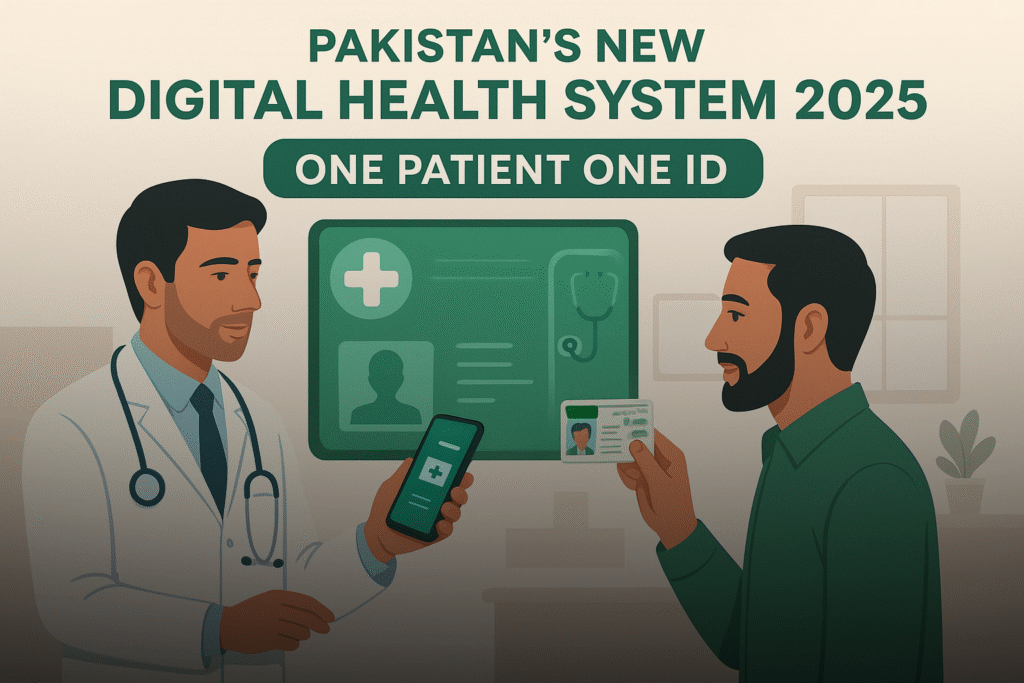
Pakistan New Digital Health System 2025
In an innovation that promises to reshape healthcare in Pakistan, the government has introduced its new digital health system 2025, linking medical records directly to CNICs. This move, dubbed “One Patient One ID”, leverages technology to streamline access, improve care delivery, and lay groundwork for telemedicine. This article explores what the system entails, its benefits, key implementation steps, and what patients in Pakistan can expect going forward.
What Is the “One Patient One ID” Digital Health System?
The new digital health system 2025 initiative integrates patients’ medical records with their national identity cards (CNICs). Under this plan, each citizen’s CNIC becomes their Medical Record number, accessible across all healthcare institutions in Pakistan. The objective: simplify data management, reduce repeat paperwork, and elevate care accuracy.
Why This Matters: Key Benefits of the Digital Health System
Seamless Access to Medical Data
By linking CNICs to medical records, any authorized healthcare provider can access a patient’s history with one scan. This fosters better treatment decisions and reduces administrative delays.
Boosting Telemedicine & Decongesting Hospitals
With real-time data access, doctors can consult remotely—vital for rural areas. It also helps reduce overload at major hospitals by enabling local treatment centers to provide informed care.
Enhanced Data Collection for Public Health
Centralizing medical records enhances disease surveillance, especially for chronic illnesses like diabetes and hypertension. Real-time data supports robust policymaking and early intervention plans.
Future-Ready Healthcare Infrastructure
This framework paves the path for innovations like AI diagnostics, predictive healthcare, and personalized medicine.
Implementation Strategy & Timeline
Government Collaboration & Oversight
The initiative results from collaboration between NADRA and the Ministry of Health, with key figures such as Health Minister Mustafa Kamal playing pivotal roles.
Pilot Rollout Phases
While full implementation details are pending, initial piloting and further announcements are expected as part of this systematic launch.
Leveraging Existing Structures
By aligning with CNICs, Pakistan avoids building parallel ID frameworks—making adoption smoother for hospitals and clinics nationwide.
Benefits for Patients & Healthcare Providers
For Patients
- Lower paper hurdles: No more drags with lost files or repeated registration.
- Faster, more accurate treatment: Quicker decisions, tailored care.
For Providers
- Improved workflow: Easier record access boosts efficiency.
- Better coordination: Doctors can quickly share insight, improving continuity of care.
Addressing Potential Concerns
Data Privacy & Security
Linking personal IDs to medical data raises valid concerns. The system must include robust cybersecurity, encryption, and access protocols to protect patient information.
Digital Divide & Inclusivity
Implementation must ensure that rural clinics and underserved areas have adequate infrastructure—no community should be left behind.
Staff Training & Awareness
Healthcare workers require proper training to smoothly adapt to digitized workflows and use CNIC-linked health records effectively.
Looking Ahead – The Impact in 2025 and Beyond
By rolling out this system, Pakistan positions itself for next-gen healthcare delivery. Telemedicine, data-driven public health, and efficient patient tracking will all become more attainable. As the system scales, expect:
- Reduced healthcare inefficiencies
- Smarter epidemiological response
- Nationwide consistency in patient care quality
FAQs (Frequently Asked Questions)
Q1: What is the “One Patient One ID” system?
This initiative links medical records to each citizen’s CNIC, creating a unified health ID accessible nationwide.
Q2: How will this benefit telemedicine?
Doctors can securely access patient history remotely, enabling informed diagnosis and reducing visits to crowded hospitals.
Q3: What challenges could arise?
Challenges include ensuring data privacy, overcoming digital infrastructure gaps in rural clinics, and staff training requirements.
Q4: When will it be fully operational?
Pilot rollouts are expected soon, though exact dates are yet to be confirmed.
Q5: Who is spearheading this initiative?
It’s a joint effort by NADRA and the Ministry of Health, led by figures like Health Minister Mustafa Kamal and NADRA Chairman Lt Gen Munir Afsar.
Final Thoughts
The launch of Pakistan’s new digital health system 2025 marks a turning point in the country’s healthcare landscape. By linking CNICs with medical records under the “One Patient One ID” initiative, the government aims to create a smarter, faster, and more transparent healthcare experience.
Related : Writozy

