
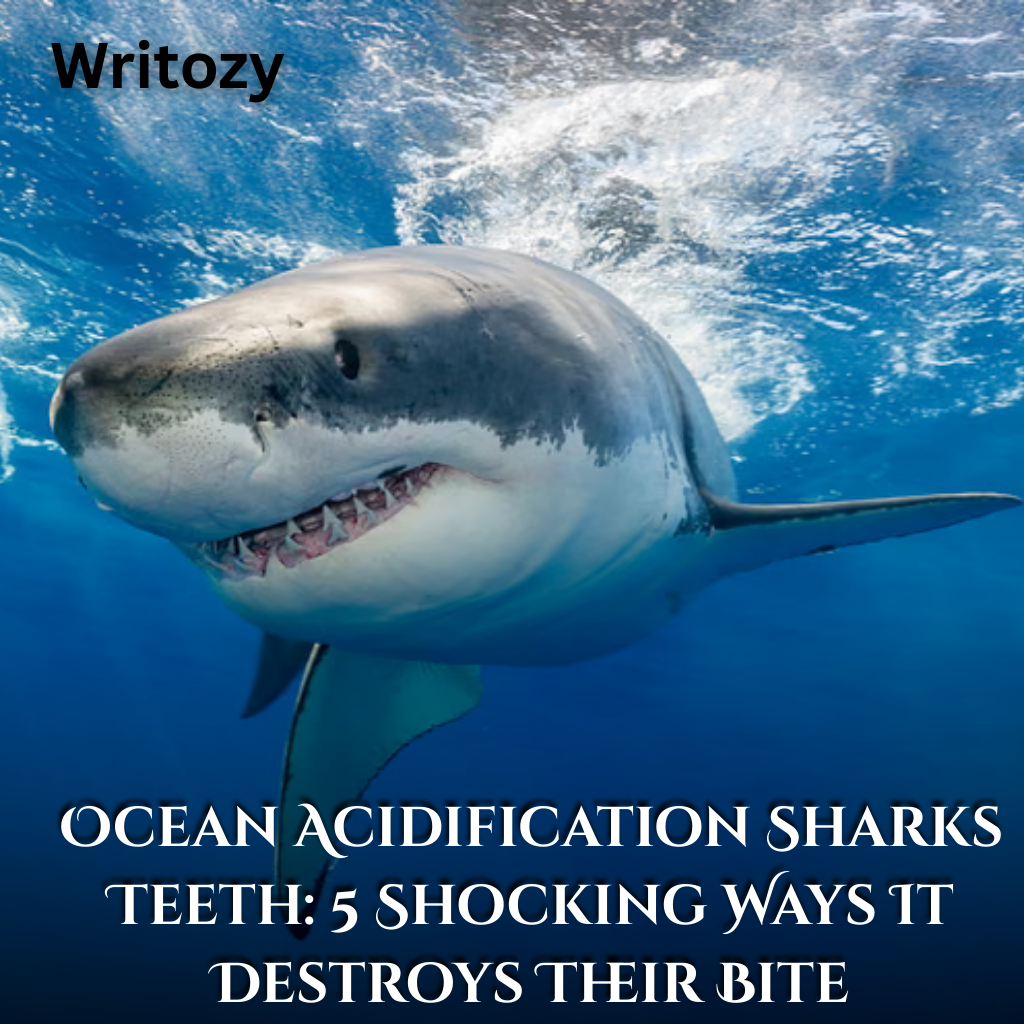
Ocean Acidification Sharks’ Teeth: Nature’s Bite at Risk
The world’s oceans are under siege—not just from warming waters and melting ice, but also from a growing threat beneath the surface. Recent studies now show that ocean acidification sharks teeth are being corroded by increasingly acidic seas. This alarming discovery underscores an urgent environmental concern that goes beyond coral reefs and shellfish.
What Is Ocean Acidification — And Why Should We Care?
Ocean acidification shark theeth occurs when carbon dioxide from the atmosphere dissolves into seawater, forming carbonic acid. This process lowers the water’s pH—currently around 8.1—and could drop to 7.3 by the year 2300 if CO₂ emissions continue as projected
The effects of acidification are well-documented in coral bleaching and shell erosion, but a groundbreaking study from Heinrich Heine University Düsseldorf has now revealed a more startling victim—shark teeth.
Sharks’ Teeth Under Siege: What the Research Reveals
Dr. Maximilian Baum and his research team studied over 600 naturally shed teeth from blacktip reef sharks, exposing them to two simulated ocean environments: current pH (8.1) and future-altered pH (7.3). After an eight-week incubation in these waters, the results were striking.
- Increased Corrosion: Teeth in the acidic tank showed up to 50% more deterioration, including visible cracks, holes, and weakened structures
- Structural Damage: Damage was found on both roots and crowns; tooth serrations (crucial for prey capture) were visibly altered
- Implications for Predation: Weakening of these highly specialized tools may hamper sharks’ ability to hunt efficiently, potentially reducing their dominance at the top of marine food webs
Despite sharks’ ability to replace teeth constantly, the added energy demand to regenerate damaged ones in acidified waters could create a biological stress—another layer of pressure on populations already challenged by overfishing and pollution
What’s at Stake for Sharks—and the Ocean Ecosystem
If shark teeth become less effective, several cascading consequences could unfold:
- Reduced Hunting Efficiency: Weaker teeth may lower prey capture rates and force sharks to expend more energy for less reward .
- Ecosystem Imbalance: Sharks help regulate fish and invertebrate populations. A decline in their predatory ability could disrupt marine biodiversity .
- Increased Stress: Additional metabolic strain from repairing or replacing corroded teeth may weaken sharks’ resilience.
Why This Research Matters
This study expands the impact scope of ocean acidification beyond the usual suspects of corals and shelled organisms to include apex predators—sharks. It’s a sobering reminder that climate change effects ripple throughout ecosystems, even targeting the ocean’s most evolved hunters .
Additionally, since this research used shed, non-living teeth, further studies are needed to measure damage in live sharks and determine if regeneration truly compensates—especially in energetically expensive, acidified conditions .
FAQ Section
Q1: Can ocean acidification really damage shark teeth?
Yes—experiments simulating future pH levels showed a 50% increase in tooth deterioration, including cracks, crusts, and weakened structure.
Q2: Aren’t sharks able to regenerate teeth?
Yes, sharks constantly replace their teeth. But acidification may force them to regenerate more frequently—at higher energy cost—possibly affecting survival and reproduction.
Q3: Will all shark species be affected?
Likely. Although the study focused on blacktip reef sharks, many species have similar tooth composition and exposure, so the effects could be widespread.
Q4: Is this problem reversible?
Reducing CO₂ emissions and slowing ocean acidification are necessary first steps. But recovering lost marine functionality—especially in apex predators—could take decades or longer.
Q5: What further research is needed?
Live-animal studies measuring tooth function, regeneration rates under low pH, and impacts on feeding efficiency are critical next steps.
Final Thoughts: A Bite We Can’t Ignore
Ocean acidification is eroding more than shells—it’s chipping away at nature’s most sinister teeth. This research is a chilling milestone, revealing how human-driven environmental changes can compromise the survival tools of our planet’s top predators.
Protecting sharks means more than banning finning—it requires a global strategy to curb CO₂ emissions and safeguard ocean chemistry. Because when sharks lose their bite, the entire ocean ecosystem bleeds.
Related : Writozy

