


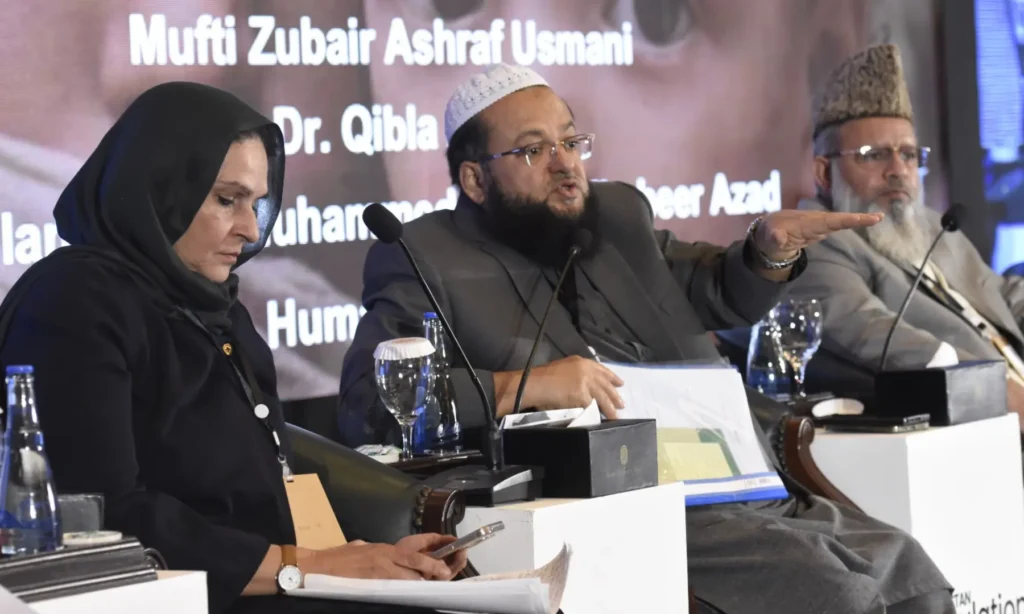
The second and final day of the ‘Pakistan Population Summit’ — a national dialogue on restoring balance and building sustainable futures — is underway in Islamabad.
Organised by DawnMedia, the summit is bringing together politicians, economists, development specialists, private sector leaders, and experts to develop a shared vision as rapid population growth continues to place pressure on health systems, food and water security, and employment.
On Monday, policymakers, experts, diplomats and lawmakers had expressed the unanimous view that prosperity was not possible if the number of mouths to feed kept rising.
They argued that without managing the population in terms of resources, all of the government’s efforts — aimed at development, progress and social uplift — would amount to nought.
View the full agenda here.
10:45am — Islam allows birth control in select situations: Jamia Darul Uloom vice president
Jamia Darul Uloom Vice President Mufti Zubair Ashraf Usmani also shed light on what the Sharia says about the issue of rapid population growth.
“Growing population is not an issue, it is a waseela,” he said, adding that a balance could be struck as birth control could be used in certain situations, such as when there was danger to a woman’s health.
However, Mufti Usmani said Islamic laws did not favour “birth control due to fear of poverty and starvation”, or if parents wanted to avoid a girl’s birth.

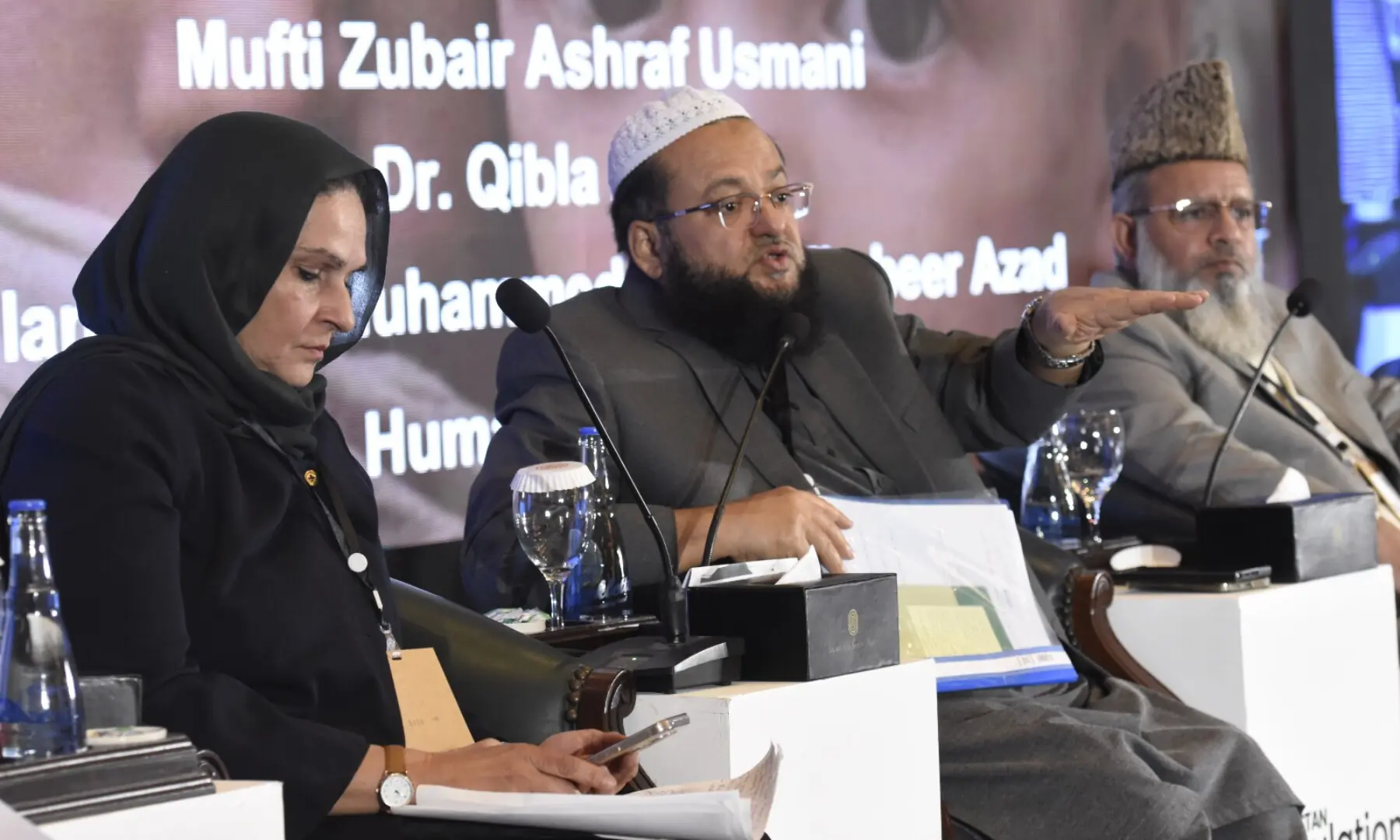
10:35am — Maulana Abdul Khabeer Azad terms tackling population growth ‘a collective responsibility’
Chairman Ruet-i-Hilal Committee Abdul Khabeer Azad stressed that tackling population growth was “our collective responsibility”, recalling his 15 years of association with the Population Council.
Detailing their efforts, he said: “When we created this awareness that saving one human life was equivalent to saving the entirety of humanity, and then when we talked about the health of mother and child, people understood that this was indeed a noble cause.”
“We often see that when such topics come under discussion, they are labelled as foreign agenda, but we believe that the life of a person is very precious,” he added.
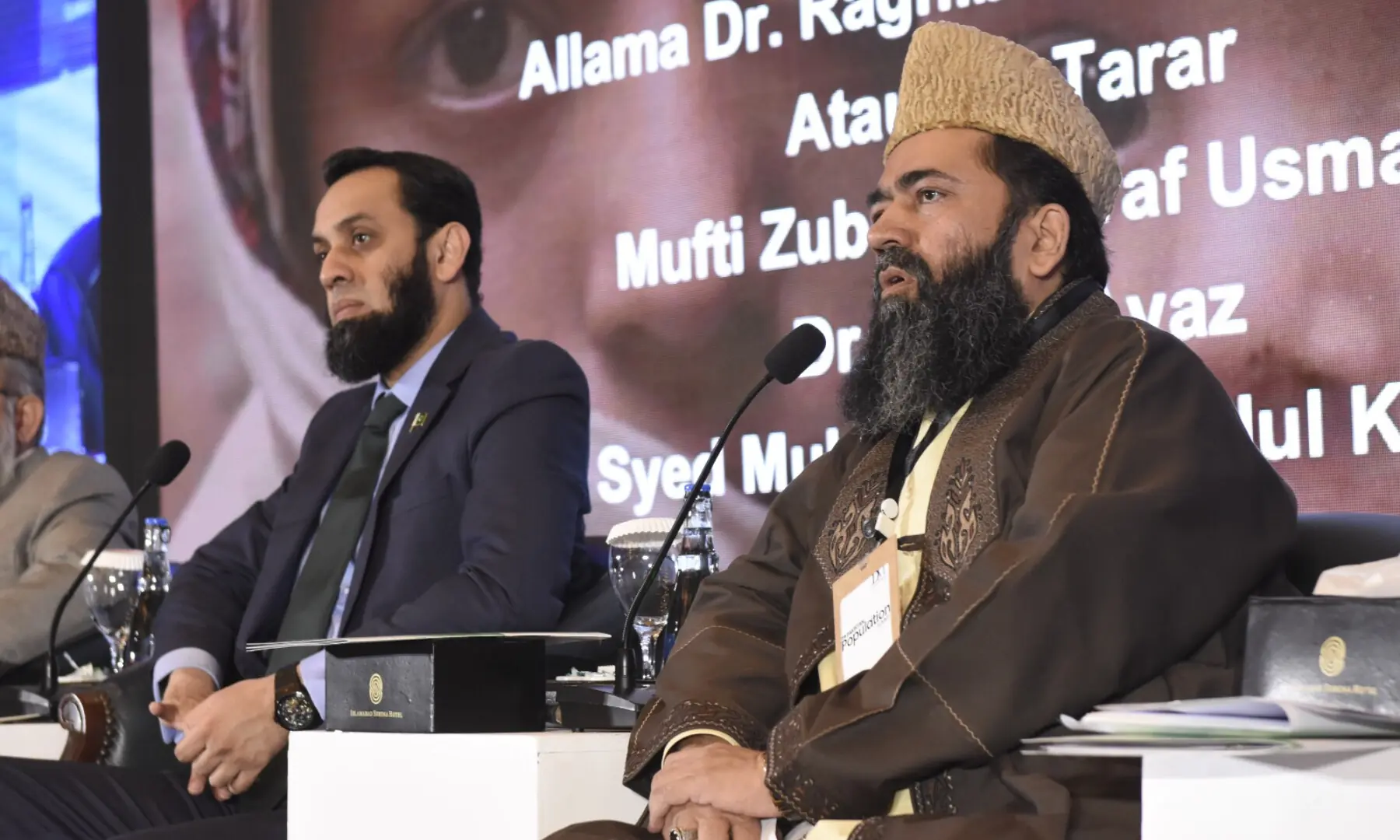
10:28am — ‘Religious scholars ready to play role in raising public awareness’
The CII chief affirmed that religious scholars were determined to play their role in raising awareness among the public.
“Neither are the scholars behind in this, nor do they think that birth spacing should not be adopted,” he said.
Dr Raghib Naeemi called for public sessions, discussions at the graduate level in colleges and universities, and formation of think tanks to work on the issue.
10:22am — Birth spacing parents’ duty: Council of Islamic Ideology chairman
CII chief Raghib Hussain Naeemi said that keeping in mind Islamic rules, appropriate birth spacing to consider the children’s health was the parents’ responsibility.
He further said that scholars of all sects were of the view that Sharia allowed for birth planning and spacing if there was danger to the mother’s health during pregnancy, or risk of “untolerable pain”, or issues related to lactation, or the mother would have to face multiple complications.
The CII chairman also advocated for a social media campaign to raise awareness. He said that Islam’s “fundamental principle” of balance also favoured a balance between resources and population.
10:20am — CII chairman terms family planning ‘Islamic responsibility’
CII chairman Muhammad Raghib Hussain Naeemi recalled that in July, CCII organised a conference aimed at discussing the Islamic perspective on population growth, where they adopted a resolution.
“The basis of our resolution was that the protection of the family system, the health of the mother and child, in the context of an increasing population…has become increasingly important”, he said.
He continued: “Quran and Sunnat have declared the protection of one’s life and their offspring as the fundamental purpose of Shariat, which is why the protection of one’s life, the betterment of mother and child, and family planning is an Islamic responsibility.”
“Keeping in view the Sharia, taking a gap between children is the responsibility of the parents in the context of their child’s health,” he added.
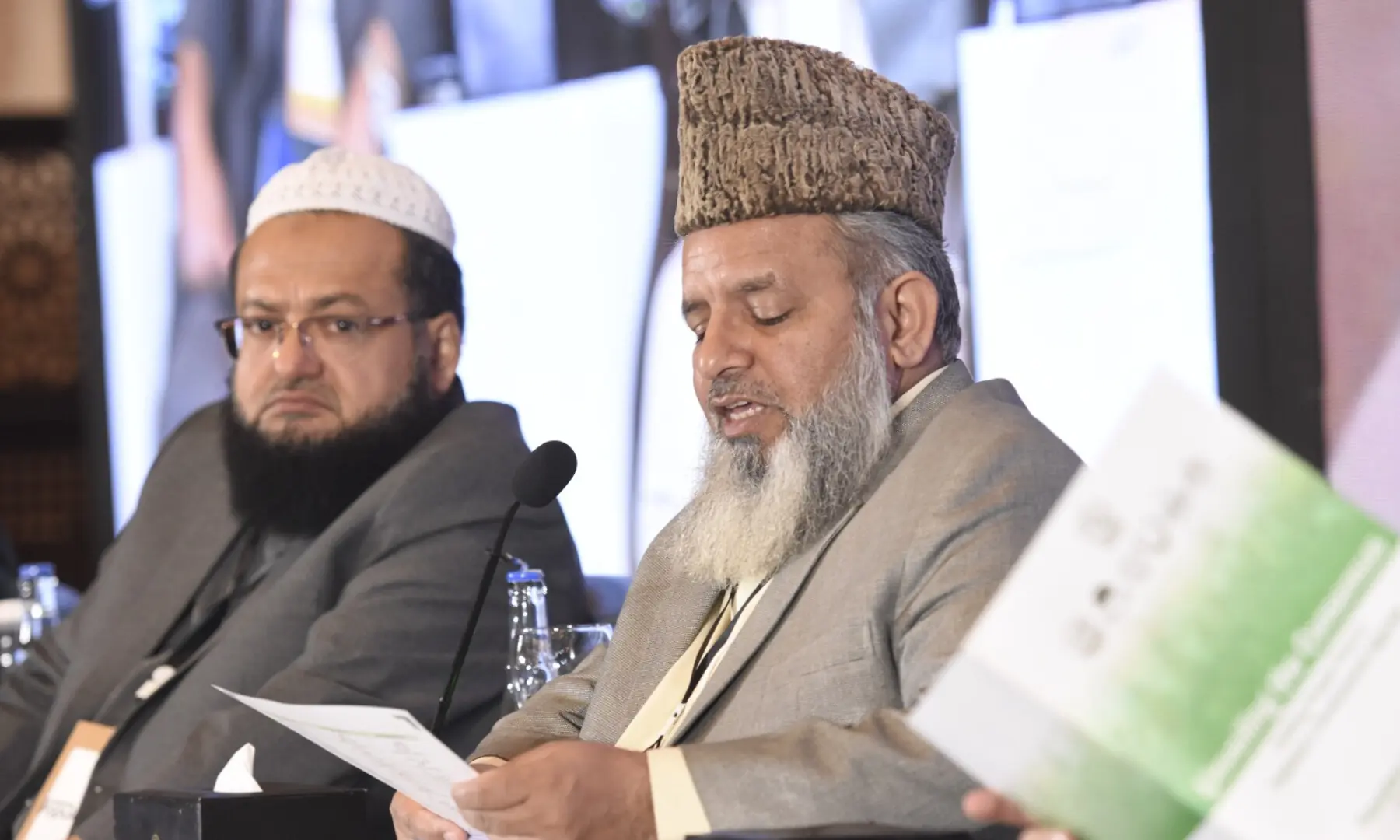
10:16am — Info minister calls for joint working group, parliamentary debate
Suggesting some steps that could be taken, Attaullah Tarar called for a charter on the population crisis and recommended that a debate be held in parliament.
“One size fits all strategy might not work,” he noted, adding that religion was not an impediment in population planning.
The minister called for a joint working group that could work on a charter on the issue.
10:11am — Postpartum depression is a reality: info minister
The information minister also highlighted that postpartum depression was a “reality which should be realised and accepted”.
He stressed that mental health was a major aspect of “health linked to the population problem”.
Tarar further wondered what role legislators and the parliament could play in this regard. The minister also pointed out that lack of resources was an issue.
“There needs to be a realisation of rights and responsibilities — who has rights and who has responsibilities.”
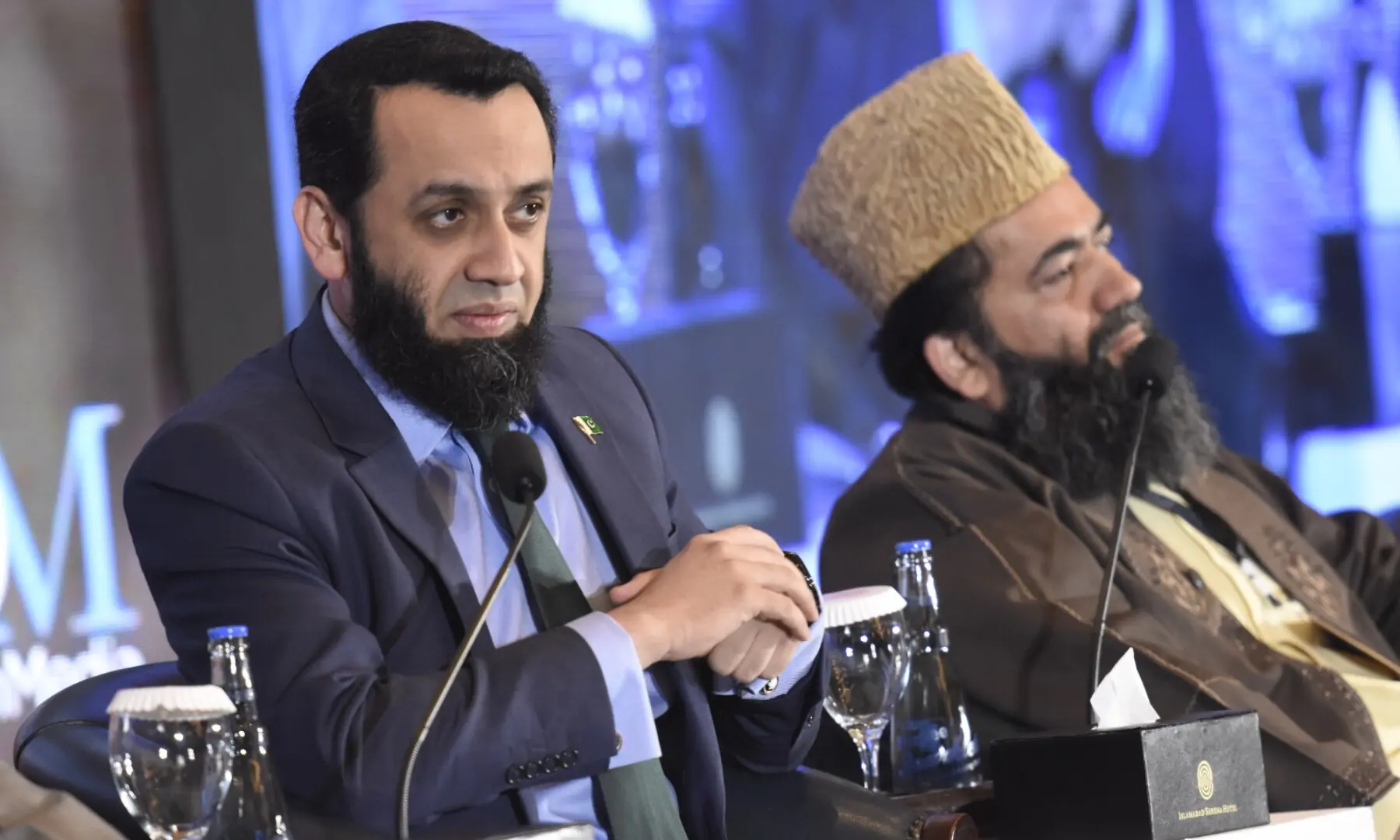
10:08am — ‘Right to life’ impeded by population growth: Tarar
Attaullah Tarar believed that the fundamental right to life guaranteed under the Constitution was directly linked to population growth.
“If one’s right to life gets impeded because of the population issue […] It is tragic,” he said.
The minister noted that “we were losing a lot of lives” due to issues amplified by the population explosion, particularly in relation to infant mortality rates, neonatal healthcare, mother-child healthcare, and reproductive health.
10:05am — Must acknowledge scale of issue: Attaullah Tarar
Minister for Information and Broadcasting Attaullah Tarar began by commending the DawnMedia group for speaking about the issue. He then stressed that, to him, “acknowledging the issue itself was quite important”.
“Until and less we accept it as a huge challenge, we will continue to face problems,” he said.
“First of all, it’s acceptance and the realisation that it is a huge issue,” the minister cautioned.
10:00am — 1st session of the day
Dr Ali Mohammad Mir, the senior director of the Population Council, is moderating the first session of the day.
The panel features Information Minister Attaullah Tarar, Council of Islamic Ideology Chairman Allama Dr Muhammad Raghib Hussain Naeemi, Jamia Darul Uloom Vice President Mufti Zubair Ashraf Usmani, Member of the Shariat Appellate Bench Dr Qibla Ayaz, Ruet-i-Hilal Committee Chairman Maulana Syed Muhammed Abdul Khabeer Azad and scholar and legal expert Humaira Masihuddin.
9:58am — Population Council official speaks
Ali Mazhar, the director of communications at the Population Council, opened the second day.
He said that the first day of the summit focused on the gap between an expanding population and the available resources.
Experts highlighted that ensuring a safe and educated Pakistan is not possible until we take better steps for population management, he said.
Mazhar also noted that the role of Islamic scholars in tackling population growth came under much discussion.
“Scholars have the most influence on our family planning and societal behaviour,” he noted.
9:56am — 2nd day of Pakistan Population Summit begins
The second and final day of the Pakistan Population Summit has begun in Islamabad. The day kicked off with the recitation of the Holy Quran.



